
Toyota Century (G50): thirty years of quiet power in Japan's most discreet limousine
Built for boardrooms and ministries rather than showrooms, the first Century changed slowly, aged gracefully and still feels like nothing else on the road.
By the Japan to Ireland editors · · 5 min read
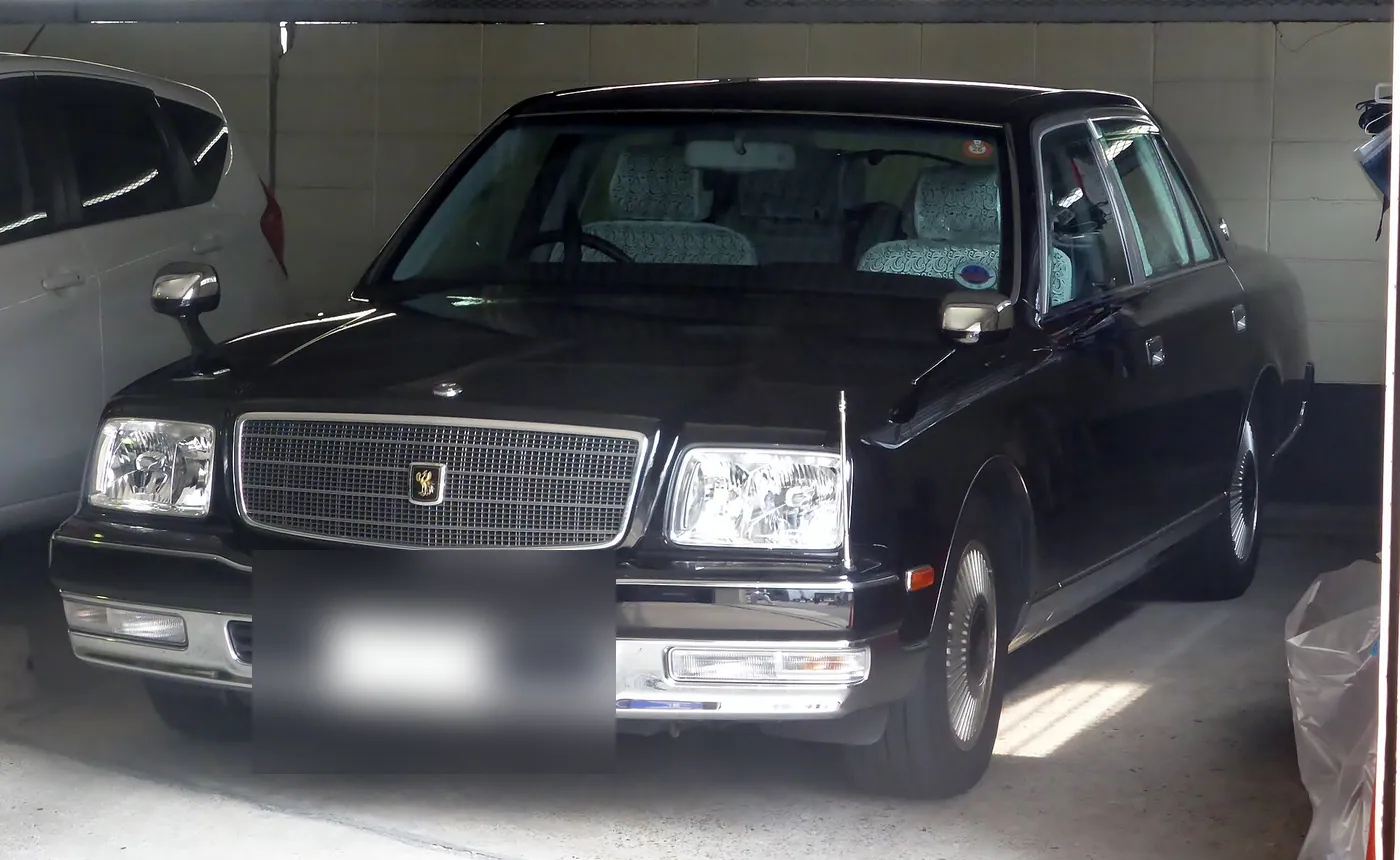
Picture a Tokyo street in the late 1960s. The Olympic Games of 1964 have come and gone, the Shinkansen is running, new expressways are rising on concrete stilts above the city, and the country's economy is growing at a pace the rest of the world finds hard to believe. Into this traffic, in 1967, Toyota released a large black saloon with a phoenix emblem on its grille. It was called the Century, after the hundredth anniversary of the birth of Sakichi Toyoda, the inventor whose loom business gave rise to the Toyota group.
The car was not meant to be loved by the public. It was meant to carry the people who ran Japan: company presidents, senior civil servants, politicians. For three decades the first-generation Century did exactly that, changing so little in outline that a 1990s car parked beside a 1960s one looks like a close relative rather than a successor. That slow evolution is the reason it has become one of the most interesting Japanese classics an Irish enthusiast can import.
The specs
| Years built | 1967–1997 (first generation) |
|---|---|
| Engine | V8 petrol: 3.0 litres at launch, later 3.4 and 4.0 litres |
| Gearbox | Automatic on most surviving cars |
| Drive | Rear-wheel drive |
| Body styles | Four-door saloon, plus a long-wheelbase version late in the run |
| Named for | The 100th anniversary of Sakichi Toyoda's birth in 1867 |
| Steering | Right-hand drive |
Why Toyota built it
By the mid-1960s Toyota had established the Crown as Japan's prestige family saloon, but there was nothing domestic at the very top of the market. Official and corporate fleets relied heavily on imported American and European cars. The Century was Toyota's answer, a flagship designed for a Japanese idea of luxury rather than a copy of a Cadillac or a Mercedes.
That idea shows everywhere. The design is upright and formal rather than flamboyant. The cabin was trimmed to favour the rear passenger, because the owner sat in the back while a driver sat in the front. Wool cloth upholstery was the common choice in Japan, not leather, partly because cloth is quieter and does not creak when a passenger shifts in the seat. Lace seat covers and rear curtains complete a look that is distinctly Japanese.
Design and engineering
Under the bonnet sat Toyota's first production V8. It began at 3.0 litres, grew to 3.4 litres in the early 1970s and to 4.0 litres in the early 1980s. None of these engines was tuned for outright performance. They were built to be smooth, quiet and unhurried, and to keep a heavy car moving without fuss for decades of chauffeured duty.
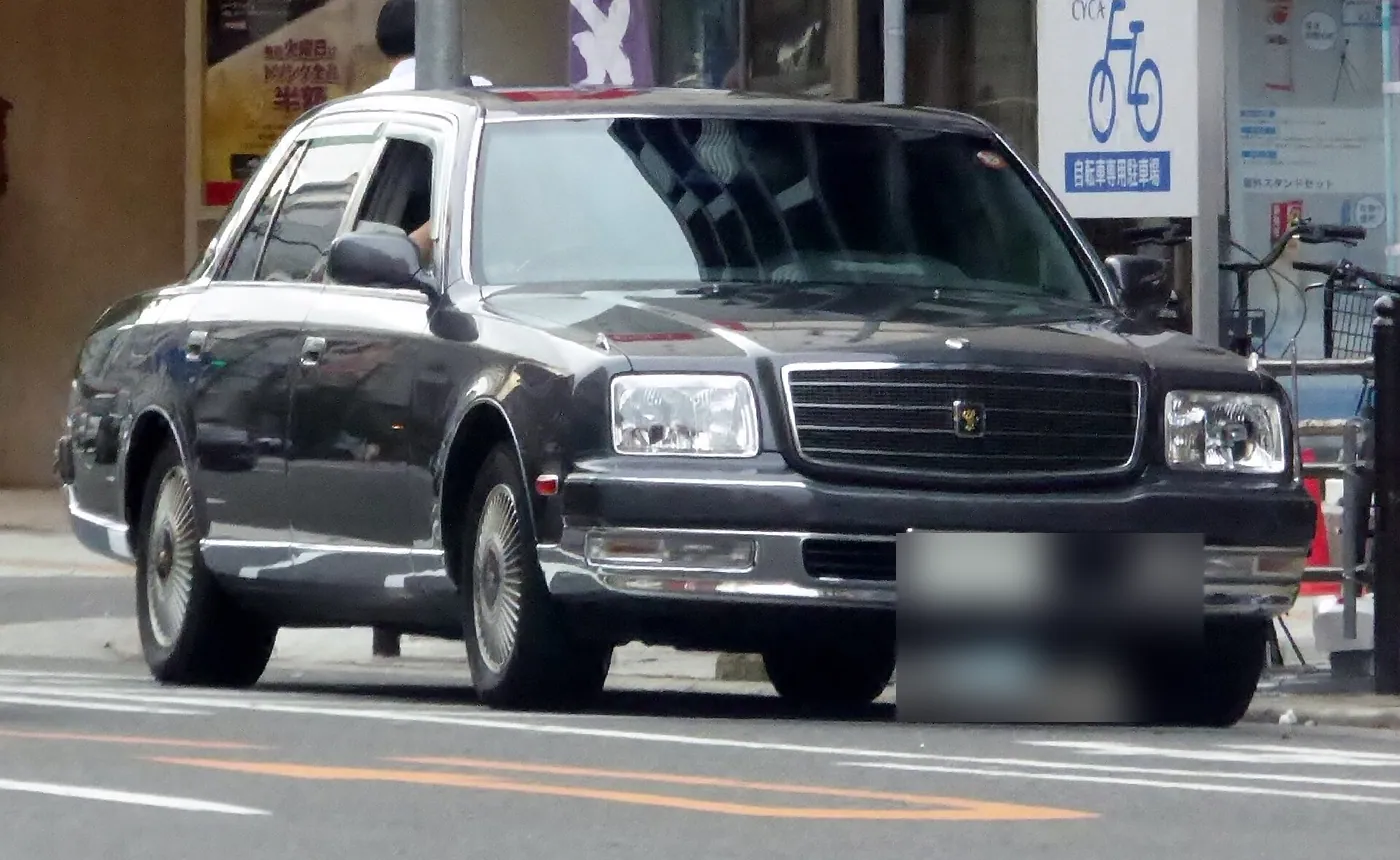
The body stayed recognisably the same through the whole run, with updates to lights, bumpers, trim and equipment as the years passed. Later cars gained more electrical equipment, improved climate control and a long-wheelbase version for even more rear legroom. In 1997 the first generation finally gave way to an all-new Century powered by a V12, which is the car the G50 code is most often linked to today. For buyers, the important thing is that the long-lived original is a separate, simpler machine.
How it drives today
A first-generation Century is not quick and does not pretend to be. What it offers is isolation. The suspension is soft and long in travel, the steering light, the engine barely audible at a cruise. On a smooth N-road it rides with a calm that few modern cars match, and on broken Irish surfaces it floats over ruts that would jolt a lower, stiffer car. Body roll is pronounced if you hurry it through a bend, and the brakes demand respect given the weight involved.
It is also a large car by Irish standards. Parking in a city centre needs planning, and narrow rural roads require care. But on a motorway such as the M50 or the M7, it settles into a gentle, unhurried pace that suits it perfectly.
The versions worth knowing
Early cars with the original V8 are the rarest and most historically interesting, but they are also the hardest to find in good order and the most demanding to maintain. Most cars seen at Japanese auctions today are from the 1980s and 1990s, with the 4.0-litre V8, automatic transmission and fuller equipment. These are the most practical choice for regular use. Long-wheelbase cars are less common and suit buyers who want the full rear-seat experience.
What to check when buying in Japan
Many Centurys led a privileged life: garaged, professionally maintained and driven gently by chauffeurs. That is the good news. The bad news is that age eventually catches up even with cared-for cars. Look closely at the sills, the lower edges of the doors, the rear wheel arches, the boot floor and the area around the front and rear screens, where water can collect under trim and rubbers. Underneath, check the floor and suspension mounting points for corrosion.
Interior condition matters greatly, because wool upholstery, headlining and wood trim are costly to restore properly. Check that power windows, central locking, climate control and rear-seat controls all work, since electrical faults on a car of this age can take patience to trace. Mechanical parts for the V8 are less widely stocked than those for Toyota's mainstream engines, so a car with a documented service history is worth more than one without.
Be wary of cars modified in the VIP style, with lowered suspension and large wheels. Some are tasteful, but many have had their ride ruined and their arches stressed. Odometer readings on older Japanese cars can be hard to verify, so look for consistency between the auction sheet, wear on the pedals, steering wheel and driver's seat, and any service records. Make sure the export certificate and deregistration paperwork are complete before the car leaves Japan.
Should you import one?
The Century suits a particular kind of owner: someone who values calm over speed, history over badges, and who enjoys a car that draws curious looks rather than loud ones. It is a fine choice for weddings and occasions, and an intriguing alternative to the usual British and German classics seen at Irish car shows.
Realistic expectations matter. Running a large V8 saloon from another era will never be cheap, parts can take time to arrive from Japan, and you will need a mechanic willing to learn the car. Cars over 30 years old can qualify for Ireland's vintage treatment, which helps the sums for older examples. Buy the best car you can find, keep it dry and garaged through the Irish winter, and the first Century will reward you with a sense of occasion that very few cars of any age can match.
Frequently asked questions
Is the first-generation Century right-hand drive?
Yes. It was built for the Japanese market, so it is right-hand drive like Irish cars.
What engine does it have?
A Toyota V8 petrol engine, which grew from 3.0 litres at launch to 3.4 and then 4.0 litres over the years.
Is the Century easy to maintain in Ireland?
Routine servicing is straightforward for a competent mechanic, but some specific parts must be sourced from Japan, so plan ahead.
Why do many Centurys have cloth seats instead of leather?
Wool cloth was the preferred choice in Japan because it is quiet and comfortable for rear passengers.
More Japanese classics
- Toyota Crown (S130): The Saloon That Carried Japan's Bubble-Era Middle Class
- Toyota Soarer (Z30): The Japanese Coupe Designed in California That Became the Lexus SC
- Toyota Land Cruiser 40: the boxy off-roader that took Toyota around the world
- Toyota Land Cruiser 60: the family wagon that turned a tough truck into a comfortable classic
- Toyota Land Cruiser 70: the working truck Toyota never stopped building, and the early ones worth importing
- All 90 Japanese classics you can import
Photo credits
- Photo: Tokumeigakarinoaoshima / Wikimedia Commons, CC0
- Photo: Tokumeigakarinoaoshima / Wikimedia Commons, CC BY-SA 4.0