
Toyota Land Cruiser 70: the working truck Toyota never stopped building, and the early ones worth importing
Launched in 1984 and still in production elsewhere, the 70 Series is a living classic. The older Japanese examples carry its story best.
By the Japan to Ireland editors · · 4 min read
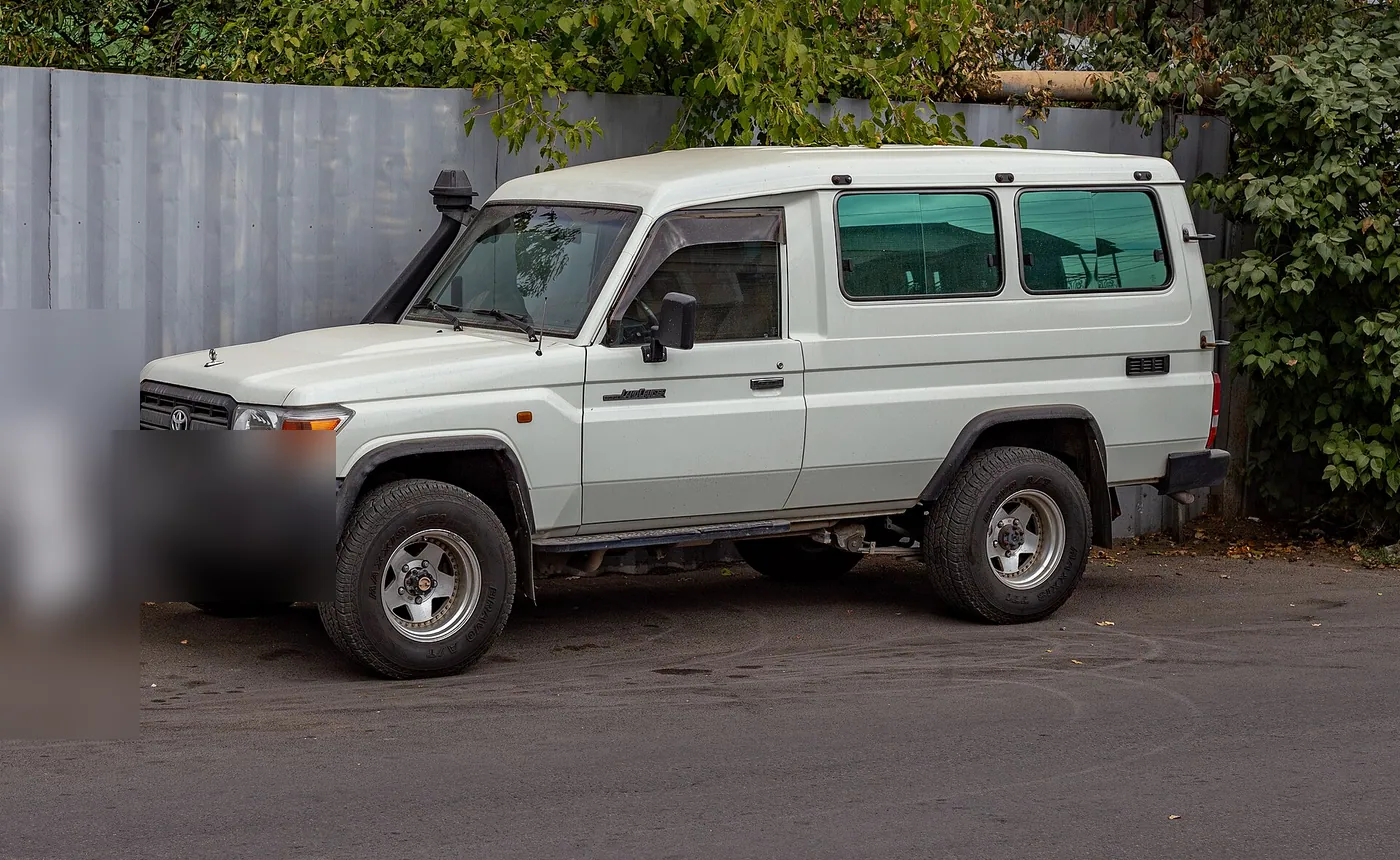
In 1984 Toyota replaced the venerable 40 Series with a new heavy-duty Land Cruiser. It looked more modern, rode a little better and offered more space, but it kept the same uncompromising toughness. Few could have guessed that four decades later it would still be in production in some form, outliving several generations of the luxurious Land Cruiser estates.
That longevity makes the 70 an unusual classic. It is both a working vehicle and a collector's item, and the older Japanese examples, built in the 1980s and early 1990s, are the ones that carry its original story.
The specs
| Years built | 1984 to the present (Japanese-market sales ended in 2004, with later re-releases) |
|---|---|
| Engines (early Japanese models) | 3B four-cylinder and 2H six-cylinder diesels; later 1PZ five-cylinder and 1HZ six-cylinder diesels |
| Gearbox | Manual; automatic on some later versions |
| Drive | Part-time four-wheel drive |
| Suspension | Leaf springs front and rear at launch; front coil springs from 1999 |
| Body styles | Soft top, hard top, van, pick-up and wagon |
| Wheelbases | Short, medium and long |
Why it was built
By the early 1980s the 40 was ageing. Toyota needed a vehicle that could continue its reputation for toughness in Australia, Africa and the Middle East, while also meeting the needs of Japanese buyers who used four-wheel drives for farming, construction and leisure.
The 70 was designed to do exactly that. It used a separate chassis, solid axles and leaf springs, with part-time four-wheel drive and a low-range gearbox. It was offered in several lengths and body styles, from short soft tops to long-wheelbase vans and pick-ups.
Design and engineering
The early 70s were simple and rugged. The body was squarer and more modern than the 40, with more interior room and better visibility. Diesel engines were the mainstay in Japan, including the 3B four-cylinder and the 2H six-cylinder. Later, the 1PZ five-cylinder and 1HZ six-cylinder diesels arrived, offering more refinement and power.
A major change came in 1999, when the front leaf springs were replaced with coil springs, improving ride and handling. Toyota also built a lighter-duty version that became the Land Cruiser Prado, which is a separate story.
Japanese-market sales of the 70 ended in 2004, although production continued for other markets. Toyota then brought the 70 back to Japan for a limited period in 2014 to mark its 30th anniversary, and reintroduced it again in 2023 with a modern diesel engine and automatic gearbox. Those recent models are new vehicles rather than classics, and this article focuses on the older ones.
The early 70s arrived as Japan's economy was moving towards the boom of the late 1980s. Leisure four-wheel driving was growing in popularity, and the 70 found buyers among skiers, anglers and campers as well as farmers and builders. That mix of working and leisure use explains why Japanese examples vary so much in condition today.
How it drives today
An early 70 drives like a refined 40, but it is still a truck. The steering is heavy, the ride is firm, and the cabin is noisy at speed. The diesel engines are slow to accelerate but pull strongly at low revs, making them ideal for towing and off-road work.
Off road, the 70 is formidable. Its strong axles, low-range gearbox and robust chassis allow it to tackle steep, muddy and rocky terrain with ease. On Irish roads, it is happiest on rural routes and farm tracks rather than busy motorways.
Inside, everything is functional. The dashboard is upright and plain, the seats are firm, and the controls are designed to be used with work gloves on. There is little sound deadening, and on a wet winter morning the heater takes its time. Yet that bluntness is part of the charm. The 70 never pretends to be anything other than a tool, and owners tend to love it for exactly that reason. It is also easy to work on, with plenty of room around the engine and few electronic systems to go wrong.
The variants worth knowing
Short-wheelbase versions are the most nimble and the most fun off road. Medium and long wheelbase versions offer more practical space and are well suited to families or working use. Vans with hard tops keep out the weather better than soft tops. The six-cylinder 2H and later 1HZ diesels are prized for their durability, while the 3B is simpler and lighter. Later front coil-spring versions offer a better ride, but are newer and not yet classics.
What to check when buying in Japan
Inspect the chassis carefully for rust, especially at the rear crossmember, spring hangers and around the fuel tank. Check the floor, footwells, door bottoms and the rear body. Many 70s have been used hard, so look for signs of heavy off-road use, such as damaged sills, dented panels and worn suspension bushes.
Modified examples are common. Lift kits, large tyres and engine swaps can affect reliability and value. Mileage is difficult to verify, so judge the vehicle by its condition rather than the odometer. Check that the diesel engine starts easily and does not smoke heavily. Ensure that the chassis number on the vehicle matches the export paperwork.
Should you import one?
An early 70 suits an enthusiast who wants a tough, simple four-wheel drive with a long history. It is ideal for those who enjoy off-road driving, towing or rural life.
In Ireland, a 70 will cope well with muddy tracks and wet conditions, but it can be noisy and slow on motorways. Rust protection is essential, and dry storage helps preserve its value. Cars over 30 years old can qualify for Ireland's vintage treatment, which covers the earliest 70s. Choose a well-maintained example, and it will offer years of rugged service.
Frequently asked questions
Is the Land Cruiser 70 still in production?
Yes. Production continued for other markets after Japanese sales ended in 2004, and Toyota re-released it in Japan in 2014 and again in 2023.
Which 70s count as classics?
Older examples from the 1980s and early 1990s are the ones most enthusiasts treat as classics.
Is the 70 comfortable for daily driving?
It is noisy and firm, and suits rural and occasional use better than daily commuting.
What is the difference between the 70 and the Prado?
The Prado grew out of a lighter-duty version of the 70 and is treated as a separate model.
More Japanese classics
- Toyota Land Cruiser 60: the family wagon that turned a tough truck into a comfortable classic
- Toyota Land Cruiser 40: the boxy off-roader that took Toyota around the world
- Toyota Land Cruiser 80: coil springs, big sixes and the moment the Land Cruiser grew up
- Toyota Hilux Surf (N130): the pick-up that became a family SUV just as Japan fell for the outdoors
- Toyota Chaser, Mark II and Cresta (X90): three saloons, one twin-turbo heart and a cult that never faded
- All 90 Japanese classics you can import
Photo credits
- Photo: Nikolai Bulykin / Wikimedia Commons, CC BY-SA 4.0