
Toyota Land Cruiser 40: the boxy off-roader that took Toyota around the world
For almost a quarter of a century the 40 Series proved that a simple, tough Japanese four-wheel drive could go anywhere. Finding an honest one is the challenge.
By the Japan to Ireland editors · · 4 min read
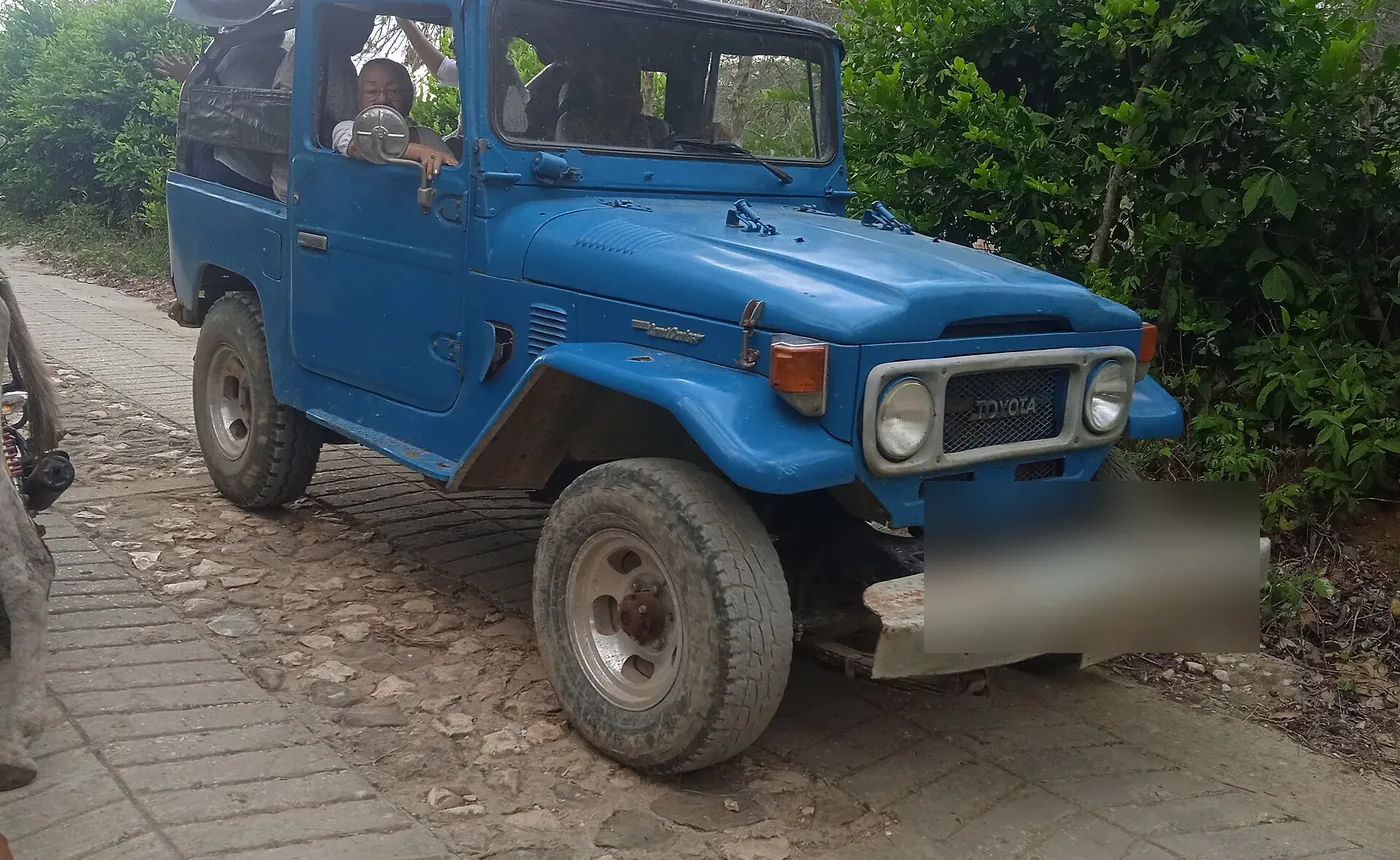
Somewhere in a dusty yard in Australia, Africa or the Middle East, there is still a 40 Series Land Cruiser at work. That is not a romantic exaggeration. Built from 1960 to 1984 in Japan, the 40 became one of the vehicles that established Toyota's reputation far beyond its home market, long before the Corolla made the name familiar in Irish driveways.
The 40 is a plain machine: a steel box on a ladder frame, solid axles, leaf springs and a gearbox with a low range. Its appeal comes precisely from that simplicity. Today it is one of the most sought-after Japanese classics in the world, and its values and restoration industry reflect that.
The specs
| Years built | 1960–1984 in Japan |
|---|---|
| Engines | F 3.9-litre straight-six petrol; B, 2B and 3B four-cylinder diesels; H six-cylinder diesel |
| Gearbox | Manual, with a low-range transfer case |
| Drive | Part-time four-wheel drive |
| Suspension | Leaf springs and solid axles front and rear |
| Body styles | Soft top, hard top, pick-up and long-wheelbase wagon |
| Wheelbases | Short (40), medium (43) and long (45) |
Why it was built
Toyota's first four-wheel-drive vehicles grew out of the early 1950s, when Japan needed rugged machines for police, forestry and infrastructure work as the country rebuilt after the war. The Land Cruiser name arrived in that decade, and the 40 Series that followed in 1960 refined the formula into something that could be sold around the world.
Japan in 1960 was at the start of its high-growth era. Industry was expanding, roads were still poor away from the cities, and exports were becoming central to the country's economic plans. The 40 fitted that moment perfectly: a strong, repairable vehicle that could be sold in markets where reliability mattered more than comfort.
Design and engineering
The classic 40 shape, with its flat panels, round headlamps and upright windscreen, barely changed over the years. Underneath, the formula was conventional and tough. A separate chassis, leaf springs at each corner, solid axles and part-time four-wheel drive with a low-range transfer case gave it real off-road ability.
The original petrol engine was the F, a large straight-six with plenty of low-speed pulling power and a reputation for durability. In later years Toyota added diesel engines, including the B, 2B and 3B four-cylinder units and the H six-cylinder diesel. In Japan, diesel versions such as the BJ40 became especially common.
The family came in several lengths. The short-wheelbase 40 is the iconic version. The medium 43 and long 45 offered more space, with pick-up, cab-chassis and wagon bodies for working use.
How it drives today
Driving a 40 is a lesson in what cars used to be. The steering is heavy and slow, the ride is firm and bouncy, wind noise is considerable, and the brakes need more pressure than modern drivers expect. At motorway speeds it feels busy and loud. On a boreen in Connemara or a forest track in Wicklow, though, it comes alive, crawling over ground that would defeat many modern SUVs.
The short wheelbase makes it nimble off road but can feel nervous at speed. This is a vehicle for weekends, shows and trails, not for a daily commute on the M50.
The variants worth knowing
The short-wheelbase FJ40 with the F petrol engine is the most famous and the most collectable, especially in its earlier form. Diesel BJ40s are more common from Japanese sources and are prized for their economy and torque. The longer 43 and 45 versions are useful if you need a pick-up or more interior space. Hard-top versions keep the Irish weather out better than soft tops, which matters more here than in California.
What to check when buying in Japan
Rust is the great enemy of every 40. Check the floor pans, footwells, the bottom of the doors, the rear body tub, the windscreen frame and the rear corners of the body. Look at the chassis rails, especially near the rear crossmember and spring hangers, and inspect the inside of the bodywork where mud collects. Many cars have been repaired or restored, so ask for photographs of the underside and of any work done.
Originality varies enormously. Some 40s have been fitted with later engines, modern seats, different axles or non-standard paint. That is not always bad, but it affects value and should be reflected in what you pay. Mileage on a vehicle of this age is often impossible to verify, so judge the car on condition, not the odometer.
Parts supply is surprisingly good thanks to a global restoration industry, and many panels and components are reproduced. Diesel engines are durable but tired examples can smoke and lack power. Make sure the paperwork, including the export certificate, matches the chassis number on the vehicle.
Should you import one?
If you want a classic off-roader with real history and a strong following worldwide, the 40 is one of the best choices you can make. It suits enthusiasts who enjoy mechanical simplicity and are happy to spend time looking after a vehicle that is now decades old.
In Ireland, expect a vehicle that is cold in winter, noisy on motorways and happiest on green lanes, at shows or on sunny weekends. Rust protection and dry storage are essential given our wet climate. Cars over 30 years old can qualify for Ireland's vintage treatment, which applies to every 40. Buy on condition, not on looks alone, and an honest 40 will hold its appeal for many years.
Frequently asked questions
Is the Land Cruiser 40 right-hand drive?
Japanese-market vehicles are right-hand drive, which suits Irish roads.
Are parts available for the 40 Series?
Yes. A large global restoration industry makes many mechanical parts and body panels available.
Is the 40 a good daily driver?
Not for most people. It is noisy, firm and slow by modern standards and is best suited to weekend and leisure use.
Which engine is most common in Japanese examples?
Diesel versions such as the BJ40 are common in Japan, alongside the classic F straight-six petrol.
More Japanese classics
- Toyota Century (G50): thirty years of quiet power in Japan's most discreet limousine
- Toyota Crown (S130): The Saloon That Carried Japan's Bubble-Era Middle Class
- Toyota Land Cruiser 60: the family wagon that turned a tough truck into a comfortable classic
- Toyota Land Cruiser 70: the working truck Toyota never stopped building, and the early ones worth importing
- Toyota Land Cruiser 80: coil springs, big sixes and the moment the Land Cruiser grew up
- All 90 Japanese classics you can import
Photo credits
- Photo: Ed Wessel Lied / Wikimedia Commons, CC BY 4.0