
Toyota Land Cruiser 60: the family wagon that turned a tough truck into a comfortable classic
The 60 Series kept the leaf springs and solid axles but added space and comfort, creating the template for the big Land Cruiser estates that followed.
By the Japan to Ireland editors · · 4 min read
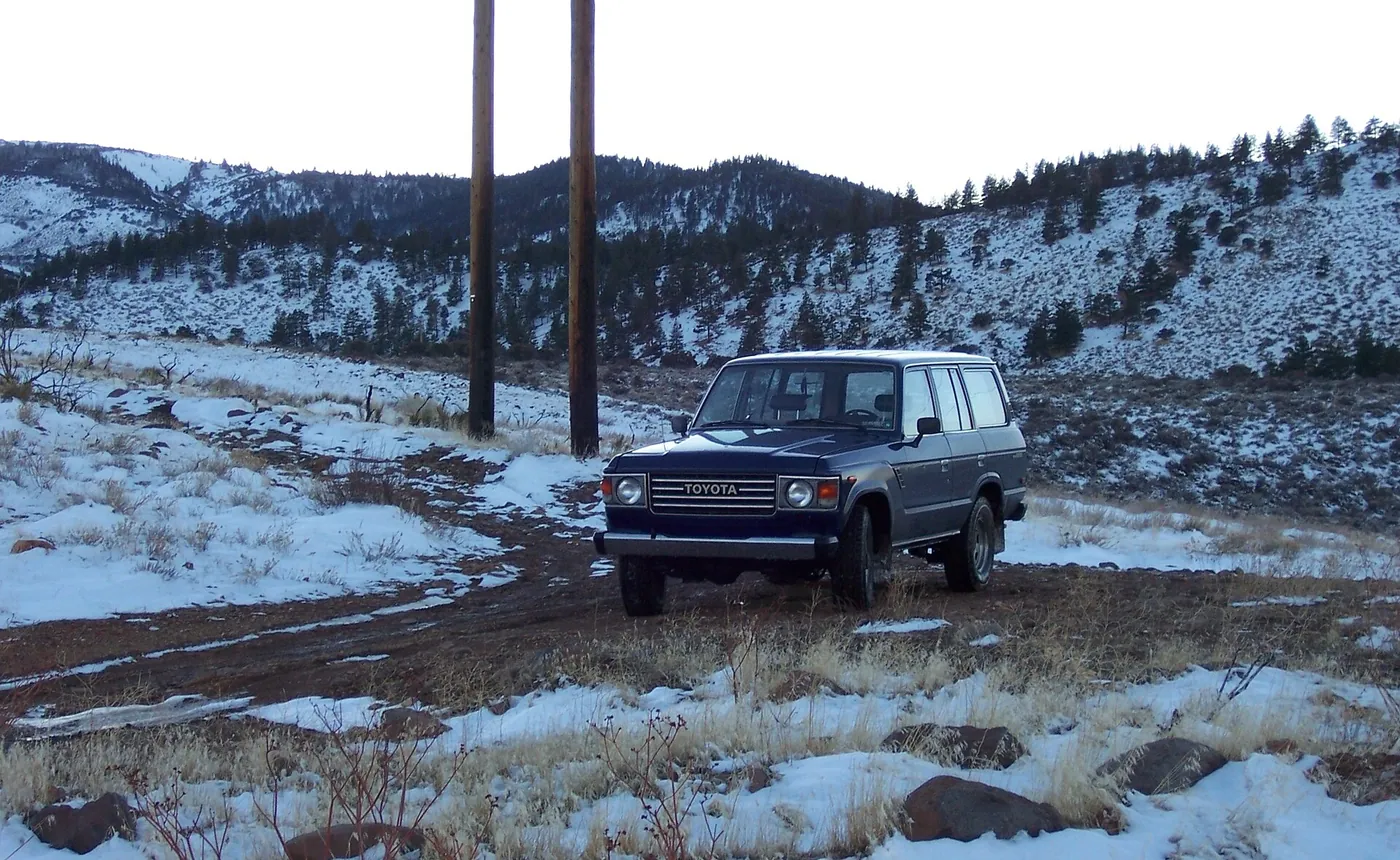
By 1980 Japan was a different country from the one that had produced the first Land Cruisers. Its economy was the second largest in the world, its cars were selling across the globe, and families who had once owned nothing more than a small saloon were beginning to look for something larger. Toyota's answer for those who wanted space, ruggedness and a little comfort was the Land Cruiser 60.
It replaced the long-wheelbase 55 Series and became the first big Land Cruiser estate that felt like a family car as well as a working machine. Today it is a sought-after classic, prized for its honest engineering and its unmistakable boxy shape.
The specs
| Years built | 1980–1990 |
|---|---|
| Engines | 2F 4.2-litre and 3F-E 4.0-litre petrol; 2H and 12H-T six-cylinder diesels; 3B four-cylinder diesel |
| Gearbox | Manual; automatic on later versions |
| Drive | Part-time four-wheel drive |
| Suspension | Leaf springs and solid axles front and rear |
| Body style | Five-door estate |
| Facelift | Square headlamps from the later 1980s |
Why it was built
The 60 was designed as a station wagon rather than a utility vehicle. Toyota understood that buyers in North America, Australia and the Middle East wanted space, comfort and air conditioning in addition to toughness. In Japan, the 60 also found a role as a large, capable family wagon at a time when leisure travel and outdoor pursuits were becoming more popular.
The engineering stayed conservative. Leaf springs and solid axles were retained, along with a separate ladder chassis and part-time four-wheel drive. That made the 60 extremely durable, but it also meant the ride remained firm.
Design and engineering
The 60 is defined by its long, square body, upright glass and practical rear doors. Early versions had round headlamps; later versions adopted square lamps that give the car a more modern face. Inside, there was room for a family and a generous load space behind the rear seats.
The engine line-up was broad. Petrol versions used the 2F straight-six and later the fuel-injected 3F-E. Diesel versions, which are more common from Japan, included the 3B four-cylinder, the 2H six-cylinder and the 12H-T turbocharged six-cylinder, which brought much-improved performance. Later versions also offered an automatic gearbox, which makes them more relaxing for everyday use.
How it drives today
The 60 drives like a solid, honest truck with a comfortable cabin. The steering is slow, body roll is noticeable and the ride is firm on poor surfaces. But it cruises steadily once up to speed, and the turbocharged diesel versions keep up with modern traffic better than the non-turbo engines.
Off road, it is extremely capable. Its long wheelbase and strong axles give it good stability on rough tracks, and its low-range gearbox allows it to crawl through mud and over rocks. For a large family or a dog owner who wants a classic that can still be used, it is one of the most practical old four-wheel drives available.
The cabin is a pleasant place to spend time. The seating position is high and commanding, visibility through the big square windows is excellent, and the switchgear is simple enough to understand at a glance. Air conditioning, where fitted and working, makes a real difference on a long summer run to Kerry or Donegal. Just do not expect modern levels of sound insulation: the diesel clatter and wind noise are part of the experience.
The variants worth knowing
The turbocharged 12H-T diesel is a highlight, giving the 60 more confident performance on motorways and hills. The non-turbo 2H is slower but highly durable. Later square-headlamp versions with the automatic gearbox are the easiest to live with. Earlier round-headlamp cars appeal to purists for their original look. Some Japanese versions came with a high roof, which adds headroom and character.
What to check when buying in Japan
Rust is the main concern. Check the rear quarter panels, the lower tailgate and rear doors, the windscreen pillars, the floor and the area around the rear wheel arches. Inspect the chassis rails and crossmembers for corrosion, especially at the rear. Roof gutters and sunroofs, where fitted, should be checked for leaks.
Many 60s left Japanese cities in the 2000s, after air quality rules restricted older diesel vehicles in the major urban areas. Some that remain have been carefully kept by enthusiasts, while others have been heavily modified with lift kits, large tyres and non-standard engines. Modified cars can be excellent but must be inspected carefully, especially for steering and suspension wear.
Mileage can be difficult to verify on a vehicle of this age, so check for consistent wear on the interior and pedals. Diesel engines should start easily and not smoke excessively. Make sure the export paperwork and chassis number match.
Should you import one?
The 60 is a superb choice for anyone who wants a classic four-wheel drive with space for a family and real off-road ability. It is more comfortable than a 40 and more characterful than a modern SUV.
In Ireland, a 60 will feel at home on muddy farm lanes and forestry tracks, and it can comfortably manage motorway journeys at a steady pace. Keep it out of the salt where possible and invest in rust protection. Cars over 30 years old can qualify for Ireland's vintage treatment, which covers every 60. Choose a car with a solid chassis and a well-maintained engine, and it will remain a useful classic for years.
Frequently asked questions
What engine is best in the Land Cruiser 60?
The 12H-T turbocharged diesel offers the best mix of performance and durability, while the 2H is slower but very robust.
Is the 60 comfortable for long journeys?
It is reasonably comfortable for a classic truck, but leaf springs make the ride firmer than modern SUVs.
Is rust a problem on Land Cruiser 60s?
Yes. Check the rear quarters, tailgate, floor, windscreen pillars and chassis carefully before buying.
Is the 60 right-hand drive?
Japanese-market vehicles are right-hand drive, which suits Irish roads.
More Japanese classics
- Toyota Land Cruiser 40: the boxy off-roader that took Toyota around the world
- Toyota Century (G50): thirty years of quiet power in Japan's most discreet limousine
- Toyota Land Cruiser 70: the working truck Toyota never stopped building, and the early ones worth importing
- Toyota Land Cruiser 80: coil springs, big sixes and the moment the Land Cruiser grew up
- Toyota Hilux Surf (N130): the pick-up that became a family SUV just as Japan fell for the outdoors
- All 90 Japanese classics you can import
Photo credits
- Photo: Imconfused11887 at English Wikipedia / Wikimedia Commons, CC BY-SA 3.0