
Toyota Land Cruiser 80: coil springs, big sixes and the moment the Land Cruiser grew up
The 80 Series brought comfort to the big Land Cruiser without giving up the solid axles that made it legendary. It is now a modern classic with a strong following.
By the Japan to Ireland editors · · 4 min read
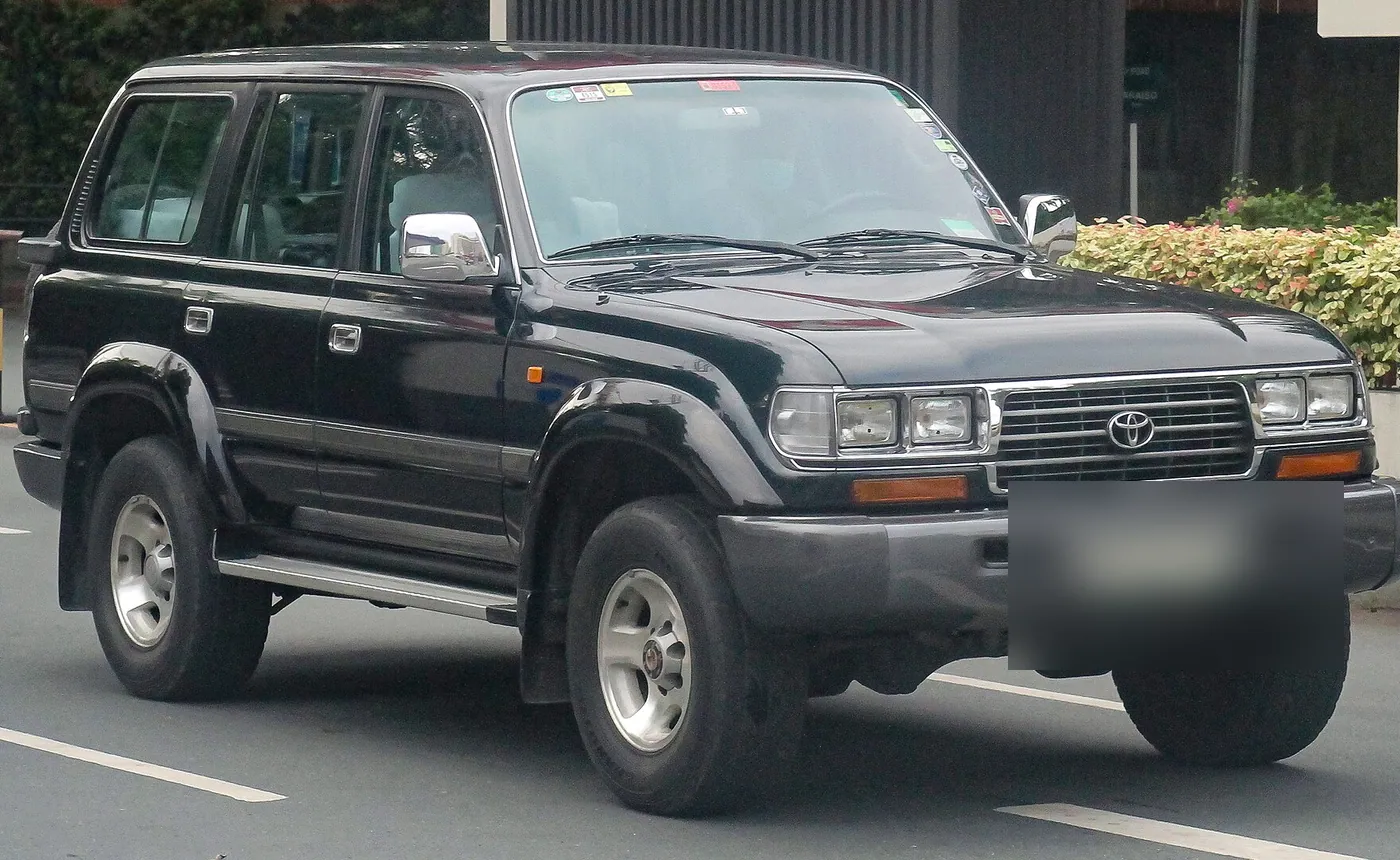
At the start of the 1990s Japan was at the peak of its economic bubble. Land prices in Tokyo were astronomical, consumer spending was strong and Japanese manufacturers were confident enough to build vehicles that matched or exceeded their European rivals. The Land Cruiser 80, launched in that atmosphere, transformed the big Land Cruiser from a rugged estate into a vehicle that could cross a continent in comfort.
It retained solid axles front and rear, but replaced the old leaf springs with coil springs. The result was a vehicle that rode far better on the road while keeping its off-road strength. Today the 80 is a prized modern classic, admired by expedition drivers and collectors alike.
The specs
| Years built | 1990–1997 |
|---|---|
| Engines | 1HZ 4.2-litre diesel; 1HD-T and 1HD-FT 4.2-litre turbo diesels; 3F-E 4.0-litre and 1FZ-FE 4.5-litre petrol |
| Gearbox | Five-speed manual or four-speed automatic |
| Drive | Four-wheel drive, full-time on most versions |
| Suspension | Coil springs with solid axles front and rear |
| Body style | Five-door estate |
| Locking differentials | Front and rear lockers available |
Why it was built
By the end of the 1980s the 60 Series felt dated. Buyers wanted more comfort, refinement and power, and competitors were offering more car-like four-wheel drives. Toyota's solution was to create a larger, more luxurious Land Cruiser without compromising its toughness.
The 80 had more interior space, improved seats and more modern equipment, while retaining a separate ladder chassis and robust axles. It was sold around the world, including in North America as the Land Cruiser and as the Lexus LX 450.
In Japan, the 80 arrived at a time when large four-wheel drives were becoming fashionable family vehicles. Ski trips, camping weekends and long drives to the countryside were popular, and the 80 became a status symbol for families who could afford one. That domestic popularity means plenty of examples survive, although many have since been exported or modified.
Design and engineering
The 80 is longer, wider and more rounded than the 60. Its coil-spring suspension with solid axles gave it both comfort and articulation. Most versions had full-time four-wheel drive with a centre differential.
The engine range included the 1HZ 4.2-litre diesel, known for its toughness, and the turbocharged 1HD-T. From the mid-1990s the 24-valve 1HD-FT offered more power. Petrol versions used the 3F-E 4.0-litre and later the 1FZ-FE 4.5-litre straight-six. Front and rear locking differentials were available, adding to its off-road ability.
How it drives today
The 80 is far more comfortable than earlier Land Cruisers. It rides smoothly on the motorway, steers with reasonable precision and has a quiet cabin for its age. The turbo diesel versions offer good pulling power, while the 4.5-litre petrol is smooth and strong but thirsty.
Off road, the 80 remains highly capable. Its coil springs give good axle articulation, and its locking differentials allow it to climb steep, slippery slopes. In Ireland, it is well suited to wet fields, forestry tracks and towing horseboxes or boats.
The cabin of an 80 marked a clear step up from the 60. The dashboard is more modern, the seats are softer and more supportive, and higher trims added features such as power windows, climate control and wood-effect trim. Rear passengers sit in comfort, and the load space is large enough for a family holiday. Some versions have a third row of seats, which folds up against the sides of the load area. It is a big vehicle, though, and parking in a tight city centre requires patience and good mirrors.

The variants worth knowing
The 1HD-FT turbo diesel is often regarded as the best all-round engine, offering power and durability. The 1HZ is slower but very simple and robust. The 1FZ-FE petrol is smooth and powerful but uses more fuel. Versions with front and rear lockers are prized by off-road enthusiasts. Japanese-market versions include upmarket VX trims with more equipment.
What to check when buying in Japan
Inspect the rear quarter panels, rear wheel arches, the tailgate or rear doors, the windscreen frame and the sunroof drains for rust. Check the chassis rails and crossmembers, particularly at the rear. Many 80s have been used for towing or off-road driving, so look for worn suspension bushes, leaking swivel hub seals and noisy drive shafts.
The 1FZ-FE engine can suffer from head gasket problems at high mileage, so check for overheating or coolant loss. Diesel engines should start easily and not smoke heavily. Mileage can be difficult to verify, so look for consistency in wear and service records. Modified vehicles with lift kits and large tyres should be inspected carefully for steering and suspension wear. Check that the centre differential lock and any axle lockers engage and disengage properly, as these systems can seize if left unused for years. Ensure that the chassis number matches the export paperwork.
Should you import one?
The 80 is an excellent choice for anyone who wants a classic four-wheel drive that can still be used every day. It offers comfort, space and off-road ability, and its strong reputation means parts and expertise are widely available.
In Ireland, an 80 will handle wet weather and rough tracks with ease, and it can tow heavy loads. Fuel consumption is high, especially for petrol versions, so diesel versions are usually more practical. Cars over 30 years old can qualify for Ireland's vintage treatment, which covers the earliest 80s. Buy a well-maintained example, and it will provide years of reliable service.
Frequently asked questions
Which engine is best in the Land Cruiser 80?
The 1HD-FT turbo diesel is often considered the best balance of performance and durability.
Is the 80 comfortable for daily driving?
Yes. Its coil-spring suspension makes it much more comfortable than earlier Land Cruisers.
Is rust a problem on the 80?
Check the rear quarters, tailgate, windscreen frame and chassis carefully, as rust can be a problem.
Does the 80 have locking differentials?
Front and rear locking differentials were available on some versions.
More Japanese classics
- Toyota Land Cruiser 70: the working truck Toyota never stopped building, and the early ones worth importing
- Toyota Land Cruiser 60: the family wagon that turned a tough truck into a comfortable classic
- Toyota Hilux Surf (N130): the pick-up that became a family SUV just as Japan fell for the outdoors
- Toyota Chaser, Mark II and Cresta (X90): three saloons, one twin-turbo heart and a cult that never faded
- Toyota Mark II (X70): the white hardtop that carried Japan's salarymen into the boom years
- All 90 Japanese classics you can import
Photo credits
- Photo: Ethan Llamas / Wikimedia Commons, CC BY-SA 4.0
- Photo: Ethan Llamas / Wikimedia Commons, CC BY-SA 4.0