
Toyota Starlet GT Turbo (EP82): Bubble-Era Japan's Pocket Rocket With a Turbo Bulge
A small, cheap hatchback with a turbocharged 1.3 and a bonnet scoop, the EP82 GT Turbo was one of the fastest ways to cross a Japanese city in 1990.
By the Japan to Ireland editors · · 4 min read
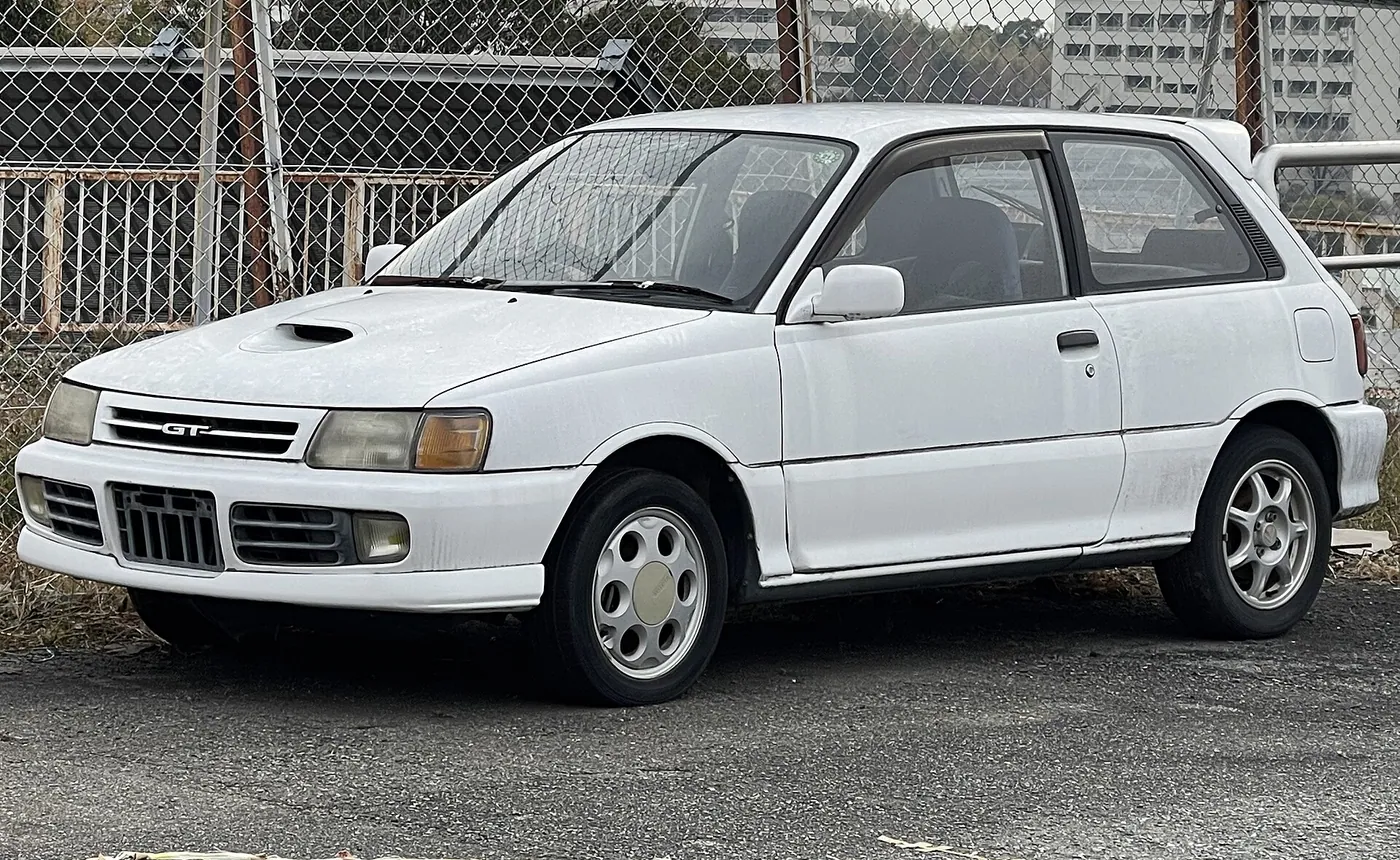
At the end of 1989, Japan was at the peak of its economic bubble. Land in central Tokyo was valued at sums that made no sense, young salarymen spent freely, and car makers were building whatever they could imagine. In that climate, Toyota launched the fourth-generation Starlet, a modest city hatchback, and gave the range a top model that had no business being so quick.
The EP82 GT Turbo took a 1.3-litre engine, added a turbocharger and an intercooler, cut a scoop in the bonnet and put the result in a three-door body that weighed very little. It was a hot hatch built for a country where small cars were taxed and insured kindly, and where a cheap, fast car could be enjoyed on mountain passes and city streets alike.
The specs
| Years built | 1989–1995 |
|---|---|
| Engine | 1.3-litre 4E-FTE turbocharged four-cylinder, 16 valves |
| Power | 135 PS at launch |
| Gearbox | Five-speed manual |
| Drive | Front-wheel drive |
| Body styles | Three-door hatchback |
| Distinctive feature | Intercooled turbo and bonnet scoop on a 1.3 city car |
Why it was built
Toyota had a history of quick Starlets. The previous generation, the EP71, had offered a turbocharged version, and the market for small, sporty cars in Japan was crowded with rivals from Nissan, Honda, Daihatsu and others. The P80 Starlet was a mainstream car, sold mostly in sensible trims to commuters and shoppers. The GT Turbo was the halo, and it was aimed squarely at young drivers.
Its successor, the P90 generation, arrived in 1996 and carried the idea on as the Glanza V with a similar turbocharged engine. The EP82, though, is the car that defined the formula.
Design and engineering
The heart of the car is the 4E-FTE, a 1.3-litre twin-cam, 16-valve four-cylinder with a turbocharger and intercooler. At launch it made 135 PS, a big figure for the size, and the car's low weight meant the power-to-weight ratio was serious by the standards of the day. Drive goes to the front wheels through a five-speed manual gearbox.
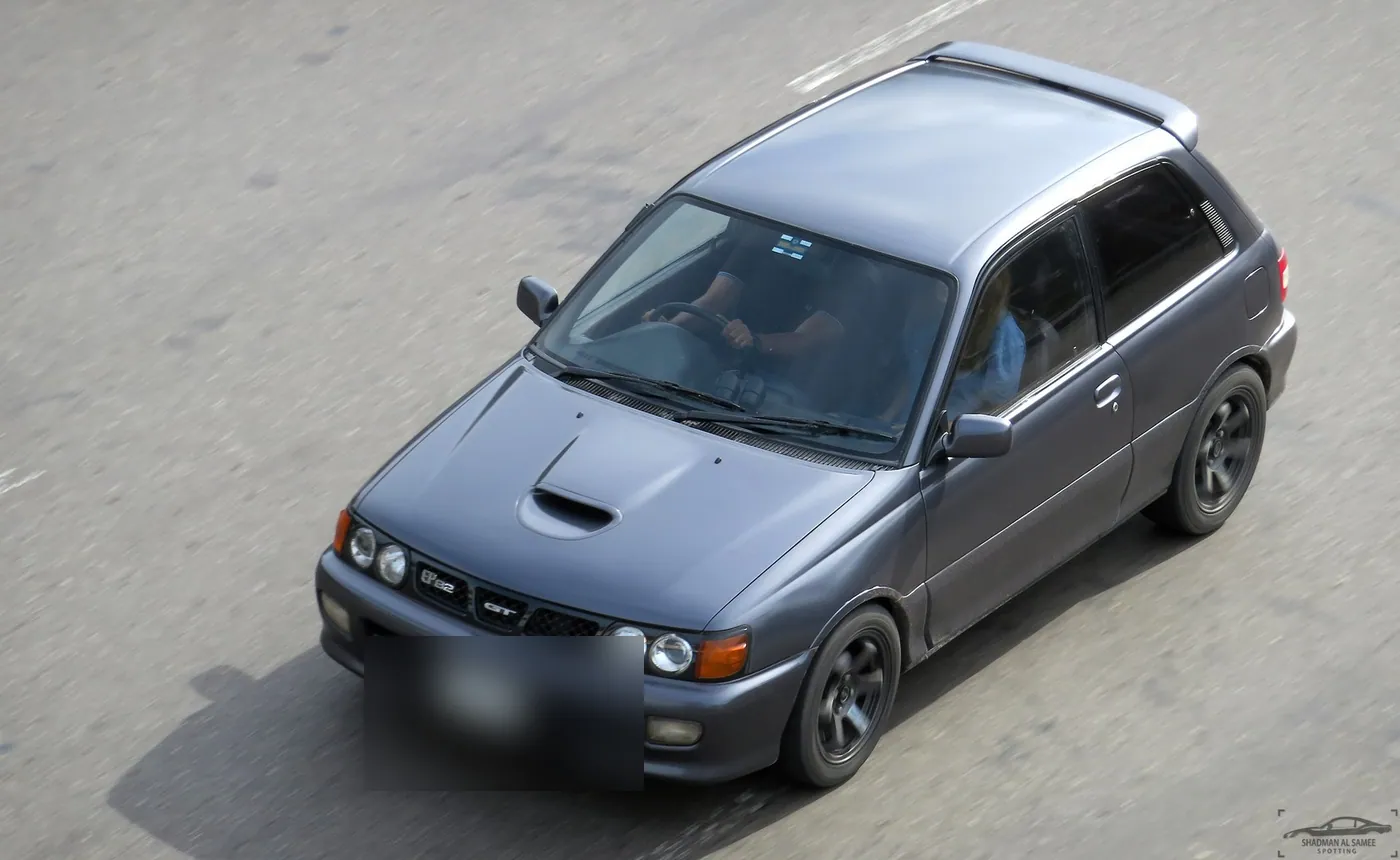
The rest of the car is conventional small-Toyota engineering: MacPherson struts at the front, a simple rear set-up, and a compact cabin with sports seats and a three-spoke wheel. The bonnet scoop feeds the top-mounted intercooler and is the easiest way to tell a GT Turbo from an ordinary Starlet at a glance.
Body styling is rounded and clean, typical of Japanese design at the turn of the 1990s, with flush glass and a short overhang at each end.
How it drives today
A healthy EP82 feels quicker than its numbers. There is some lag at low revs, then the turbo comes in with a rush that can make the front tyres scrabble on a damp Irish road. The steering is light and direct, the car is narrow enough to place precisely on a tight back road, and the gearchange is quick.
It is also a product of its time. Torque steer under hard acceleration is part of the experience, and the brakes and tyres of a standard car are modest by modern standards. Refinement on the motorway is limited: the engine works hard at speed and road noise fills the cabin. As a weekend car on twisting N-roads and county lanes, it is a great deal of fun for very little fuss.
Variants worth knowing
The GT Turbo is the one collectors want, and the GT Turbo badge is what to look for on the tailgate. There were minor changes during the production run, including updated trim and equipment, and later cars can be slightly tidier, but the basic formula did not change. Non-turbo P80 Starlets are far more common and share the body, so be wary of cars sold as turbo models that have been converted or rebadged. The engine number and model code on the documents should confirm the real thing.
What to check when buying in Japan
Most EP82s have led lively lives, and many have been modified. Expect to see aftermarket exhausts, boost controllers, larger turbochargers, lowered suspension and replacement seats. A modestly modified car can be fine, but heavy tuning raises the risk of a tired engine and gearbox. Listen for turbo whine, look for blue smoke on start-up and under load, and check the gearbox for crunching on the faster changes.
Rust tends to appear on the rear arches, sills, around the tailgate and on the floor pan, especially on cars from snowy regions. Accident damage is common in cheap performance cars, so look for uneven panel gaps, overspray and mismatched paint. Odometer readings on cars of this age and type should be treated with caution; condition tells you more.
Turbo parts and engine internals can be sourced in Japan and through specialists, but some trim and body parts are becoming scarce. Check the export certificate carefully against the chassis plate.
Should you import one?
If you grew up with Japanese hot hatches in car magazines, the EP82 is an affordable way to own one of the purest examples. It is light, fast, simple and right-hand drive, so it feels at home on Irish roads, and it is small enough to park anywhere in a town.
It is not a refined car and it will not flatter careless maintenance. Insurance for a turbocharged import can need some shopping around. Cars over 30 years old can qualify for Ireland's vintage treatment, which applies to many EP82s. Buy the most standard car you can find, set aside money for a cambelt and fluids on arrival, and treat it as a car to enjoy rather than a daily appliance.
Frequently asked questions
How powerful is the Starlet GT Turbo EP82?
Its 1.3-litre 4E-FTE turbo engine made 135 PS at launch, a strong figure for such a small and light car.
Is the EP82 front-wheel drive?
Yes. The GT Turbo drives its front wheels through a five-speed manual gearbox.
How do I tell a real GT Turbo from a converted Starlet?
Check the model code and engine number on the Japanese documents against the car; a bonnet scoop and badges alone prove nothing.
Are many EP82s modified?
Yes. Most have some aftermarket parts, so a largely standard example is rarer and usually the safer buy.
More Japanese classics
- Toyota Starlet (KP61): The Last Rear-Drive Starlet and Japan's Pocket Sports Car
- Toyota Estima (first generation): the egg-shaped people carrier with its engine under the floor
- Toyota Mega Cruiser: The Military Truck Toyota Sold to Ordinary Japanese Buyers
- Toyota Land Cruiser Prado (J70): The Coil-Sprung Land Cruiser That Started the Prado Line
- Honda NSX (NA1): The Aluminium Supercar That Made Ferrari Rethink Everything
- All 90 Japanese classics you can import
Photo credits
- Photo: Tokumeigakarinoaoshima / Wikimedia Commons, CC BY-SA 4.0
- Photo: Shadman Samee from Dhaka, Bangladesh / Wikimedia Commons, CC BY-SA 2.0