
Toyota Starlet (KP61): The Last Rear-Drive Starlet and Japan's Pocket Sports Car
Built as frugal transport after the oil shocks, the little KP61 turned out to be one of the purest driver's cars Toyota made in the late 1970s.
By the Japan to Ireland editors · · 5 min read
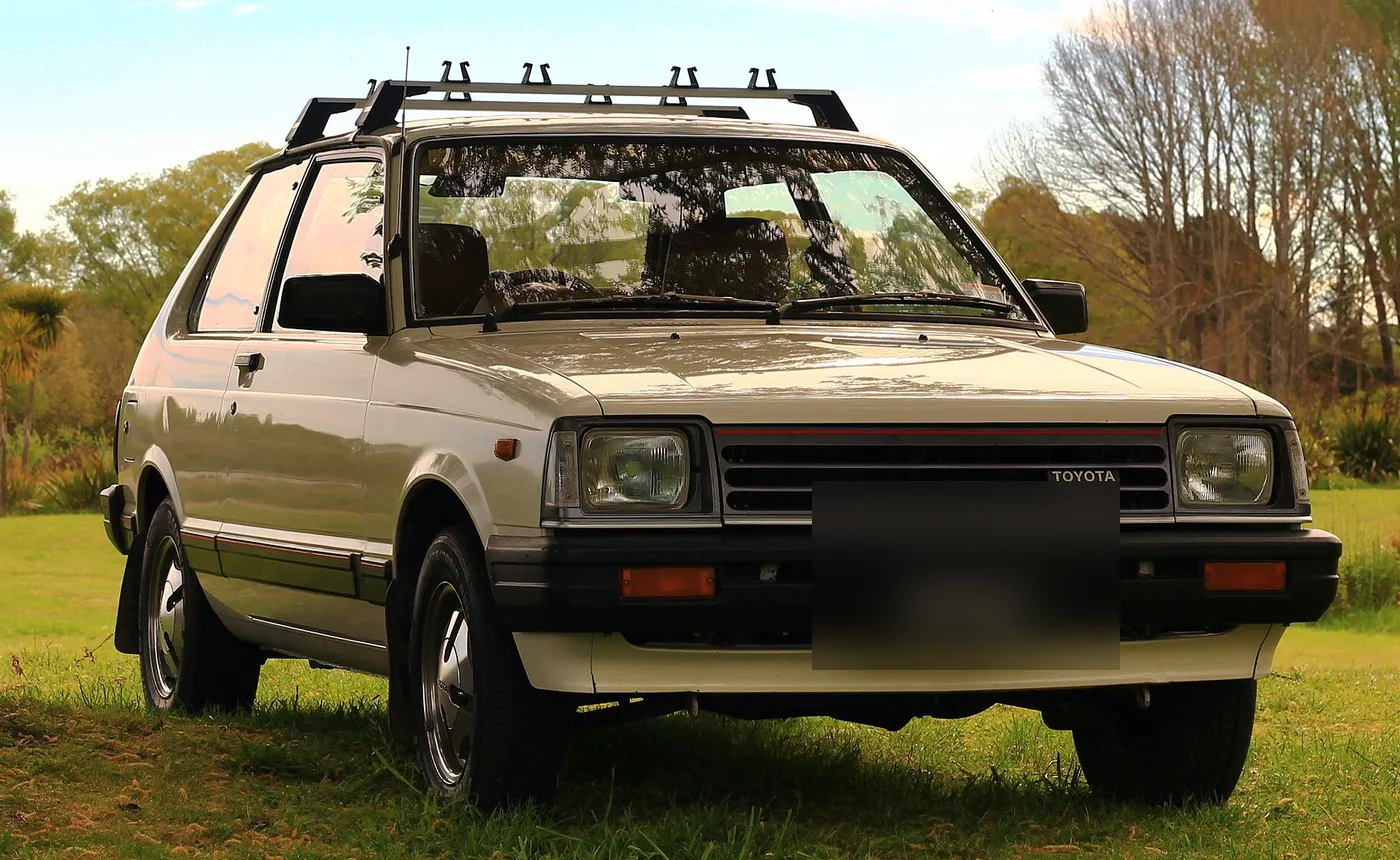
In the late 1970s, a Japanese family buying its first new car was making a decision shaped by two oil shocks and some of the strictest exhaust rules in the world. Petrol was expensive, cities were crowded, and the domestic industry was learning to build small cars that were clean, cheap and durable. Toyota's answer in 1978 was the second-generation Starlet, the P60, and the car most people mean when they say KP61.
It looked like sensible transport: a tidy, square hatchback with big windows and thin pillars. Underneath was something old-fashioned. While rivals were moving to front-wheel drive, the Starlet kept its engine in the front and drove the rear wheels through a live axle. That choice, made for cost and simplicity, is the reason enthusiasts in Japan still chase these cars more than four decades later.
The specs
| Years built | 1978–1984 |
|---|---|
| Engine | 1.3-litre 4K four-cylinder, carburettor; fuel injection on later sporting versions |
| Power | Modest, well under 100 PS in standard form |
| Gearbox | Four or five-speed manual |
| Drive | Front engine, rear-wheel drive |
| Body styles | Three-door and five-door hatchback, van |
| Rear suspension | Live axle on coil springs |
Why it was built
The Starlet name had first appeared on a version of the Publica, Toyota's original people's car. With the P60, the Starlet became a model in its own right, sitting below the Corolla and aimed at buyers who wanted something smaller and cheaper to run. Japan's 1978 emissions standards were demanding, and Toyota's small-capacity K-series engines were adapted to meet them while staying simple enough for any dealer workshop to maintain.
The result was a car that did its job well and sold strongly at home and abroad, including in Ireland, where Starlets of this era were a familiar sight in the early 1980s. Few survived the salt, the damp and the scrappage of the decades that followed.
Design and engineering
The KP61 uses the 1.3-litre 4K engine, a pushrod four-cylinder with a reputation for being nearly impossible to kill. It is not powerful. What matters is how little the car weighs, so the engine never feels strained. Front suspension is by MacPherson struts, and the rear axle is located by links and coil springs rather than the leaf springs found on many cheap cars of the period. That gives the Starlet a more settled ride and more predictable handling than its price suggested.
Later in the run, Toyota added a sportier fuel-injected version, and the shape was tidied with a facelift that brought square headlamps. The cabin is plain and upright, with simple dials, thin seats and a view out that modern cars cannot match.
The KP61 was the last of the line to use rear-wheel drive. Its 1984 replacement, the EP71, moved the engine sideways and drove the front wheels, and the Starlet never went back.
How it drives today
On a quiet road, a good KP61 feels light and alive in a way that is hard to describe to anyone who has only driven modern cars. The steering is unassisted and talkative. The car leans, but it tells you exactly what it is doing, and the rear can be coaxed round on a wet roundabout with a lift of the throttle. That balance is why the KP61 became a favourite for grassroots motorsport in Japan, from one-make races to gymkhana and small-scale drifting.
It is slow by any modern standard. Motorway driving on the M50 is possible but noisy, and the brakes need planning rather than trust. On a winding back road in Kerry or a boreen in Mayo, at sensible speeds, it is the kind of car that makes a short drive feel like an event.
Variants worth knowing
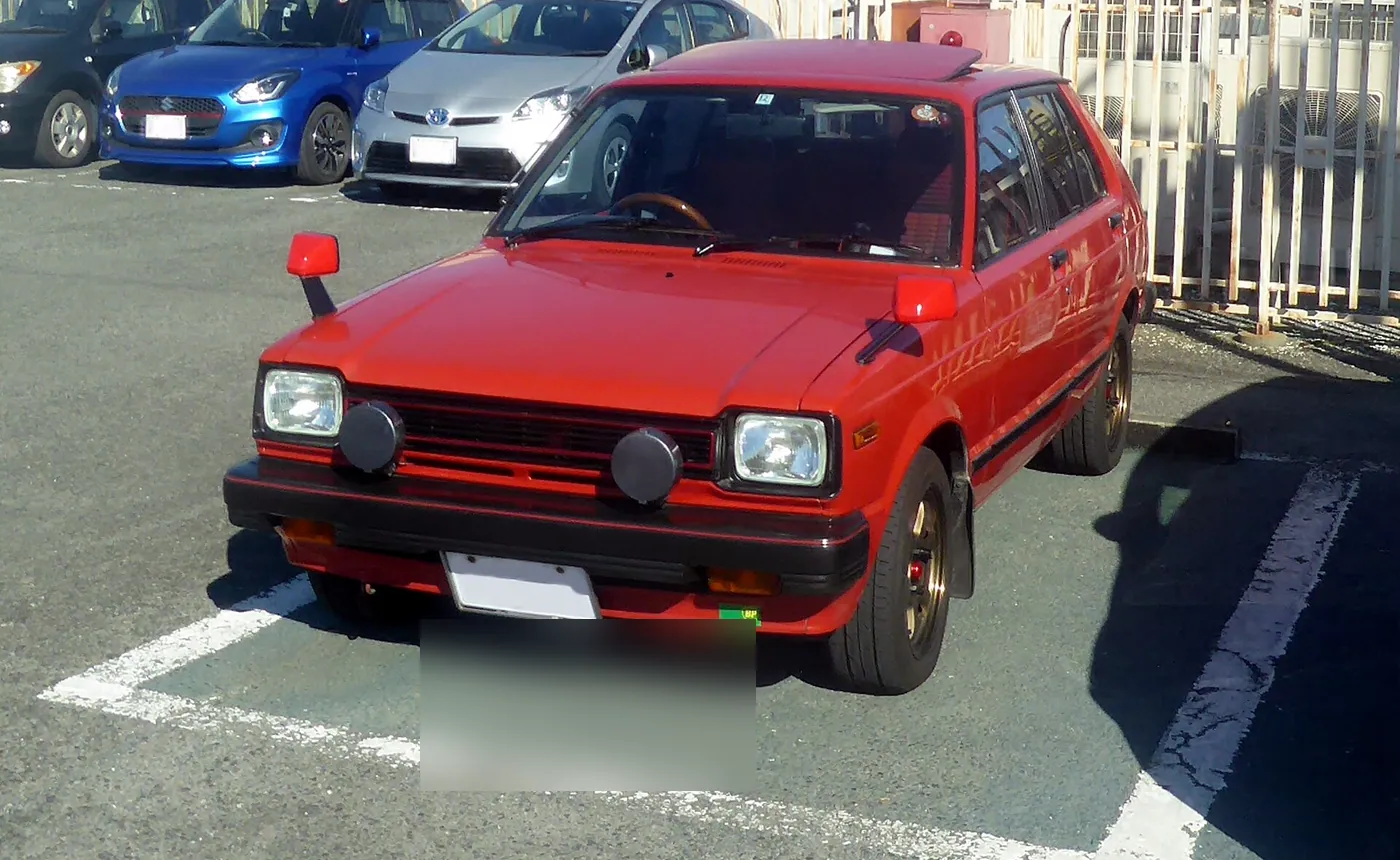
Most cars on the market are three-door hatchbacks, which are also the most wanted. Five-doors exist and are often more original, because fewer were used hard. The van version was common in Japan as small business transport. The fuel-injected sporting model is the one collectors look for first. Early cars with round headlamps and later square-lamp cars have their own followings, and neither is clearly better: choose the one you like looking at.
What to check when buying in Japan
Rust is the first and last question. Check the sills, the floor pans, the rear wheel arches, the bottom of the tailgate, the lower doors and the area around the front and rear screens. Look under the carpets if photographs allow. Cars from snowy northern prefectures are more likely to have structural corrosion.
Many surviving KP61s have been modified, some heavily. Engine swaps are common, as are lowered suspension, wide wheels, stripped interiors and roll cages. A tasteful period modification may be fine, but a heavily cut car is a project, not a classic. Ask whether the engine is the original 4K or a later swap, because the registration documents should match what is under the bonnet.
Odometers on cars this old are not reliable evidence of anything. Judge the car by wear on the pedals, seats and steering wheel, and by service history if any exists. Mechanical parts for the 4K engine remain fairly easy to source, but trim, glass and body panels are much harder, so a complete car is worth more than a cheap one missing pieces. Make sure the Japanese export certificate matches the chassis number stamped on the car.
Should you import one?
If you want a small, simple classic that is genuinely fun on Irish roads, the KP61 is an unusual and rewarding choice. It is easy to work on, light on fuel and quick to put a grin on your face. It is not a car for daily motorway commuting, and it has none of the safety equipment of a modern hatchback, so most owners treat it as a weekend car.
Cars over 30 years old can qualify for Ireland's vintage treatment, and every KP61 is well past that mark. Budget for rust repair even on a good-looking car, buy the most complete and least modified example you can find, and expect to become the person at the petrol station who answers questions about it.
Frequently asked questions
Is the Toyota Starlet KP61 rear-wheel drive?
Yes. It was the last Starlet with a front engine and rear-wheel drive; its successor moved to front-wheel drive in 1984.
What engine does the KP61 use?
The 1.3-litre 4K pushrod four-cylinder, known for its durability, with fuel injection on later sporting versions.
Are parts easy to find?
Engine and mechanical parts are reasonably available, but body panels, glass and interior trim are scarce, so buy a complete car.
Does the KP61 qualify as a vintage car in Ireland?
Every KP61 is more than 30 years old, so it can qualify for Ireland's vintage treatment if it meets the conditions.
More Japanese classics
- Toyota Estima (first generation): the egg-shaped people carrier with its engine under the floor
- Toyota Sera: the glass-roofed coupe with butterfly doors that only the bubble era could have built
- Toyota Starlet GT Turbo (EP82): Bubble-Era Japan's Pocket Rocket With a Turbo Bulge
- Toyota Mega Cruiser: The Military Truck Toyota Sold to Ordinary Japanese Buyers
- Toyota Land Cruiser Prado (J70): The Coil-Sprung Land Cruiser That Started the Prado Line
- All 90 Japanese classics you can import
Photo credits
- Photo: 83kp61 / Wikimedia Commons, CC BY-SA 4.0
- Photo: Tokumeigakarinoaoshima / Wikimedia Commons, CC BY-SA 4.0