
Toyota Estima (first generation): the egg-shaped people carrier with its engine under the floor
Toyota laid a four-cylinder engine almost flat beneath the cabin to create a futuristic people carrier. Known abroad as the Previa, it remains a fascinating classic.
By the Japan to Ireland editors · · 4 min read
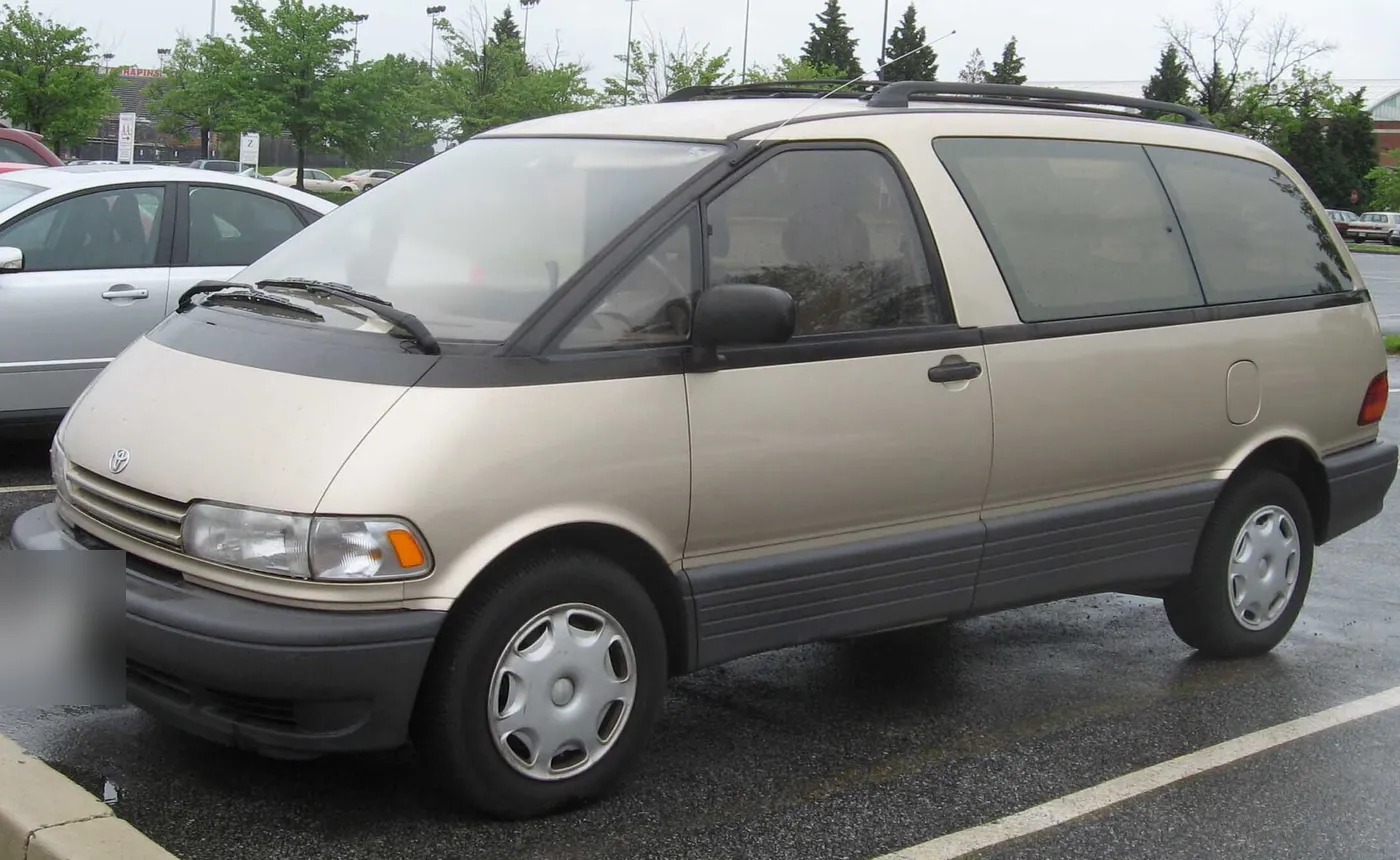
In 1990 Toyota launched a people carrier that looked like nothing else on the road. The Estima had a smooth, egg-shaped body, a sweeping windscreen and a flat floor, and its engine was hidden beneath the cabin, tilted almost flat. To many observers, it seemed more like a concept car than a family vehicle.
The Estima was sold abroad as the Previa, and it became a familiar sight in Ireland and Britain in the 1990s. In Japan, the first generation remained in production until 2000, with narrower versions and a supercharged engine added along the way. Today it is a fascinating classic, admired for its engineering and its unusual design.
The specs
| Years built | 1990–2000 |
|---|---|
| Engine | 2TZ-FE 2.4-litre four-cylinder petrol; supercharged 2TZ-FZE from 1994 |
| Gearbox | Four-speed automatic on most Japanese cars |
| Drive | Rear-wheel drive or four-wheel drive |
| Body style | Five-door people carrier |
| Engine layout | Mid-mounted under the floor, tilted at about 75 degrees |
| Known abroad as | Toyota Previa |
Why it was built
The late 1980s were a time of experimentation in the Japanese car industry. Buyers wanted vehicles that were spacious, comfortable and stylish, and the people carrier was beginning to emerge as a new type of family car. Toyota wanted to create something that offered more space and refinement than traditional vans.
Japan's own van-based people carriers of the time placed the engine beneath the front seats, which made them noisy and cramped up front. Toyota wanted to break with that, and the Estima was its bold answer.
The solution was to mount the engine under the floor, between the axles. This allowed a flat floor, a spacious cabin and good weight distribution. It also gave the Estima its unusual, smooth shape, as there was no need for a conventional engine bay at the front.
Design and engineering
The Estima's engine was the 2TZ-FE 2.4-litre four-cylinder, mounted under the floor and tilted at about 75 degrees. To make this layout work, many of the engine's ancillaries, such as the alternator and air conditioning compressor, were driven by a shaft at the front of the vehicle. From 1994, a supercharged 2TZ-FZE version offered more power.
The Estima was offered with rear-wheel drive or four-wheel drive. Inside, there was space for up to eight people, with flexible seating and large windows. Toyota also introduced narrower versions, the Estima Emina and Estima Lucida, designed to fit Japan's smaller vehicle size class.
How it drives today
The Estima drives smoothly and quietly, with a comfortable ride and stable handling. The engine is smooth but can feel underpowered when the vehicle is fully loaded. The supercharged version offers more performance and is better suited to motorway driving. The steering is light, and visibility is excellent thanks to the large windows.
On Irish roads, the Estima is comfortable for long journeys and practical for families. Its size makes it easy to manoeuvre in town, although it can feel large on narrow country roads.
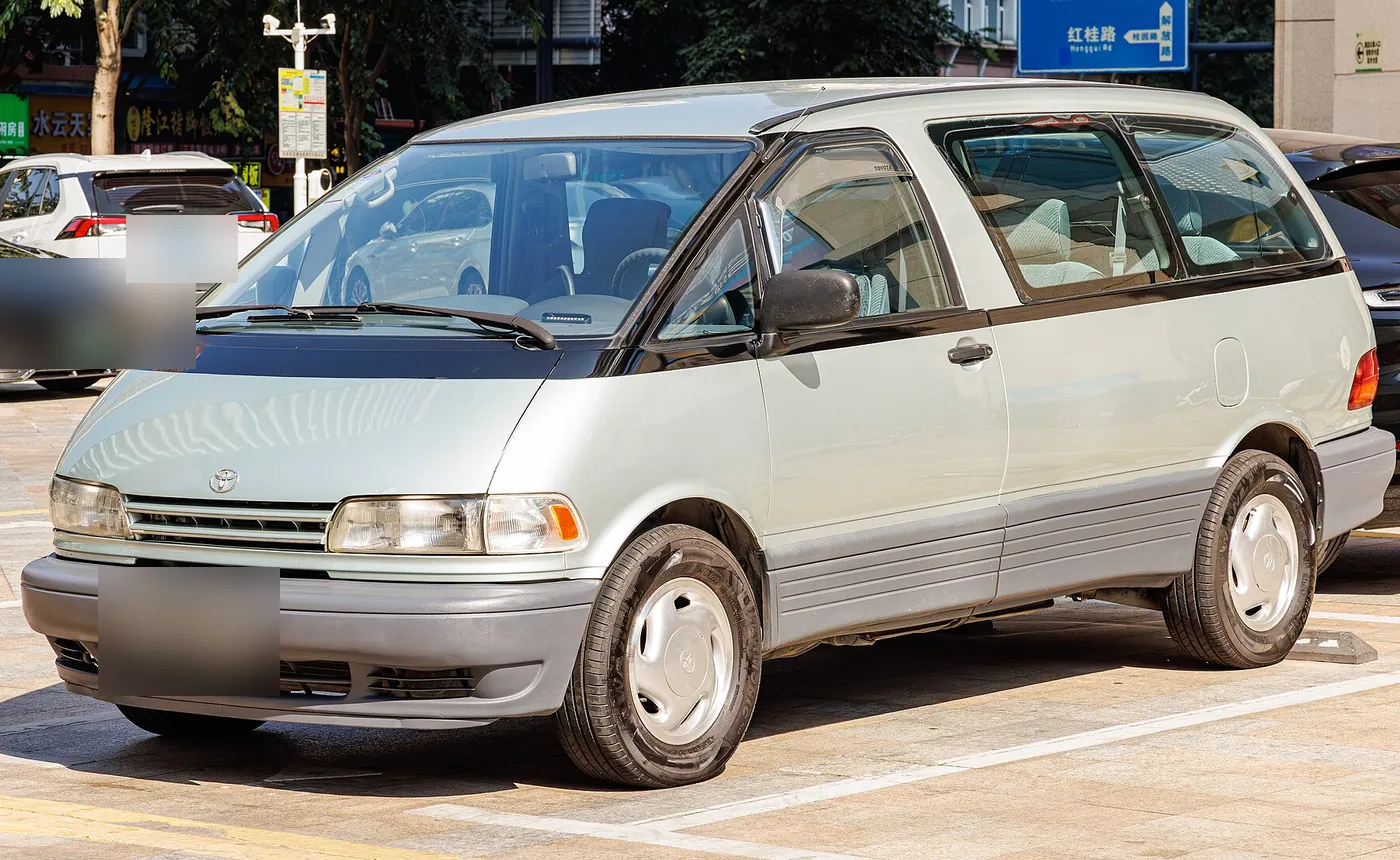
The driving position is one of the Estima's great pleasures. You sit high and well forward, with the front wheels behind you and a vast windscreen ahead, which gives an unusually commanding view of the road. With the engine under the floor, there is no long bonnet to judge, and the cabin feels far roomier than the outside dimensions suggest. Some noise and heat from the engine does reach the cabin, and servicing takes longer than on a conventional van because access is tight.
The variants worth knowing
The supercharged 2TZ-FZE versions are the most sought after for their extra performance. Four-wheel-drive versions are useful for wet or snowy conditions. The narrower Emina and Lucida versions are distinctive and offer a slightly different driving experience. Later versions received minor updates, including improved equipment and styling changes.
What to check when buying in Japan
Rust can be a problem, particularly on the sills, rear wheel arches and the underside. Check the floor and suspension mounting points carefully. Inspect the engine for oil leaks, as access is limited and leaks can go unnoticed. The engine is reached through panels beneath the front seats, so check that these are intact.
The ancillary drive shaft should be checked for noise and wear. On supercharged versions, check the supercharger for noise and leaks. Overheating can be a problem if the cooling system is neglected, so check the coolant level and condition, and look for signs of overheating.
Many Estimas have been used as family vehicles, so check the interior for wear and damage. Ensure that the seats and sliding door operate smoothly. Mileage can be difficult to verify, so look for consistent wear on the interior and pedals, and check service records where available. Ensure that the chassis number matches the export paperwork.
Should you import one?
The first-generation Estima suits buyers who want a practical, characterful classic that can still be used as a family vehicle. It is ideal for those who appreciate unusual engineering and design.
In Ireland, an Estima is comfortable for long journeys and practical for families. Parts availability can be a challenge for some specific components, so expect to source some items from Japan. Cars over 30 years old can qualify for Ireland's vintage treatment, which covers the earliest Estimas. Choose a well-maintained example, and it will reward you with a unique and practical classic.
Frequently asked questions
Is the Estima the same as the Previa?
Yes. The first-generation Estima was sold in many export markets as the Toyota Previa.
Where is the engine?
It is mounted under the floor between the axles, tilted at about 75 degrees.
Is there a supercharged version?
Yes. A supercharged 2TZ-FZE engine was offered from 1994.
Is the Estima right-hand drive?
Japanese-market vehicles are right-hand drive, which suits Irish roads.
More Japanese classics
- Toyota Sera: the glass-roofed coupe with butterfly doors that only the bubble era could have built
- Toyota Mark II (X70): the white hardtop that carried Japan's salarymen into the boom years
- Toyota Starlet (KP61): The Last Rear-Drive Starlet and Japan's Pocket Sports Car
- Toyota Starlet GT Turbo (EP82): Bubble-Era Japan's Pocket Rocket With a Turbo Bulge
- Toyota Mega Cruiser: The Military Truck Toyota Sold to Ordinary Japanese Buyers
- All 90 Japanese classics you can import
Photo credits
- Photo: IFCAR / Wikimedia Commons, Public domain
- Photo: Dinkun Chen / Wikimedia Commons, CC BY-SA 4.0