
Toyota Sera: the glass-roofed coupe with butterfly doors that only the bubble era could have built
A small front-wheel-drive coupe with doors that swing up and forward and a roof made largely of glass, the Sera is one of Japan's most charming oddities.
By the Japan to Ireland editors · · 4 min read
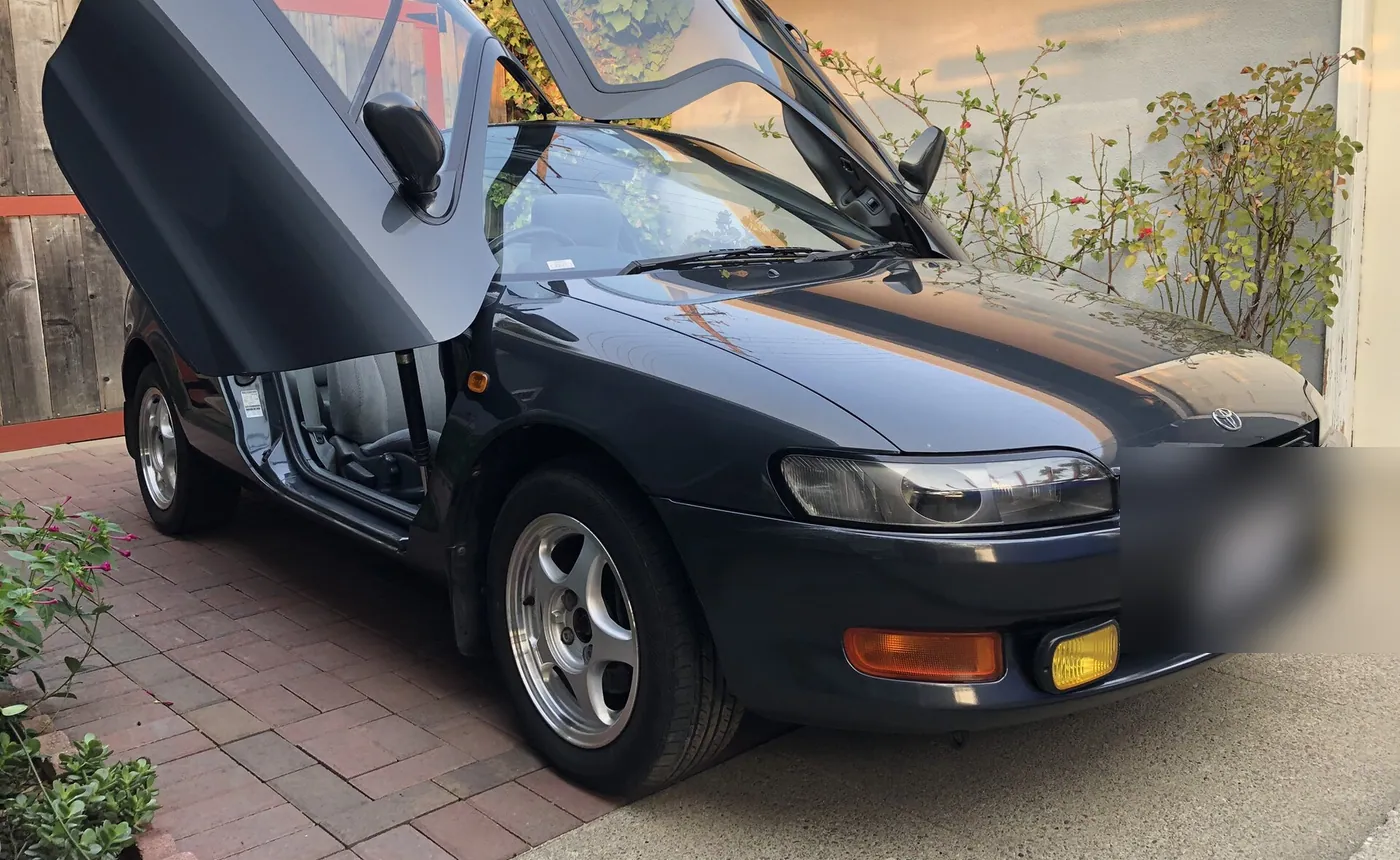
Few cars capture the optimism of Japan's bubble era as vividly as the Toyota Sera. Launched in 1990, it was a small, front-wheel-drive coupe based on humble underpinnings, but it had doors that swung up and forward like a supercar and a roof made largely of glass. It looked like something from the future, and it was sold to the public at a time when Japanese manufacturers felt they could try almost anything.
The Sera was never a performance car. It was a design statement, built to make people smile. Today it is a cult classic, prized for its originality and its unmistakable silhouette.
The specs
| Years built | 1990–1995 |
|---|---|
| Engine | 5E-FHE 1.5-litre four-cylinder petrol |
| Gearbox | Five-speed manual or four-speed automatic |
| Drive | Front-wheel drive |
| Body style | Three-door coupe with butterfly doors |
| Concept | Previewed by the AXV-II concept car |
| Steering | Right-hand drive |
Why it was built
The late 1980s were a time of extraordinary confidence in Japan. Land and share prices were soaring, consumers were spending freely, and car makers were producing an array of unusual and ambitious models. The Sera grew out of a concept car shown at the Tokyo Motor Show, the AXV-II, which explored the idea of a glass canopy and butterfly doors on a small car.
Toyota decided to put the concept into production with relatively few changes. The result was a car that combined everyday practicality with an extraordinary design.
That decision says a great deal about the moment. A car like the Sera would have been hard to justify in a cautious market, but in the confident Japan of 1990 a major manufacturer could build a small coupe chiefly for the pleasure of its design. By the time sales ended in the mid-1990s, the economy had cooled and that spirit of experiment was fading across the industry.
Design and engineering
The Sera's defining feature is its butterfly doors, which are hinged at the front and the top and swing up and forward. Combined with the glass canopy, they give the car a striking appearance and an airy, open cabin. The doors are supported by gas struts and are easier to use in tight spaces than many people expect, because they swing out only a short distance.
Underneath, the Sera was based on Toyota's small-car components. The engine was the 5E-FHE 1.5-litre four-cylinder, a smooth and economical unit. It drove the front wheels through a five-speed manual or four-speed automatic gearbox.
Inside, the cabin is simple but well designed, with a driver-focused dashboard and seats for four, although the rear is best suited to children or short journeys. An elaborate optional sound system was offered, adding to the car's sense of occasion.
How it drives today
The Sera drives like a light, easy-going small car. The 1.5-litre engine is willing and smooth, and the car is nimble around town. The steering is light, the ride is comfortable and the handling is safe and predictable. It is not fast, but it is fun.
On a sunny day, the glass roof makes the cabin bright and open, giving a sense of space unusual in a small car. On a hot day, however, the cabin can become very warm, so working air conditioning is important. In Ireland's climate, that is less of a concern, and the glass roof offers excellent visibility on grey days.
The variants worth knowing
There were few major variants. Automatic and manual versions are both available, with the manual offering a more engaging drive. Cars with the optional sound system are more desirable to collectors. Later cars received minor updates, but the basic design remained the same throughout production.
What to check when buying in Japan
Rust is the main concern. Check the sills, rear wheel arches, floor and boot area, as well as the areas around the door hinges and the base of the windscreen. The glass panels and seals should be inspected carefully for leaks, cracks and damage, as replacement glass is difficult to source.
The gas struts that support the doors can weaken with age. Check that the doors open and close smoothly and stay open without assistance. The door seals should be intact to prevent leaks.
Mechanically, the 5E-FHE engine is generally reliable, but check for oil leaks, smoke and signs of overheating. Check the gearbox and clutch for wear. Many Seras have been modified with aftermarket wheels and body kits, so look for cars that are close to standard if originality matters.
Mileage can be difficult to verify, so look for consistent wear on the interior and pedals. Ensure that the chassis number matches the export paperwork.
Should you import one?
The Sera is ideal for buyers who want a distinctive, characterful classic that is easy to drive and economical to run. It suits enthusiasts who appreciate Japanese design and want something unusual.
In Ireland, a Sera will attract attention wherever it goes, and its small engine makes it cheap to run. Parts for the glass and doors can be difficult to find, so careful maintenance is essential. Cars over 30 years old can qualify for Ireland's vintage treatment, which covers the earliest Seras. Choose a well-maintained example with intact glass and working doors, and it will reward you with years of smiles.
Frequently asked questions
Does the Sera have gull-wing doors?
It has butterfly doors, hinged at the front and top, which swing up and forward.
What engine does the Sera use?
A 5E-FHE 1.5-litre four-cylinder petrol engine driving the front wheels.
Is replacement glass available?
Replacement glass is difficult to source, so check the glass carefully before buying.
Was the Sera sold outside Japan?
It was designed for the Japanese market, and Japanese-market cars are right-hand drive.
More Japanese classics
- Toyota Mark II (X70): the white hardtop that carried Japan's salarymen into the boom years
- Toyota Chaser, Mark II and Cresta (X90): three saloons, one twin-turbo heart and a cult that never faded
- Toyota Estima (first generation): the egg-shaped people carrier with its engine under the floor
- Toyota Starlet (KP61): The Last Rear-Drive Starlet and Japan's Pocket Sports Car
- Toyota Starlet GT Turbo (EP82): Bubble-Era Japan's Pocket Rocket With a Turbo Bulge
- All 90 Japanese classics you can import
Photo credits
- Photo: CaliforniaLegal / Wikimedia Commons, CC BY-SA 4.0