
Nissan Teana vs Toyota Premio: Two Quiet Japanese Saloons for Drivers Who Hate Fuss
The Teana was Nissan's roomy, soft-riding mid-size saloon. The Premio is Toyota's compact saloon for people who want a car that simply works. Neither shouts. Both deserve a look.
By the Japan to Ireland editors · · 4 min read
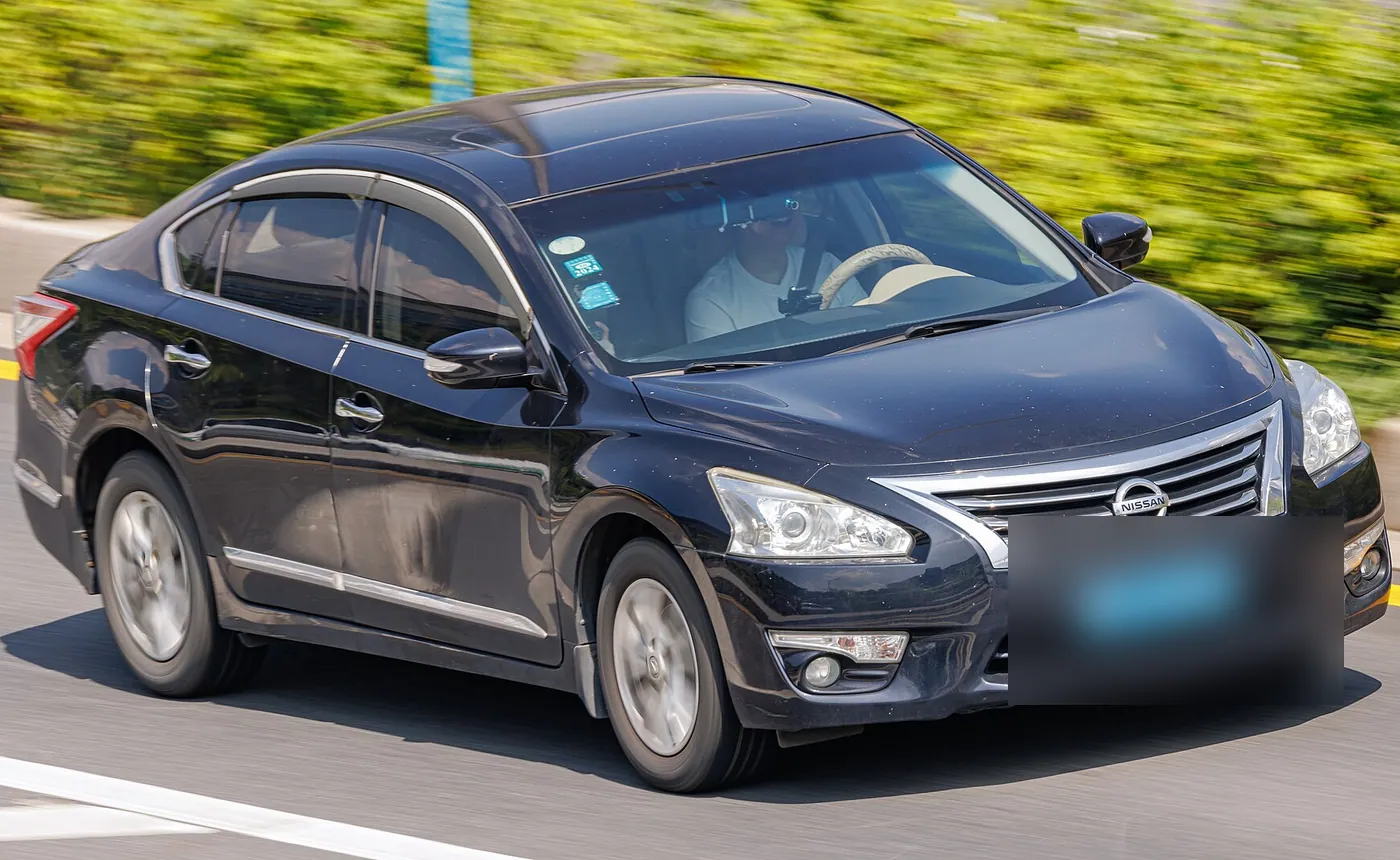
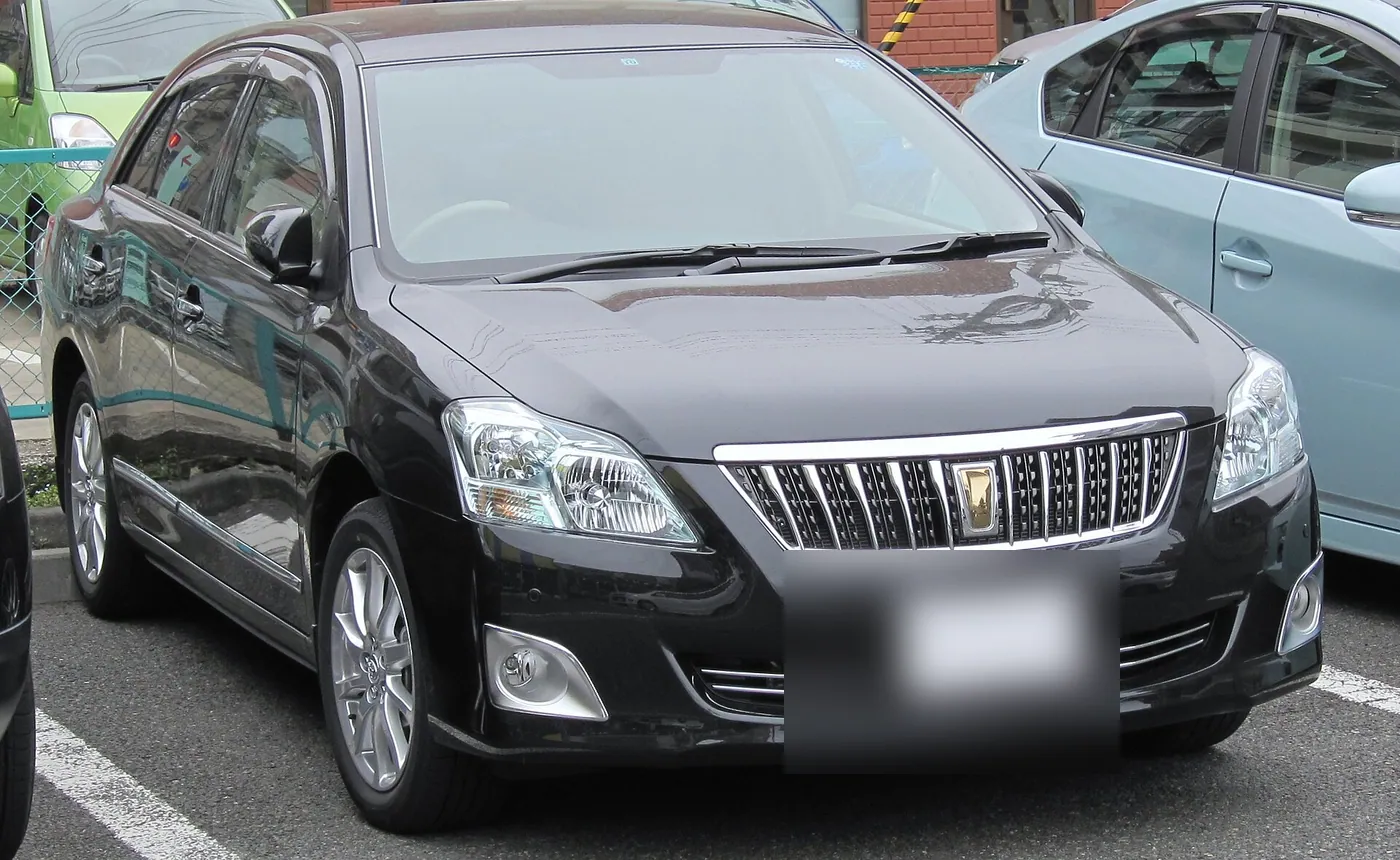
In short: In the three months to 19 September 2026, 890 Nissan Teanas sold at Japanese auctions at a median of €987, against 2,366 Toyota Premios at €3,450. The Nissan Teana is the cheaper buy by about €2,463 at auction, before shipping, VAT, VRT and fees. Our verdict is at the end of this article.
Japan has always built a certain kind of car that never appears on magazine covers. It is a saloon, it is beige or silver, and it is owned by someone who wants to drive to work, to the shops and to a relative's house at the weekend without thinking about the car at all. The Nissan Teana and the Toyota Premio are two of the best examples of the breed, and at Japanese auctions they remain plentiful and inexpensive.
They are not direct rivals in size. The Teana is a larger mid-size saloon, while the Premio, with its twin the Allion, was built to fit Japan's 5-number size class, which limits width and length. But they are cross-shopped for the same reason: each offers a comfortable, reliable, four-door car for little money, and Irish buyers who still prefer a saloon to a crossover have few better options.
The specs
| Nissan Teana | Toyota Premio | |
|---|---|---|
| Generation most imported | J32, 2008–2014; J33, 2014–2020 | T260, 2007–2021 |
| Engine(s) | 2.5 V6 and 3.5 V6 (J32); 2.5 four-cylinder (J32 4WD and J33) | 1.5, 1.8 and early 2.0 petrol |
| Gearbox | CVT | CVT |
| Drive | Front, some 4WD | Front, or 4WD |
| Seats | 5 | 5 |
| Size class | Larger mid-size saloon | Japanese 5-number compact saloon |
| Twin | None | Toyota Allion |
| Import duty to Ireland | 0% possible (Japan-built, with proof of origin) | 0% possible (Japan-built, with proof of origin) |
History and positioning
The Teana arrived in 2003 and was positioned as a relaxed, lounge-like saloon, with an emphasis on rear-seat comfort. The second-generation J32, sold from 2008 to 2014, offered 2.5 and 3.5 V6 engines with front-wheel drive, and a 2.5 four-cylinder with four-wheel drive. The J33 that followed in 2014 simplified things with a 2.5-litre four-cylinder only, front-wheel drive and a CVT.
The T260 Premio launched in 2007 and stayed on sale until 2021, a fourteen-year run with several facelifts. It used 1.5 and 1.8 petrol engines throughout, plus a 2.0 in its earlier years, with CVTs and optional four-wheel drive. It was a favourite of older Japanese drivers and of companies that bought cars by the dozen.
How they drive
The Teana is soft and relaxed. Its suspension is tuned for comfort rather than control, and on a long N-road it floats over undulations that would jostle a firmer car. The V6 versions are smooth and strong, the four-cylinder adequate and quieter than you might expect. Push it into a tight bend and it leans and understeers, but that is not what it was made for.
The Premio is lighter, smaller and more agile. Its steering is light, its turning circle tight, and it slots into a city parking space with ease. The 1.8 is the better engine for Irish use, with enough pull for motorway merging and hills. The 1.5 is economical but needs working on a long climb with a full car.
Inside and practicality
The Teana's cabin is its strongest argument. The seats are broad and soft, rear legroom is generous by any standard, and the materials are a step above most mid-size Japanese saloons of the period. The boot is large and deep.
The Premio is smaller inside but cleverly packaged. Four adults fit comfortably, the boot is a good size for the car's dimensions and the cabin, while plain, is solidly built. Later cars received better safety equipment, including Toyota's automatic emergency braking on many grades from the 2016 facelift onward.
Running costs and reliability
Both are mechanically simple cars. The Premio's engines are among Toyota's most durable, parts are cheap and almost any garage can service one. Fuel consumption is modest, particularly with the 1.5. The Teana is thirstier, especially with the 3.5 V6, and its larger engines sit in higher CO2 bands for motor tax.
The weak point to watch is the gearbox. Both cars use CVTs that need regular fluid changes, and Nissan CVTs of this era have a more mixed record than Toyota's. A Teana with documented fluid changes is worth paying more for.
What to check at a Japanese auction
Most of these cars are now between five and fifteen years old. Look for grade 3.5 or 4 cars with low mileage and an interior score of B or better. Read the auction sheet for scratches, dents and seat wear, and note any comments about the gearbox on the inspector's drive.
On cars from snowy northern prefectures, especially four-wheel-drive versions, the underbody can show surface corrosion, so look for rust notes. On a Teana, listen for any whine or judder from the CVT. On a Premio, check that the reversing camera and navigation work, since replacements can be fiddly.
The verdict
Buy the Nissan Teana if comfort and rear space matter most, if you cover long distances at a gentle pace and if you want a bigger car for the money. Choose a later J33 or a well-maintained J32 V6 with a documented gearbox history.
Buy the Toyota Premio if you want the more economical, more reliable and easier car to live with day to day. It is smaller and plainer, but for a driver who wants a saloon that will start every morning for a decade, it is the safer choice.
Frequently asked questions
Is the Premio the same as the Allion?
They are twins, sharing engines and platforms with different styling and trim.
Does the Teana have a V6?
The J32 Teana offered 2.5 and 3.5 V6 engines. The later J33 used a 2.5-litre four-cylinder only.
Which is more economical?
The Premio, especially with the 1.5-litre engine.
What should I check on the gearbox?
Both use CVTs. Look for evidence of regular fluid changes, particularly on the Teana.
Keep reading
- Toyota Celsior vs Nissan Cima: Japan's V8 Executive Saloons, Twenty Years On
- Lexus LS vs Mercedes-Benz S-Class: The Flagship Duel, Bought From Japan
- Toyota Allion vs Nissan Bluebird Sylphy: The Quiet Saloons Japan Kept for Itself
- Honda S660 vs Daihatsu Copen: Two Tiny Roadsters, One Big Difference in Philosophy
- Mitsubishi Eclipse Cross vs Toyota C-HR: Two Coupé-Crossovers With Very Different Engineering Under the Skin
Photo credits
- Nissan Teana: Photo: Dinkun Chen / Wikimedia Commons, CC BY-SA 4.0
- Toyota Premio: Photo: TTTNIS / Wikimedia Commons, CC0