
Lexus LS vs Mercedes-Benz S-Class: The Flagship Duel, Bought From Japan
For more than thirty years Lexus has measured its biggest saloon against the Mercedes. Used from Japan, both are remarkable value, but they ask very different things of their owners.
By the Japan to Ireland editors · · 4 min read
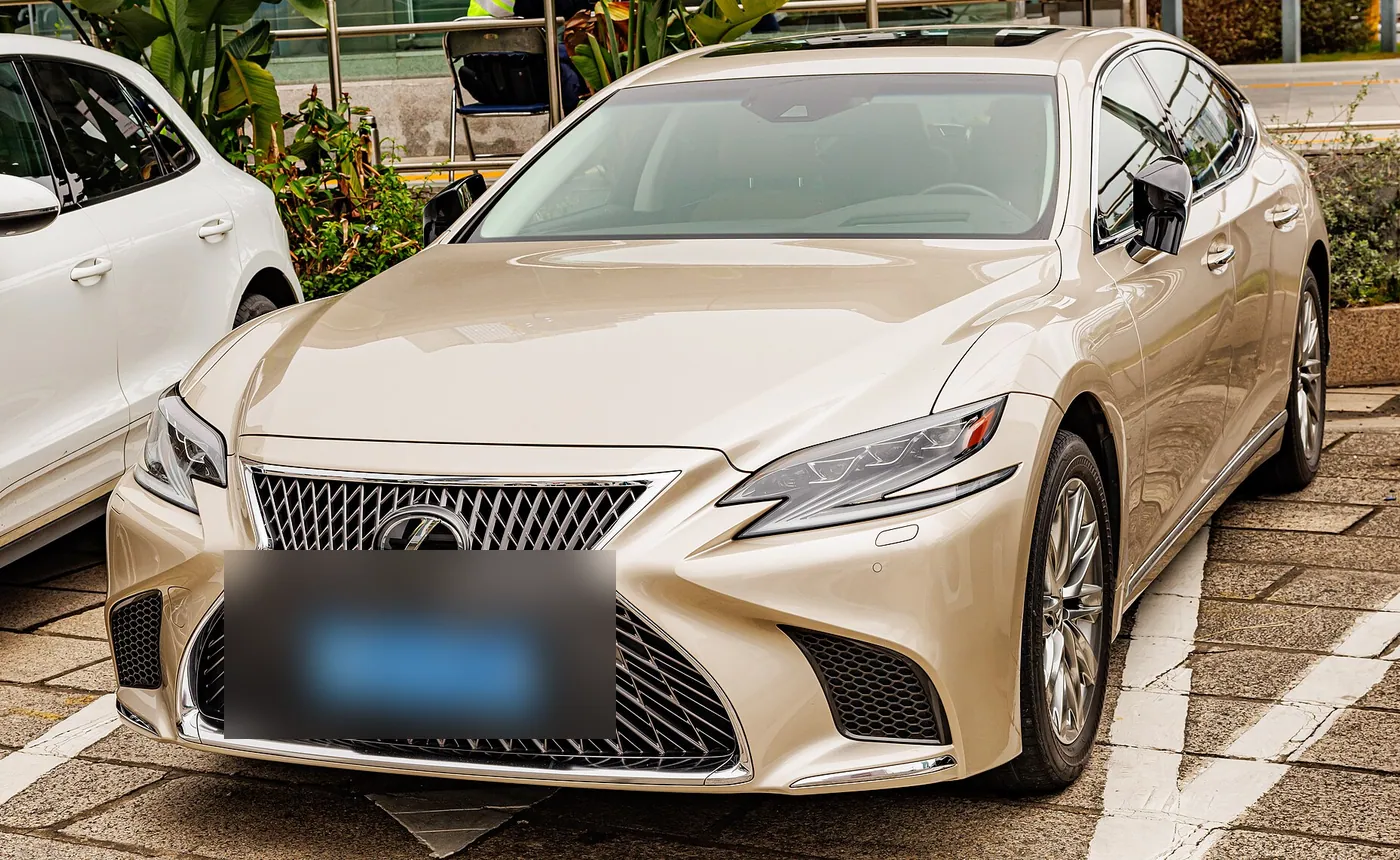
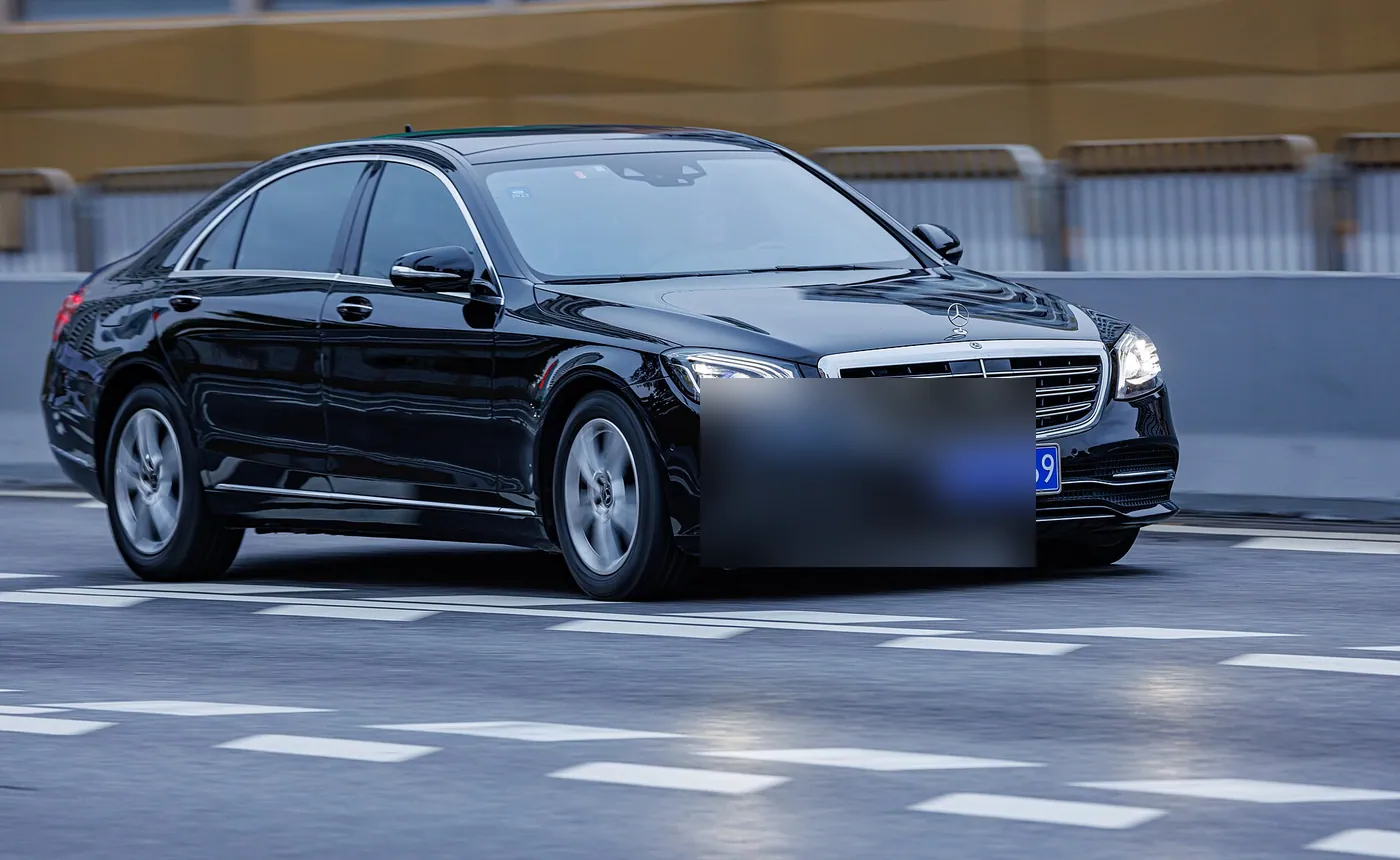
In short: In the three months to 19 September 2026, 540 Lexus LSs sold at Japanese auctions at a median of €21,543, against 401 Mercedes-Benz S-Classs at €6,797. The Mercedes-Benz S-Class is the cheaper buy by about €14,746 at auction, before shipping, VAT, VRT and fees. Our verdict is at the end of this article.
When the first Lexus LS went on sale in 1989, its target was never in doubt. Toyota had studied the Mercedes-Benz S-Class in forensic detail and set out to build a quieter, smoother, more reliable car. The two have been circling each other ever since, and in Japan both have sold to the same sort of buyer: a company chairman, a doctor, a family that wants the best and usually sells it after a few years, every service stamped.
The cars most commonly found at Japanese auctions today are the fifth-generation LS, known as the XF50 and sold from 2017, and the W222 S-Class, sold from 2013 to 2020. The previous LS460 and LS600h, built from 2006 to 2017, are also plentiful and worth considering on a smaller budget.
For an Irish buyer these cars represent an extraordinary amount of engineering for the money. They also represent a responsibility. A flagship saloon is cheap to buy used for a reason, and the difference between a good one and a bad one is measured in repair bills.
The specs
| Lexus LS | Mercedes-Benz S-Class | |
|---|---|---|
| Generation most imported | 5th gen (XF50), 2017 on | W222, 2013–2020 |
| Engine(s) | 3.5 twin-turbo V6 (LS500); 3.5 V6 hybrid (LS500h) | Mainly V6 and straight-six petrol and hybrid; some V8 |
| Gearbox | 10-speed automatic (LS500); multi-stage hybrid (LS500h) | 7-speed, later 9-speed automatic |
| Drive | Rear or AWD | Rear, some 4Matic |
| Seats | 5 | 5 |
| Length | 5,235 mm | 5,125 mm (standard); 5,255 mm (long) |
| Suspension | Air suspension on many grades | Airmatic air suspension |
| Import duty to Ireland | 0% possible (Japan-built, with proof of origin) | 10% (not built in Japan) |
Two philosophies
The XF50 LS was a clean break. It moved to a new rear-drive platform, replaced the long-serving V8 with a 3.5-litre twin-turbo V6 in the LS500, and offered a multi-stage hybrid in the LS500h that combines a V6 with an electric motor and a stepped gearbox. Its low fastback shape was a deliberate move away from the stately look of earlier cars.
The W222 is more conventional and more formal. Japanese buyers had a wide range of engines, with V6 and, after the 2017 facelift, straight-six petrol and hybrid models the most common, alongside V8 versions. Both standard and long-wheelbase cars were sold, and the long car is the one that most suits the S-Class image.
How they drive
The LS is quiet and composed, and handles with more precision than its size suggests. The twin-turbo V6 is strong and the ten-speed automatic smooth, while the hybrid is refined and gentle in traffic. On larger wheels, particularly in F Sport form, the ride can feel firm over a broken Irish surface.
The S-Class is still the benchmark for ride comfort. Its Airmatic suspension floats over joints and potholes, the cabin is supremely quiet and the engines are smooth. It feels heavier and more ceremonial than the LS. On a long motorway run from Dublin to Galway, very little on the road is more restful.
Inside and practicality
The LS cabin is the most beautiful Lexus has produced, with pleated door trims, hand-finished details and superb seats. Its weakness is the infotainment system, controlled by a touchpad, which is less intuitive than it should be. Rear legroom is good, but the sloping roofline trims headroom.
The S-Class is more spacious and upright, with twin screens stretching across the dashboard. The long-wheelbase car gives rear passengers limousine-like room. Both have large boots, though the LS500h gives up some space to its battery.
Running costs and reliability
The LS has a strong reliability record, and the hybrid system, while complex, is built on Toyota's long experience. The S-Class has far more electronics, and its air suspension, while superb when healthy, can be expensive to repair as it ages. Mercedes parts and labour are dearer.
Both cars sit in high CO2 bands, with the hybrids lower than the petrol-only versions, and fuel costs on V8 models are substantial. An independent specialist is the sensible route for either car, and for the Mercedes it is almost essential.
What to check at a Japanese auction
Buy only grade 4 or higher cars with full service records. Read the auction sheet for notes on air suspension, warning lights and any repaired panels, and treat a car that sits low at one corner in the photographs with suspicion.
For the LS500h, ask about hybrid battery health. For an LS with light leather, check the bolsters for wear. For the S-Class, test every electronic function, check that the suspension raises and lowers correctly and look for water marks near the sunroof. Rust is rarely a concern on cars from Japan.
The verdict
Buy the Lexus LS if you want a luxury saloon with outstanding reliability, a beautiful cabin and lower running costs. The LS500h is the most sensible version for Irish roads and Irish motor tax.
Buy the Mercedes-Benz S-Class if you want the best ride and the most rear space in the class, and you are prepared to budget properly for maintenance. The long-wheelbase car is the one that truly delivers the S-Class experience.
Frequently asked questions
Which is more reliable?
The Lexus LS has the stronger reliability record. The S-Class has more complex electronics and air suspension that can be costly to repair.
Is the long-wheelbase S-Class available from Japan?
Yes. Both standard and long-wheelbase W222 S-Class models were sold in Japan.
Does the current LS have a V8?
No. The fifth-generation LS uses a twin-turbo V6 or a V6 hybrid. The previous LS460 had a V8.
Which is better for rear passengers?
The long-wheelbase S-Class offers the most rear space.
Keep reading
- Toyota Crown Crossover vs Lexus ES: The Saloon That Grew Tall and the One That Stayed Low
- Toyota Supra vs Nissan Fairlady Z: Two Old Names, Two Very Different Ideas of a Sports Car
- Toyota Celsior vs Nissan Cima: Japan's V8 Executive Saloons, Twenty Years On
- Nissan Teana vs Toyota Premio: Two Quiet Japanese Saloons for Drivers Who Hate Fuss
- Toyota 86 vs Subaru BRZ: Twins From the Same Factory, Separated by Suspension and Personality
- Importing a Lexus LS: prices and costs
Photo credits
- Lexus LS: Photo: Dinkun Chen / Wikimedia Commons, CC BY-SA 4.0
- Mercedes-Benz S-Class: Photo: Dinkun Chen / Wikimedia Commons, CC BY-SA 4.0