
Datsun Fairlady Roadster (SR311): the open two-seater that took on Britain's best
The Fairlady 2000 roadster of the late 1960s combined a light body, a five-speed gearbox and a strong two-litre engine. It is a rare, charming and very usable entry into classic Japanese motoring.
By the Japan to Ireland editors · · 4 min read
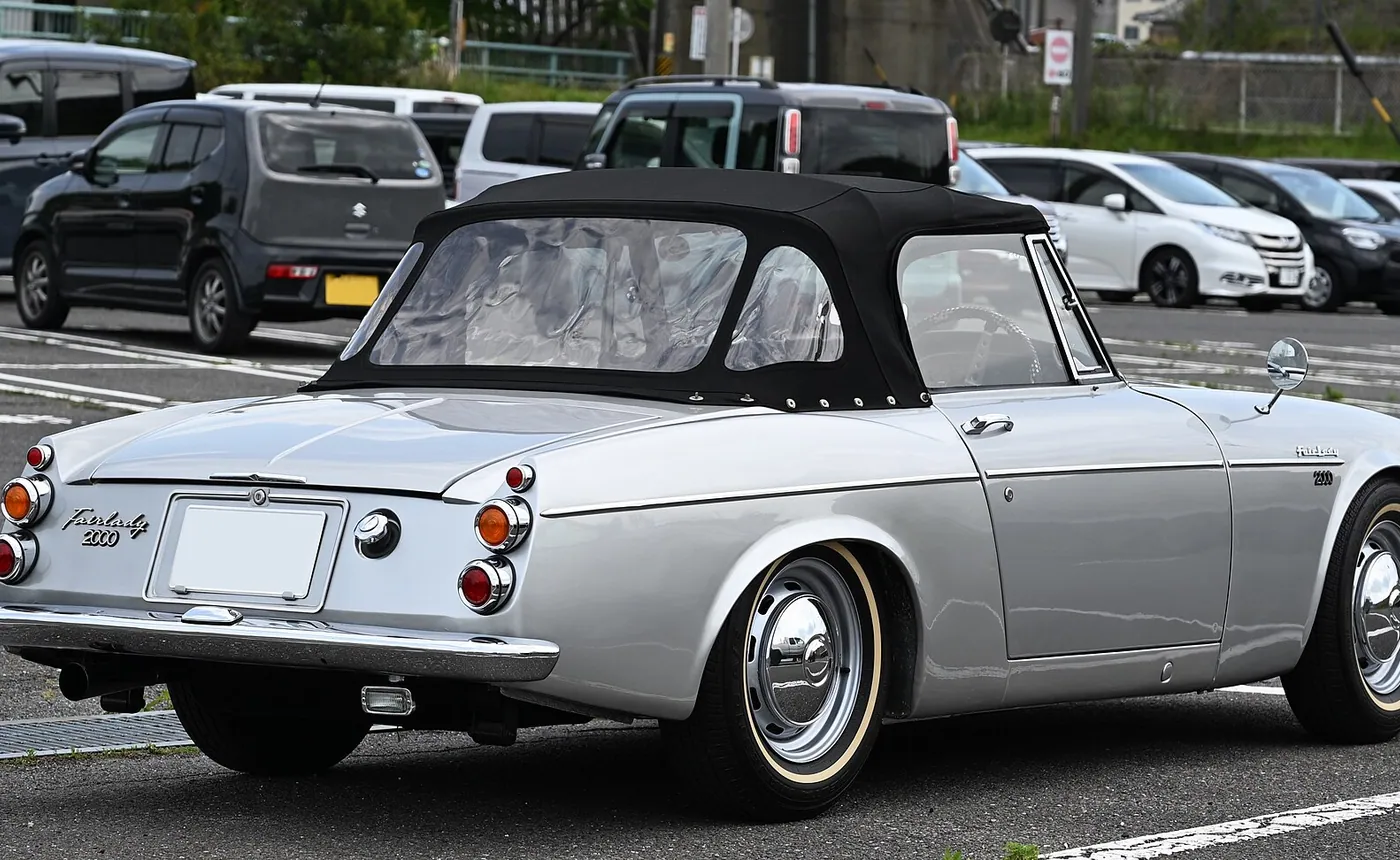
In the 1960s, the best sports cars on the roads of Japan were British. MGs, Triumphs and Austin-Healeys set the template: two seats, a fold-down roof and a gruff four-cylinder engine. Nissan studied them closely, and with the Fairlady 2000 it built a roadster that could run with them and, in a straight line, beat many of them.
The specs
| Years built | 1967–1970 |
|---|---|
| Engine | 2.0-litre four-cylinder (U20), single overhead camshaft, twin carburettors |
| Power | 145 PS (Japanese gross rating) |
| Gearbox | Five-speed manual |
| Drive | Rear-wheel drive |
| Body styles | Two-seat roadster |
| Chassis | Separate ladder frame |
Where the Fairlady name came from
Nissan's roadster line began in the early 1960s. The name has a famous origin: the company's leadership had been charmed by the Broadway musical My Fair Lady, and Fairlady was chosen for the Japanese market. Export cars wore Datsun badges and were sold under model codes, but in Japan the name stuck, and it later passed to the Fairlady Z.
The 1.5-litre SP310 of 1962 was followed in 1965 by the 1.6-litre SP311. In 1967 came the SR311, the Fairlady 2000, which was the fastest and most powerful of the line.
Japan was racing towards prosperity. New expressways were opening, motorsport was booming, and a sports car built at home had become an object of national pride as well as personal pleasure.
Design and engineering
The SR311 used a separate ladder frame with a steel body, a simple and robust arrangement. Front suspension was independent, with a live axle on leaf springs at the rear. The engine was the U20, a 2.0-litre four-cylinder with a single overhead camshaft and twin carburettors, rated at 145 PS. It drove the rear wheels through a five-speed manual gearbox, a feature few rivals offered at the time.
The styling is compact and simple, with a long bonnet, a low windscreen and a short tail. A removable hardtop was available. The cabin is tight and upright, with a row of round dials and a thin-rimmed steering wheel.
How it drives today
An SR311 in good order feels quick, light and lively. The engine pulls strongly through the mid-range and revs freely, and the five-speed gearbox makes it easy to keep it on the boil. The steering is direct and unassisted, and the ride is firm and old-fashioned, with the live rear axle making itself felt on rough surfaces. The brakes need a firm press, and the car's narrow tyres demand respect in the wet.
It is a car that suits open, quiet roads on a fine day, and in that setting it is enormous fun.
Variants worth knowing
The SP311 1600 is gentler and more common, with a 1.6-litre engine. The SR311 2000 is the fastest. Early SR311s have a lower windscreen; later cars were changed to meet new safety rules with a taller screen and revised interior. Export cars were sold as the Datsun 1600 and 2000. Some cars were modified for racing in period, and a few have racing history.
Buying one in Japan
These cars are rare in Japan today and turn up mainly through specialists or at auctions for older vehicles. Rust is the key concern. Look at the sills, floors, the lower parts of the front and rear wings, the boot floor, the door bottoms and the frame itself. Many have been restored, and the quality varies widely, so inspect closely and ask for photographs of any restoration.
Check whether the engine is the correct U20 for an SR311 and whether it has been swapped. Mechanical parts are sometimes available, but some trim, chrome and body parts are hard to source and may need to be made. Mileage on cars of this age is effectively impossible to verify without records.
The paperwork matters as much as the metal. The chassis number on the Japanese documents should match the plate on the car and the number stamped on the frame, and the model code should confirm that the car is a genuine SR311 rather than a 1600 fitted with a larger engine. A car with a period hardtop, its original tool kit or old service records carries a real premium among enthusiasts, so ask what comes with it. Look closely at the soft top and its frame, because replacements are available but fitting them properly takes skill. Check the wiring too, since sixty years of owners can leave a tangle of additions and old repairs behind the dashboard. Finally, have the brakes, fuel lines and rubber hoses inspected before the car is driven any distance, as perished rubber is common on cars that have stood for long periods.
Should you import one?
The SR311 suits someone who wants a pure, simple 1960s sports car with a rare badge and a strong engine. It is a weekend car, a show car and a car for summer roads, not something to drive through an Irish winter.
It is right-hand drive in Japanese-market form, and every example is well over 30 years old, so it can qualify for Ireland's vintage treatment. Keep it dry, use a specialist who understands old carburettor engines, and insure it on an agreed value. Find a solid one and it will give you the classic roadster experience with a story few others can match.
Frequently asked questions
Where does the Fairlady name come from?
Nissan's leadership was taken with the Broadway musical My Fair Lady, and the name was chosen for the Japanese market.
What engine is in the SR311?
The U20, a 2.0-litre single-cam four-cylinder with twin carburettors, rated at 145 PS.
Is the SR311 rare?
Yes. Good examples are scarce in Japan and usually come through specialists or classic car auctions.
Can an SR311 qualify for vintage status in Ireland?
Yes. Every SR311 is well over 30 years old, so it can qualify for Ireland's vintage treatment.
More Japanese classics
- Nissan Fairlady Z (Z32): the twin-turbo Z that set Japan's 280 PS ceiling
- Nissan Fairlady Z (Z31): the turbo V6 coupe that defined the 1980s Z
- Toyota Sports 800: the featherweight twin that taught Toyota how to have fun
- Honda S800: the 791 cc roadster that revved like a racing motorcycle
- Honda S600: chain drive, 9,000 rpm and the birth of Honda the carmaker
- All 90 Japanese classics you can import
Photo credits
- Photo: TTTNIS / Wikimedia Commons, CC0