
Honda S800: the 791 cc roadster that revved like a racing motorcycle
Honda's first cars were built by engineers who had conquered motorcycle racing, and it shows. The S800 was the most powerful of the little S roadsters and the one that finally gave them real pace.
By the Japan to Ireland editors · · 5 min read
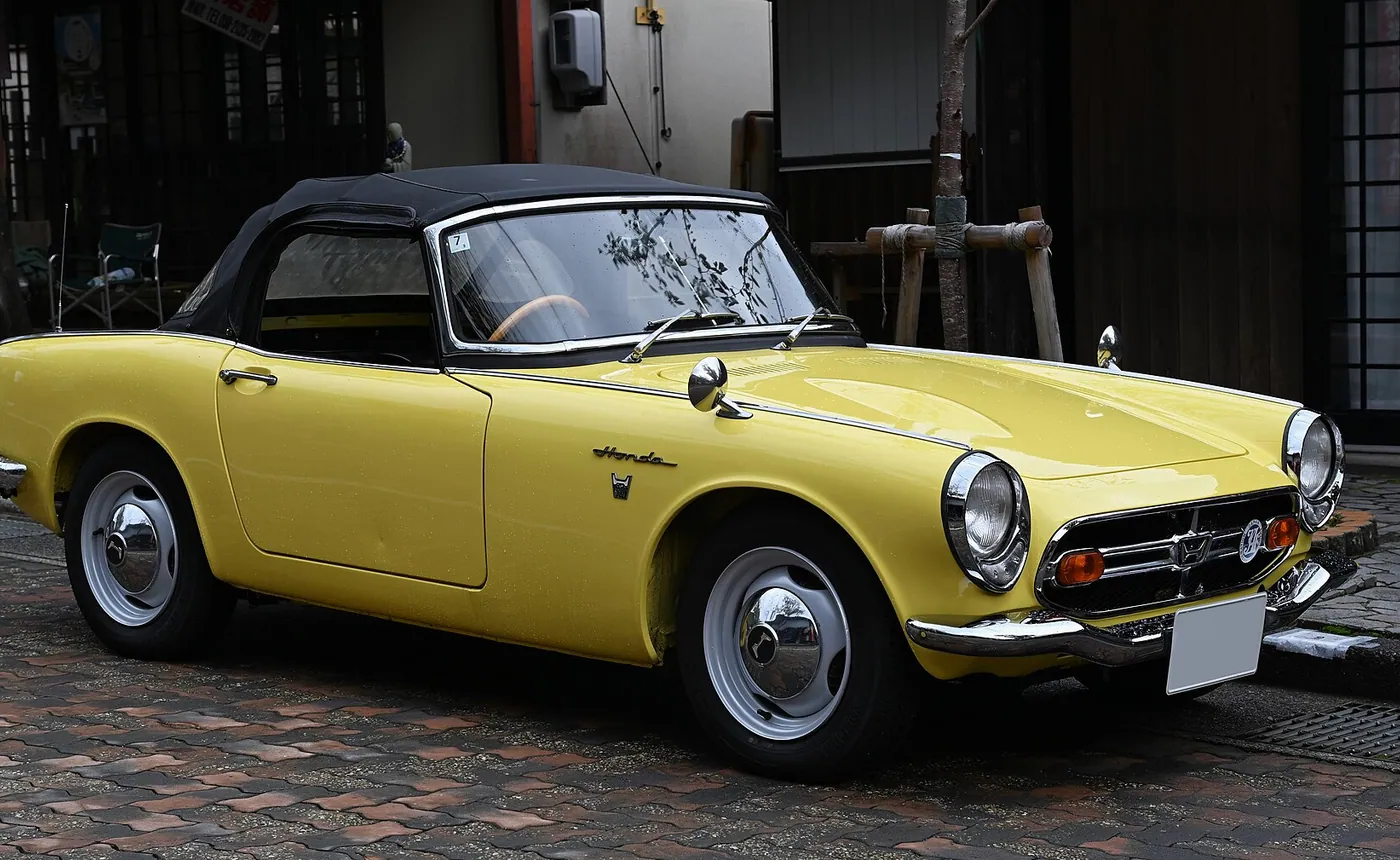
In October 1965, Richie Ginther crossed the line first at the Mexican Grand Prix in a Honda RA272. It was Honda's first Formula One win, scored barely two years after the company had sold its first car. That same autumn, at the Tokyo Motor Show, Honda showed the S800, a tiny roadster with an engine that revved past 8,000 rpm and a top speed beyond 160 km/h. For a car with less than 800 cc, that was a remarkable claim, and it was true.
The S800 was the third and final step in Honda's S series, after the S500 and S600. It is the one with the most power, the most refinement and, for many enthusiasts, the most complete character. It is also a car that tells you everything about Honda in the 1960s: a motorcycle company with racing in its blood, building cars the way it built engines.
The specs
| Years built | 1966–1970 |
|---|---|
| Engine | 791 cc DOHC inline-four, four carburettors |
| Power | 70 PS at 8,000 rpm |
| Gearbox | 4-speed manual |
| Drive | Rear-wheel drive (early cars by chain, then live axle) |
| Body styles | Roadster, fastback coupe |
| Top speed | Over 160 km/h |
| Late update | S800M (1968) with front disc brakes |
A motorcycle company learns to build cars
Honda had made its name on two wheels, sweeping the 125 cc and 250 cc classes at the Isle of Man TT in 1961. Moving into cars was a gamble taken partly because the Japanese government was considering rules that could have made it harder for new manufacturers to enter the car business. Honda launched the T360 truck and the S500 roadster in 1963, then the S600 in 1964. The S800 arrived in 1966.
Japan was booming. Expressways were being opened, incomes were rising and younger buyers wanted something more exciting than a sensible saloon. Honda's small roadsters gave them a car that felt like a racing machine, with engine speeds that no other road car of the time could match.
Design and engineering
The engine is the heart of it. The 791 cc inline-four has twin overhead camshafts, four carburettors and a design that owes a great deal to Honda's motorcycle engines. It produces 70 PS at 8,000 rpm. Below 4,000 rpm it is polite. Above that it becomes a very different machine, howling towards its limit with a sound more often heard at a race meeting.
Like the earlier S cars, the S800 sits on a separate steel frame. Early cars kept the S600's distinctive chain drive, in which each rear wheel was driven by a chain inside a sealed case that also worked as a trailing arm. Early in production Honda switched to a conventional live rear axle, which was tougher and better suited to the extra power. The S800M of 1968 added front disc brakes and other updates.
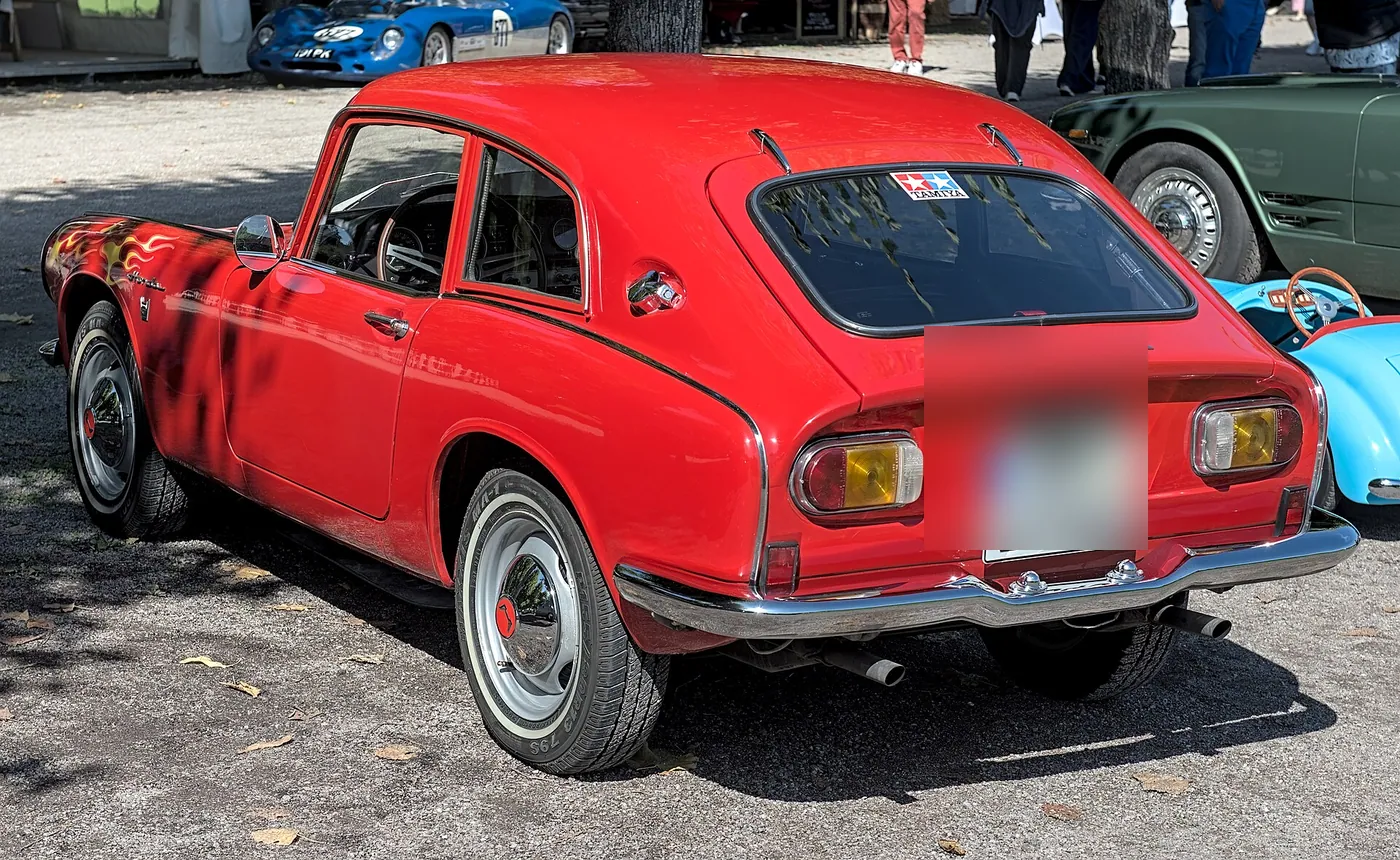
There were two bodies: an open roadster and a coupe with a fastback roof and an opening rear hatch. Both are small, neat and well proportioned, with a long bonnet and a cabin that seats two adults closely.
How it drives today
The S800 feels light and alive. The steering is quick, the car is narrow enough for any boreen, and the engine encourages you to use every last revolution. It cruises happily at modern motorway speeds, though it is busy and noisy doing so, and you are very aware of how small the car is beside lorries and SUVs.
What it rewards most is a twisting road taken at a steady pace, with the gearbox worked hard to keep the engine in its sweet spot. Drum-braked early cars need care. The disc-braked S800M is the more reassuring choice for regular use.
Versions worth knowing
The main split is between early chain-drive cars and the later live-axle cars, and between roadster and coupe. Chain-drive S800s are rarer and interesting to collectors because they connect directly to the S500 and S600. The S800M is the most developed version. Honda also built left-hand-drive cars for export markets, and some have returned to Japan, so check which side the steering wheel is on before you bid.
What to check when buying in Japan
Rust is the first question. The frame, sills, floor pans, boot floor, door bottoms and the area around the headlamps all corrode, and a shiny repaint can hide serious damage. A thorough inspection underneath, ideally on a lift, is essential.
The engine is complex and needs someone who understands it. Ask about valve clearance adjustments, carburettor balancing and any rebuild history. A tired engine smokes, rattles or refuses to idle evenly, and a full overhaul is specialist work. Japan has a strong S-series owner community and specialists who remanufacture many parts, which helps, but trim and some body panels are still scarce.
On chain-drive cars, look for oil leaks from the chain cases and listen for noise from the drive. Many S800s have been modified for racing or fitted with non-original parts over the decades, so decide whether you want originality or a usable, upgraded car. Mileage on a car of this age is rarely provable. Paperwork, chassis numbers and the Japanese export certificate must all line up.
Should you import one?
The S800 suits a driver who loves engines. It is a car to be driven briskly on good roads in dry weather, maintained carefully and enjoyed as a piece of engineering history. It is not a practical daily car in an Irish winter, and the engine will need regular attention.
Every S800 is far older than 30 years, so it can qualify for Ireland's vintage treatment. Expect to keep a close relationship with specialists, and expect plenty of attention at classic gatherings, where very few people will have seen one in the flesh. For the right owner, few small cars of the era are as rewarding to drive.
Frequently asked questions
What is the difference between the S800 and the S600?
The S800 has a larger 791 cc engine with 70 PS, more refinement and, after early production, a conventional live rear axle in place of the S600's chain drive.
Did the S800 use chain drive?
Early S800s kept the chain drive from the S600, but Honda switched to a live rear axle early in production.
Is the S800M worth seeking out?
The S800M of 1968 added front disc brakes and other updates, making it the most developed and reassuring version to drive.
Can an S800 be used every day in Ireland?
It is better suited to dry-weather weekend use, as the engine needs regular expert maintenance and the car is very small in modern traffic.
More Japanese classics
- Toyota Sports 800: the featherweight twin that taught Toyota how to have fun
- Datsun Fairlady Roadster (SR311): the open two-seater that took on Britain's best
- Honda S600: chain drive, 9,000 rpm and the birth of Honda the carmaker
- Mazda Cosmo Sport 110S: the space-age coupe that proved the rotary engine
- Mazda Savanna RX-7 (SA22C): the light, pure sports car that rescued the rotary
- All 90 Japanese classics you can import
Photo credits
- Photo: TTTNIS / Wikimedia Commons, CC0
- Photo: Alexander Migl / Wikimedia Commons, CC BY-SA 4.0