
Toyota Sports 800: the featherweight twin that taught Toyota how to have fun
Built on the bones of a humble economy car, the little 'Yota-hachi' used light weight and clean air rather than power. Sixty years on, it is one of the rarest and most charming Toyotas you can bring home.
By the Japan to Ireland editors · · 5 min read
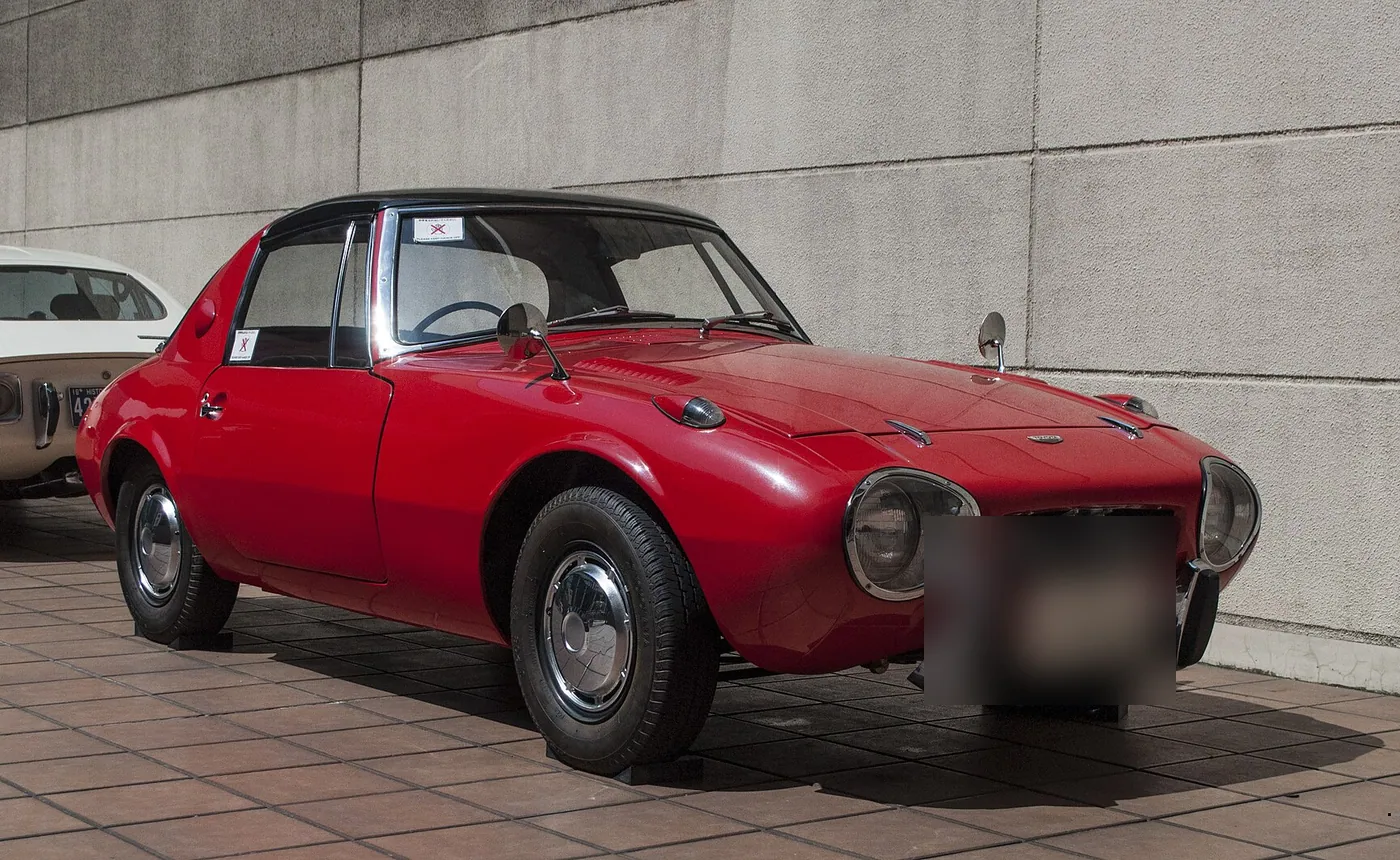
At the 1962 motor show in Tokyo, Toyota rolled out a small, round prototype with a roof that slid back like the canopy of a fighter plane. It was called the Publica Sports, and it was built on the mechanicals of the Publica, the plain little saloon Toyota had launched the year before for families buying their first car. The canopy did not survive into production. Almost everything else did.
The car that reached showrooms in 1965 was the Toyota Sports 800, known affectionately in Japan as the Yota-hachi. It was small, light and modest in power, and it was the first time Toyota had sold a car built purely for pleasure. That makes it the distant ancestor of the 2000GT, the AE86 and every sporting Toyota since.
The specs
| Years built | 1965–1969 |
|---|---|
| Engine | 790 cc air-cooled flat-twin (2U) |
| Power | 45 PS |
| Gearbox | 4-speed manual |
| Drive | Rear-wheel drive |
| Body styles | Two-seat coupe with removable roof panel |
| Kerb weight | About 580 kg |
| Production | Around 3,100 |
A sports car for a country learning to drive
Japan in the mid-1960s was in the middle of an extraordinary economic run. The Tokyo Olympics of 1964 had arrived with the first Shinkansen line, new expressways were being opened, and the idea of the private family car was moving from fantasy to reality for ordinary households. Manufacturers were racing to fill that demand, and the Publica was Toyota's answer at the cheapest end of the market.
A sports car on that platform made sense in a very Japanese way. Engines were small, fuel and taxes mattered, and the roads outside the cities were narrow and twisting. Rather than chase power, the engineers chased weight and drag. The result was a car that could reach well over 150 km/h on an engine shared with an economy saloon.
The Sports 800 also had a direct rival in the Honda S600 and later the S800. The two met on the race track at Suzuka, and the Toyota's frugal twin and slippery body meant it could run long distances with fewer fuel stops than the higher-revving Honda. That reputation for winning by efficiency has followed it ever since.
Design and engineering
The body is the star. It is a compact monocoque with smooth, rounded surfaces, covered headlamps and a tapering tail, shaped with aerodynamics in mind at a time when few small cars were. The roof panel lifts off and stows, turning the coupe into an open car in a few minutes. Toyota used aluminium for that panel to save weight, and the whole car weighs around 580 kg.
The engine is the 2U, a 790 cc horizontally opposed twin cooled by air, with twin carburettors on the Sports 800. It produces 45 PS. That number looks absurd today, but in a car this light it was enough for brisk progress. The gearbox is a four-speed manual driving the rear wheels, with independent suspension at the front and a live axle on leaf springs at the back. Brakes are drums.
Inside there is room for two, a slim wheel and a simple row of round dials. It is snug for tall drivers, and the seating position is low enough that a modern SUV will tower over you.
How it drives today
Drive one now and the first surprise is the sound: a busy, slightly agricultural thrum from the twin behind the grille, very different from the smooth fours of later Japanese cars. The second is the lightness. The unassisted steering is direct, the car changes direction with almost no effort, and you can feel the tyres working on the road surface.
It is not fast by modern standards. On a winding N-road or a quiet coastal route it is a joy, because you can use all of its performance without breaking any rules. On the M50 at rush hour it feels very small and very exposed. Drum brakes demand planning, and you need to drive as if the car in front might stop suddenly, because it might.
Versions worth knowing
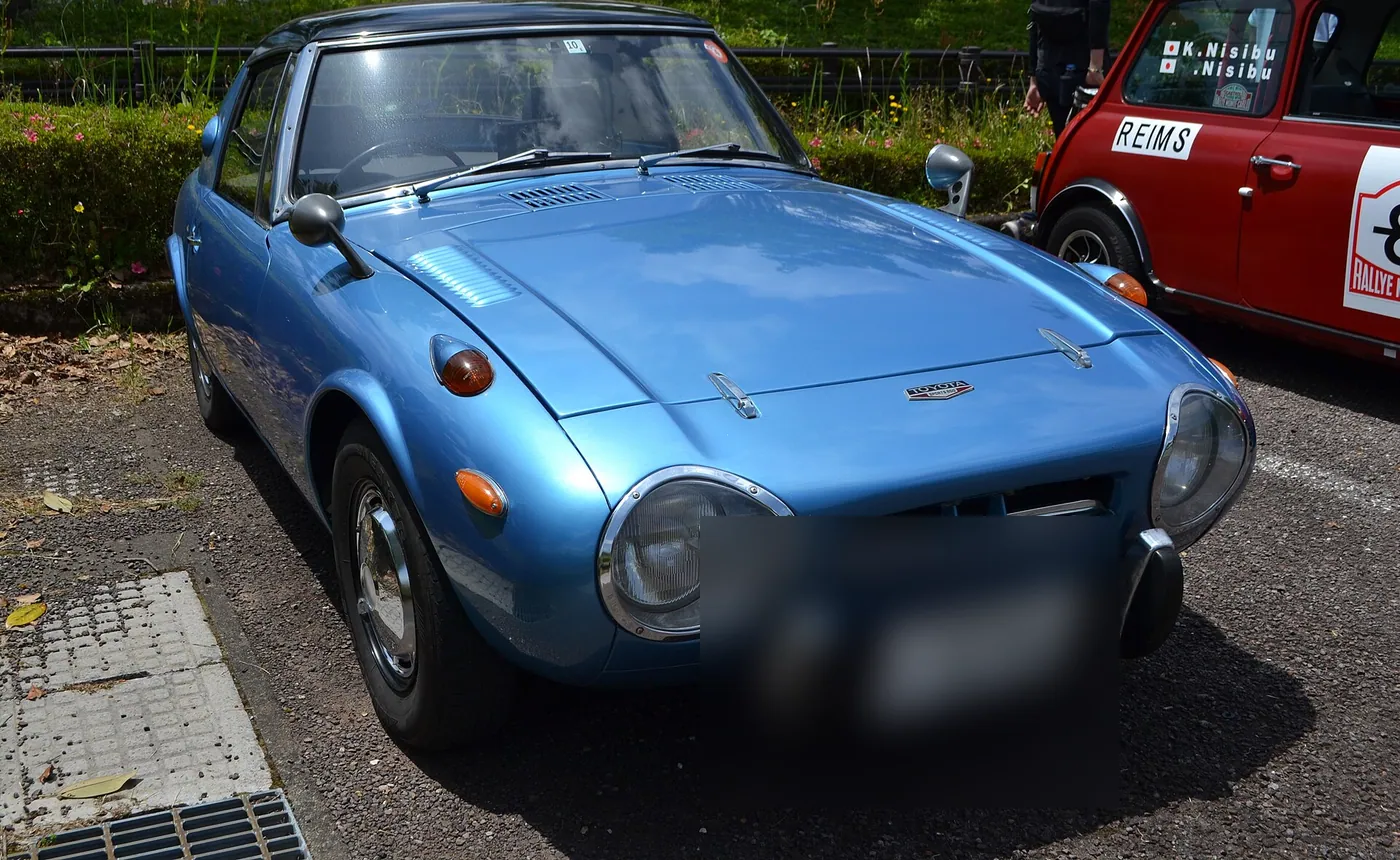
There was essentially one model, built for the Japanese home market in modest numbers, with minor running changes over its life. Most surviving cars are therefore right-hand drive, which suits Irish roads well. Some cars have been rebuilt in racing trim or modified with later parts, and a handful of replicas and heavily restored shells exist. A largely original, matching-numbers car is the one collectors want.
What to check when buying in Japan
These cars rarely appear in ordinary used-car auctions. When they do, condition varies enormously, from concours restorations to tired projects that have been stored for decades. Rust is the main enemy. Check the sills, the floor pans, the bottoms of the doors, the front valance and the area around the roof panel seals, where water can sit after years of leaking. Lift the carpets if you can.
Mechanically, the 2U twin is simple and many parts were shared with the Publica, which helps. Body panels, trim, glass and badges are another story and can be hard to source. Confirm the engine is a correct 2U and not a swapped unit. Mileage on a car this old is rarely meaningful, since odometers have been replaced or have turned over, so judge the car on its condition and history rather than the number on the clock.
Paperwork matters. You want the Japanese export certificate in order, a clear chassis number that matches the documents, and any records of restoration work. Ask for detailed photographs of the underside before committing.
Should you import one?
The Sports 800 suits a collector or an enthusiast who wants something rare, historically important and genuinely fun at low speed. It is not a daily driver and it will never be a quick car. Cars over 30 years old can qualify for Ireland's vintage treatment, which makes ownership more practical, but you should budget for careful storage, specialist knowledge and patience with parts.
In return you get one of the most interesting small sports cars Japan ever made, a car that turns heads at any classic show in Ireland because almost nobody here has seen one. Drive it on dry summer days, keep it away from salted winter roads, and it will repay the effort.
Frequently asked questions
Is the Toyota Sports 800 right-hand drive?
Nearly all were built for the Japanese home market, so the cars available in Japan are right-hand drive, which suits Irish roads.
How powerful is the Sports 800?
Its 790 cc air-cooled flat-twin produces 45 PS, but the car weighs only about 580 kg, so it feels livelier than the figure suggests.
Are parts hard to find?
Engine parts shared with the Publica are easier to source, but body panels, trim and glass are scarce and often need specialist help in Japan.
Can it qualify as a vintage vehicle in Ireland?
Yes, every Sports 800 is well over 30 years old, so it can qualify for Ireland's vintage treatment if it meets the conditions.
More Japanese classics
- Datsun Fairlady Roadster (SR311): the open two-seater that took on Britain's best
- Nissan Fairlady Z (Z32): the twin-turbo Z that set Japan's 280 PS ceiling
- Honda S800: the 791 cc roadster that revved like a racing motorcycle
- Honda S600: chain drive, 9,000 rpm and the birth of Honda the carmaker
- Mazda Cosmo Sport 110S: the space-age coupe that proved the rotary engine
- All 90 Japanese classics you can import
Photo credits
- Photo: Alex Brogan / Wikimedia Commons, CC BY 3.0
- Photo: 先従隗始 / Wikimedia Commons, CC0