
Honda S600: chain drive, 9,000 rpm and the birth of Honda the carmaker
Honda's second car was a tiny, jewel-like roadster built by engineers who thought in motorcycle terms. Its chain-driven rear wheels and screaming 606 cc engine make it one of the most unusual sports cars ever sold.
By the Japan to Ireland editors · · 4 min read
In June 1961, on the Isle of Man, Honda motorcycles took the first five places in both the 125 cc and 250 cc races at the TT. For a Japanese company that had been making motorised bicycles barely a decade before, it was a stunning result, and it gave Honda the confidence to try something even more ambitious. Within three years it was selling a sports car with a 606 cc engine that revved to around 9,000 rpm.
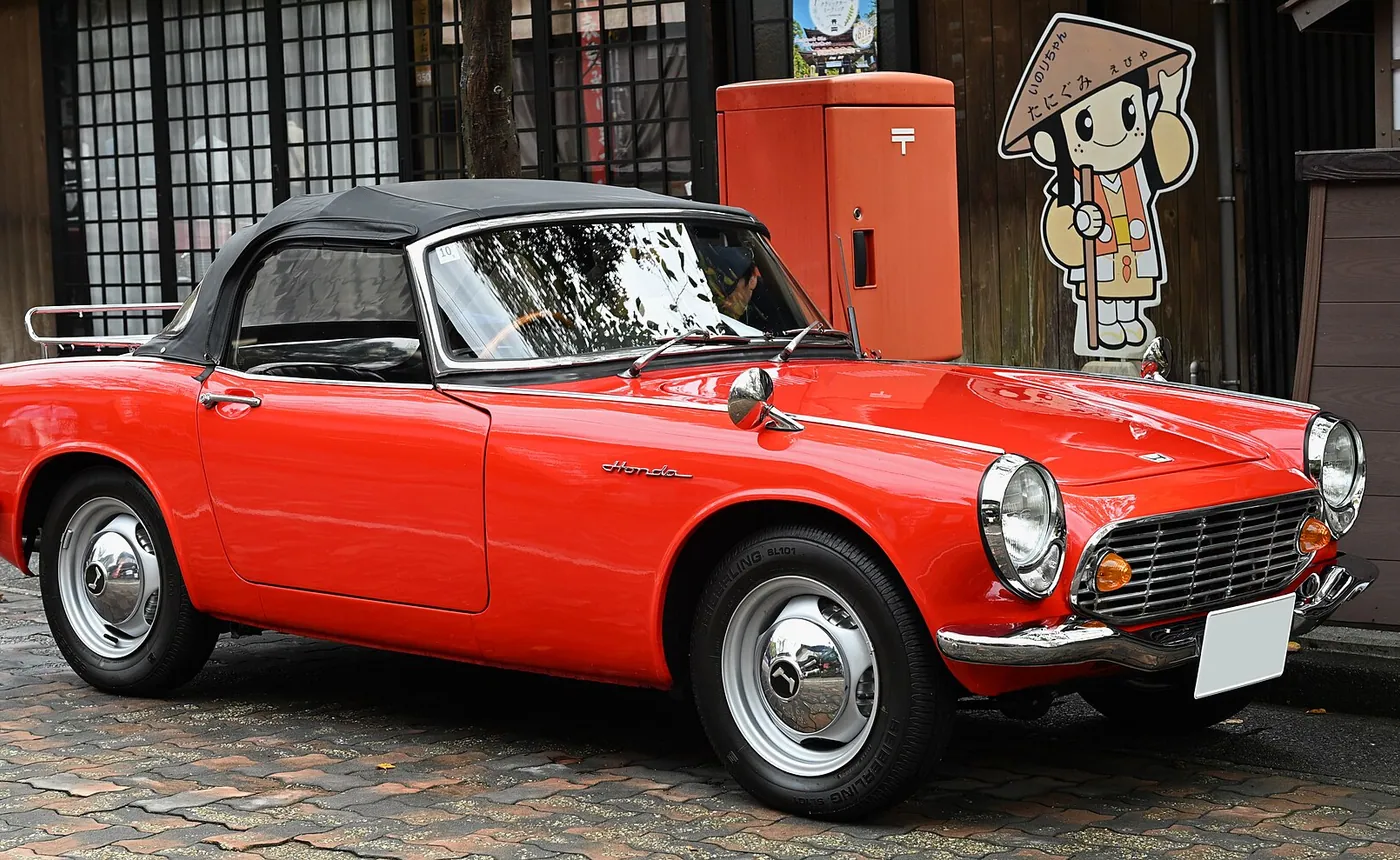
That car was the S600. It was not Honda's first car, since the S500 and the T360 truck came first in 1963, but it was the one that sold in meaningful numbers and the one that introduced Honda cars to Europe. It is small, strange and utterly charming.
The specs
| Years built | 1964–1966 |
|---|---|
| Engine | 606 cc DOHC inline-four, four carburettors |
| Power | 57 PS at 8,500 rpm |
| Gearbox | 4-speed manual |
| Drive | Rear-wheel drive by twin chains |
| Body styles | Roadster, fastback coupe (from 1965) |
| Chassis | Separate steel frame |
| Predecessor | Honda S500 (1963) |
Why Honda built it
In the early 1960s the Japanese government was considering legislation that could have limited the number of companies allowed to build cars. Honda did not want to be shut out, so it moved quickly to establish itself as a car manufacturer. A sports car was an obvious way to show what its engineers could do, and it fitted the company's racing image.
Japan was racing ahead economically. Tokyo was preparing for the 1964 Olympics, new expressways were opening and cars were becoming possible for many families for the first time. The S600 arrived in the middle of that mood: a car not for practical needs but for the joy of driving, made by a company that already had a worldwide racing reputation.
Design and engineering
The engine is pure motorcycle thinking applied to four wheels. The 606 cc inline-four has twin overhead camshafts, four carburettors and needle and roller bearings where most car engines would use plain bearings. It produces 57 PS at 8,500 rpm, an extraordinary specific output for the time, and it needs those revs to deliver its performance.
The drivetrain is even more unusual. Power travels from the four-speed gearbox to a differential mounted on the frame, and then by chain to each rear wheel. The chains run inside sealed, oil-bathed cases that double as trailing arms for the rear suspension. It is clever, compact and very much a Honda idea, though it can produce a slight lurch under hard acceleration as the rear of the car rises.
The body sits on a separate steel frame. The roadster came first, and in 1965 Honda added a fastback coupe with an opening rear window. Both are tiny by modern standards, with neat chrome detailing and a cabin for two.
How it drives today
The S600 is a car you feel more than you measure. It is light, nimble and quick to respond, and the engine sounds like nothing else on the road, rising to a howl as the tachometer swings past 8,000 rpm. Real-world performance is modest, but the sensation of speed is high because everything happens so close to you.
On a narrow Irish back road it is delightful, darting through bends with very little effort at the wheel. On a busy dual carriageway it feels fragile. The brakes need firm and early use, and the car's size means modern traffic may not see you. It is a car for planned drives rather than errands.
Versions worth knowing
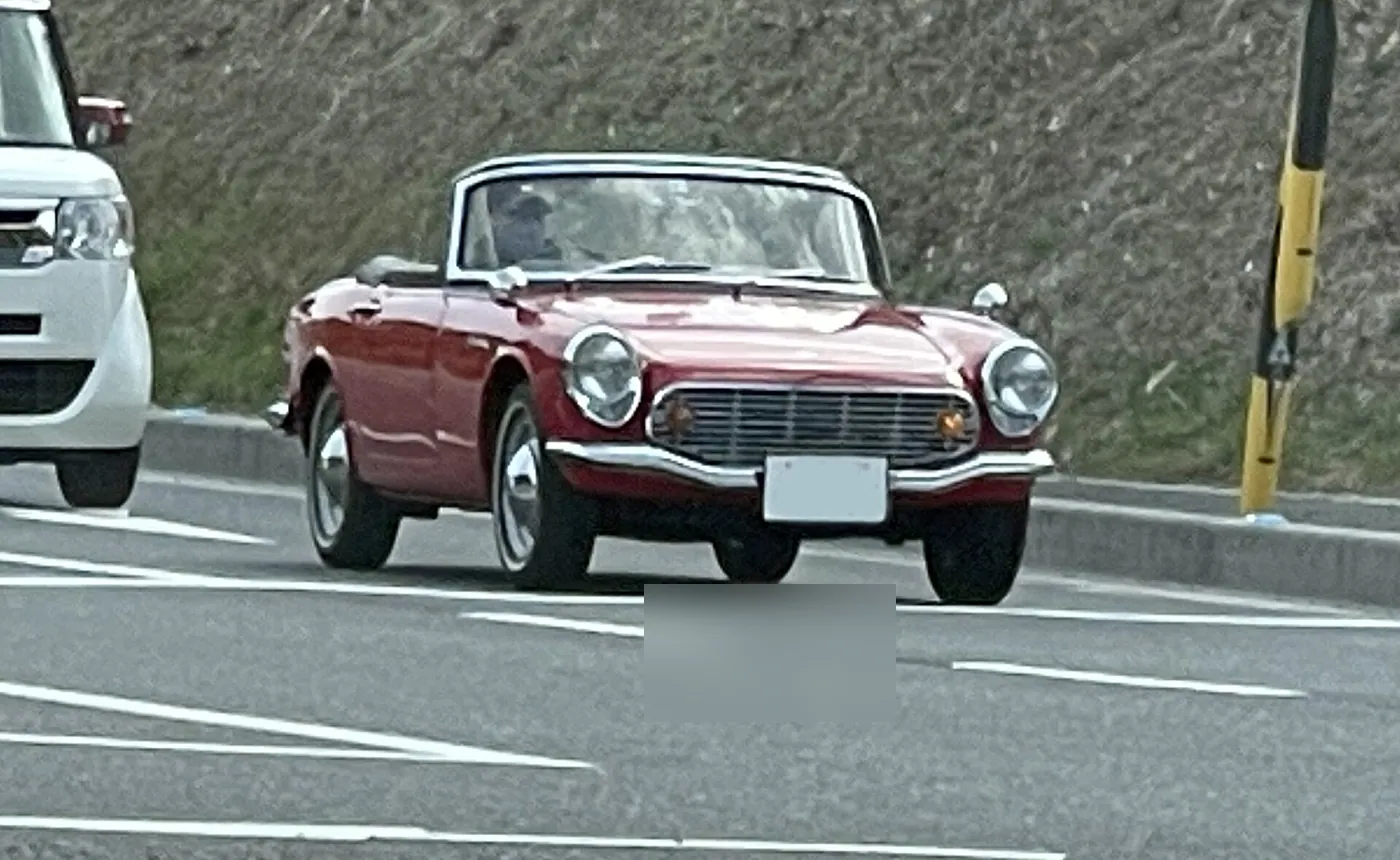
The main choice is between the roadster and the coupe. Roadsters are more numerous and more sought after. The coupe is rarer and offers a little more weather protection. Export cars were built for markets including Britain and continental Europe, so left-hand-drive examples do exist. The earlier S500 is rarer still and closely related, while the S800 that followed is more powerful and more developed.
What to check when buying in Japan
Rust is the biggest threat, particularly in the frame, floor pans, sills, door bottoms and boot floor. Many cars have been restored at least once, and the quality of that work varies widely. Inspect underneath, check panel gaps and look for filler.
The chain cases should be checked for leaks and the chains for wear and correct adjustment. The engine is intricate and needs a specialist familiar with Honda's S-series engines. Ask about valve adjustment, carburettor synchronisation and any rebuild history. Japan has active owners' clubs and specialists who supply remanufactured parts, but body panels and trim can still be scarce.
Many S600s have been upgraded with S800 engines or parts, which can make a car more usable but less original. Confirm the engine and chassis numbers and check they match the documents. Mileage on a car of this age is not reliable. The Japanese export certificate and any restoration records are essential.
Should you import one?
The S600 suits a collector or enthusiast who values engineering character above outright performance. It is not a practical everyday car for Irish weather or traffic, and it needs careful, informed maintenance.
Every S600 is well over 30 years old, so it can qualify for Ireland's vintage treatment. Owning one means joining a small, knowledgeable community, keeping the car dry and driving it with patience. In return you get a piece of Honda history that still feels astonishing every time the engine climbs towards its redline.
Frequently asked questions
Why does the Honda S600 use chain drive?
Honda's engineers borrowed the idea from motorcycles: chains in oil-filled cases drive each rear wheel and also act as trailing arms for the rear suspension.
How high does the S600 engine rev?
Its 606 cc twin-cam four makes peak power at 8,500 rpm and was built to rev beyond that, far higher than most road cars of the 1960s.
Was there a coupe version?
Yes, Honda added a fastback coupe with an opening rear window in 1965, alongside the original roadster.
Are S600s often modified?
Many have been fitted with S800 engines or parts, so check engine and chassis numbers against the paperwork if originality matters to you.
More Japanese classics
- Honda S800: the 791 cc roadster that revved like a racing motorcycle
- Toyota Sports 800: the featherweight twin that taught Toyota how to have fun
- Mazda Cosmo Sport 110S: the space-age coupe that proved the rotary engine
- Mazda Savanna RX-7 (SA22C): the light, pure sports car that rescued the rotary
- Mazda RX-7 (FC3S): the turbocharged rotary that grew up for the bubble years
- All 90 Japanese classics you can import
Photo credits
- Photo: TTTNIS / Wikimedia Commons, CC0
- Photo: Tokumeigakarinoaoshima / Wikimedia Commons, CC BY-SA 4.0