
Datsun Fairlady Z (S30): the affordable sports car that won over the world
Launched in 1969, the first Fairlady Z gave buyers six cylinders, sleek looks and real performance at a price far below European rivals. Rust has claimed many, but a good one remains a joy.
By the Japan to Ireland editors · · 4 min read
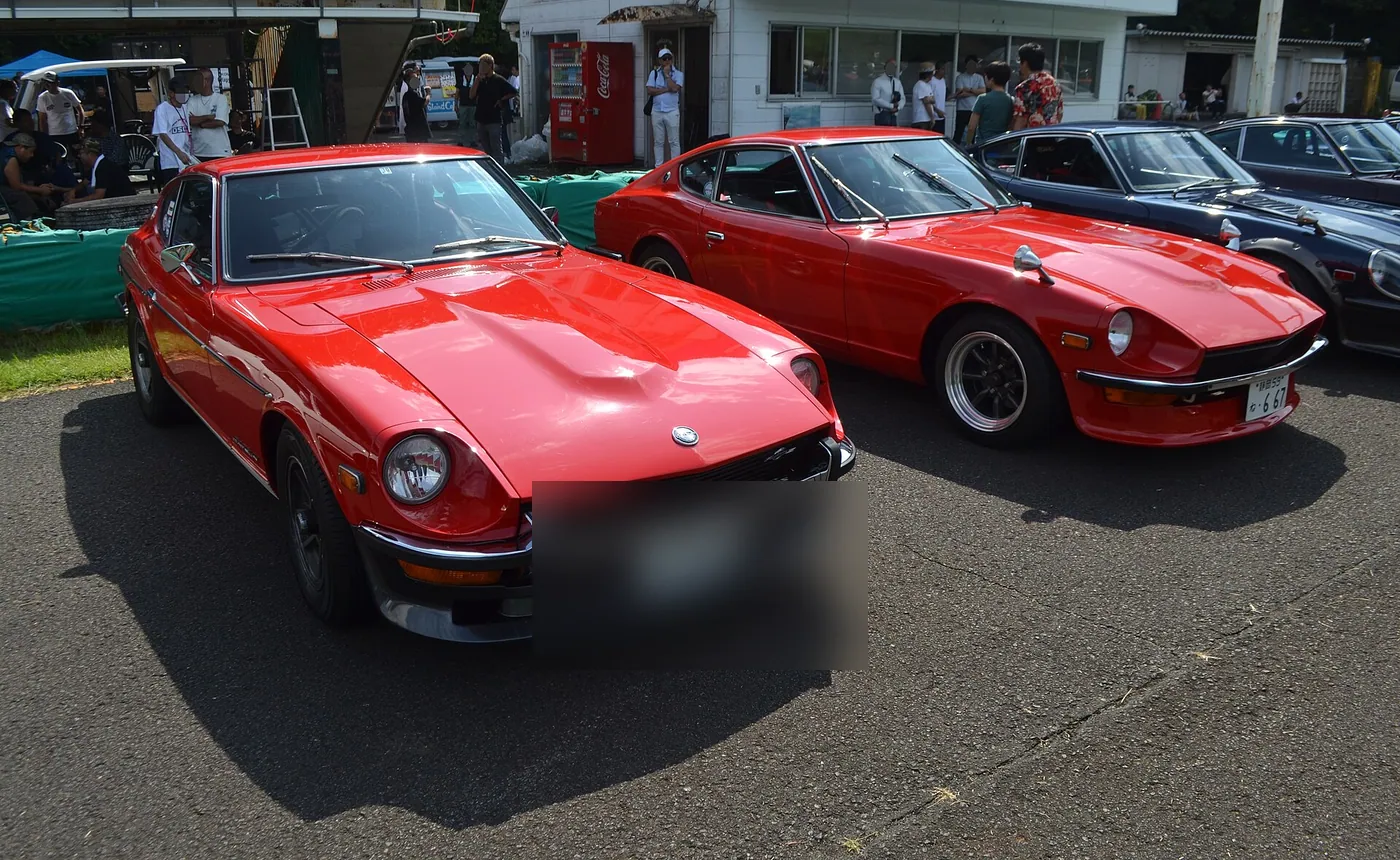
In 1971 a Datsun 240Z won the East African Safari Rally, one of the toughest motor events in the world, run across thousands of kilometres of dirt, mud and rock. The car that had made Japanese sports cars fashionable in American suburbs had also proved it could survive Kenya's worst roads. It won the Safari again in 1973.
At home in Japan, the same car was called the Fairlady Z, and it changed how the world thought about Japanese performance cars.
The specs
| Years built | 1969–1978 |
|---|---|
| Engine | Straight-six L-series (2.0 litres in most Japanese cars; 2.4, 2.6 and 2.8 litres for export); S20 twin-cam in the Z432 |
| Power | Varies by engine; the Z432's S20 was rated at 160 PS (Japanese gross) |
| Gearbox | Four- or five-speed manual; automatic available |
| Drive | Rear-wheel drive |
| Body styles | Two-seat fastback coupe; 2+2 from 1974 |
| Export names | 240Z, 260Z, 280Z |
Why Nissan built it
By the late 1960s, Nissan had a successful small roadster, the Fairlady, but it wanted a modern closed sports car with real comfort and pace. The man most associated with pushing for it was Yutaka Katayama, head of Nissan's American operation, who knew exactly what American buyers wanted: a good-looking coupe with a strong engine and a price that undercut European rivals. The design team was led by Yoshihiko Matsuo.
The result went on sale in late 1969. In America it was the Datsun 240Z, and it sold in huge numbers. In Japan, it kept the Fairlady name.
Design and engineering
The S30 is a simple, elegant car: a long bonnet, a short tail and a fastback rear with a hatch. Underneath it used a unitary body with MacPherson strut suspension at all four corners, front disc brakes and rear-wheel drive. The engines were straight-six L-series units, single-cam and robust.
For tax reasons most Japanese-market cars had a 2.0-litre engine, while export cars had larger 2.4-litre, later 2.6- and 2.8-litre units. The most famous Japanese version was the Z432, which used the S20 twin-cam engine from the Skyline GT-R. The name is a code: four valves per cylinder, three carburettors, two camshafts. In 1971 Nissan also sold the 240ZG in Japan, with an extended aerodynamic nose and riveted wheel arch extensions, built for homologation.
A 2+2 version with a longer wheelbase joined the range in 1974.
How it drives today
A good S30 feels light, communicative and eager. The L-series six is smooth and torquey, the steering is unassisted but direct, and the chassis is balanced and playful. It is easy to drive quickly and easy to understand. The cabin is snug and simple, with deep-set dials and a long gearlever. On a dry Irish back road on a summer evening, it is about as pleasing as a 1970s sports car gets.
Variants worth knowing
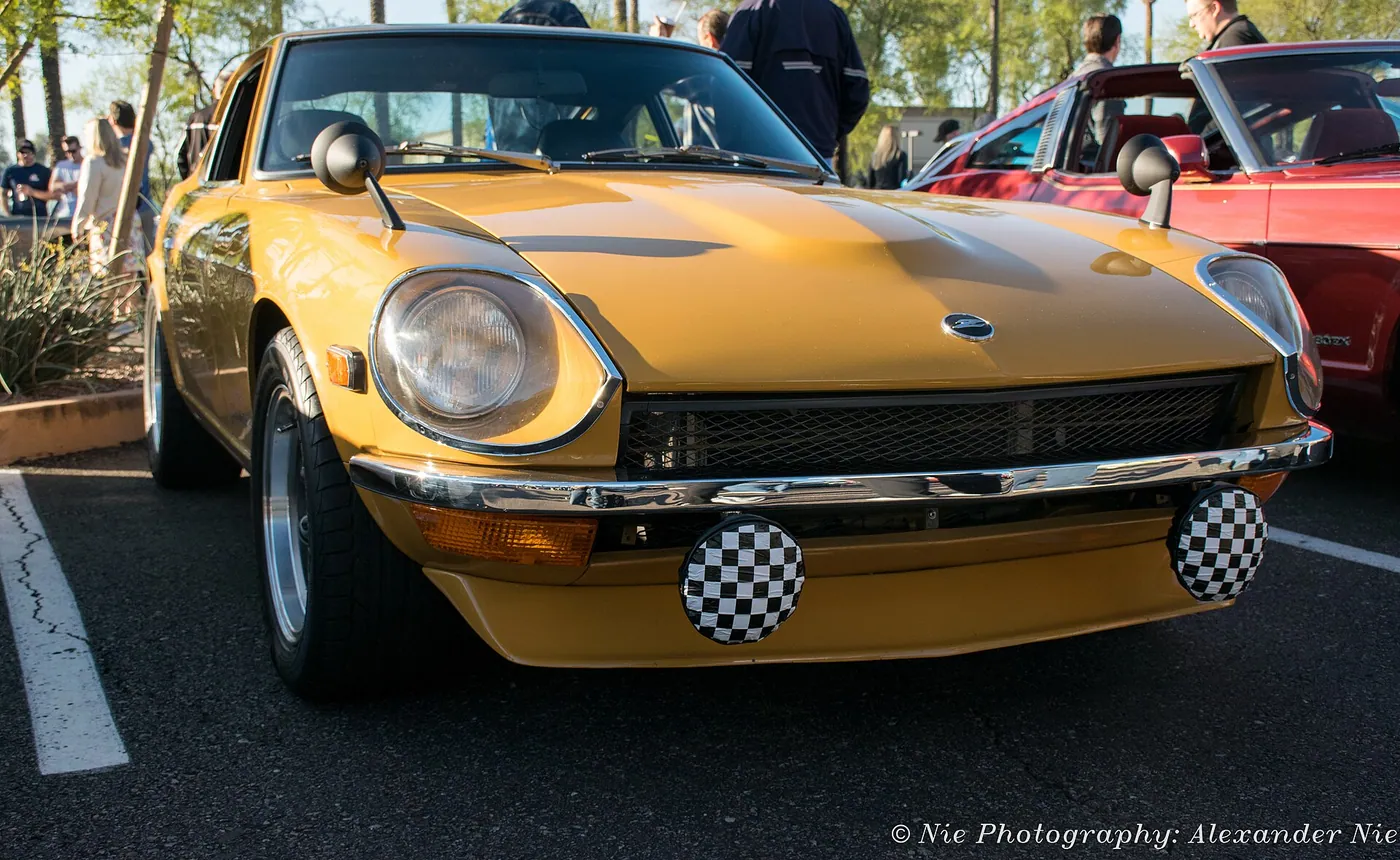
The Z432 and the 240ZG are the collector's cars, and both are rare and widely copied. The 2.0-litre Fairlady Z and Z-L are the Japanese cars most often found, and many have been upgraded with larger L-series engines. The 2+2 is more practical but less pretty. You will also find cars in Japan that began life as export 240Z, 260Z or 280Z models; check the chassis code carefully.
Buying one in Japan
Rust is the defining issue with an S30. Check the floors, sills, the chassis rails under the car, the battery tray, front and rear wheel arches, the area around the rear hatch and the spare wheel well, and the lower part of the doors and wings. Many cars have been restored, and some have been restored badly. Ask for photographs during any restoration and look underneath yourself, or have an inspector do it.
Originality is the next question. Engine swaps, carburettor changes, wide arches and replica G-noses are common. A Z432 or 240ZG should be checked through its chassis number, engine number and documents. Mechanical parts for the L-series are widely available, while some trim pieces are reproduced and others are scarce. Mileage on cars of this age is rarely provable without records.
Paperwork deserves the same care as the bodywork. The Japanese registration or deregistration certificate should show the same chassis number as the plate on the car, and the build date on those documents is what matters for Irish vintage eligibility. Ask the seller for any old inspection records, receipts and restoration photographs, because a thick folder tells you more about an S30 than a fresh coat of paint ever will. If the car has been resprayed in a different colour, look inside the engine bay, under the dashboard and beneath the rear hatch trim for traces of the original paint, which can also help confirm the model's identity. A car that wears its original colour, with honest wear and a clear history, is often a better buy than a glossy restoration with no story behind it.
Should you import one?
The S30 suits a driver who wants a classic sports car that is fun at real-world speeds and can be maintained without exotic expertise. It is one of the more practical classic Japanese sports cars to own, with good parts support and a large enthusiast community.
It is right-hand drive, and every example is over 30 years old, so it can qualify for Ireland's vintage treatment. Keep it out of winter salt, check under the carpets after wet drives, and insure it on an agreed value. Buy the most solid body you can afford, because paint and mechanicals are easier to fix than rust. The right S30 is a car you will want to drive often.
Frequently asked questions
What does Z432 mean?
Four valves per cylinder, three carburettors and two camshafts, describing its S20 twin-cam engine.
Is the Fairlady Z the same as the 240Z?
Yes. Fairlady Z was the Japanese-market name; export cars were sold as the 240Z, 260Z and 280Z.
What is the biggest problem with S30s?
Rust, especially in the floors, sills, chassis rails, battery tray, wheel arches and rear hatch area.
Is an S30 eligible for vintage status in Ireland?
Yes, every S30 is over 30 years old, so it can qualify for Ireland's vintage treatment.
More Japanese classics
- Nissan Skyline GT-R R33: the bigger, calmer GT-R that proved itself at the Nürburgring
- Nissan Skyline GT-R R32: how Godzilla won every race it entered and changed the rules
- Nissan Fairlady Z (Z31): the turbo V6 coupe that defined the 1980s Z
- Nissan Fairlady Z (Z32): the twin-turbo Z that set Japan's 280 PS ceiling
- Datsun Fairlady Roadster (SR311): the open two-seater that took on Britain's best
- All 90 Japanese classics you can import
Photo credits
- Photo: 先従隗始 / Wikimedia Commons, CC0
- Photo: Alexander Nie / Wikimedia Commons, CC BY-SA 2.0