
Nissan Skyline GT-R R32: how Godzilla won every race it entered and changed the rules
The R32 brought the GT-R name back in 1989 with twin turbos, four-wheel drive and clever electronics. It dominated Japanese touring car racing and is now crossing the 30-year line for Irish buyers.
By the Japan to Ireland editors · · 4 min read
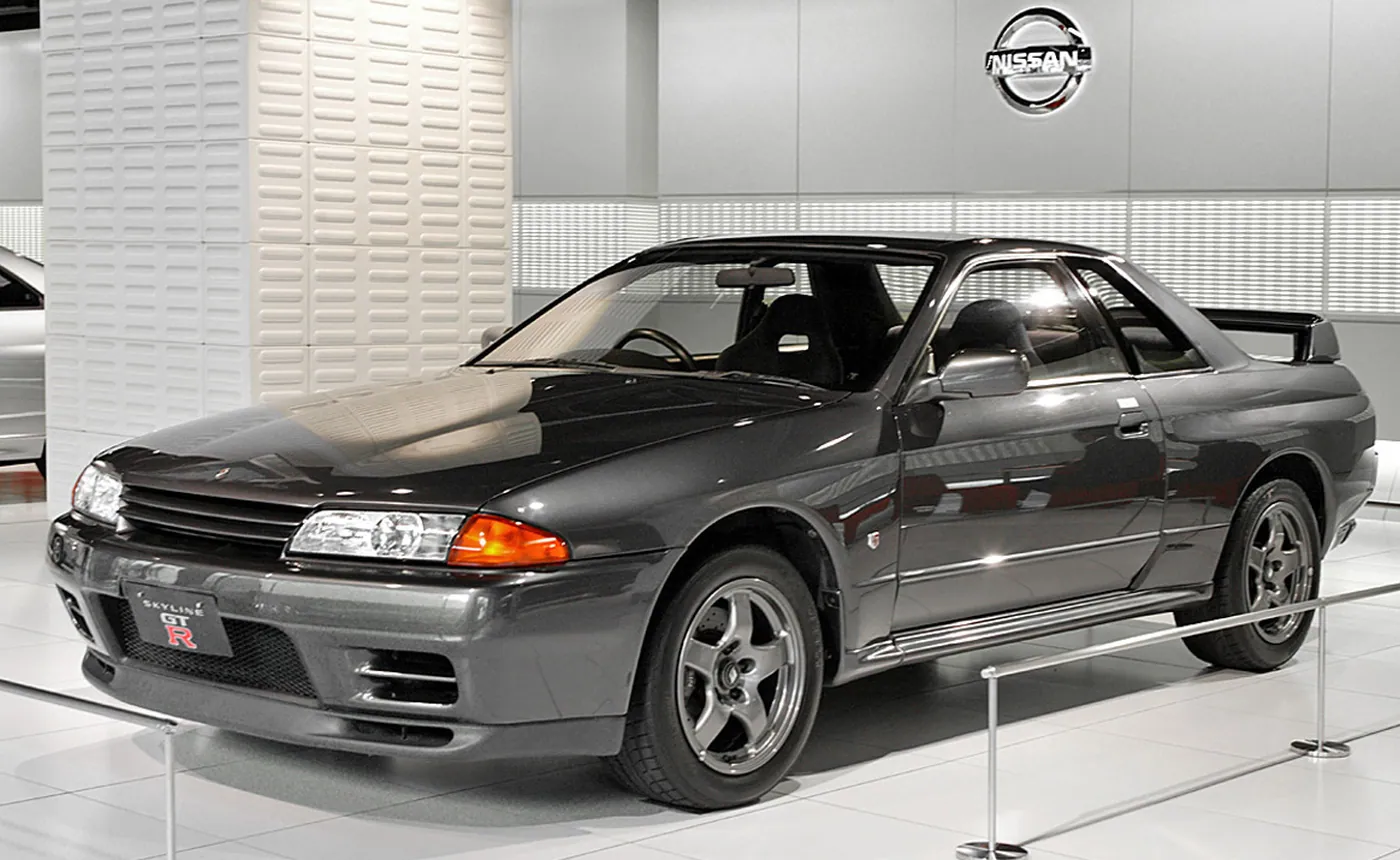
Between 1990 and 1993, the Skyline GT-R R32 started 29 races in the Japanese Touring Car Championship and won all 29. Abroad it won the Spa 24 Hours in 1991 and took consecutive victories at Bathurst in Australia, where the motoring press gave it the nickname that stuck: Godzilla. It was so dominant that the rules it raced under were rewritten.
That record is the reason people still talk about the R32 with a kind of awe. The road car behind it is the reason they still want to own one.
The specs
| Years built | 1989–1994 |
|---|---|
| Engine | 2.6-litre twin-turbo straight-six (RB26DETT) |
| Power | 280 PS (Japanese net rating) |
| Gearbox | Five-speed manual |
| Drive | ATTESA E-TS electronically controlled four-wheel drive |
| Body styles | Two-door coupe |
| Steering | Super HICAS four-wheel steering |
Bringing the GT-R back
Nissan had not built a GT-R since 1973. By the late 1980s, flush with bubble-economy confidence, the company had set itself the goal of building the best-handling cars in the world by 1990. The eighth-generation Skyline, the R32, launched in 1989, and the GT-R arrived in August of that year with the specification aimed squarely at Group A racing.
Its engine size was chosen with the rules in mind. Turbocharged cars were classed by multiplying displacement, and 2.6 litres put the GT-R in the class where it could carry the weight and tyres Nissan wanted. The result was the RB26DETT.
Design and engineering
The RB26DETT is a 2.6-litre straight-six with twin overhead camshafts, six individual throttle bodies and two turbochargers, built with an iron block designed to handle far more than its rated output. On paper it made 280 PS, the figure Japanese makers had agreed not to exceed. In reality it was conservatively rated, and it responds readily to tuning.
Drive goes through a five-speed manual gearbox to ATTESA E-TS, an electronically controlled four-wheel-drive system that runs mostly as a rear-drive car and sends torque to the front axle when sensors detect slip. Super HICAS steers the rear wheels slightly for stability. The bonnet and front wings are aluminium to save weight, and the body is compact, with the flared arches and four round tail lamps that link it to earlier Skylines.
How it drives today
An R32 GT-R in good order still feels quick, but what stays with you is the way it puts power down. The engine is flat and civil low in the revs, then the turbos arrive and it pulls hard to the red line with a hard-edged, metallic six-cylinder wail. Out of a wet roundabout the four-wheel drive gathers the car up and fires it forward. The steering is heavier than in a modern car and the ride firm, and the cabin feels compact and functional rather than plush.
On Irish roads that four-wheel drive is a real advantage. On a soaking N-road the R32 inspires far more confidence than most rear-drive classics of the same era.
Variants worth knowing
The standard GT-R makes up the bulk of the roughly 43,000 cars built. The Nismo edition of 1990 was a homologation special, built in a run of around 560 cars, with extra aerodynamic ducts and weight-saving measures. The N1 model was a lighter, more focused car for Japanese production racing. Late in production came the V-spec, with Brembo brakes and larger wheels, and then the V-spec II with wider tyres. These special versions command attention and attract fakes, so their identity should be checked carefully.
Buying one in Japan
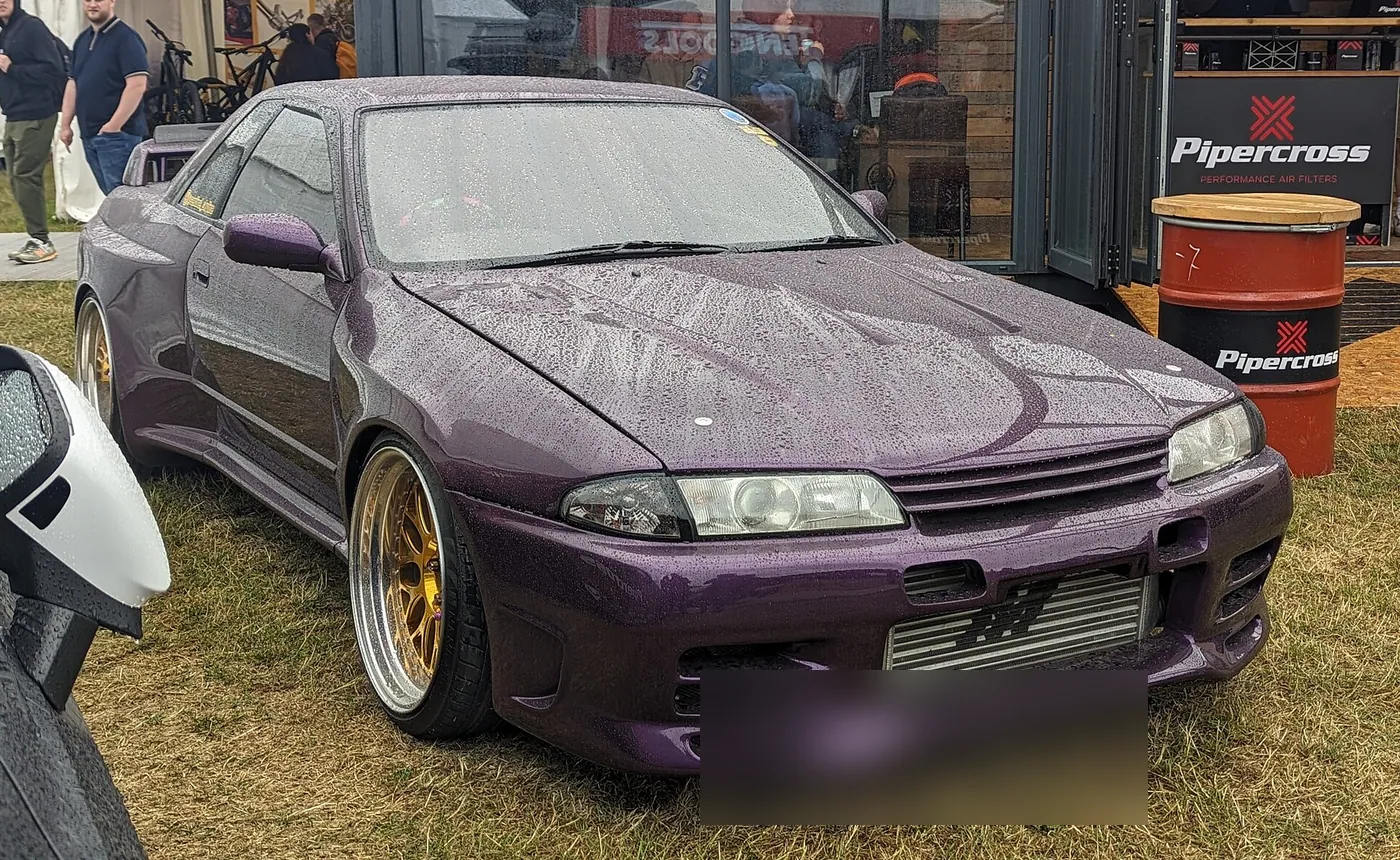
Very few R32 GT-Rs are untouched. Most have been modified, some lightly, some heavily, and boost increases, aftermarket exhausts, coilovers and larger turbos are common. Ask for documentation of every change and expect to see an auction sheet that records modifications. A car returned to standard is often preferable to one with a long list of tuning parts.
Rust is a serious concern. Check the rear wheel arches, sills, the rear quarter panels behind the doors, the battery tray, front strut tops and the area around the rear screen. Early RB26 engines had a known weakness in the oil pump drive, and the original ceramic turbine wheels can fail if boost has been raised. Smoke, oil leaks and low compression need investigating before purchase.
Mileage on R32s has to be treated with caution, as instrument clusters are often replaced. Records and the auction sheet's own notes are the best evidence available.
Should you import one?
The R32 GT-R suits a buyer who wants a 1990s performance icon with a racing record few cars can match, and who is ready for the care an older turbocharged engine needs. It is no longer a cheap car to buy or to run well.
It is right-hand drive, it handles Irish weather better than most classics thanks to four-wheel drive, and the earliest cars are now over 30 years old, so they can qualify for Ireland's vintage treatment. Find a specialist who knows the RB26, insure it on an agreed value and keep it dry. Treated properly, an R32 is still one of the most exciting Japanese cars you can put on an Irish road.
Frequently asked questions
Why is the R32 GT-R called Godzilla?
The nickname came from the Australian motoring press after the GT-R dominated touring car racing there in the early 1990s.
Is the R32 GT-R four-wheel drive?
Yes. It uses ATTESA E-TS, which sends power mainly to the rear wheels and transfers torque to the front when needed.
Are most R32 GT-Rs modified?
Many are. Ask for documentation of all changes and check the auction sheet for listed modifications.
Can an R32 GT-R qualify for vintage status in Ireland?
Cars over 30 years old can qualify, and the earliest R32 GT-Rs from 1989 have now passed that point.
More Japanese classics
- Nissan Skyline R31 GTS-R: the forgotten homologation special that bridged two GT-Rs
- Nissan Skyline GT-R Kenmeri: the 197-car GT-R that never got to race
- Nissan Skyline GT-R R33: the bigger, calmer GT-R that proved itself at the Nürburgring
- Datsun Fairlady Z (S30): the affordable sports car that won over the world
- Nissan Fairlady Z (Z31): the turbo V6 coupe that defined the 1980s Z
- All 90 Japanese classics you can import
Photo credits
- Photo: Tennen-Gas / Wikimedia Commons, CC BY-SA 3.0
- Photo: Calreyn88 / Wikimedia Commons, CC BY-SA 4.0