
Nissan Skyline GT-R R33: the bigger, calmer GT-R that proved itself at the Nürburgring
Longer and heavier than the R32, the R33 GT-R was dismissed by some at launch and is now valued as the most usable of the classic GT-Rs. Here is what changed, what to look for and how it suits Irish roads.
By the Japan to Ireland editors · · 4 min read
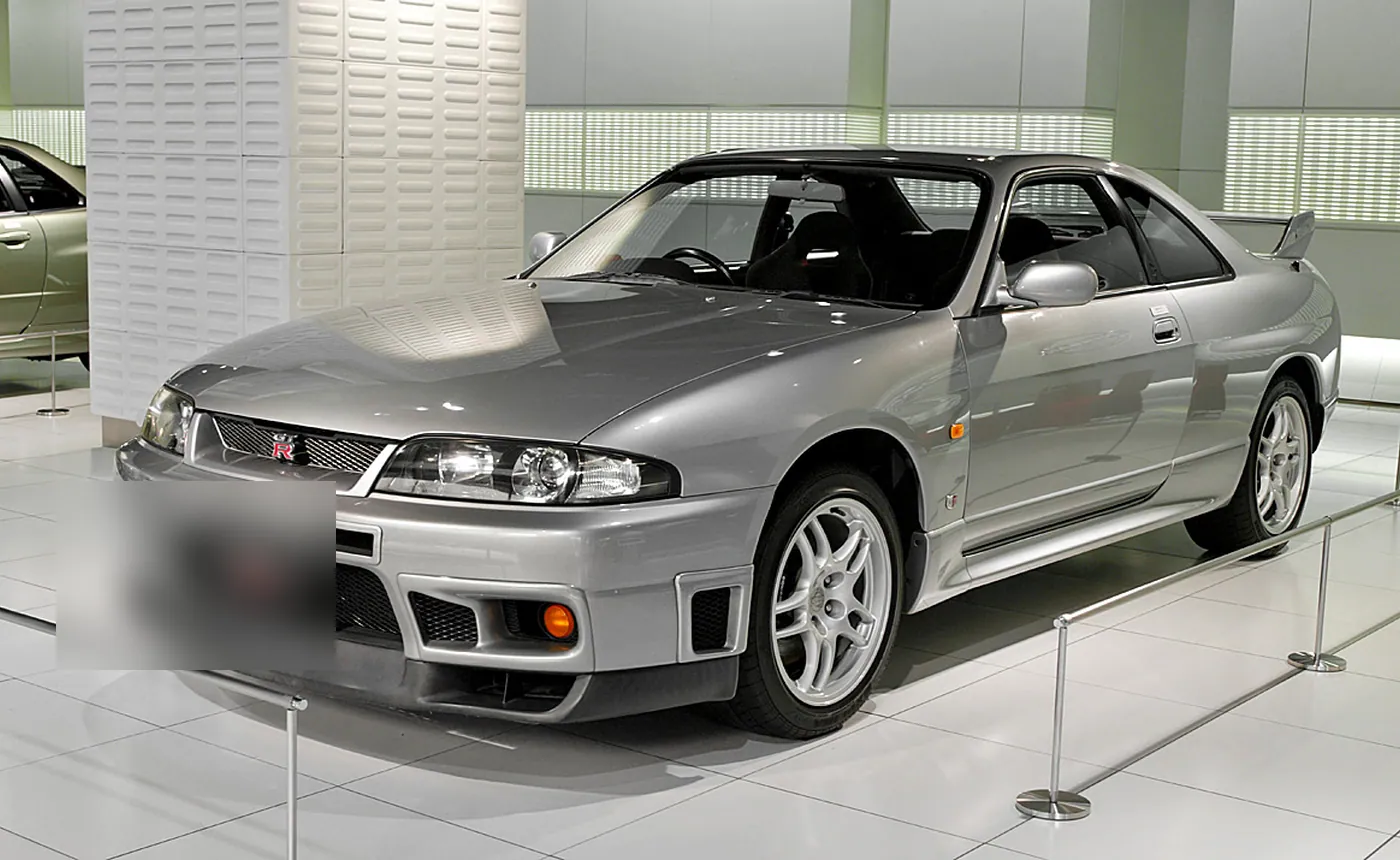
Before the R33 Skyline GT-R went on sale, Nissan sent it to the Nürburgring Nordschleife, the long, punishing circuit in Germany's Eifel hills, and published a lap time just under eight minutes. Its advertising made the point bluntly, comparing the time with the R32's and counting the seconds saved. In the mid-1990s, a production car going around the Nordschleife in under eight minutes was a headline.
The car still needed it. The R33 had grown, and early critics worried that the GT-R had lost its edge.
The specs
| Years built | 1995–1998 |
|---|---|
| Engine | 2.6-litre twin-turbo straight-six (RB26DETT) |
| Power | 280 PS (Japanese net rating) |
| Gearbox | Five-speed manual |
| Drive | ATTESA E-TS four-wheel drive; ATTESA E-TS Pro with active rear differential on V-spec |
| Body styles | Two-door coupe; four-door Autech version in 1998 |
| Steering | Super HICAS four-wheel steering |
A different decade
The R33 arrived in January 1995, a few years after Japan's bubble economy had burst. The mood was more cautious, and the ninth-generation Skyline reflected a push for refinement and comfort as well as speed. The wheelbase was longer, the cabin roomier and the body heavier, all of which made the standard Skyline a better grand tourer.
For the GT-R, the engineers set out to make that bigger car faster than its predecessor where it counted: on a demanding circuit.
Design and engineering
The RB26DETT carried over: a 2.6-litre twin-cam straight-six with two turbochargers and individual throttle bodies, rated at the agreed 280 PS but with more torque than in the R32. A five-speed manual gearbox was the only transmission. The four-wheel-drive system was revised, and the V-spec models used ATTESA E-TS Pro, which added an active limited-slip rear differential to help the car turn and put power down more precisely. Super HICAS rear-wheel steering remained.
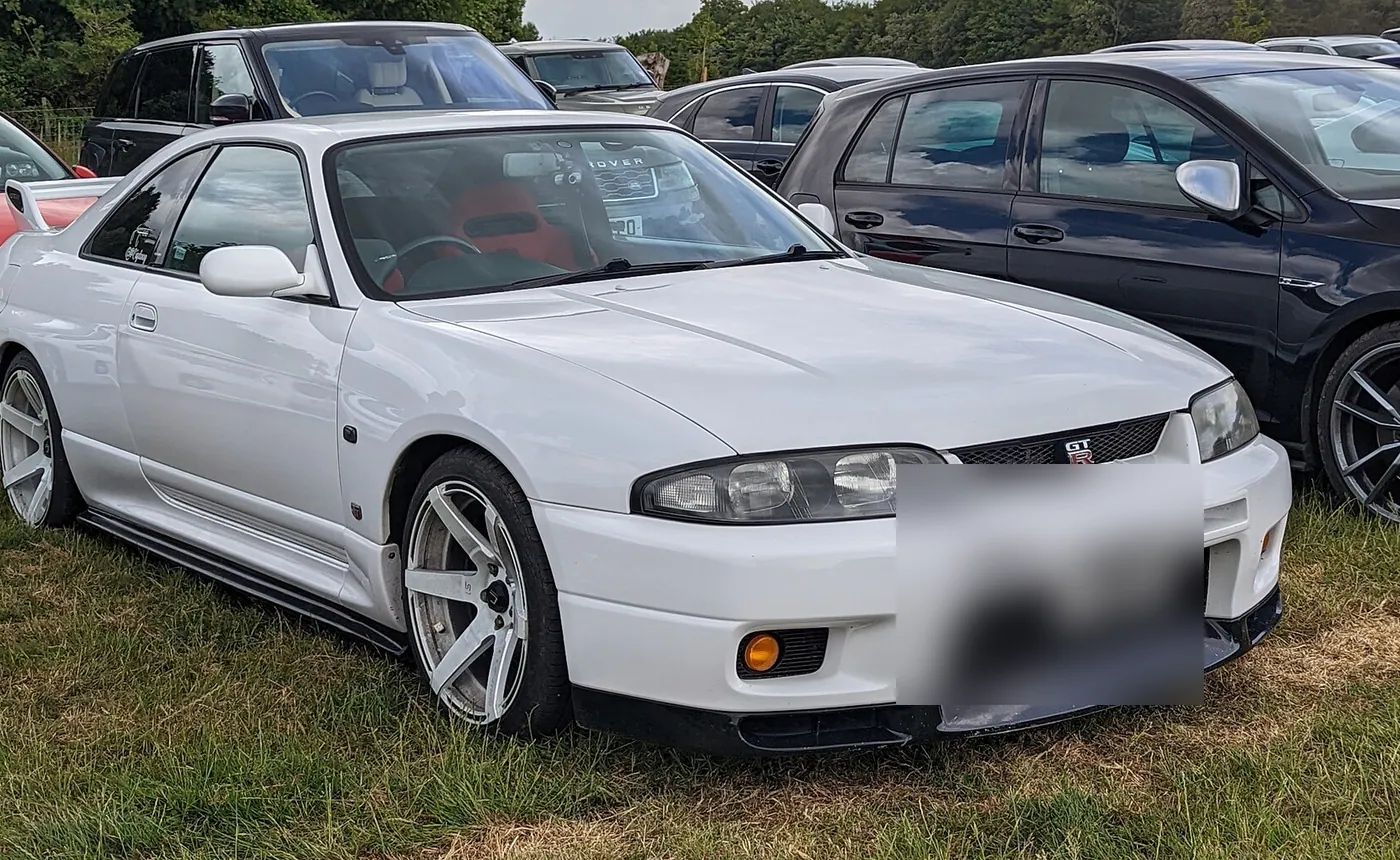
Visually the R33 is smoother and more rounded, with a large adjustable rear wing, a deep front bumper and the round tail lamps that mark every GT-R. The extra length gives it a more planted stance, and the bigger cabin makes it the most comfortable of the 1990s GT-Rs for long drives.
Nissan also took the R33 racing at Le Mans in 1995, with a GT1 car developed from it. To mark the effort, a small run of LM Limited road cars was built.
How it drives today
On the road the R33 feels stable and composed. It is not as nimble as an R32 in tight corners, but on fast, sweeping roads it is calm and supremely confident, and in the wet its four-wheel drive and longer wheelbase give it a reassuring footing. The engine is strong in the mid-range and still loves revs, and the ride is more forgiving than its reputation suggests. For long trips across the country, it is arguably the most usable GT-R of the era.
Variants worth knowing
Most cars are standard GT-Rs or V-specs, and the V-spec, with its active rear differential, is the more desirable. The N1 version was a lighter specification aimed at production racing. The LM Limited marked the Le Mans programme. The Nismo 400R was a very rare high-performance edition built in tiny numbers. In 1998 Autech built a four-door GT-R to mark the Skyline's 40th anniversary, an unusual and appealing car for anyone who wants the GT-R drivetrain with practical rear doors. A small run of cars was also officially sold in the United Kingdom, making the R33 the first GT-R to be marketed new there.
Total production was considerably lower than the R32's, which helps explain the R33's growing appeal among collectors.
Buying one in Japan
As with every GT-R, originality is uncommon. Many cars have been tuned, from simple exhausts to full engine builds. The original ceramic turbine wheels can fail at raised boost, so a car running higher pressure on standard turbos is a risk. Ask what has been done, look for evidence of who did it, and read the auction sheet's notes on modifications carefully.
Check for rust around the rear wheel arches, sills, the bottoms of the doors, the boot floor and the front chassis area. The heavy rear wing can cause cracking or corrosion on the boot lid. ATTESA and HICAS faults show up on the dash and should be investigated, not ignored. Rare variants such as the LM Limited, V-spec and Autech four-door should have matching documentation, because body kits can be added to any car.
Odometer readings should be supported by records, because instrument clusters are sometimes swapped. Japanese-market cars also have a speed limiter at 180 km/h, which many owners have removed.
Should you import one?
The R33 GT-R suits someone who wants the RB26 experience in a car that is easier to live with than an R32 and less outlandish than an R34. It is a strong touring car, sure-footed in wet Irish weather, and comfortable enough for long days on the motorway.
It is right-hand drive, which helps. The earliest R33s are now approaching the age at which cars over 30 years old can qualify for Ireland's vintage treatment, which buyers should keep in mind when timing a purchase. In the meantime, plan for specialist servicing, agreed-value insurance and dry storage in winter. Buy the best documented car you can find, and it will be one of the most rewarding Japanese cars you can own here.
Frequently asked questions
Is the R33 GT-R faster than the R32?
Nissan's own Nürburgring testing showed the R33 lapping faster, although the R32 feels more agile on tight roads.
What is the R33 V-spec?
A version with ATTESA E-TS Pro, adding an active limited-slip rear differential to the four-wheel-drive system.
Was there a four-door R33 GT-R?
Yes. Autech built a four-door GT-R in 1998 to mark the Skyline's 40th anniversary.
Does the R33 GT-R qualify for vintage status in Ireland?
Cars over 30 years old can qualify; the earliest R33s are approaching that age, so check the build date of any car you consider.
More Japanese classics
- Nissan Skyline GT-R R32: how Godzilla won every race it entered and changed the rules
- Nissan Skyline R31 GTS-R: the forgotten homologation special that bridged two GT-Rs
- Datsun Fairlady Z (S30): the affordable sports car that won over the world
- Nissan Fairlady Z (Z31): the turbo V6 coupe that defined the 1980s Z
- Nissan Fairlady Z (Z32): the twin-turbo Z that set Japan's 280 PS ceiling
- All 90 Japanese classics you can import
Photo credits
- Photo: Tennen-Gas / Wikimedia Commons, CC BY-SA 3.0
- Photo: Calreyn88 / Wikimedia Commons, CC BY-SA 4.0