
Eunos Cosmo: the three-rotor bubble-era coupe that showed Japan the future
Mazda's grandest rotary had the only three-rotor engine ever fitted to a production car and a touchscreen with satellite navigation in 1990. It is extravagant, thirsty and unforgettable.
By the Japan to Ireland editors · · 4 min read
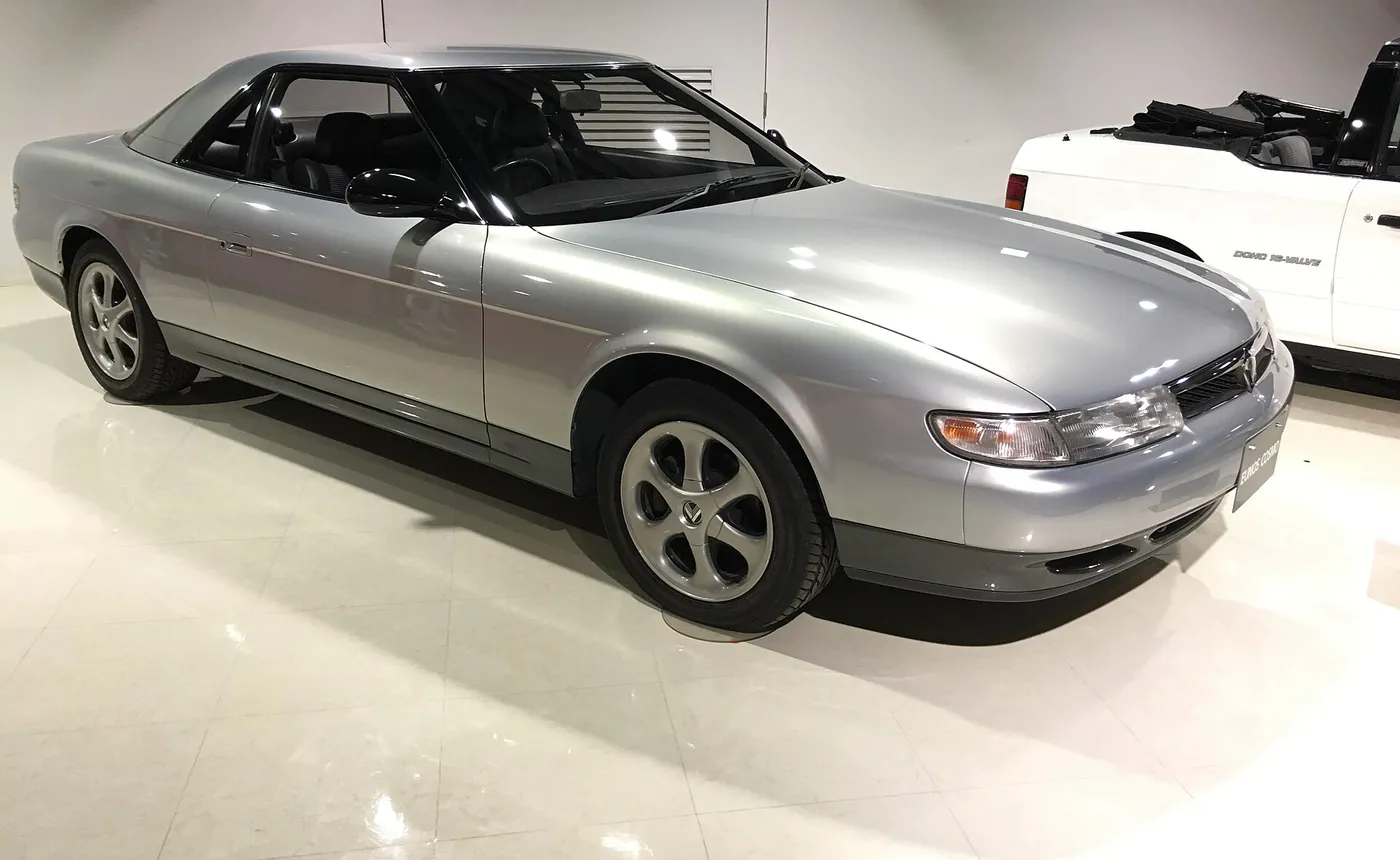
In 1990, at the height of the Japanese bubble economy, Mazda launched a coupe with a touchscreen on its dashboard. The screen controlled the climate, showed vehicle information and, on some versions, displayed a map with the car's position fixed by satellites in orbit. It was one of the first cars in the world sold with GPS navigation. Under the bonnet was something even rarer: a three-rotor engine, the only one ever fitted to a production car.
The car was the Eunos Cosmo. It was Mazda's most ambitious and most luxurious rotary, and it remains a symbol of a moment when Japanese carmakers believed anything was possible.
The specs
| Years built | 1990–1996 |
|---|---|
| Engine | 1,962 cc three-rotor (20B-REW) or 1,308 cc twin-rotor (13B-REW), sequential twin turbos |
| Power | 280 PS (20B-REW), 230 PS (13B-REW) |
| Gearbox | 4-speed automatic |
| Drive | Rear-wheel drive |
| Body styles | Two-door 2+2 coupe |
| Technology | Car Communication System touchscreen with GPS navigation |
| Production | Fewer than 9,000 |
Why Mazda built it
During the bubble years, Mazda expanded rapidly, creating several new sales channels in Japan, including Eunos, Efini and Autozam. Each needed its own models. The Eunos brand was intended to be upmarket and stylish, and the Cosmo was its flagship: a large, comfortable grand tourer that could compete with the best luxury coupes in the world.
Japan in 1990 was wealthy and confident. Buyers wanted technology, refinement and exclusivity, and money was easy to come by. The Cosmo delivered all three, with a price to match.
Design and engineering
The headline is the 20B-REW, a 1,962 cc three-rotor engine with sequential twin turbochargers. It was rated at 280 PS, the maximum Japanese manufacturers agreed to declare at the time, though its torque was the real story. A twin-rotor 13B-REW with 230 PS was also offered.
All Cosmos used a four-speed automatic gearbox. This was a grand tourer, not a sports car, and the engine's smoothness suited relaxed, effortless progress.
The body is a long, low 2+2 coupe with clean lines. Inside, higher-specification cars had leather, wood trim and the Car Communication System, or CCS, with its touchscreen. Few cars anywhere offered anything like it at the time.
The name carried weight inside Mazda. The Eunos Cosmo was the fourth and final car to wear the Cosmo badge, following the original Cosmo Sport of 1967, the Cosmo AP of the 1970s and a third generation in the early 1980s. Each had been a showcase for the rotary engine, and the Eunos version was the most lavish of them all. When production ended, the Cosmo name ended with it, and no later Mazda has used a three-rotor engine on the road.
How it drives today
The 20B-engined Cosmo is remarkably smooth. The three rotors spin with almost no vibration, and the car gathers speed with a smooth, unbroken rush that feels more like a turbine than a piston engine. It is genuinely fast, and very comfortable on a long motorway run.
It is also heavy and very thirsty. Fuel consumption was poor even when new, and it has not improved with age. Handling is secure but not sporting. This is a car for covering distance in comfort and style rather than attacking corners.
Versions worth knowing
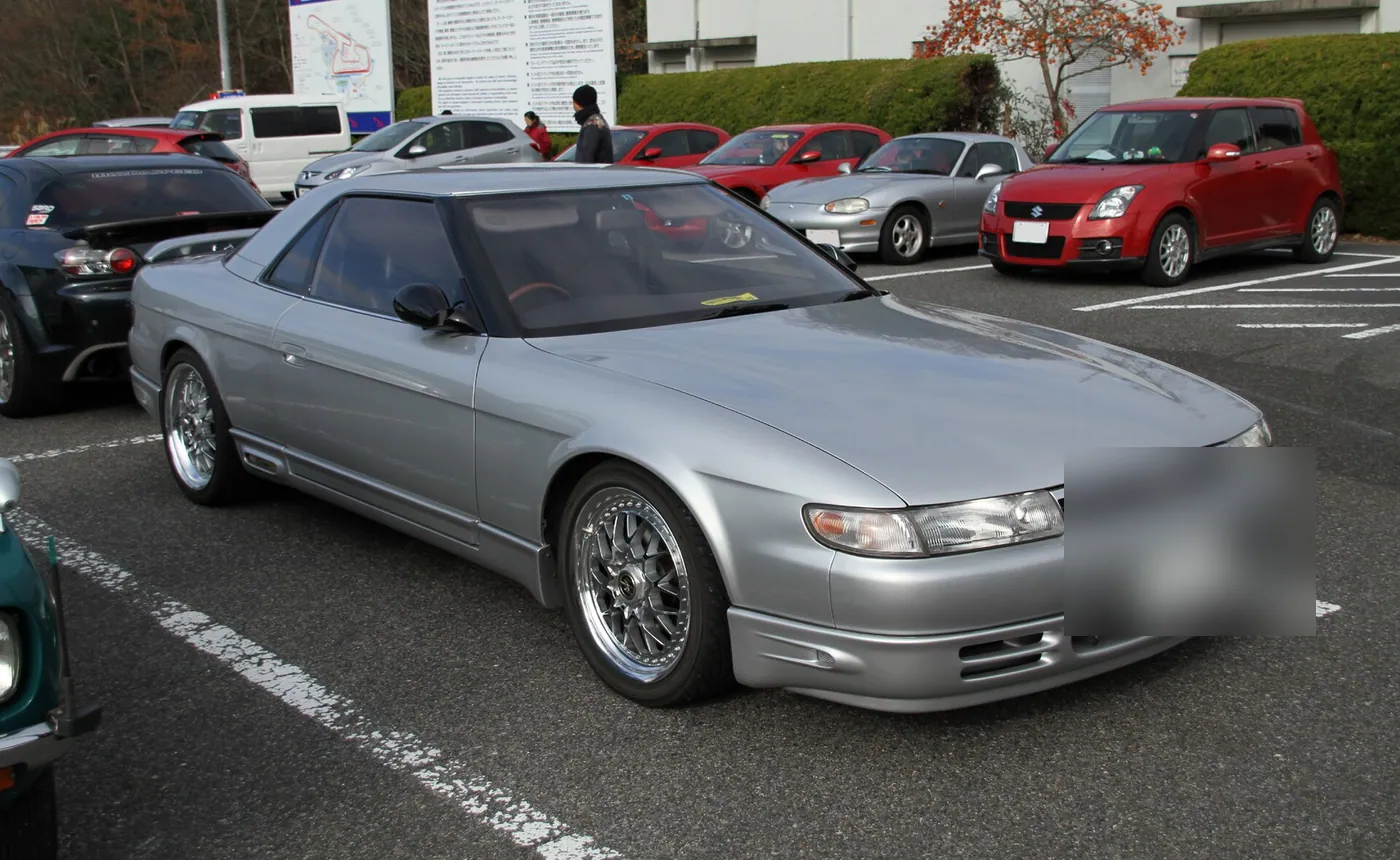
The main choice is engine: the three-rotor 20B-REW is the one most collectors want, while the 13B-REW is more common and slightly simpler to maintain. Trim levels such as Type E and Type S differ in equipment, with the CCS screen fitted to higher-spec cars. Cars with working CCS systems are especially prized.
What to check when buying in Japan
The CCS system is a known weak point. Screens fail and electronics age, and because the system controls the climate on many cars, a failure is more than cosmetic. Check that every function works. Replacements are scarce.
For the engine, a rotary compression test is essential, reading each face of each rotor. The 20B is rarer than the 13B, and some parts are hard to find. Look for signs of coolant seal failure, overheating or smoke. The sequential turbo system depends on vacuum hoses and actuators that perish with age and heat.
Rust can appear in the sills, wheel arches and floor, particularly on cars from colder regions. Interior trim, especially leather and wood, can be worn and difficult to replace.
Some Cosmos have had their engines swapped or modified, and some 20B engines have been removed for use in other cars. Check engine and chassis numbers against the documents. Mileage can be difficult to prove on a car of this age. The Japanese export certificate must be in order.
Should you import one?
The Eunos Cosmo suits a collector who values rarity, technology and the story of Japan's bubble years. It is not a practical everyday car, and running costs, especially fuel, are high.
Cars from the early part of production are now over 30 years old and can qualify for Ireland's vintage treatment, with later cars following soon. Ownership means finding specialists, sourcing parts patiently and keeping the electronics alive. In return, you have one of the most extraordinary cars Japan ever built, and almost certainly the only one at any Irish car show.
Frequently asked questions
What engine does the Eunos Cosmo have?
Most collectors seek the 20B-REW three-rotor engine with 280 PS, though a twin-rotor 13B-REW with 230 PS was also available.
Did the Eunos Cosmo have satellite navigation?
Yes, its Car Communication System touchscreen offered GPS navigation on some versions, one of the first such systems in a production car.
Was a manual gearbox available?
No, every Eunos Cosmo used a four-speed automatic gearbox.
What is the biggest weakness?
The CCS touchscreen system can fail, and because it controls the climate on many cars, a working system is important.
More Japanese classics
- Mazda RX-7 (FD3S): the most beautiful rotary, and the most demanding to own
- Mazda RX-7 (FC3S): the turbocharged rotary that grew up for the bubble years
- Eunos Roadster (NA): the little car that brought the sports car back from the dead
- Toyota Supra (A70): the turbocharged GT that gave the Supra its own name
- Toyota Supra (A80): The Grand Tourer That Became a Legend by Accident
- All 90 Japanese classics you can import
Photo credits
- Photo: NAParish / Wikimedia Commons, CC BY-SA 2.0
- Photo: ゴリバー / Wikimedia Commons, CC BY-SA 3.0