
Toyota Supra (A70): the turbocharged GT that gave the Supra its own name
Before the A80 became a legend, the A70 established the Supra as Toyota's flagship sports car, with turbo power, double wishbones and a removable roof.
By the Japan to Ireland editors · · 4 min read
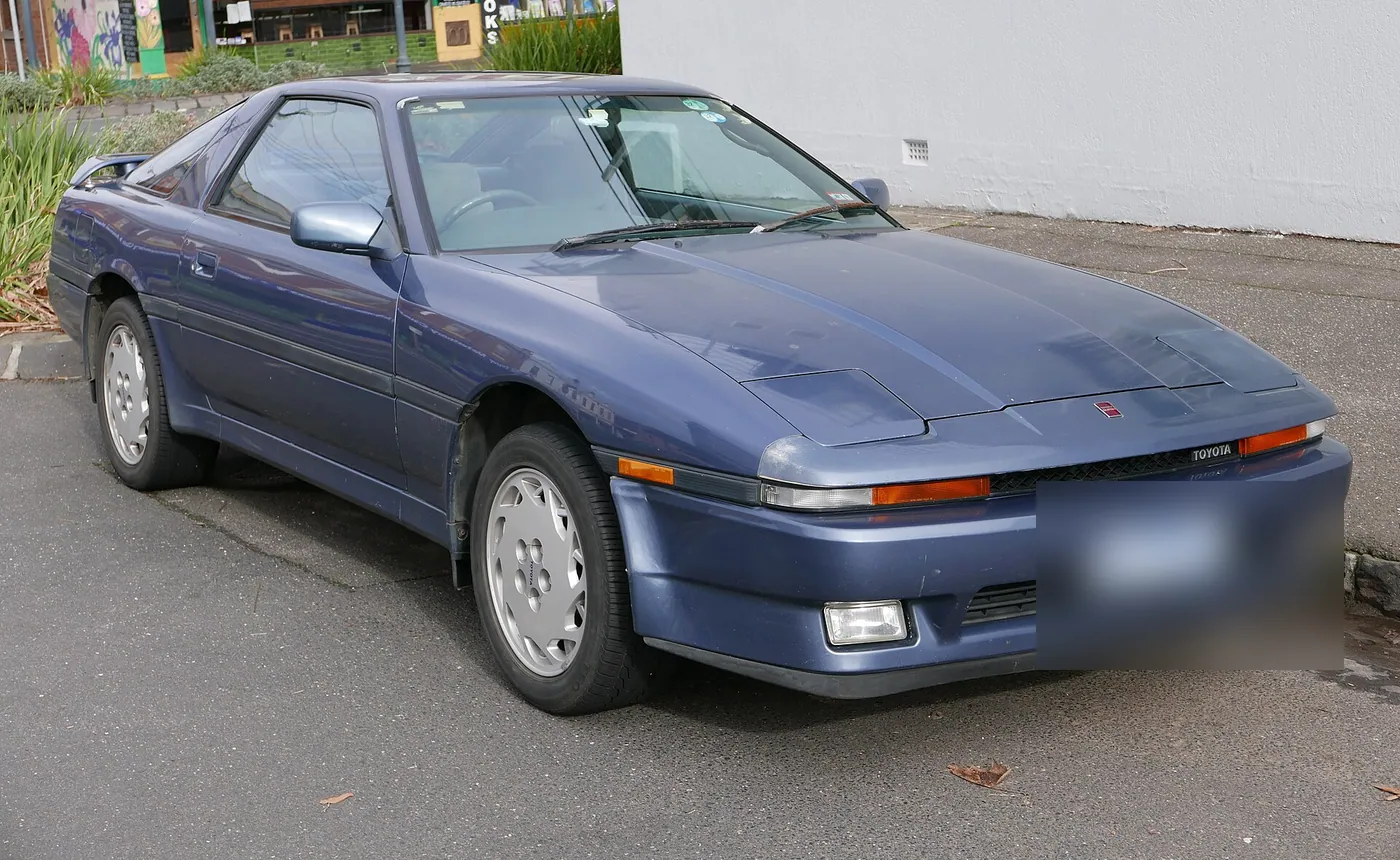
In February 1986, Toyota launched a new sports car in Japan with a familiar name and a new identity. For the first time, the Supra stood apart from the Celica. In Japan, earlier versions had been sold as the Celica XX. Now the car had its own name, its own platform and a role as Toyota's flagship sports coupe.
The A70 Supra was larger, more powerful and more sophisticated than anything Toyota had built in the segment before. It came with turbocharged engines, double wishbone suspension and the option of a removable roof panel. It set the stage for the legend that followed.
The specs
| Years built | 1986–1993 |
|---|---|
| Engine | 3.0-litre turbo (7M-GTEU), 2.5-litre twin turbo (1JZ-GTE), 2.0-litre twin turbo (1G-GTE) and others |
| Power | Around 230 PS (7M-GTEU), 280 PS (1JZ-GTE) |
| Gearbox | 5-speed manual, 4-speed automatic |
| Drive | Rear-wheel drive |
| Body styles | Three-door liftback, Aerotop with removable roof panel |
| Suspension | Double wishbones front and rear |
| Homologation special | Turbo A (1988), around 500 built |
Why Toyota built it
By the mid-1980s, Japanese manufacturers were competing hard in the sports car market. Nissan had the Fairlady Z, Mazda had the RX-7, and buyers wanted more power and more technology. Toyota responded with a car designed to compete with European grand tourers as well as Japanese rivals.
Japan's economy was booming, and the market for expensive, well-equipped cars was growing rapidly. The Supra offered performance and luxury, with a long list of options and technology.
Design and engineering
The main engine in early Japanese cars was the 7M-GTEU, a 3.0-litre straight-six with a turbocharger and intercooler, producing around 230 PS. Smaller engines, including the 2.0-litre twin-turbo 1G-GTE, were also offered in Japan, where annual car tax rose with engine size and a 2.0-litre version made sense for many buyers. In 1990, the 2.5-litre 1JZ-GTE twin-turbo arrived with 280 PS.
The chassis uses double wishbones at all four corners, and some versions had Toyota's TEMS electronically adjustable suspension. The Aerotop version had a removable roof panel that could be stored in the boot.
In 1988, Toyota built the Turbo A, a limited homologation special for Group A racing, with around 500 built. It had more power, a black body and distinctive details. The car was facelifted in the late 1980s with revised styling and interior updates.
How it drives today
The A70 is a grand tourer first. It is comfortable, stable and fast, especially with the turbo engines. The 7M-GTEU delivers strong torque, while the 1JZ-GTE is smoother and revs more freely.
The car is heavy, but the double wishbone suspension gives it good balance and grip. Steering is precise for its age, and the ride is comfortable on Irish roads. It is happy on the motorway, and it handles winding roads well, though it feels more like a GT than a sports car.
The cabin is a period piece in the best way: low, wide and full of buttons, with supportive seats and a driving position that suits long journeys. Visibility is good for a sports coupe, and the large rear hatch makes the car more practical than most rivals, with genuine space for luggage. In the wet, the turbo cars need a measured right foot, as the power arrives in a surge once boost builds, and old tyres on a heavy car do nothing for confidence.
Versions worth knowing
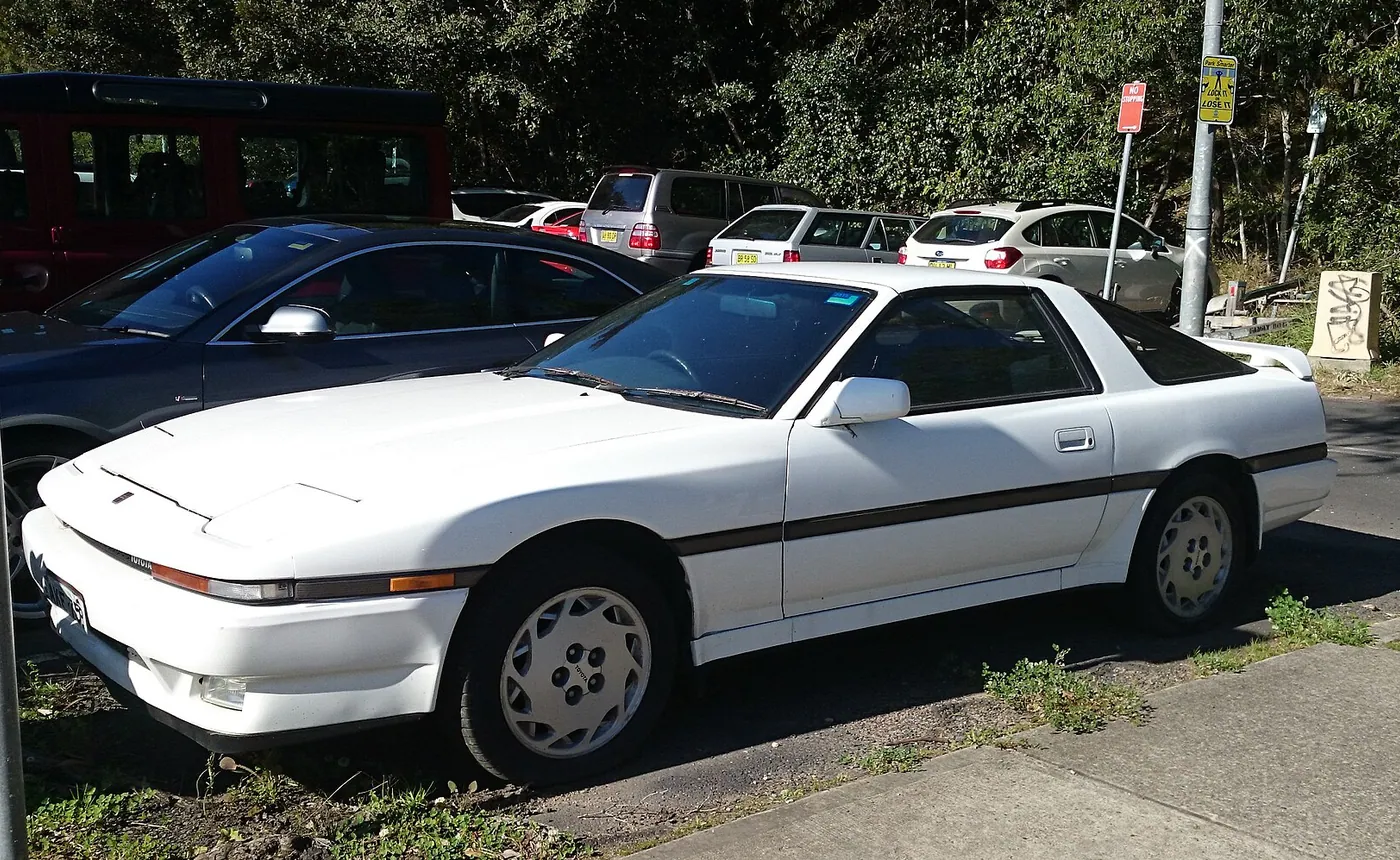
The 1JZ-GTE 2.5GT Twin Turbo models from 1990 are popular for their engine and reliability. The 7M-GTEU 3.0GT Turbo cars are more common. The Turbo A is the most collectable. Aerotop versions are sought after for the open-air experience.
What to check when buying in Japan
The 7M-GTEU is known for head gasket problems, often linked to head bolt torque. Check for coolant loss, overheating, white smoke and oil contamination. A properly rebuilt engine with uprated parts is a good sign. The 1JZ-GTE is generally tougher, though its turbos and ageing hoses deserve a careful look.
Turbo cars with a manual gearbox use a stronger unit than the non-turbo cars, and it is worth checking for worn synchromesh, a slipping clutch and noisy bearings. The automatic gearboxes are durable if the fluid has been changed regularly, but a harsh or slow shift points to trouble.
Rust can appear in the rear arches, sills, tailgate and around the Aerotop seals. Check the floor and underside carefully. Interior plastics can crack and fade, and electronics such as TEMS and the digital instruments can fail.
Many A70s have been modified, often with 1JZ or 2JZ engine swaps, aftermarket turbos and lowered suspension. Decide whether you want an original car or a modified one. Mileage can be difficult to prove on older cars, so condition and history matter more.
Check chassis numbers against the documents and confirm the Japanese export certificate is in order.
Should you import one?
The A70 suits a driver who wants a comfortable, fast and stylish classic GT. It is more practical than many classics and has strong parts support.
Every A70 is now over 30 years old and can qualify for Ireland's vintage treatment. Look for a well-maintained car, with evidence of head gasket work on 7M-engined cars. Treated well, the A70 is a rewarding and characterful classic, and a car that still turns heads on Irish roads.
Frequently asked questions
What is the best engine in the A70 Supra?
The 1JZ-GTE twin turbo from 1990 is valued for its smoothness and durability, while the 7M-GTEU offers strong torque.
What is the Turbo A?
A 1988 homologation special for Group A racing, with more power and distinctive details, and around 500 built.
What problems does the 7M-GTEU engine have?
It is known for head gasket failures, often linked to head bolt torque, so look for evidence of a proper rebuild.
What is the Aerotop?
A version of the A70 with a removable roof panel that can be stored in the boot for open-air driving.
More Japanese classics
- Eunos Roadster (NA): the little car that brought the sports car back from the dead
- Eunos Cosmo: the three-rotor bubble-era coupe that showed Japan the future
- Toyota Supra (A80): The Grand Tourer That Became a Legend by Accident
- Toyota AE86 Levin and Trueno: The Humble Corolla That Taught the World to Drift
- Toyota Celica GT-Four (ST165): The First Turbocharged, Four-Wheel-Drive Celica Goes Rallying
- All 90 Japanese classics you can import
Photo credits
- Photo: OSX / Wikimedia Commons, Public domain
- Photo: FotoSleuth / Wikimedia Commons, CC BY 2.0