
Toyota Supra (A80): The Grand Tourer That Became a Legend by Accident
Toyota built the fourth Supra as a fast, comfortable flagship for the end of the bubble era. A generation of tuners, gamers and film fans turned it into something else entirely.
By the Japan to Ireland editors · · 5 min read
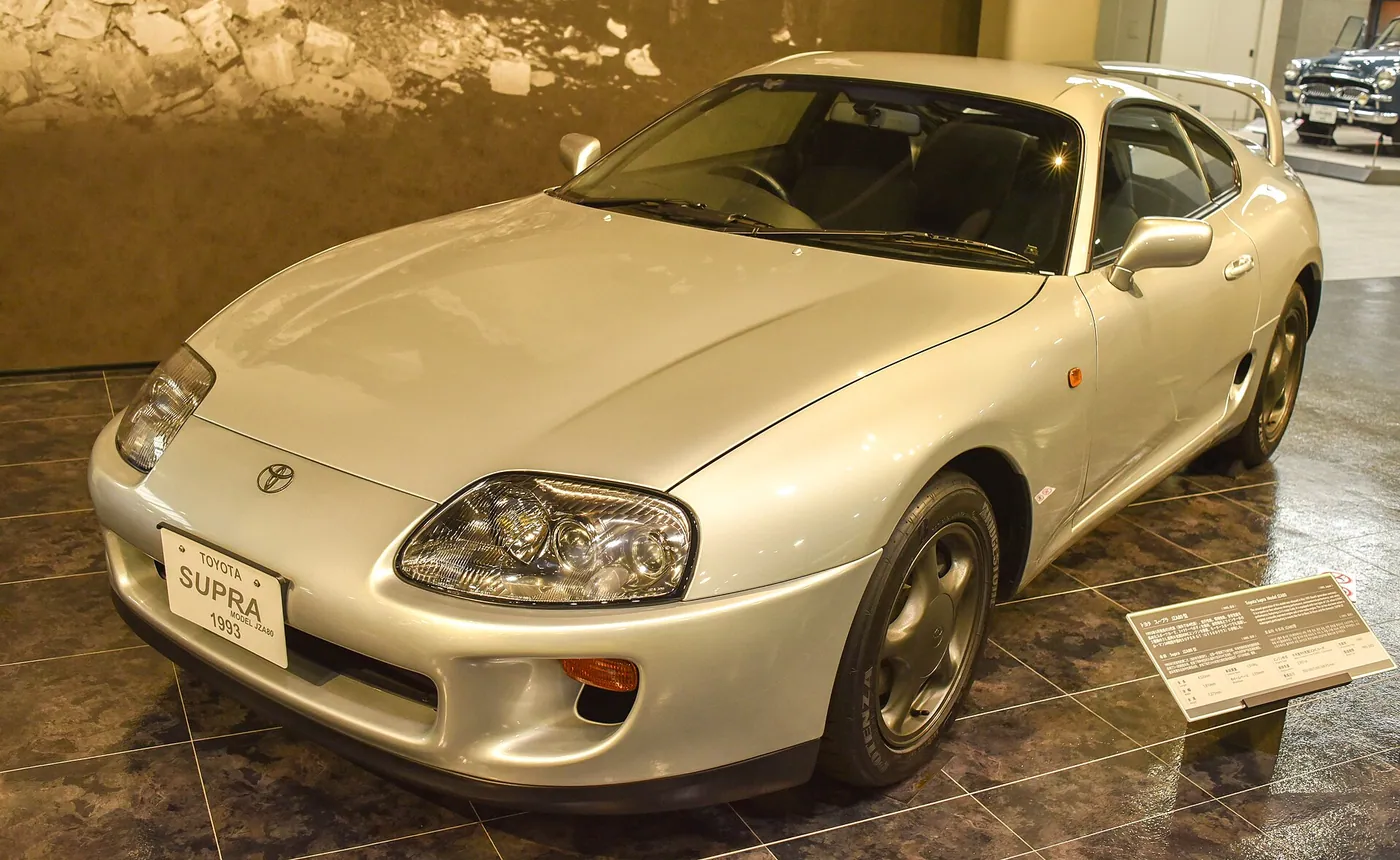
In May 1993, Japan was waking up to the fact that the party was over. The asset bubble had burst, land prices were sliding and the banks were quietly sitting on bad loans. Into that sober spring Toyota launched a car that had been conceived in far headier days: a rounded, wide, long-nosed coupe with a rear wing like a park bench and a twin-turbocharged straight-six under the bonnet. It was the fourth Supra, and it was, by the standards of what came before, an extravagance.
Nobody at the launch could have predicted what would happen next. The A80 sold modestly when new. It was expensive, it arrived as buyers were tightening their belts, and in some export markets it was withdrawn before the decade was out. Its reputation was built later, in tuning shops, in video games, on drag strips and in a 2001 Hollywood film about street racing. Today it is one of the most recognisable Japanese cars ever made.
The specs
| Years built | 1993–2002 |
|---|---|
| Engine | 3.0 straight-six 2JZ-GE, or 2JZ-GTE sequential twin-turbo |
| Power (Japan) | Twin-turbo 280 PS; non-turbo 225 PS |
| Gearbox | 5-speed or 6-speed manual, 4-speed automatic |
| Drive | Rear-wheel drive |
| Body styles | Three-door liftback, fixed roof or removable targa roof |
| Chassis code | JZA80 |
Built at the top of the curve
The A80 was the last Supra designed before the economic correction reshaped Toyota's priorities. The brief was a serious grand tourer that could stand comparison with the best from Europe, and the engineering budget shows. The bodywork used aluminium for the bonnet and other panels to save weight, the cabin wrapped around the driver like a cockpit, and the suspension used double wishbones at both ends.
The heart of it was the 2JZ-GTE, a 3.0-litre iron-block straight-six with two turbochargers arranged sequentially. At low revs a single turbo does the work, and the second joins in higher up, giving a smoother spread of shove than one large turbo could. In Japan the output was declared at 280 PS, the figure Japanese makers had informally agreed not to exceed. The engine was capable of far more, and that headroom is the whole reason tuners fell in love with it. The non-turbo 2JZ-GE was a gentler, simpler alternative.
Behind the twin-turbo engine sat a six-speed Getrag manual or a four-speed automatic. From 1997 Toyota added variable valve timing to the engines, a change Japanese buyers often look for in listings.
How it drives today
A standard A80 feels heavier and softer than its reputation suggests. It is a grand tourer first. The steering is weighty, the ride on Japanese-spec suspension is firm but not punishing, and the car settles beautifully at motorway speed. The twin-turbo engine pulls with a smooth, building surge, then a second, harder push when the second turbo comes in. It is properly fast even by modern standards.
On Irish roads the width is the thing you notice first. On a narrow N-road with a stone wall on one side, the Supra feels like a big car, and the long bonnet takes some judging. On a dry, open road it is a deeply satisfying machine, stable and composed. In the wet, with a lot of torque going to the rear wheels, respect is required.
The versions worth knowing
In Japan the twin-turbo car was the RZ, the version most collectors want, while the non-turbo cars were sold in SZ and GZ trims, the GZ being the more luxurious. A non-turbo six-speed manual was later offered as the SZ-R. Many cars have the removable roof panel, known in Japan as the Aerotop, which adds open-air driving at the cost of a little body stiffness.
Automatic twin-turbo cars are more common than manuals and are often less abused. A genuinely unmodified six-speed RZ is now the rarest and most sought-after combination.
What to check when buying one in Japan
The A80 resists rust better than many cars of its age, but it is not immune. Check the rear wheel arches, the sills, the area under the battery and the lower edges of the tailgate. Cars from snowy northern prefectures deserve a careful look underneath.
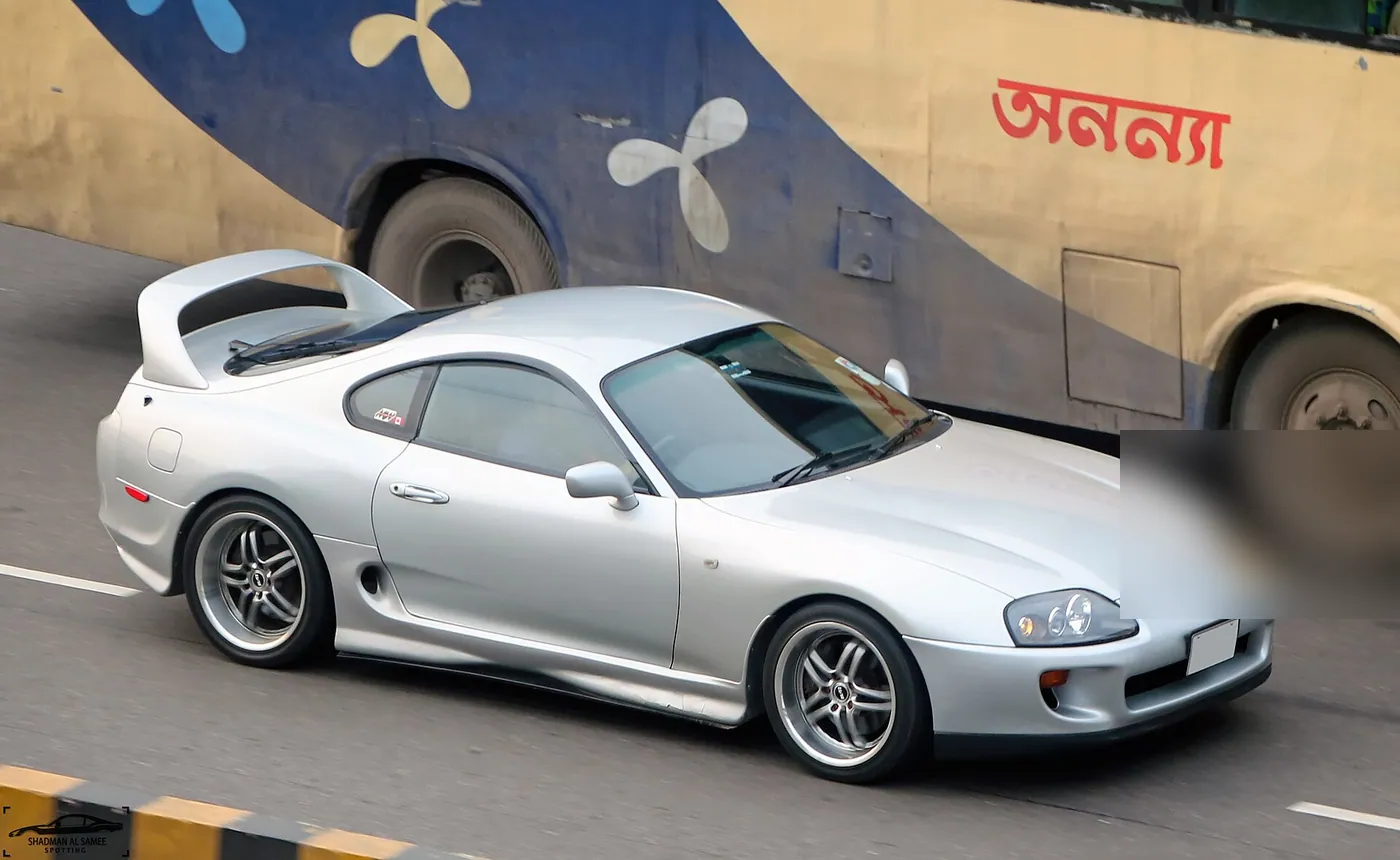
The larger problem is modification. A huge share of Supras have been tuned, many with single-turbo conversions, aftermarket engine management and boost far beyond standard. Some of this work is excellent. Some is not. A heavily modified car may also be difficult to get through the NCT and expensive to insure, so understand exactly what has been changed. Ask about the turbo system, look for clean hoses and listen for smooth transition between the turbos.
Mileage on older Japanese cars can be hard to verify, and odometer clusters are sometimes swapped. Look for service records and inspection history, and treat any wear that does not match the stated figure with caution. Toyota has reissued some parts for the A70 and A80 Supras under its heritage parts programme, which helps, but trim and interior pieces can still be scarce.
Should you import one?
If you have always wanted one, a Japanese-market car is the right place to start. It is right-hand drive, it was built for Japan's speed limits and conditions, and the supply of cars, while shrinking, is still deeper there than anywhere else.
Be realistic about what you are buying. This is a heavy, thirsty, high-performance car with more than a quarter of a century behind it, and it will need a mechanic who understands it. It is not a sensible daily driver for a commute on the M50. It is a car for good roads, dry weekends and owners who enjoy the ritual of looking after something special. Cars built from 1993 onward are now approaching or passing the 30-year mark, which can bring them within Ireland's vintage treatment, and that changes the ownership picture for some buyers. Buy the most original, best-documented car you can find, and resist the temptation to start modifying it.
Frequently asked questions
Is the A80 Supra right-hand drive in Japan?
Yes. Japanese-market Supras are right-hand drive, the same as Irish cars, so no conversion is needed.
What does RZ mean on an A80 Supra?
RZ was the Japanese name for the twin-turbo version, the most powerful and most sought-after model.
Are most A80 Supras in Japan modified?
A large share have been modified to some degree. Unmodified cars exist but take longer to find and are worth the wait.
Can an A80 Supra qualify as a vintage car in Ireland?
Cars over 30 years old can qualify for Ireland's vintage treatment, and the earliest A80s have now reached that age.
More Japanese classics
- Toyota Supra (A70): the turbocharged GT that gave the Supra its own name
- Eunos Roadster (NA): the little car that brought the sports car back from the dead
- Toyota AE86 Levin and Trueno: The Humble Corolla That Taught the World to Drift
- Toyota Celica GT-Four (ST165): The First Turbocharged, Four-Wheel-Drive Celica Goes Rallying
- Toyota Celica GT-Four (ST185): Toyota's World Champion in a Wide, Muscular Coupe
- All 90 Japanese classics you can import
Photo credits
- Photo: Coolalabright / Wikimedia Commons, CC BY 4.0
- Photo: Shadman Samee from Dhaka, Bangladesh / Wikimedia Commons, CC BY-SA 2.0