
Mazda RX-7 (FD3S): the most beautiful rotary, and the most demanding to own
Launched as the bubble burst, the third RX-7 was light, sequentially turbocharged and stunning to look at. It is a car that rewards care and punishes neglect.
By the Japan to Ireland editors · · 4 min read
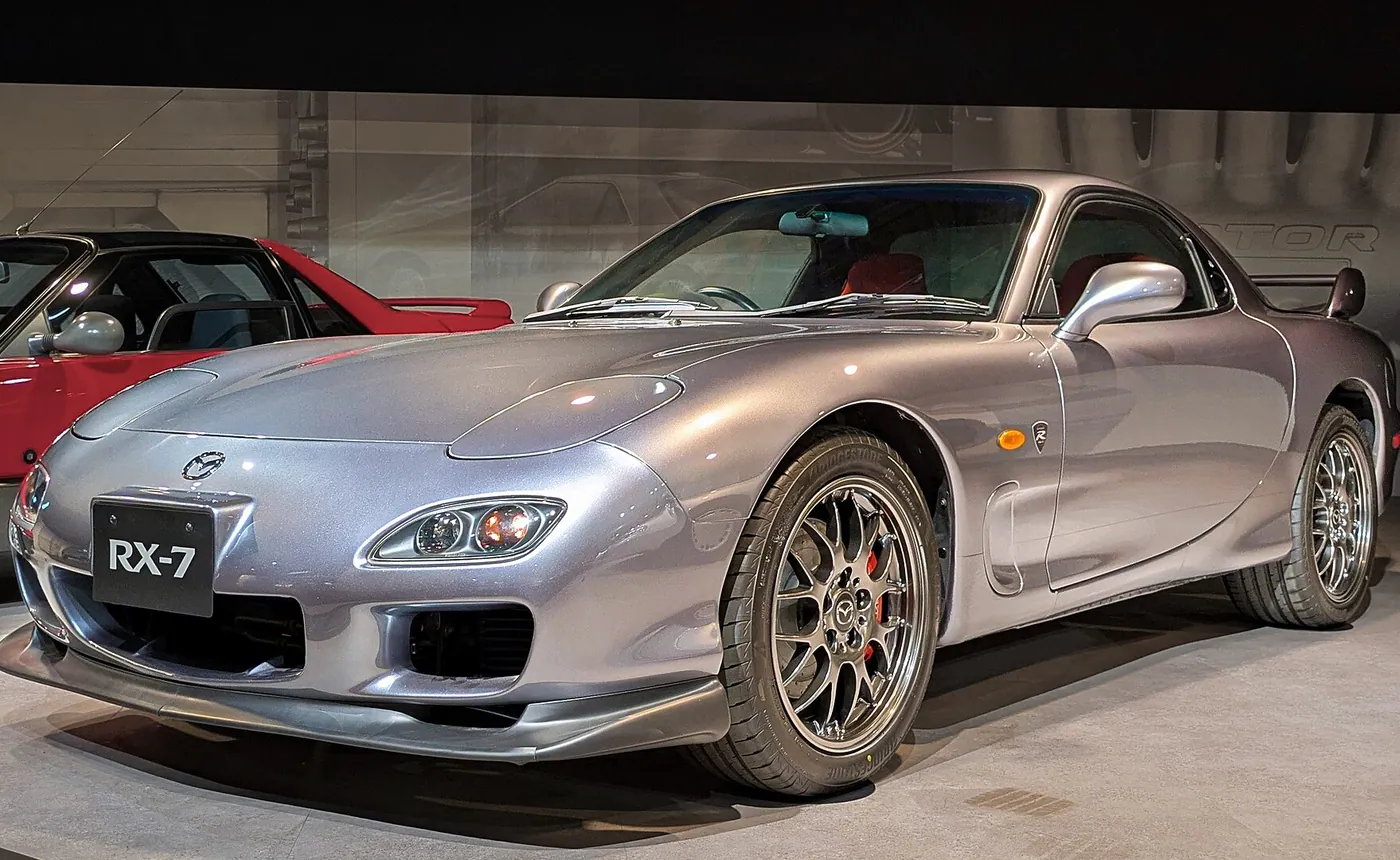
By late 1991, the Japanese bubble economy was beginning to deflate. Land and share prices had started to fall, and the confidence of the late 1980s was giving way to caution. It was an awkward moment to launch an expensive sports car, but Mazda did it anyway, and the third-generation RX-7 became one of the defining Japanese performance cars of the 1990s.
The FD3S was sold in Japan under Mazda's Efini brand, one of the sales channels the company had created during the boom years. It was low, curved and almost free of hard lines, and its sequentially turbocharged rotary engine made it astonishingly fast for its time.
The specs
| Years built | 1991–2002 |
|---|---|
| Engine | 1,308 cc twin-rotor (13B-REW), sequential twin turbos |
| Power | 255 PS, 265 PS from 1996, 280 PS from 1999 (manual cars) |
| Gearbox | 5-speed manual, 4-speed automatic |
| Drive | Rear-wheel drive |
| Body styles | Three-door coupe |
| Suspension | Double wishbones front and rear |
| Badge in Japan | Efini RX-7 until 1997, then Mazda RX-7 |
Why Mazda built it
The FD was conceived at the height of Japan's car industry ambition, when manufacturers were investing heavily in technology and performance. Mazda wanted an RX-7 that could stand alongside the Nissan Skyline GT-R, the Toyota Supra and the Honda NSX. The answer was not more size or more weight, but less.
The engineers set out to make the car as light and pure as possible, removing anything unnecessary and concentrating on balance and response. Aluminium was used for the bonnet and many suspension parts, the cabin was kept compact and early Type R cars did without heavy luxuries. The result weighed around 1,250 kg in its lightest Japanese forms, remarkably little for a car with this much power.
The Efini brand did not last. As the downturn deepened, Mazda reorganised its sales channels, and from 1997 the car was badged simply as the Mazda RX-7 for the rest of its long production life.
Design and engineering
The engine is the 13B-REW, two rotors of 654 cc each, with two turbochargers working in sequence. At low revs one turbo works alone for quick response; higher up the second joins in for maximum power. It was rated at 255 PS at launch, rising to 265 PS in 1996 and 280 PS for manual cars from 1999.
The chassis uses double wishbones front and rear, with extensive use of aluminium. The engine sits behind the front axle line, and weight distribution is close to even. The body, with its flowing curves and pop-up headlamps, is often described as one of the most beautiful Japanese car designs ever produced.
Inside, the cabin is snug and driver-focused, with a cockpit-style dashboard. The rear seats offered in some markets are tiny, and many Japanese cars are two-seaters.
How it drives today
The FD is a demanding, rewarding car. The steering is quick and precise, the chassis responds to small inputs and the car feels light and agile. The engine is smooth and strong, with a distinct step in performance as the second turbo comes in.
That transition takes some learning. Driven smoothly, the FD is extremely fast on a winding road. Driven carelessly, especially in the wet, it can catch out an inexperienced driver. On Irish roads it needs respect, good tyres and a sensible approach in poor conditions.
Versions worth knowing
Japanese FDs came in many trims. The Type R is lighter and sharper, the Type RS adds better suspension and brakes, and the Type RZ is a lightweight special edition. The Type X is more comfortable and usually automatic. The facelifted cars from 1999 have more power, revised styling and a better interior. The Spirit R of 2002, the final edition, is the most collectable.
What to check when buying in Japan
The engine is the first and biggest question. Ask for a rotary compression test that reads each rotor face. Low or uneven readings mean worn apex seals, and the engine will need rebuilding. Coolant seal failure, which causes white smoke and coolant loss, is another common problem.
The sequential turbo system relies on a complex network of vacuum hoses and actuators. Over time these perish and leak, causing poor transition between turbos or loss of boost. Many cars have had the system simplified or replaced. Heat is the FD's enemy, and an engine bay that has run hot will have brittle hoses, cracked connectors and tired wiring.
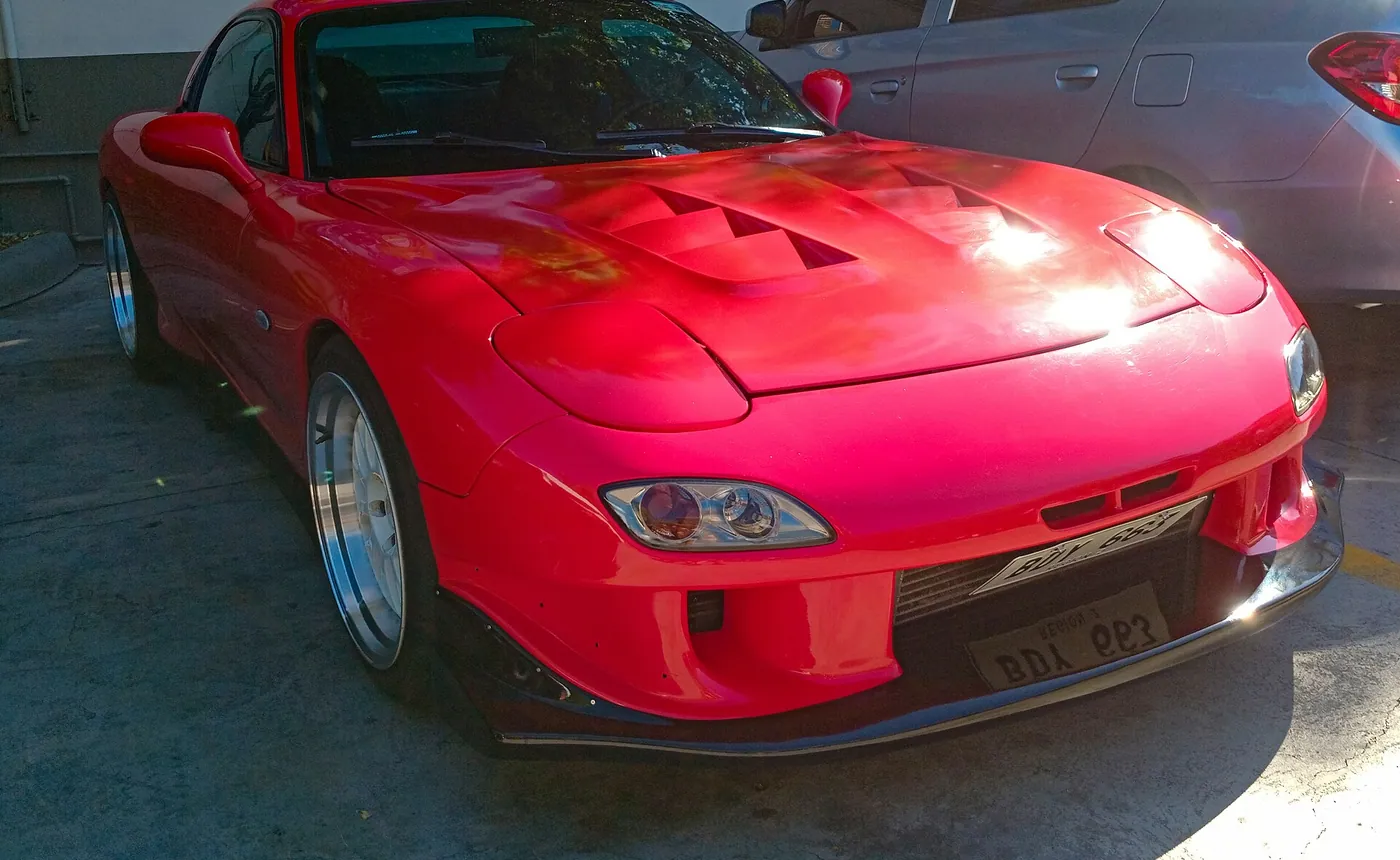
Most FDs in Japan have been modified to some degree. Aftermarket turbos, exhausts, intercoolers and engine management are common, and many cars have been tracked or drifted. A genuinely original car is rare and desirable. Look carefully for accident damage, which is common on cars driven hard.
Rust is less of a problem than on earlier RX-7s, but check the rear arches, sills and underside. Mileage on older cars can be hard to prove, so look for service records and inspection history. Confirm chassis numbers and the Japanese export certificate.
Should you import one?
The FD3S suits an experienced enthusiast who understands rotary engines or is willing to learn. It is not a car for neglect, and it needs regular use, careful maintenance and a specialist who knows the engine.
The earliest FDs are now over 30 years old and can qualify for Ireland's vintage treatment, while later cars are not yet that old. Owning one means accepting that maintenance is part of the experience. In return, you get one of the most beautiful and exciting cars Japan has ever made.
Frequently asked questions
What is the sequential twin-turbo system?
At low revs one turbo works alone for quick response, and at higher revs the second turbo joins in for maximum power.
Which FD3S versions are most desirable?
The Type R, Type RS, Type RZ and the 2002 Spirit R are the most sought after, with the facelifted 1999 cars offering 280 PS.
Are most FDs in Japan modified?
Yes, most have been modified to some degree, so a genuinely original car is rare and highly desirable.
Can an FD3S qualify as a vintage car in Ireland?
The earliest cars, built from late 1991, are now over 30 years old and can qualify, while later cars are not yet that old.
More Japanese classics
- Mazda RX-7 (FC3S): the turbocharged rotary that grew up for the bubble years
- Mazda Savanna RX-7 (SA22C): the light, pure sports car that rescued the rotary
- Eunos Cosmo: the three-rotor bubble-era coupe that showed Japan the future
- Eunos Roadster (NA): the little car that brought the sports car back from the dead
- Toyota Supra (A70): the turbocharged GT that gave the Supra its own name
- All 90 Japanese classics you can import
Photo credits
- Photo: Aos.1905 / Wikimedia Commons, CC BY 4.0
- Photo: Ethan Llamas / Wikimedia Commons, CC BY-SA 4.0