
Mazda RX-7 (FC3S): the turbocharged rotary that grew up for the bubble years
The second RX-7 traded the first car's simplicity for turbo power, clever rear suspension and real refinement. In Japan it was sold only with a turbo, and it remains the most underrated rotary of all.
By the Japan to Ireland editors · · 4 min read
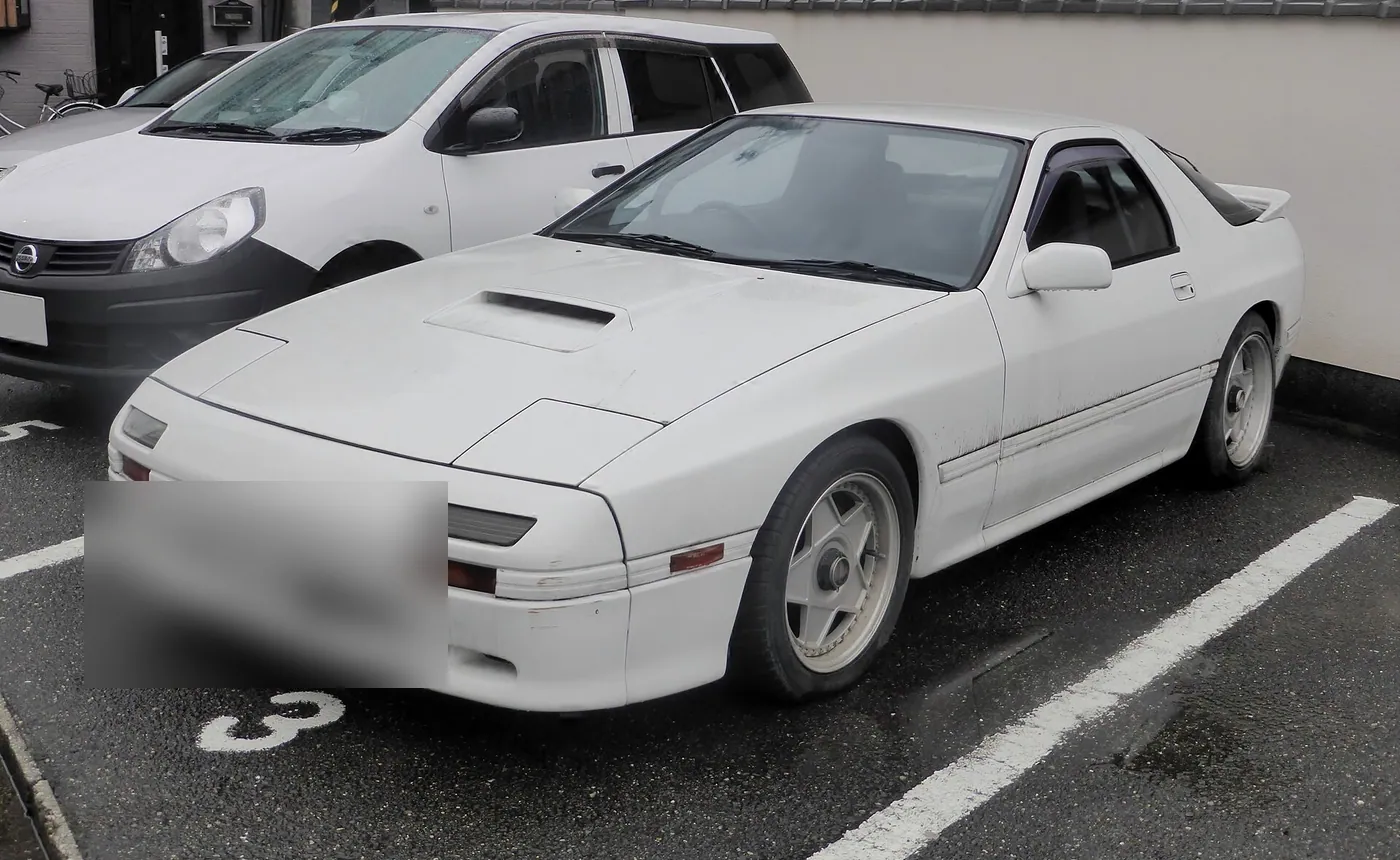
In September 1985, finance ministers from the world's largest economies met at the Plaza Hotel in New York and agreed to push down the value of the US dollar. In Japan, the yen began a steep climb, money became cheap at home and the country slid into the asset boom that would become known as the bubble economy. The following month, Mazda launched the second-generation Savanna RX-7.
It was a very different car from the first. Where the SA22C had been light and simple, the FC3S was bigger, faster and full of technology. In Japan it came only with a turbocharged engine, and it was built for a country that suddenly had money to spend and a taste for sophistication.
The specs
| Years built | 1985–1992 |
|---|---|
| Engine | 1,308 cc twin-rotor turbo (13B), intercooled |
| Power | 185 PS at launch, 205 PS from 1989 (Japanese net ratings) |
| Gearbox | 5-speed manual, 4-speed automatic |
| Drive | Rear-wheel drive |
| Body styles | Three-door coupe, cabriolet (from 1987) |
| Rear suspension | Semi-trailing multi-link with DTSS passive rear steer |
| Japanese name | Savanna RX-7 |
Why Mazda built it
The first RX-7 had been a great success, but by the mid-1980s the sports car market was changing. Buyers wanted more power, more comfort and more equipment. Porsche's 944 was a benchmark, and the FC's shape and stance owed something to that car's influence on the whole segment. Mazda wanted an RX-7 that could compete with the best on performance and refinement, not just on price.
Japan's appetite for turbocharging was also at its height. Power outputs were rising every year, and the 13B turbo gave the RX-7 the kind of numbers buyers expected.
Design and engineering
The engine is the 13B, two rotors of 654 cc each, with a twin-scroll turbocharger and an intercooler fed through a scoop on the bonnet. At launch it was rated at 185 PS in Japanese net terms. The 1989 facelift raised that to 205 PS with a revised turbo and a lighter rotor design, along with new tail lights and interior changes.
Front suspension is by MacPherson struts. The rear uses a semi-trailing multi-link design with Mazda's Dynamic Tracking Suspension System, or DTSS, which allows the rear wheels to steer slightly under certain loads to improve stability. It is a passive system, not a computer-controlled one, and it works quietly in the background.
The body is a three-door coupe with pop-up headlamps and a large glass hatch. In 1987 Mazda added a cabriolet with a clever roof that combined a removable panel over the seats with a folding rear section.
How it drives today
The FC is a mature, well-balanced car. It is heavier than the SA22C, but the turbo engine more than compensates, delivering strong mid-range pull with the rotary's familiar smoothness. There is some turbo lag by modern standards, followed by a satisfying surge as boost builds.
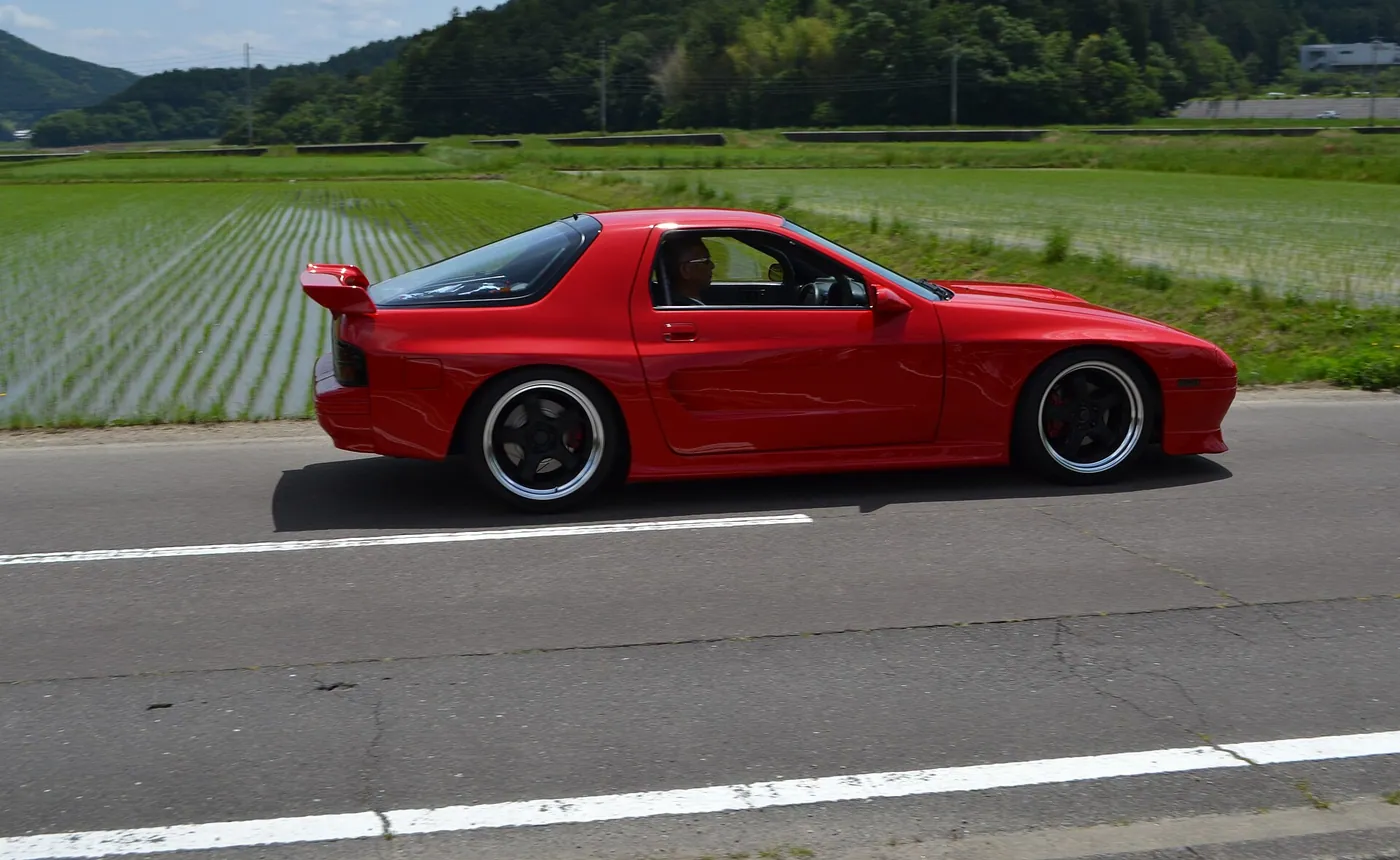
The chassis is stable and progressive, with good steering feel and a ride that copes reasonably well with poor surfaces. On Irish roads it is a capable grand tourer, comfortable on the motorway and engaging on a quiet N-road. It is a car you can use regularly if you look after it.
Versions worth knowing
Japanese-market cars came in a range of trims, including the GT, GT-R and GT-X, along with more lavishly equipped versions. The Infini editions, built in limited batches from 1987, were lighter and more focused, with stiffer suspension and distinctive trim. The cabriolet is rarer and suits a buyer who wants open-air driving. The post-1989 cars have the more powerful engine and are generally preferred.
What to check when buying in Japan
Start with the body. Rust appears in the rear wheel arches, sills, the rear hatch surround and the floor, and around sunroof drains on cars that have them. Check the battery tray area and the bottom of the doors. Cars from colder, salt-using regions of Japan are more likely to suffer.
The engine is the critical item. A rotary compression test, reading each face of each rotor, is the best guide to apex seal health. Ask for one before bidding or buying. Signs of coolant seal failure, such as white smoke, coolant loss or overheating, mean a rebuild is needed. Check the turbo for smoke or noise and look for oil leaks.
Many FCs have been modified, often heavily, for drifting and street use. Bigger turbos, ported engines, aftermarket exhausts and removed emissions equipment are common. Decide whether you want a modified car or an original one, and be cautious about cars with unclear modification histories.
Interior plastics crack and fade, and some trim is scarce. Electrical gremlins in ageing wiring are common. Mileage on cars of this age is often unprovable, so judge condition carefully. Check the chassis number against the documents and confirm the Japanese export certificate is in order.
Should you import one?
The FC3S suits a driver who wants a rotary that is fast, comfortable and usable, without paying the attention the FD demands. It is more practical than the first RX-7 and more forgiving than its successor.
Every FC is now over 30 years old, so it can qualify for Ireland's vintage treatment. Rotary ownership still means care: good oil, proper warm-ups, avoiding short trips and regular use. Treated that way, an FC is a rewarding classic and one of the better-value ways into turbo rotary ownership.
Frequently asked questions
Were all Japanese FC RX-7s turbocharged?
Yes, the Japanese-market Savanna RX-7 FC3S was sold with the turbocharged 13B engine, while some export markets also had a non-turbo version.
What is DTSS?
Dynamic Tracking Suspension System, a passive design that lets the rear wheels steer slightly under load to improve stability.
Which FC is the best to buy?
Cars from the 1989 facelift onwards have 205 PS and other updates, while the limited Infini editions are the most focused.
How do I check a rotary engine before buying?
Ask for a rotary compression test that reads every rotor face, and look for signs of coolant seal failure such as white smoke or overheating.
More Japanese classics
- Mazda Savanna RX-7 (SA22C): the light, pure sports car that rescued the rotary
- Mazda Cosmo Sport 110S: the space-age coupe that proved the rotary engine
- Mazda RX-7 (FD3S): the most beautiful rotary, and the most demanding to own
- Eunos Cosmo: the three-rotor bubble-era coupe that showed Japan the future
- Eunos Roadster (NA): the little car that brought the sports car back from the dead
- All 90 Japanese classics you can import
Photo credits
- Photo: Tokumeigakarinoaoshima / Wikimedia Commons, CC0
- Photo: 先従隗始 / Wikimedia Commons, CC0