
Honda Acty Truck: The Mid-Engined Workhorse Hiding in Plain Sight
For over four decades the Acty carried crops, tools and building materials across Japan. Its early generations put the engine in an unusual place and are now genuine classics.
By the Japan to Ireland editors · · 4 min read
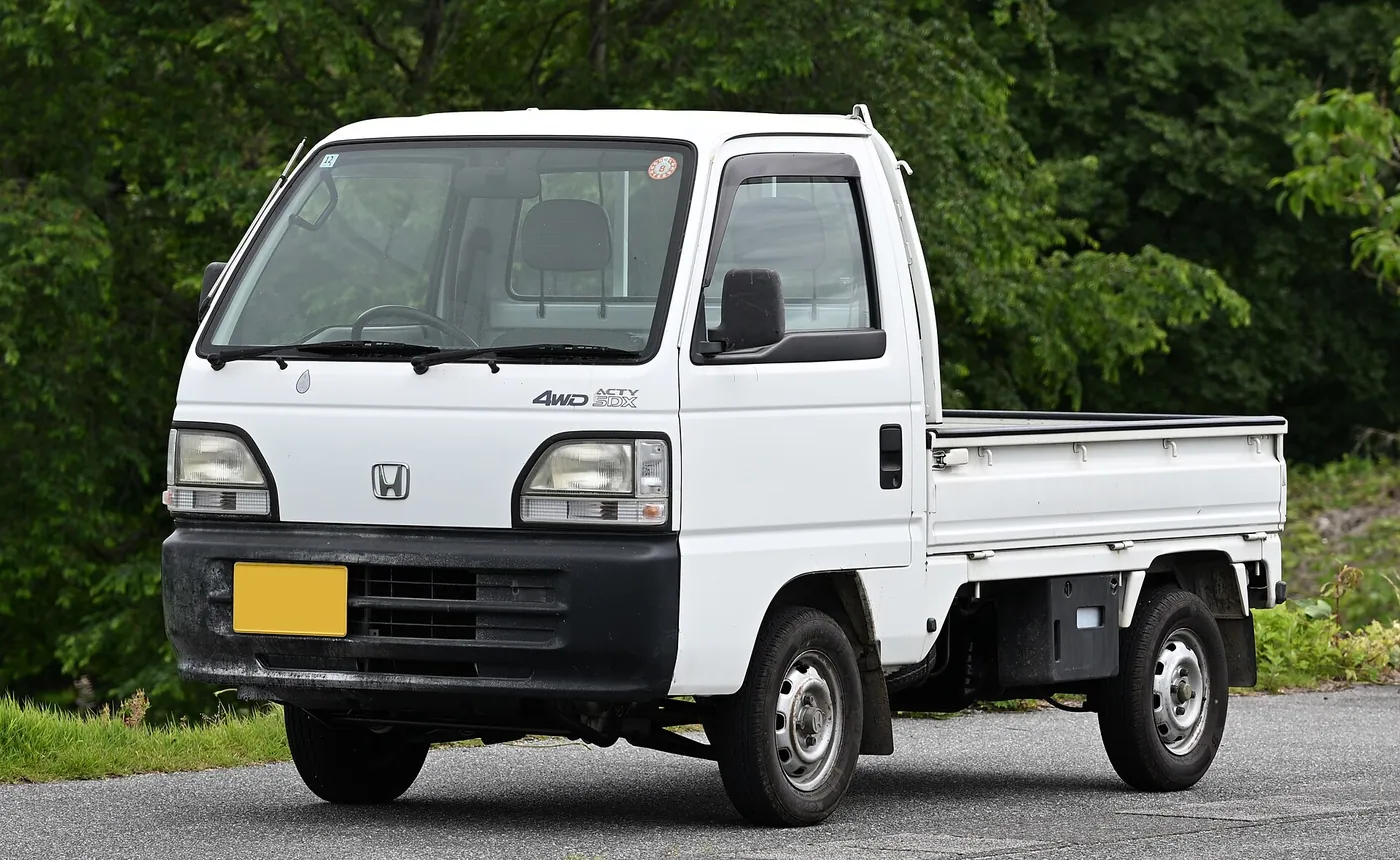
Drive through rural Japan early on a summer morning and you will see them parked at the edge of rice paddies and orchards, small white trucks with their tailgates down and their cabs barely taller than the crops around them. They carry fertiliser, cabbages, ladders and nets. Many of them are Honda Actys, and many of them are older than the farmers driving them.
The Acty truck first appeared in 1977, when Honda replaced its earlier light trucks with a new kei model built to the rules of the time. It stayed in production, through several generations, until 2021.
The specs
| Years built | 1977–2021 (classic focus: 1977–1990s) |
|---|---|
| Engine | Two- and three-cylinder petrol, 545 cc to 656 cc |
| Layout | Engine mounted under the load bed, ahead of the rear axle |
| Gearbox | Manual, later automatic options |
| Drive | Rear-wheel drive; part-time four-wheel drive on many |
| Body styles | Drop-side truck, dump and specialist bodies; Acty van |
| Kei class | Built to the 550 cc rules, then the 660 cc rules |
Why Honda built it
The kei truck is one of the quiet foundations of Japanese life. Small farms, narrow lanes and tight delivery routes demanded a vehicle that could carry a useful load and still fit through gaps a conventional pickup could not. Lower taxes and running costs for kei vehicles made them an obvious choice for farmers and tradespeople.
When the Acty arrived in 1977, the kei rules had just been revised to allow 550 cc engines and slightly larger bodies. Honda used that change to build a truck with a water-cooled two-cylinder engine and a layout that was different from most rivals.
Design and engineering
The defining feature of the Acty is the position of its engine. Rather than sitting under the seats at the front, the engine is mounted under the load bed, ahead of the rear axle, driving the rear wheels. Honda's engineers argued that this improved weight distribution, especially when the truck was empty, and reduced noise and heat in the cab. Enthusiasts often describe it as a mid-engined truck, a phrase that sounds like a joke until you drive one.
The first generation used a 545 cc two-cylinder engine. A second generation in 1988 brought a three-cylinder engine, and the 1990 kei rule change led to a 656 cc unit and a longer body. Four-wheel-drive versions with a part-time system became popular with farmers and in snowy regions. The third generation arrived in 1999 with a cab enlarged for new safety and size rules, and the truck finally left production in 2021 without a direct replacement.
How it drives today
An early Acty feels honest and mechanical. The cab is tiny, with your feet over the front wheels, and the steering is light and slow. Performance is modest, and the gearing is short to cope with heavy loads and steep farm tracks. With nothing in the back, the rear-mounted engine helps the truck feel more balanced than some of its rivals.
On Irish roads an Acty is at home on boreens, farmyards and village streets. It is not a motorway vehicle. Cruising speed is limited, wind noise is high and the cab offers little protection in a collision. Used for what it was designed to do, it is charming and surprisingly capable.
The versions worth knowing
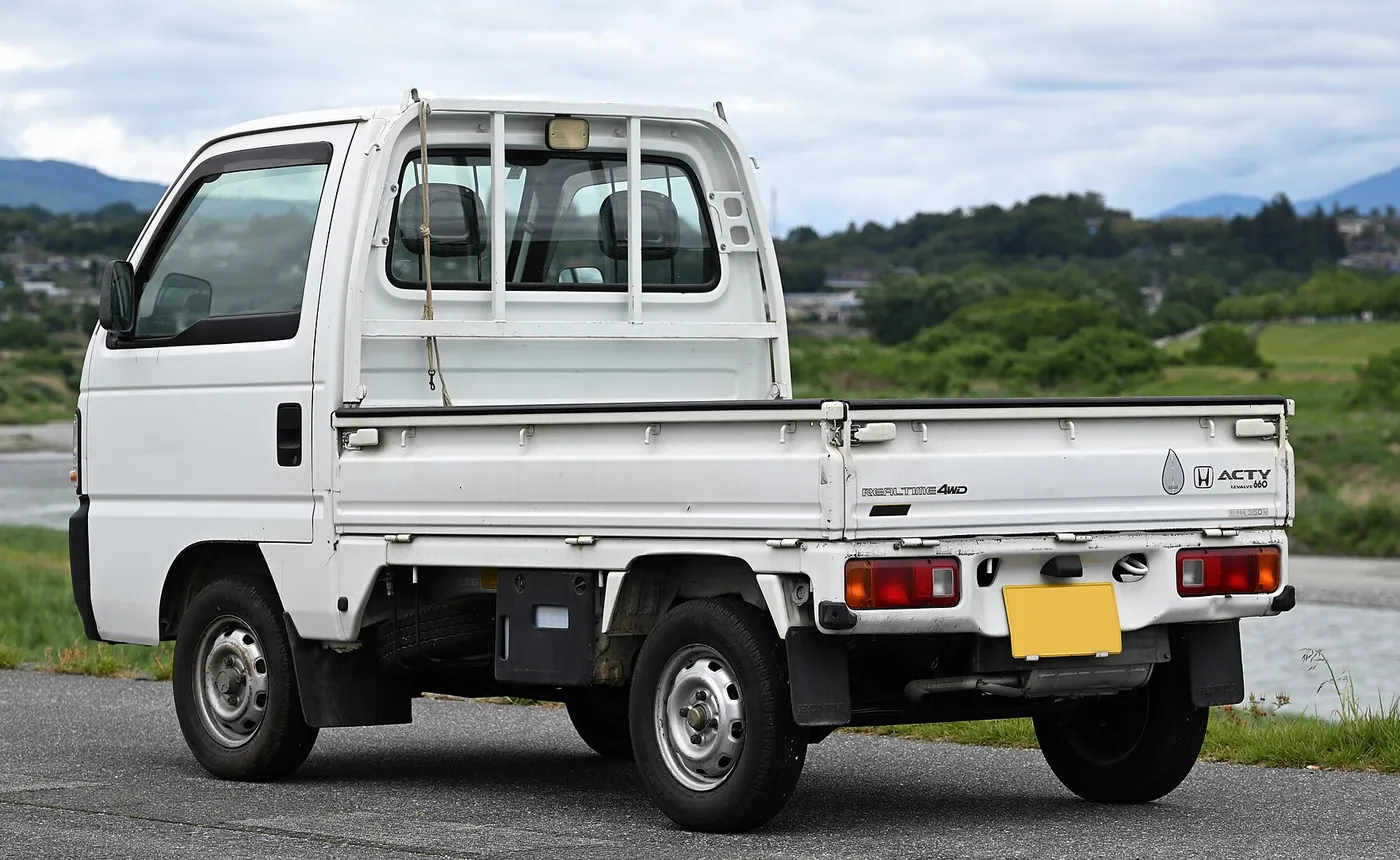
For a classic, the first generation (1977 to 1988) and the second generation (1988 to 1999) are the ones to look at, with the earliest cars being the rarest. Drop-side trucks are the most common body, but dump bodies, panel vans and specialist conversions exist. Four-wheel-drive versions are especially useful on wet Irish ground and steep farm lanes. The Acty van, a closed panel van on the same base, is a separate model line but shares much of the engineering.
What to look for when buying one in Japan
Most Actys have led hard working lives. Rust is the main threat. Check the chassis rails, the cab floor, the bottom of the doors, the area under the windscreen, and the load bed and its supports. Trucks from snowy or coastal regions may have suffered more corrosion from road salt and sea air.
Look closely at the engine and its surroundings. Because the engine sits under the bed, it is exposed to dirt, water and the occasional knock from a farm track. Check for oil leaks, damaged cooling hoses and a healthy clutch. Mechanical parts are generally still available in Japan, as the engines were used in other Honda vehicles, but cab panels and trim for early trucks are becoming rare.
Originality is less of an issue than on a sports car, but many trucks have been repainted, fitted with non-standard beds or modified for work. Mileage records on old work vehicles are often incomplete, so judge condition rather than numbers. Confirm the export papers match the chassis plate.
Should you import one?
An early Acty suits a buyer with a farm, a market garden, a large property or simply a love of small, useful machines. It is a genuine classic of Japanese engineering, and its mid-engined layout gives it a story that few work vehicles can match.
In Ireland it will draw attention at shows and in the yard. It is right-hand drive and compact, but it is slow and basic, and you should think carefully about how it will be insured and used. Older trucks over 30 years old can qualify for Ireland's vintage treatment. Expect a robust, simple vehicle that asks for regular care and rewards it with years of work.
Frequently asked questions
Why is the Honda Acty called mid-engined?
Its engine sits under the load bed, ahead of the rear axle, rather than under the seats or at the front, which improves weight distribution.
Which Acty generations count as classics?
The first generation of 1977 to 1988 and the second generation from 1988 are the ones most enthusiasts treat as classics.
Is an Acty suitable for motorway driving?
Not really. It is slow, noisy at speed and very small, and it is best used on farms, rural roads and in towns.
More Japanese classics
- Honda Today: The Long, Low Kei Car That Rewrote Japan's Smallest Class
- Honda City Turbo II: The Tall Little Bulldog That Made Japan Grin in 1983
- Suzuki Cappuccino: A Tiny Front-Engined Roadster With a Very Grown-Up Chassis
- Autozam AZ-1: Gullwing Doors, a Mid-Mounted Turbo and Japan's Wildest Kei Car
- Suzuki Jimny JA11: The Pocket Off-Roader That Climbs Where Bigger Trucks Give Up
- All 90 Japanese classics you can import
Photo credits
- Photo: TTTNIS / Wikimedia Commons, CC0
- Photo: TTTNIS / Wikimedia Commons, CC0