
Honda Today: The Long, Low Kei Car That Rewrote Japan's Smallest Class
In 1985 Honda returned to kei passenger cars with a design that pushed the wheels to the corners and the windscreen far forward. The Today became a quiet classic of Japanese urban life.
By the Japan to Ireland editors · · 4 min read
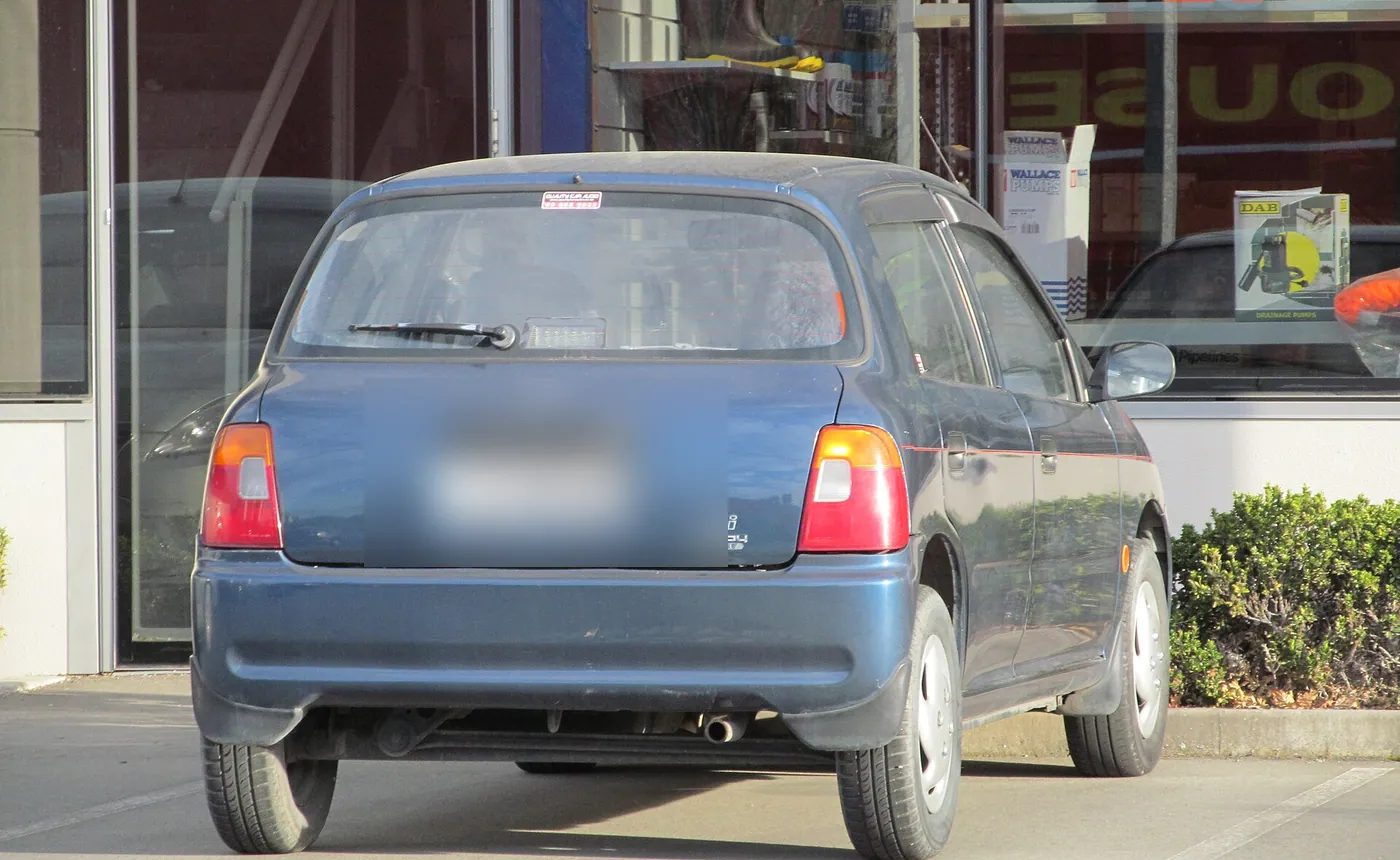
Japan's narrowest streets are not really streets at all. In older districts of Tokyo and Osaka they are lanes between houses, with a drain on each side and barely room for a delivery van. The kei car exists for places like this. Since the late 1940s, Japan has given a separate class, with lighter taxes and simpler parking rules, to cars built within strict limits on size and engine capacity.
In September 1985 Honda rejoined that class with a passenger car that looked unlike anything else in it. The Today was long and low, with a steeply raked windscreen that seemed to start just behind the front bumper, round headlamps and wheels pushed out to the very corners of the body.
The specs
| Years built | 1985–1998 |
|---|---|
| Engine | Two- and three-cylinder petrol, 545 cc to 656 cc |
| Power | Modest; varies with engine and year |
| Gearbox | Manual or automatic |
| Drive | Front-wheel drive |
| Body styles | 3-door hatchback, later 5-door |
| Kei class | 550 cc rules to 1990, 660 cc rules from 1990 |
Why Honda built it
Honda had built kei cars before, including the N360 and the Life of the late 1960s and early 1970s, but it had stepped back from small passenger cars in the 1970s to concentrate on the Civic and the Accord. By the mid-1980s, the kei class was booming again. Suzuki's Alto, launched in 1979, had shown that a kei car sold as a commercial vehicle, with two seats in front and a small rear bench, could take advantage of lower taxes on commercial kei vehicles. Many of the class leaders followed that pattern.
The Today was launched in that spirit. Early versions were registered as commercial vehicles, a common practice for kei hatchbacks at the time, and its engine was a 545 cc two-cylinder unit closely related to the one in Honda's Acty light truck. Under the 550 cc rules of the day, the car could be no longer than 3,200 mm and no wider than 1,400 mm.
Design and engineering
The Today's long wheelbase was the key to its shape and its character. By stretching the distance between the axles as far as the kei rules allowed, Honda gave it a more stable ride and more cabin space than its tall, short-wheelbase rivals. The low roofline, flat bonnet and single large windscreen wiper made it look sleeker than most small cars of its time.
The engines changed as the rules changed. A three-cylinder engine replaced the original twin in the late 1980s, and when Japan raised the kei limits in 1990 to 660 cc and a body length of 3,300 mm, the Today grew a longer nose and received a 656 cc three-cylinder engine. A second generation followed in 1993 with a rounder body and distinctive oval headlamps, including a five-door version.
How it drives today
Nobody buys a Today for speed. It is a light, simple car with small wheels and an engine designed for city traffic. What it does well is feel planted and calm for its size, thanks to that long wheelbase. Steering is light, visibility is good, and parking it is effortless.
On Irish roads it is happiest in towns and on quieter regional roads. It will reach motorway speeds, but it feels its size on the M50 among lorries and SUVs. It is better thought of as a charming, economical second car for short journeys than as a long-distance tourer.
The versions worth knowing
The first generation, especially the early round-headlamp cars with the two-cylinder engine, is the purist's choice, as it represents the original idea in its cleanest form. The 660 cc first-generation cars from 1990 onwards are a little more usable. The second-generation Today of 1993 to 1998 is softer in style and is often seen with automatic gearboxes. There were also special editions and trim levels throughout its life, and some appeared with sportier details, but none of them changes the car's gentle character.
What to look for when buying one in Japan
The Today is a car that most Japanese owners used for everyday errands and then sold or scrapped. Clean survivors exist, but they are less common than you might expect. Rust is the main concern: check the sills, the floor, the rear wheel arches, the tailgate, and the base of the windscreen pillars. The long, raked windscreen can trap water at its lower edge, so look there carefully.
Parts availability is mixed. The engines share components with other Honda kei vehicles, which helps, but body panels, glass and interior trim are now hard to source. Originality is easier to judge on a Today than on a sports car, because few were heavily modified, but you should still check for incorrect wheels, replacement seats and missing trim. As with any car of this age, treat the odometer reading with caution, and rely on condition and the auction sheet. Ensure the paperwork matches the chassis number on the car.
Should you import one?
The Today suits a buyer who loves design and small cars more than performance. It is a period piece from the years when Japan's kei class was finding its modern form, and it has a style that still turns heads.
In Ireland it will be a rare sight. It is right-hand drive, economical and easy to park, but it is small, light and old, and a long motorway run is not its strength. First-generation cars are now well over 30 years old and can qualify for Ireland's vintage treatment. Expect simple mechanicals, some patience with parts and a car that people stop to ask about.
Frequently asked questions
Is the Honda Today a kei car?
Yes. It was built to the 550 cc kei rules at launch and updated for the 660 cc rules when they arrived in 1990.
Which Today is the most collectable?
The first-generation cars, especially early examples with round headlamps, are generally the most sought after by enthusiasts.
Is a Honda Today suitable for Irish motorways?
It can manage motorway speeds, but it is small and light and is much happier in towns and on quieter roads.
More Japanese classics
- Honda City Turbo II: The Tall Little Bulldog That Made Japan Grin in 1983
- Honda Prelude (third generation): The Low, Sleek Coupe With Steering in the Back
- Honda Acty Truck: The Mid-Engined Workhorse Hiding in Plain Sight
- Suzuki Cappuccino: A Tiny Front-Engined Roadster With a Very Grown-Up Chassis
- Autozam AZ-1: Gullwing Doors, a Mid-Mounted Turbo and Japan's Wildest Kei Car
- All 90 Japanese classics you can import
Photo credits
- Photo: Riley from Christchurch, New Zealand / Wikimedia Commons, CC BY 2.0