
Honda City Turbo II: The Tall Little Bulldog That Made Japan Grin in 1983
A boxy city car with an intercooled turbo, swollen arches and a ten-second overboost button. Forty years on, the Turbo II is still one of the most characterful small cars Honda ever built.
By the Japan to Ireland editors · · 5 min read
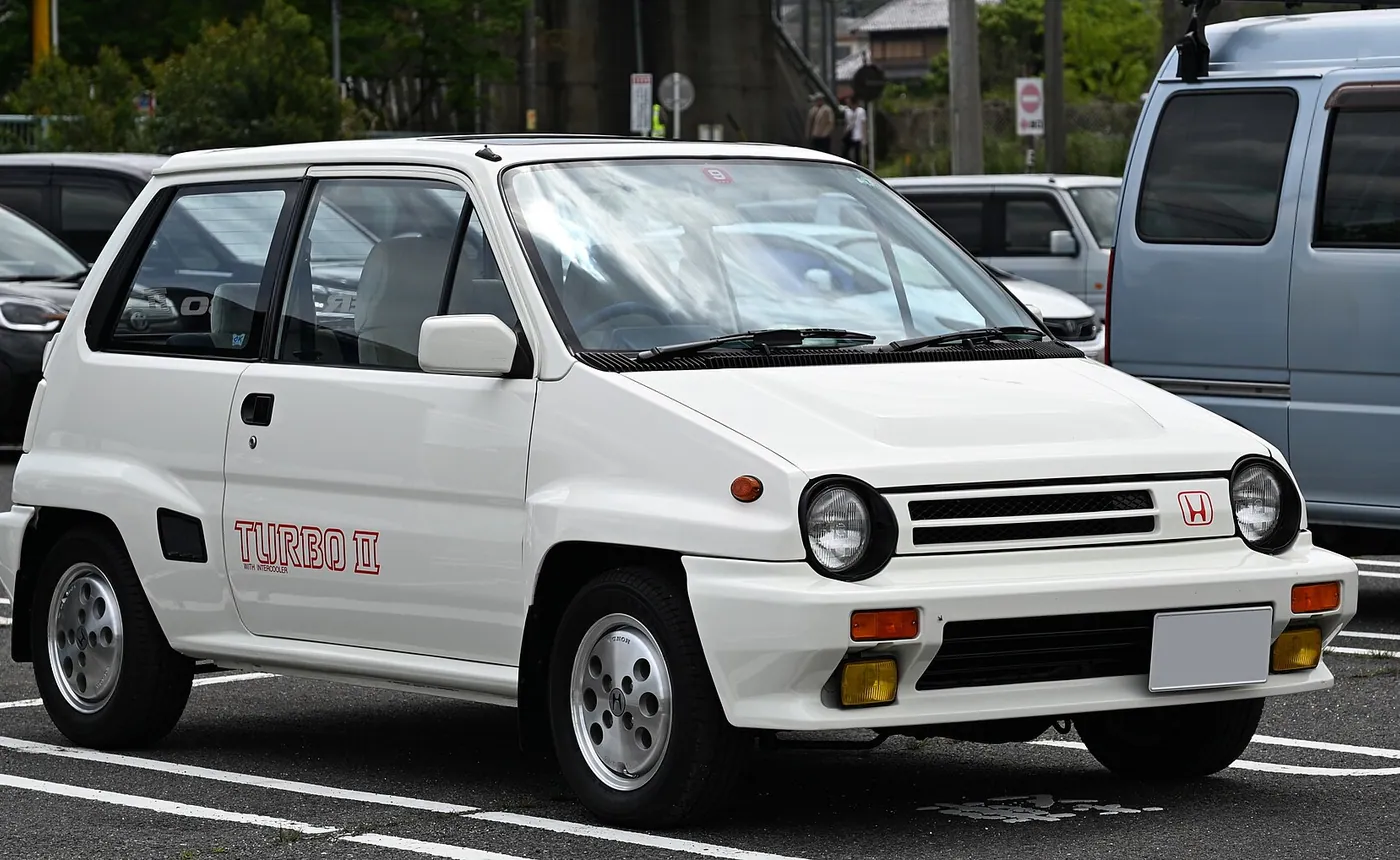
In the autumn of 1981, Honda launched a small car that looked as if someone had taken an ordinary hatchback and pulled it upwards by the roof. The City was short, narrow and unusually tall, a shape the Japanese press called a "tall boy". It came with an optional companion, the Motocompo, a folding scooter designed to slot into the boot so that the owner could park on the edge of a city and ride the last stretch. Honda advertised it with the British ska band Madness, who marched across Japanese television screens in a stomping, loose-limbed line.
Two years later the joke grew teeth. The City Turbo II arrived in late 1983 with flared wheel arches, a bonnet bulge and an intercooler, and Japan quickly gave it a nickname that stuck: the Bulldog.
The specs
| Years built | 1983–1986 (Turbo II) |
|---|---|
| Engine | 1.2-litre four-cylinder petrol, turbocharged and intercooled |
| Power | 110 PS (Japanese gross rating) |
| Gearbox | 5-speed manual |
| Drive | Front-wheel drive |
| Body styles | 3-door hatchback |
| Nickname | "Bulldog" |
| Party piece | Scramble boost: a brief overboost at full throttle |
Why Honda built it
Japan in the early 1980s was a confident, fast-growing economy with a young population and cramped cities. Turbocharging had become the fashionable technology of the moment, and Japanese manufacturers were fitting turbos to everything from saloons to small hatchbacks. Honda had already offered a City Turbo in 1982. The Turbo II was the answer to a simple question: how much performance could be wrung out of the tall little box without losing its charm?
The City Turbo II was never a kei car. Its engine displaced well over the 550 cc limit that applied to kei cars at the time, and it sat in the ordinary small-car class. That freedom allowed Honda to fit a 1.2-litre engine with a turbocharger and an intercooler, an unusual specification for a car this size in 1983.
Design and engineering
The heart of the car is a 1.2-litre four-cylinder with a single overhead camshaft and three valves per cylinder, fed by fuel injection and a small turbocharger. Honda quoted 110 PS on the Japanese gross basis of the day. The headline feature was Scramble boost: put your foot flat to the floor below a certain engine speed and the system raised boost pressure for around ten seconds, giving a short burst of extra urgency for overtaking. It is a gimmick, but a joyful one.
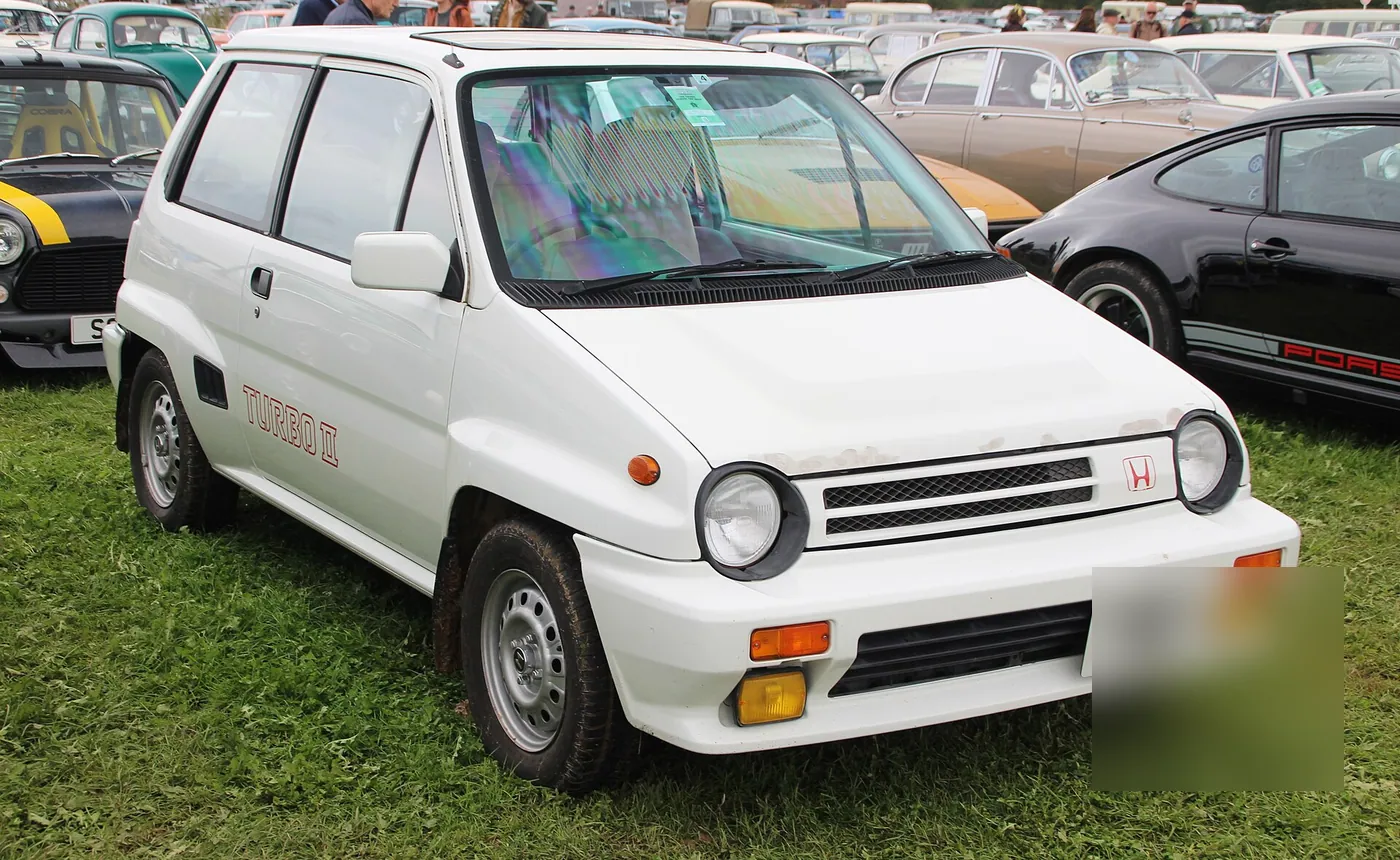
The body changes were not cosmetic for their own sake. The widened arches covered a broader track, and the bonnet bulge made room for the intercooler. Inside, the Turbo II had supportive seats and a dashboard full of 1980s graphics. Everything about the car is compact, square and honest, and the visibility from the tall glasshouse is superb.
How it drives today
By modern standards the City Turbo II is light, and that is what makes it fun. Power delivery is very much of its era: little happens at low revs, then the turbo comes on with a rush and the car surges forward while the steering tugs in your hands. The short wheelbase and tall body make it feel lively rather than planted, and it rewards a smooth driver who keeps the engine on boost through a bend.
On an Irish back road it is a happy, noisy companion. It will cruise on a motorway, though it is busy at speed and a crosswind on an exposed stretch of the M1 reminds you how tall and light it is. There is no modern safety equipment to speak of, and you drive it accordingly.
The versions worth knowing
The City range of this generation included naturally aspirated hatchbacks, the earlier City Turbo, the Turbo II, a high-roof version and a cabriolet developed with input from Pininfarina. The cabriolet was not a turbo car, though it shared the widened arches. The Turbo II is the collector's choice, and the one with the most demand among enthusiasts in Japan and abroad. A Motocompo scooter sold with a car adds period charm, but scooters are now collectable in their own right and are often sold separately.
What to look for when buying one in Japan
Age is the main enemy. These cars are now around four decades old, and many were driven hard by young owners. Check the sills, the floor, the rear wheel arches, the bottoms of the doors and the tailgate, and the areas around the windscreen and rear window seals. Rust in the widened front arches can be hidden by filler.
Originality matters. Many Turbo IIs were modified with larger turbos, aftermarket wheels, lowered suspension and replacement steering wheels. Factory interior trim, the original seats and the correct wheels are hard to find, so a car that still has them is worth more to an enthusiast. Body panels, trim and turbo-specific parts are scarce, although mechanical service parts can still be sourced in Japan.
Mileage on cars of this age is always uncertain. Odometers have been replaced and, on some cars, wound back. The auction sheet, service records and the general wear on pedals, seats and switches tell you more than the number on the dial. Make sure the export paperwork and the Japanese deregistration certificate match the chassis number stamped on the car.
Should you import one?
The City Turbo II suits a driver who wants a small, light, slightly mad 1980s car that is still relatively easy to live with. It is not a car for daily commuting in all weathers, but it is perfect for dry weekends, classic car runs and the kind of short trips where you arrive grinning.
Ownership in Ireland is straightforward if you accept that some parts will come from Japan and take time. Because it is right-hand drive, it feels natural on Irish roads. Cars over 30 years old can qualify for Ireland's vintage treatment, which the Turbo II easily meets. Expect a characterful, well-engineered little car with the frailties of its age, and buy the most original, rust-free example you can find rather than the fastest.
Frequently asked questions
Is the Honda City Turbo II a kei car?
No. Its 1.2-litre engine put it in Japan's ordinary small-car class, well above the kei car engine limit of the time.
What is Scramble boost?
It is a feature that briefly raises turbo boost for around ten seconds when the driver floors the throttle, giving a short burst of extra performance.
Are parts hard to get?
Routine service parts can still be found in Japan, but body panels, interior trim and turbo-specific components are scarce, so an original, complete car is the safest buy.
More Japanese classics
- Honda Prelude (third generation): The Low, Sleek Coupe With Steering in the Back
- Honda Integra Type R (DC2): The Front-Wheel-Drive Car Many Rate the Best Ever Made
- Honda Today: The Long, Low Kei Car That Rewrote Japan's Smallest Class
- Honda Acty Truck: The Mid-Engined Workhorse Hiding in Plain Sight
- Suzuki Cappuccino: A Tiny Front-Engined Roadster With a Very Grown-Up Chassis
- All 90 Japanese classics you can import
Photo credits
- Photo: TTTNIS / Wikimedia Commons, CC0
- Photo: Calreyn88 / Wikimedia Commons, CC BY-SA 4.0