
Suzuki Cappuccino: A Tiny Front-Engined Roadster With a Very Grown-Up Chassis
Born at the end of Japan's bubble years, the Cappuccino packed a turbocharged three-cylinder, rear-wheel drive and a three-piece removable roof into a kei car footprint.
By the Japan to Ireland editors · · 4 min read
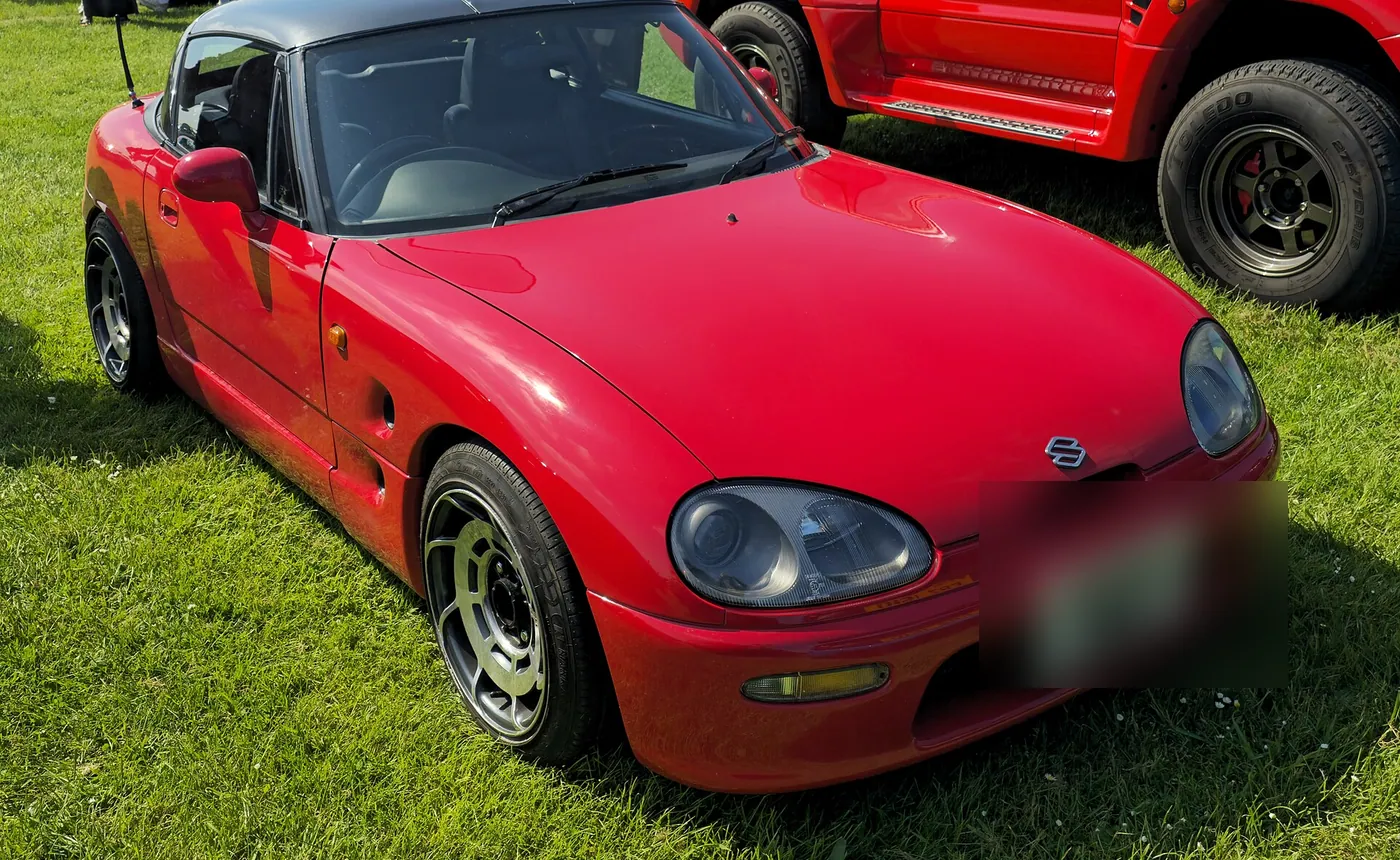
In the autumn of 1991 the Japanese economy was beginning to come down from the most extravagant decade in its modern history. Land prices had peaked, the stock market had fallen, and the excess of the late 1980s was turning into caution. Yet the product plans of that era were still arriving, and some of the most ambitious small cars ever made reached showrooms just as the party ended.
The Suzuki Cappuccino was one of them. It was a two-seat roadster built to the kei rules, which by then allowed 660 cc engines and a body 3,300 mm long, and it was taken seriously as a sports car from the start.
The specs
| Years built | 1991–1997 |
|---|---|
| Engine | 657 cc three-cylinder turbo (F6A), later all-alloy K6A |
| Power | 64 PS |
| Gearbox | 5-speed manual; 3-speed automatic on later cars |
| Drive | Rear-wheel drive, front-mid engine |
| Body styles | 2-seat roadster with removable roof panels |
| Suspension | Double wishbones all round |
Why Suzuki built it
By 1990 the kei class had become a battleground for small performance cars. Suzuki had already made its name with the turbocharged Alto Works, and the arrival of the 660 cc rules gave every manufacturer more room to play. Honda's Beat and Mazda's Autozam AZ-1 appeared in the same period, and together the three are often called the ABC trio: AZ-1, Beat, Cappuccino.
Suzuki took the most traditional route. It built a front-engined, rear-wheel-drive roadster with the classic proportions of a British sports car, shrunk to fit inside Japan's kei limits.
Design and engineering
The engine is a 657 cc three-cylinder with twin overhead camshafts and a turbocharger, mounted lengthways and set well back behind the front axle. Like other kei cars of its era it produced 64 PS, the voluntary limit agreed among Japanese manufacturers. Its strength is the torque from the turbo and the car's low weight.
The chassis is unusually sophisticated for a car of this size, with double wishbone suspension at all four corners. Suzuki used aluminium for several body panels, including the bonnet, to reduce weight. The roof is the cleverest touch. It comes apart in three pieces: two hard roof panels that can be stored in the boot, and a rear section with the window that folds down. That allows a closed coupé, a targa, a T-bar style open car or a full roadster.
In 1995 Suzuki updated the Cappuccino with a new all-aluminium K6A engine and the option of a three-speed automatic gearbox. Production ended in 1997.
How it drives today
The Cappuccino feels tiny from the driver's seat, with your hips close to the floor and the gear lever right beside your knee. Once moving, it is wonderfully alert. The steering is direct, the car turns in quickly, and the rear-wheel-drive balance means it can be steered with the throttle at sensible speeds. The turbo engine pulls well in the mid-range but needs to be kept spinning.
On Irish roads it is happiest on a dry, twisty regional road on a summer evening. It can keep up with modern traffic, but its small size and low seating position make it vulnerable on busy motorways, and other drivers may not see it in mirrors.
The versions worth knowing
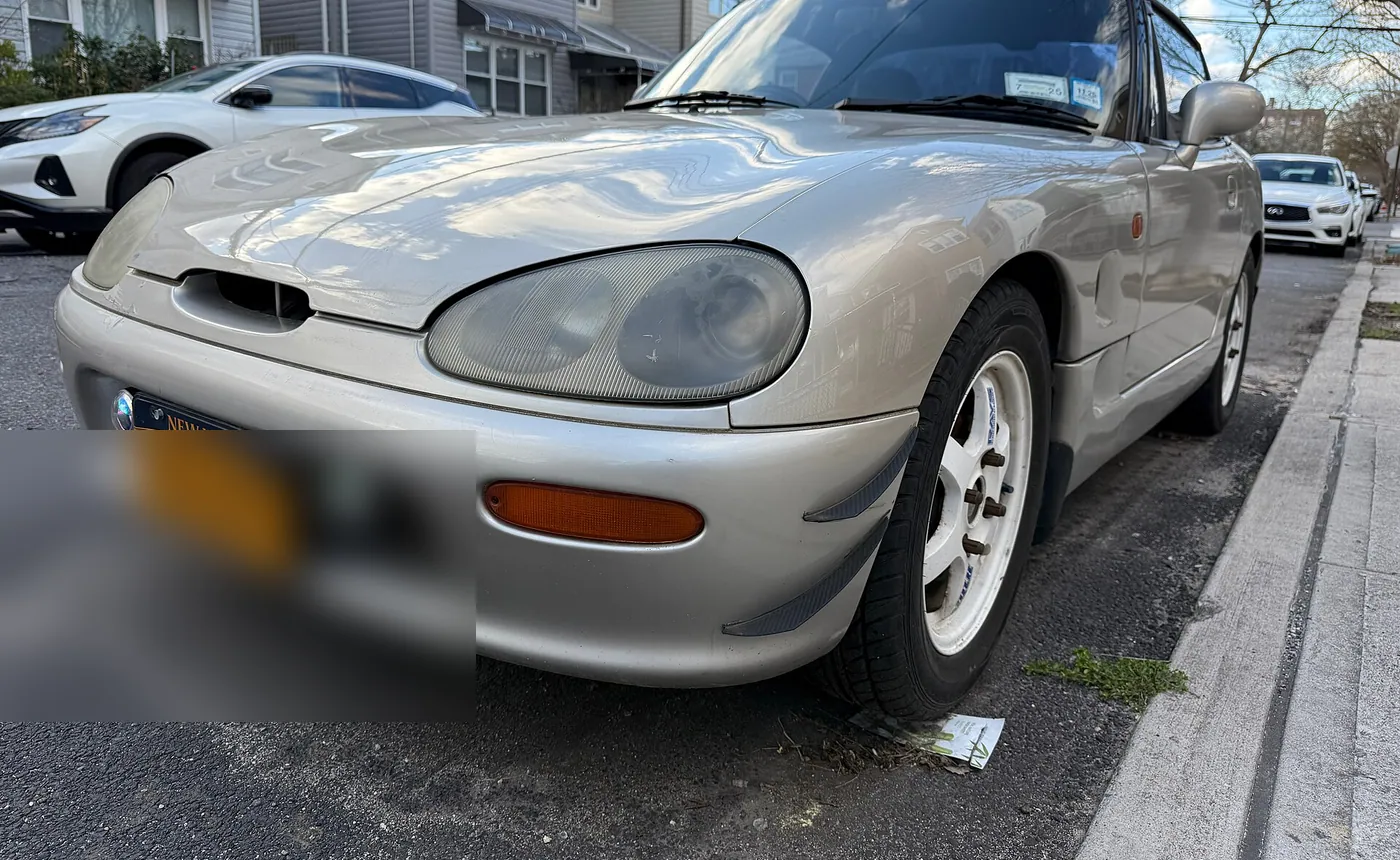
The early EA11R cars with the F6A engine are the original, and some enthusiasts prefer their character. The later EA21R cars with the K6A engine are lighter in the engine bay and often thought to be stronger. Automatic cars exist but are rarer and less desirable to most buyers. Suzuki also sold the Cappuccino new in the UK in small numbers in the early 1990s, so some European-specification cars exist, but the great majority came through Japanese auctions.
What to look for when buying one in Japan
Rust is the biggest problem. Check the sills, the floor pan, the rear subframe mounts, the rear wheel arches and the area under the boot floor. The roof seals and drainage channels can let water into the cabin and boot, which leads to damp carpets and hidden corrosion. Lift the carpets if you can, or ask for detailed photographs.
Many Cappuccinos have been modified. Aftermarket turbos, exhausts, wheels and suspension are common, and some cars have been used for track days. A largely standard car is generally the better buy. Engine parts are reasonably available because the F6A and K6A engines were used widely by Suzuki, but some body and trim parts are getting harder to source.
Check that all three roof pieces are present and fit properly. Like any 30-year-old car, mileage claims should be treated with care; judge condition first. Make sure the export documents match the chassis number.
Should you import one?
The Cappuccino suits an enthusiast who wants a proper rear-wheel-drive sports car in miniature, with low running costs and huge charm. It is a car for sunny weekends and back roads, not a daily commuter in Irish rain.
In Ireland it already has a small following thanks to UK and Japanese imports, and it is right-hand drive. Many cars are now over 30 years old and can qualify for Ireland's vintage treatment. Expect a rewarding, fragile, utterly lovable machine that needs careful rust prevention and a dry garage.
Frequently asked questions
How does the Cappuccino roof work?
It comes apart in three pieces: two removable roof panels that store in the boot and a rear section with the window that folds down, giving several open configurations.
What engine does the Cappuccino use?
Early cars use the 657 cc F6A turbocharged three-cylinder; later cars from 1995 use the all-aluminium K6A, both rated at 64 PS.
What is the biggest problem with a Cappuccino?
Rust, especially in the sills, floor, rear arches and subframe areas, often made worse by water leaking past roof seals.
More Japanese classics
- Honda Acty Truck: The Mid-Engined Workhorse Hiding in Plain Sight
- Honda Today: The Long, Low Kei Car That Rewrote Japan's Smallest Class
- Autozam AZ-1: Gullwing Doors, a Mid-Mounted Turbo and Japan's Wildest Kei Car
- Suzuki Jimny JA11: The Pocket Off-Roader That Climbs Where Bigger Trucks Give Up
- Suzuki Alto Works: The Little Hatch That Set Japan's 64 PS Kei Car Limit
- All 90 Japanese classics you can import
Photo credits
- Photo: Calreyn88 / Wikimedia Commons, CC BY-SA 4.0
- Photo: Oleg Yunakov / Wikimedia Commons, CC BY-SA 4.0