
Honda Prelude (third generation): The Low, Sleek Coupe With Steering in the Back
With pop-up lamps, a remarkably low bonnet and mechanical four-wheel steering, the 1987 Prelude was the stylish face of bubble-era Japan.
By the Japan to Ireland editors · · 4 min read
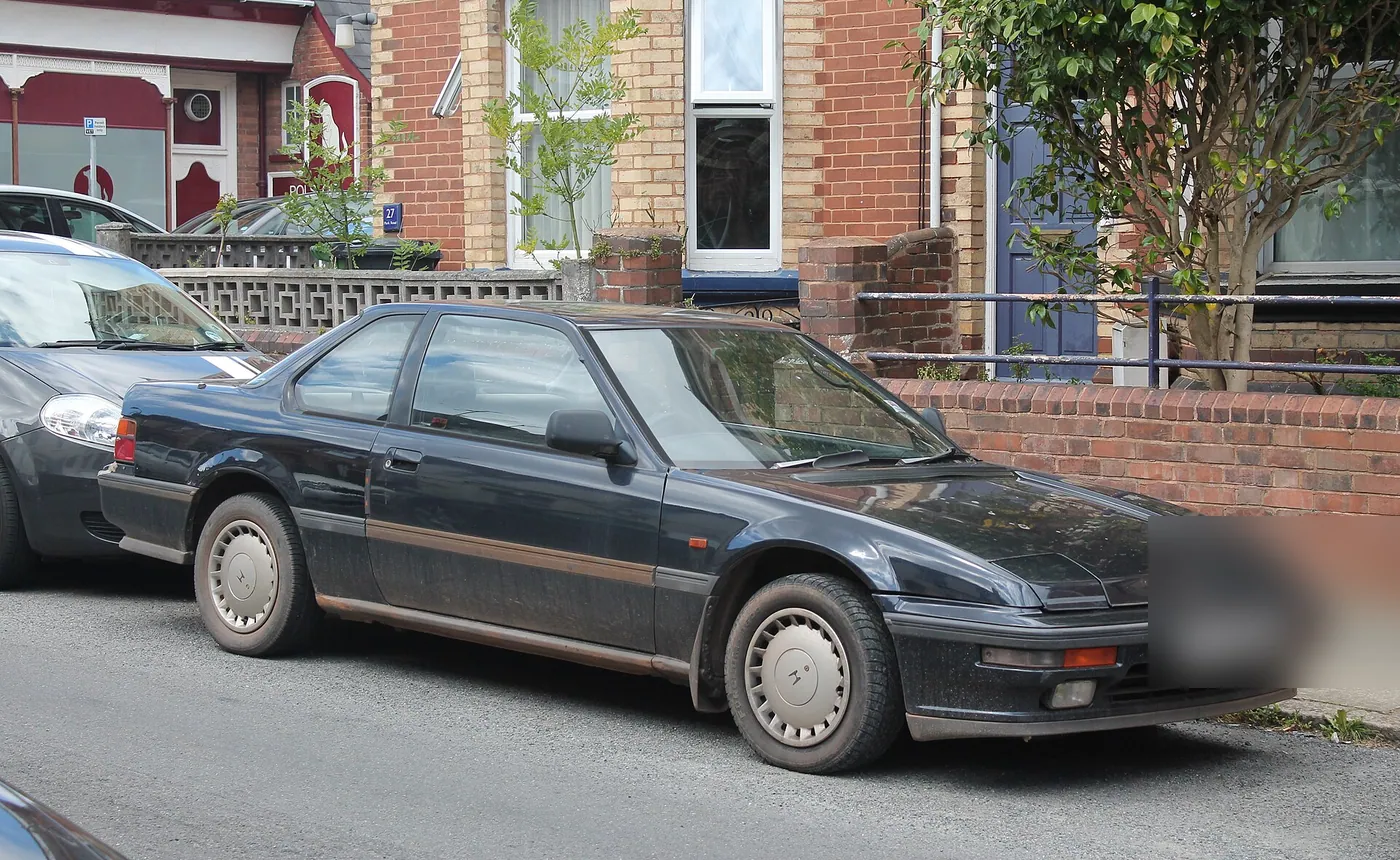
In April 1987, Honda launched the third-generation Prelude, a coupe so low and sleek that it seemed designed to sit beneath the line of other traffic. Its bonnet was remarkably low for a front-engined car, pop-up headlights kept the nose clean, and the glasshouse was thin and airy. It also offered a feature that no ordinary car buyer had seen before: steering at the back.
Japan was entering its bubble economy, and the Prelude became one of the defining cars of that moment. It was stylish, fashionable and associated with young couples heading out for dinner in the city. In Japan it was famously described as a date car.
It was replaced in 1991 by the fourth-generation Prelude, a wider and more rounded car with larger engines. Many enthusiasts still regard the third generation as the best-looking of the line, and its combination of low lines and clever engineering has aged well.
The specs
| Years built | 1987–1991 |
|---|---|
| Engine | 2.0-litre four-cylinder, SOHC or DOHC (B20A) |
| Power | Moderate; the DOHC engine is the stronger choice |
| Gearbox | Five-speed manual or four-speed automatic |
| Drive | Front-wheel drive |
| Body styles | Two-door coupe |
| Distinctive feature | Mechanical four-wheel steering option |
Why it was built
The first Prelude arrived in 1978 as a small coupe. The second generation in 1982 made it lower and more refined, with pop-up lamps that became part of its identity. For the third generation, Honda wanted to push both style and engineering forward, and to give the car a technical highlight that would set it apart from rivals.
That highlight was four-wheel steering. Honda's system was mechanical, linking the front and rear steering through a shaft. At small steering angles, the rear wheels turned slightly in the same direction as the fronts for stability; at larger angles, they turned in the opposite direction to help the car turn tightly. The Prelude was one of the first production cars sold with four-wheel steering.
Design and engineering
The Prelude uses double wishbone suspension front and rear, an expensive layout that Honda used for many of its sporting cars of the time. The engine is mounted low, which allowed the remarkably low bonnet line. Japanese models used 2.0-litre engines, either a SOHC unit or the DOHC B20A, with the twin-cam offering more power and a keener character.
The body is a long, low coupe with clean surfaces, slim pillars and a large glass area. The interior is simple and well made, with a low dashboard that gives a wide view out and a driving position that feels sporty without being cramped.
How it drives today
The Prelude feels light, precise and composed. The steering is accurate and the four-wheel steering system, where fitted, makes the car feel nimble at low speeds and stable at higher ones. It is not a fast car by modern standards, but the DOHC engine pulls smoothly and revs happily.
On Irish roads, it is comfortable enough for regular use, with a supple ride by the standards of a sports coupe. The low seating position and pop-up lamps feel very much of their era. It is quiet at motorway speeds for a car of this age.
Variants worth knowing
The DOHC models with four-wheel steering are the most interesting for enthusiasts. Two-wheel-steer versions are simpler and can be easier to maintain. Japanese models came in several trims with different levels of equipment, and late cars received a facelift. Automatic and manual versions are both found; the manual suits the car's character better.
What to check when buying in Japan
Rust is a significant concern. Check the rear wheel arches, sills, floor pans, sunroof drains and surrounds, and the area around the rear screen. Water leaks can damage the interior and cause hidden corrosion.
The four-wheel steering system should be checked carefully. Look for play, leaks and noise, and remember that some parts are specific to the Prelude and may be hard to source. Pop-up headlight mechanisms can also wear.
Many Preludes have been modified, though fewer than sportier Hondas. Check that the engine matches the documents. Sporting Hondas of this era were sometimes stolen and stripped for parts in Japan, so look carefully at chassis numbers and panels for signs of tampering. Odometer readings on cars of this age should be backed by records.
Should you import one?
If you want a stylish, comfortable classic coupe with clever engineering, the third-generation Prelude is a rewarding choice. It is right-hand drive, practical for a coupe and pleasant to drive regularly.
Parts for the four-wheel steering and some trim can be hard to find, and rust repairs can be expensive. Cars over 30 years old can qualify for Ireland's vintage treatment, which covers every third-generation Prelude. Buy a solid, original car, check the four-wheel steering carefully, and enjoy a classic that still looks low and sharp beside modern cars.
On a wet Irish winter road, remember that this is a light, front-driven coupe on narrow tyres by modern standards. Good tyres make a large difference. Keep it garaged if you can, clear the sunroof drains regularly, and it should give years of comfortable, distinctive motoring.
Frequently asked questions
Did the third-generation Prelude have four-wheel steering?
Yes. A mechanical four-wheel steering system was available, making it one of the first production cars with the feature.
What engines were used in Japan?
Japanese models used 2.0-litre engines, either SOHC or the DOHC B20A, with the twin-cam being the stronger.
What is the main buying concern?
Rust in the arches, sills and floors, plus wear or leaks in the four-wheel steering system.
Is the Prelude practical for daily use?
It is comfortable and reasonably practical for a coupe, though age means it needs careful maintenance.
More Japanese classics
- Honda Integra Type R (DC2): The Front-Wheel-Drive Car Many Rate the Best Ever Made
- Honda Civic SiR (EG6): The Hatchback That Made the B16A a Legend
- Honda City Turbo II: The Tall Little Bulldog That Made Japan Grin in 1983
- Honda Today: The Long, Low Kei Car That Rewrote Japan's Smallest Class
- Honda Acty Truck: The Mid-Engined Workhorse Hiding in Plain Sight
- All 90 Japanese classics you can import
Photo credits
- Photo: Charlie from United Kingdom / Wikimedia Commons, CC BY 2.0