
Mitsubishi Delica Star Wagon (L300): the four-wheel-drive van that went everywhere
Part people carrier, part off-roader and part mountain hut on wheels, the Delica Star Wagon is the cult Japanese van that campers and adventurers still chase.
By the Japan to Ireland editors · · 4 min read
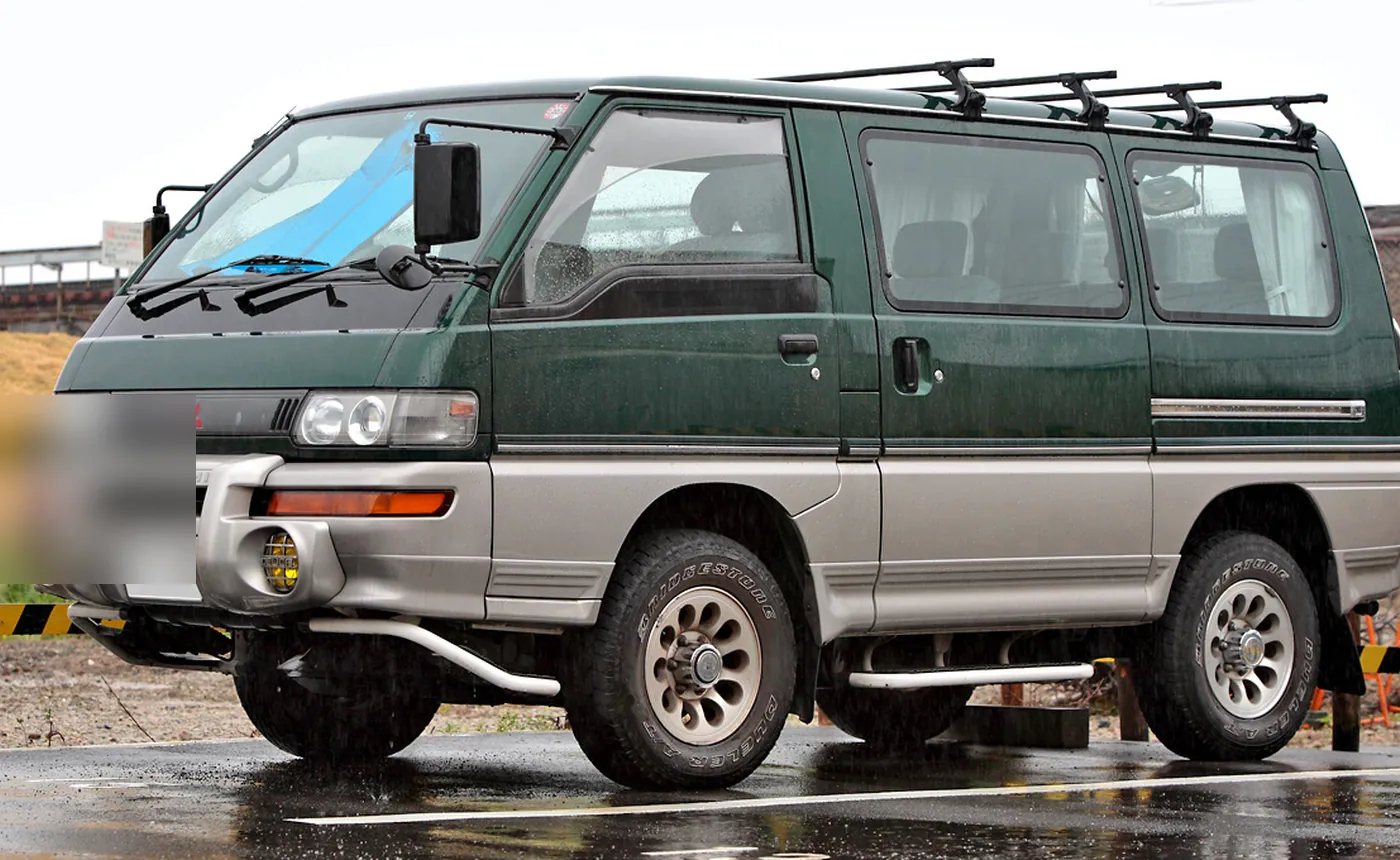
Driving past a ski resort car park in Nagano in the late 1980s, you might have seen them lined up in rows: tall, slab-sided vans with chunky bumpers, spotlights, and roofs lined with glass skylights, sitting high on their suspension above the snow. These were Mitsubishi Delica Star Wagons, and in Japan they became the default choice for families who skied, surfed, camped or simply wanted to carry everything they owned.
The third-generation Delica arrived in 1986. Mitsubishi had been building Delica vans since the 1960s, mostly as work vehicles. The new model was sold in Europe as the L300, and in commercial form it was an ordinary delivery van. In Japan, however, Mitsubishi did something unusual. It took the van's body, combined it with four-wheel-drive components related to its Pajero, and created a high-riding, go-anywhere passenger vehicle. Nobody else offered quite the same thing.
The specs
| Years built | 1986–1999 (passenger Star Wagon replaced by Space Gear in 1994) |
|---|---|
| Engine | 2.0 and 2.4 litre petrol fours, 2.5 litre turbo-diesel |
| Gearbox | Five-speed manual or four-speed automatic |
| Drive | Rear-wheel drive or part-time four-wheel drive with low range |
| Body styles | Van and passenger wagon, standard and high roof |
| Seats | Up to eight |
| Distinctive feature | Crystal Lite roof with glass skylights on some versions |
A van on stilts
The Delica's layout is simple. The driver sits high and above the front wheels, with the engine underneath the front seats. That gives a short nose, a huge cabin and a commanding view. The four-wheel-drive models use a part-time system with a two-speed transfer box and low range, plus generous ground clearance. Engines included a 2.0 petrol, a later 2.4 petrol and, most popular, the 2.5 litre turbo-diesel 4D56, the same family of engines used in the Pajero and L200.
Passenger versions came with up to eight seats, which could be folded and rotated into lounge or bed arrangements. The high-roof Crystal Lite models had glass panels in the roof, giving the interior a light, airy feel. Exceed and Chamonix were among the trim names, with the Chamonix often wearing extra lamps, bull bars and a spare wheel on the back.
In 1994 Mitsubishi replaced the passenger Star Wagon with the Delica Space Gear, which had a more conventional engine-in-front layout. The commercial van continued in production for several more years.
Driving one today
The Star Wagon is slow, tall and noisy, and it rolls like a boat in corners. The 2.5 turbo-diesel is happiest at moderate speeds and struggles on long motorway hills when fully loaded. Steering is heavy at parking speeds and the brakes are of their era. Yet owners rarely mind, because the experience is unique. You sit high, see everything, and know that if the road turns to mud or snow you can engage low range and keep going.
On Irish roads it works best as a camper or adventure vehicle. Narrow boreens and wind on exposed coastal roads demand attention, and it is not a car for anyone in a hurry.
The versions worth knowing
The four-wheel-drive, high-roof Crystal Lite with the turbo-diesel engine is the iconic choice. Petrol versions are smoother and quieter but thirstier. Exceed models were well equipped, while Chamonix versions carried the outdoor look. Long-body and standard-body variants exist. Two-wheel-drive versions are cheaper but lose much of the appeal. Many Delicas in Japan were converted into campers with pop-tops, kitchens and beds, which can be appealing but must be checked carefully.
Buying one in Japan
These vans are now between roughly 30 and nearly 40 years old, and rust is the main concern. Inspect the sills, the bottom of the sliding door and its runners, the wheel arches, the rear door and the floor, particularly in the rear footwells. Look at the chassis members underneath and the suspension mounting points. Water leaks from the roof skylights can rot the floor and spoil the interior, so check for damp carpets or musty smells.
The 4D56 diesel should be checked for overheating, head gasket problems, heavy smoke and timing belt history. Test that the four-wheel drive engages properly and that the front hubs lock. Listen for worn bearings and propshaft joints. The automatic gearboxes can be tired on high-mileage examples.
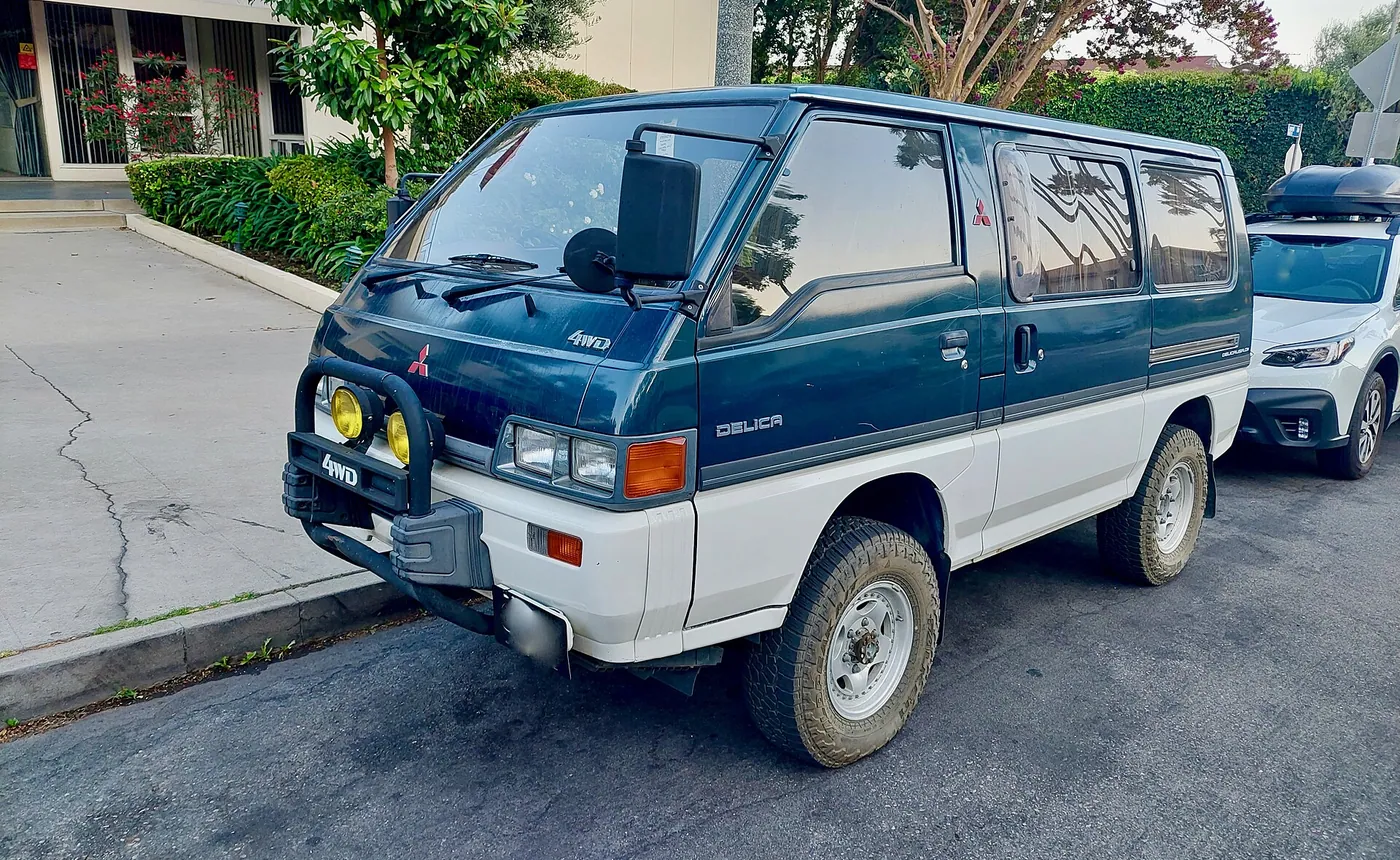
Many Delicas have been lifted, fitted with large tyres, roof racks or camping equipment. Modified vans may need extra attention to pass the NCT, so a near-standard vehicle is easier. Odometer readings on old vans can be uncertain, so focus on condition, documentation and how the engine runs. Make sure the chassis number matches the export certificate.
Should you import one?
The Delica Star Wagon suits someone who wants a capable, characterful vehicle for weekends, festivals, surfing trips or camping along the Wild Atlantic Way. It is roomy, right-hand drive and genuinely capable on soft ground and in snow. It is not a car for speed, economy or modern safety, and it will need regular care.
Owning one in Ireland is easier than many expect, because the L300 name and its engines are familiar and many mechanical parts are shared with other Mitsubishis. Body panels and interior trim are harder to source. The oldest examples are now over 30 years old and can qualify for Ireland's vintage treatment. Buy a solid, honest van rather than the flashiest, and it will become the vehicle everyone asks about when you pull into a campsite.
Frequently asked questions
Is the Delica Star Wagon the same as the L300?
Yes. The third-generation Delica was sold in Europe as the L300, though the four-wheel-drive passenger versions were mostly Japanese-market models.
Which engine is most common?
The 2.5 litre turbo-diesel 4D56, which is also found in the Pajero and L200.
What is the Crystal Lite roof?
A high roof with glass skylight panels, giving the cabin a bright, open feel.
What is the biggest buying risk?
Rust in the sills, sliding door and floor, plus water leaks from the roof skylights.
More Japanese classics
- Mitsubishi Pajero (second generation): the Dakar king that became Japan's family 4x4
- Mitsubishi Pajero (first generation): the square-rigged 4x4 that conquered the desert
- Mitsubishi GTO: the technology-packed grand tourer Japan built at the top of the boom
- Mitsubishi Lancer Evolution I to III: the first rally specials that started a dynasty
- Mitsubishi Galant VR-4: the sober saloon that carried Mitsubishi into world rallying
- All 90 Japanese classics you can import
Photo credits
- Photo: Tennen-Gas / Wikimedia Commons, CC BY-SA 3.0
- Photo: PLawrence99cx / Wikimedia Commons, CC BY-SA 4.0