
Mitsubishi Pajero (second generation): the Dakar king that became Japan's family 4x4
Super Select four-wheel drive, a choice of V6 or turbo-diesel power and a string of desert victories made the 1990s Pajero one of the most complete off-roaders of its time.
By the Japan to Ireland editors · · 4 min read
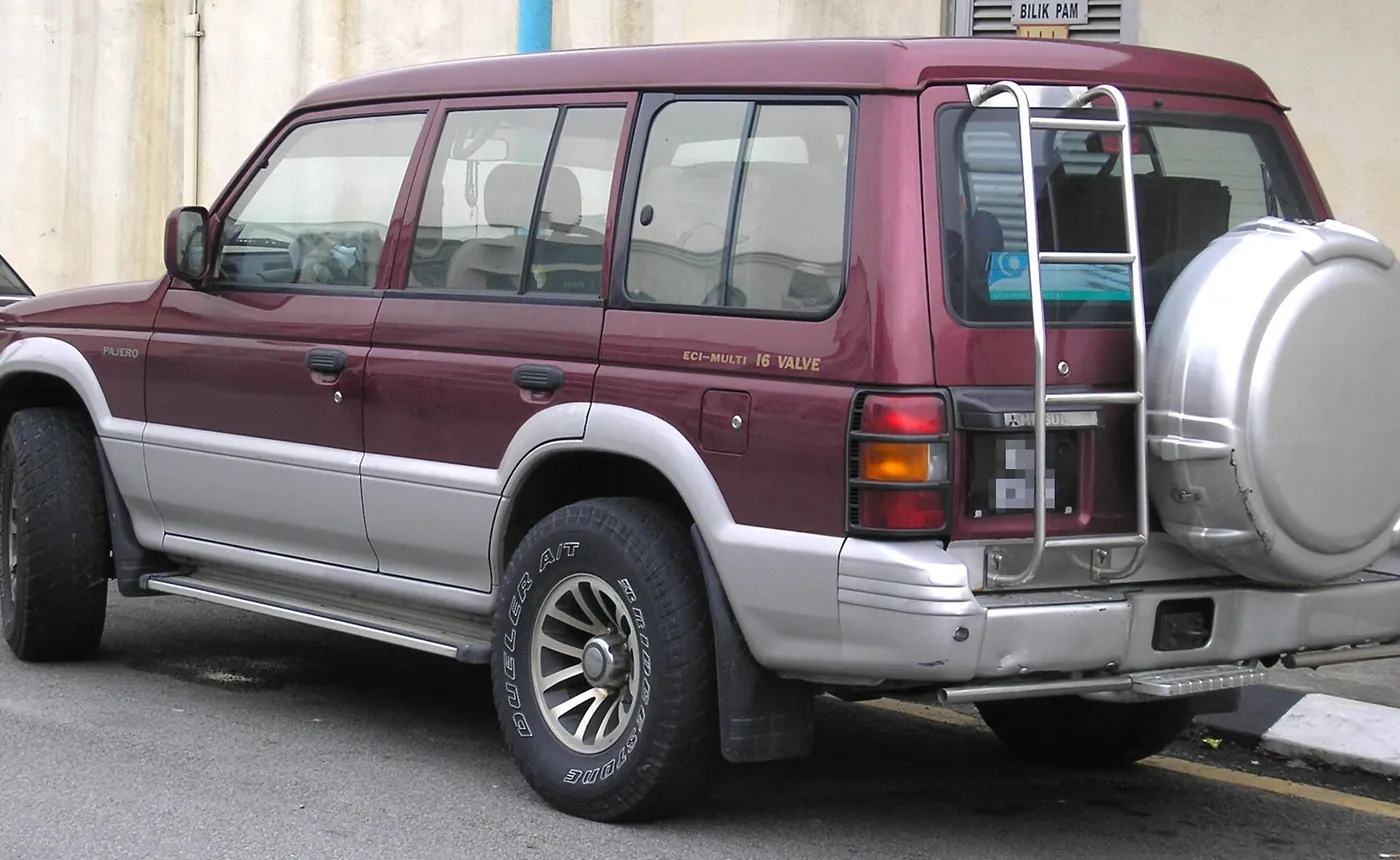
By the time the second Pajero went on sale in 1991, Japan was rich and restless. Weekend skiing, camping and fishing trips were part of the culture, and a big four-wheel drive in the car park said something about the person who owned it. Mitsubishi's new Pajero arrived as that recreational vehicle boom peaked, and it was exactly what the market wanted: tougher than a saloon, plusher than a work truck, and fresh from the deserts of North Africa.
Within a year the new Pajero had won the Paris-Dakar, with Hubert Auriol driving in 1992. Bruno Saby won again in 1993. In 1997 Kenjiro Shinozuka became the first Japanese driver to win the event outright, in a Pajero, and Jean-Pierre Fontenay won in 1998. Few road cars have had a better advertisement.
The specs
| Years built | 1991–1999 (Japan) |
|---|---|
| Engine | 3.0 and 3.5 litre V6 petrol, 2.5 and 2.8 litre turbo-diesel |
| Gearbox | Five-speed manual or four-speed automatic |
| Drive | Super Select four-wheel drive with low range |
| Body styles | Three-door short wheelbase, five-door long wheelbase, plus canvas-top and high-roof versions |
| Chassis | Ladder frame, coil-sprung rear axle |
| Homologation special | Pajero Evolution (1997) |
Super Select and a softer ride
The most important engineering change was Super Select four-wheel drive. Older part-time systems could not be used on dry tarmac because the axles wind up against each other. Super Select added a centre differential with a viscous coupling, so drivers could run in two-wheel drive, permanent four-wheel drive on any surface, or locked four-wheel drive with low range for the rough stuff. Changing between two- and four-wheel drive could be done on the move. For a wet country like Ireland, that full-time four-wheel-drive setting is a genuine safety feature.
The chassis remained a ladder frame with independent front suspension, but the rear axle moved from leaf springs to coil springs, transforming ride comfort. Petrol buyers chose between a 3.0 V6 and a later 3.5 V6. Diesel buyers had a 2.5 turbo-diesel at first and then the 2.8 litre 4M40 intercooled turbo-diesel, the engine most associated with these vehicles in Ireland and Britain, where the model was sold as the Shogun.
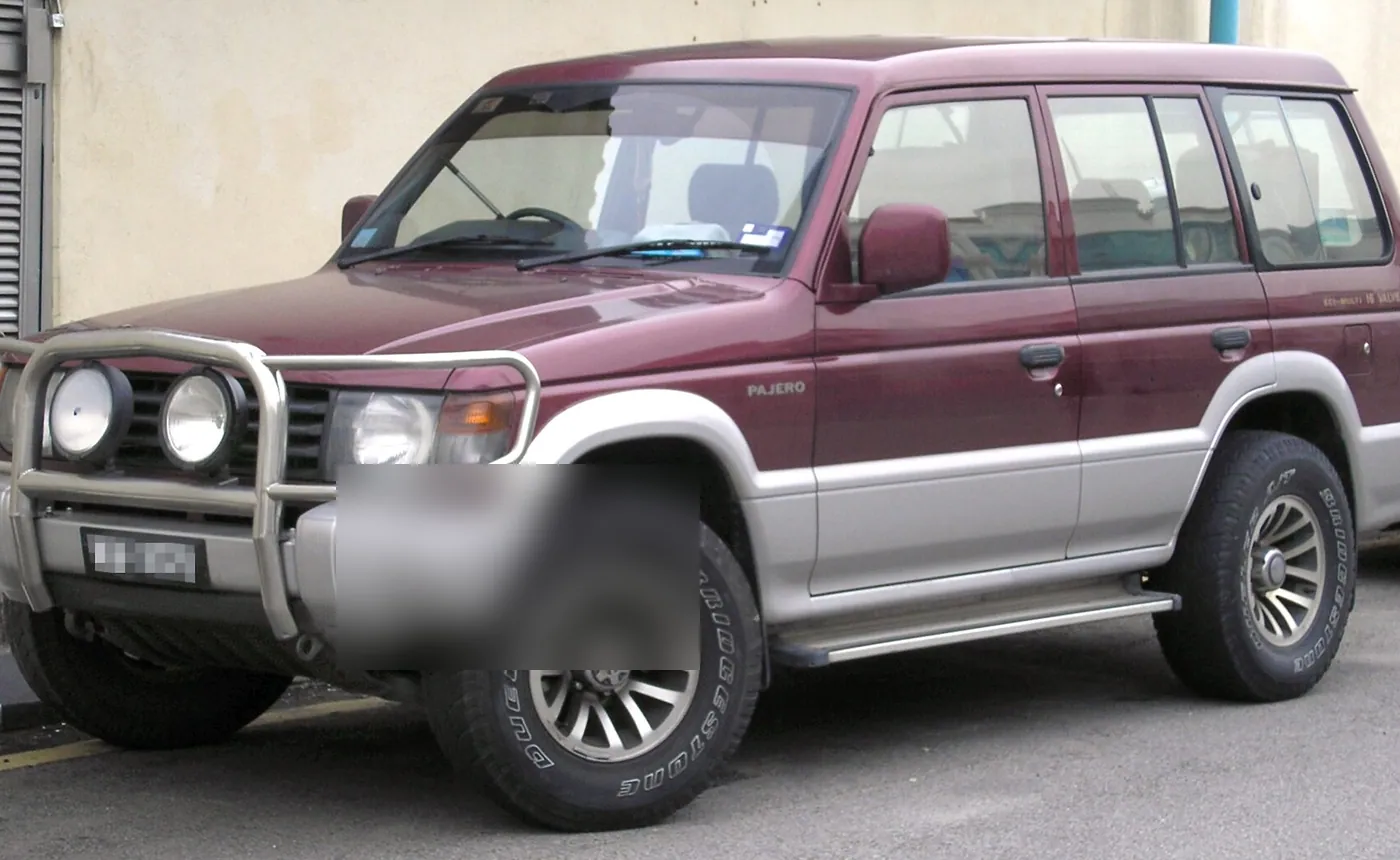
The body was rounder than before, with a big glasshouse and generous cabin. Japanese-market models offered an enormous range: short and long wheelbases, standard and high roofs, canvas-top styles and equipment levels running from basic to lavish, with leather, sunroofs and multi-gauge dashboards showing altitude, incline and pressure.
How it feels now
On the road, the second Pajero feels solid and comfortable for its age. The 2.8 turbo-diesel pulls well at low revs and cruises happily at legal motorway speeds, though it is not quick. The V6s are smoother and more refined, with the 3.5 giving genuinely brisk performance, at the cost of heavy fuel use. Steering is slow and the body rolls, but it is predictable. Off road it remains formidable: low range, decent axle articulation and a locking rear differential on some versions let it go places most modern SUVs would not try.
The variants worth knowing
The long-wheelbase 2.8 turbo-diesel is the default Irish choice: seven seats, good torque and a sturdy reputation. The short-wheelbase three-door is shorter, lighter and more agile. The Exceed was a well-equipped luxury trim, and the Field Master emphasised practicality. The Pajero Evolution of 1997, built to homologate the rally raid cars, used a 3.5 litre V6 with Mitsubishi's MIVEC variable valve timing, wide arches, independent rear suspension and a much more aggressive look. It is rare and highly collectable.
Buying one in Japan
Many second-generation Pajeros spent their lives on ski trips and in snowy prefectures, so inspect the ladder frame carefully, especially the rear crossmember and the rails above the rear axle. Check the sills, rear wheel arches, tailgate bottom and spare-wheel carrier mounts. Diesel engines should be checked for head gasket and cylinder head problems, overheating history and smoke. Ask about timing belt changes, which are critical on these engines.
Test that Super Select engages all modes cleanly, including the lamp signals on the dashboard, and that the front axle disconnect works. Old automatic gearboxes can slip or flare between gears when the fluid has not been changed. Many vehicles have been lifted, fitted with oversize tyres, roof racks and snorkels. Modifications can hide hard use. Mileage on old diesel 4x4s is often impossible to verify fully, so pay more attention to condition and paperwork than the odometer. Check that the chassis number on the export certificate matches the vehicle.
Should you import one?
The second-generation Pajero suits someone who wants a capable, comfortable, old-school 4x4 that can still do real work. It is a good fit for rural Ireland, for towing a horsebox or a trailer, and for owners who like to drive onto a beach or up a forestry track. Seven seats in the long-wheelbase version make it a practical family vehicle as well as a classic.
Expect older-vehicle compromises: fuel economy is poor next to modern SUVs, and some trim and interior parts are scarce outside Japan. Mechanical parts, particularly for the diesel engines, are widely available because the model sold across the world. The earliest cars are now over 30 years old and can qualify for Ireland's vintage treatment, which makes them more appealing to keep long term. Choose a straight, standard vehicle with a solid frame and it will outlast many newer cars.
Frequently asked questions
What is Super Select?
Mitsubishi's four-wheel-drive system that allows two-wheel drive, full-time four-wheel drive on tarmac, and locked four-wheel drive with low range.
Which engine is the best choice?
The 2.8 litre turbo-diesel suits most Irish buyers, while the 3.5 V6 is quicker but thirsty.
What is the Pajero Evolution?
A 1997 homologation special with a 3.5 V6, wide bodywork and independent rear suspension, built in small numbers.
Is the Pajero the same as the Shogun?
Yes. The Pajero was sold in Ireland and Britain as the Shogun.
More Japanese classics
- Mitsubishi Pajero (first generation): the square-rigged 4x4 that conquered the desert
- Nissan Rasheen: the boxy little four-wheel drive Japan kept to itself
- Mitsubishi Delica Star Wagon (L300): the four-wheel-drive van that went everywhere
- Mitsubishi GTO: the technology-packed grand tourer Japan built at the top of the boom
- Mitsubishi Lancer Evolution I to III: the first rally specials that started a dynasty
- All 90 Japanese classics you can import
Photo credits
- Photo: User:Two hundred percent. / Wikimedia Commons, CC BY-SA 3.0
- Photo: User:Two hundred percent. / Wikimedia Commons, CC BY-SA 3.0