
Mitsubishi Pajero (first generation): the square-rigged 4x4 that conquered the desert
Born from Mitsubishi's long apprenticeship building Jeeps under licence, the first Pajero went from a Tokyo show stand to victory on the Paris-Dakar in barely three years.
By the Japan to Ireland editors · · 5 min read
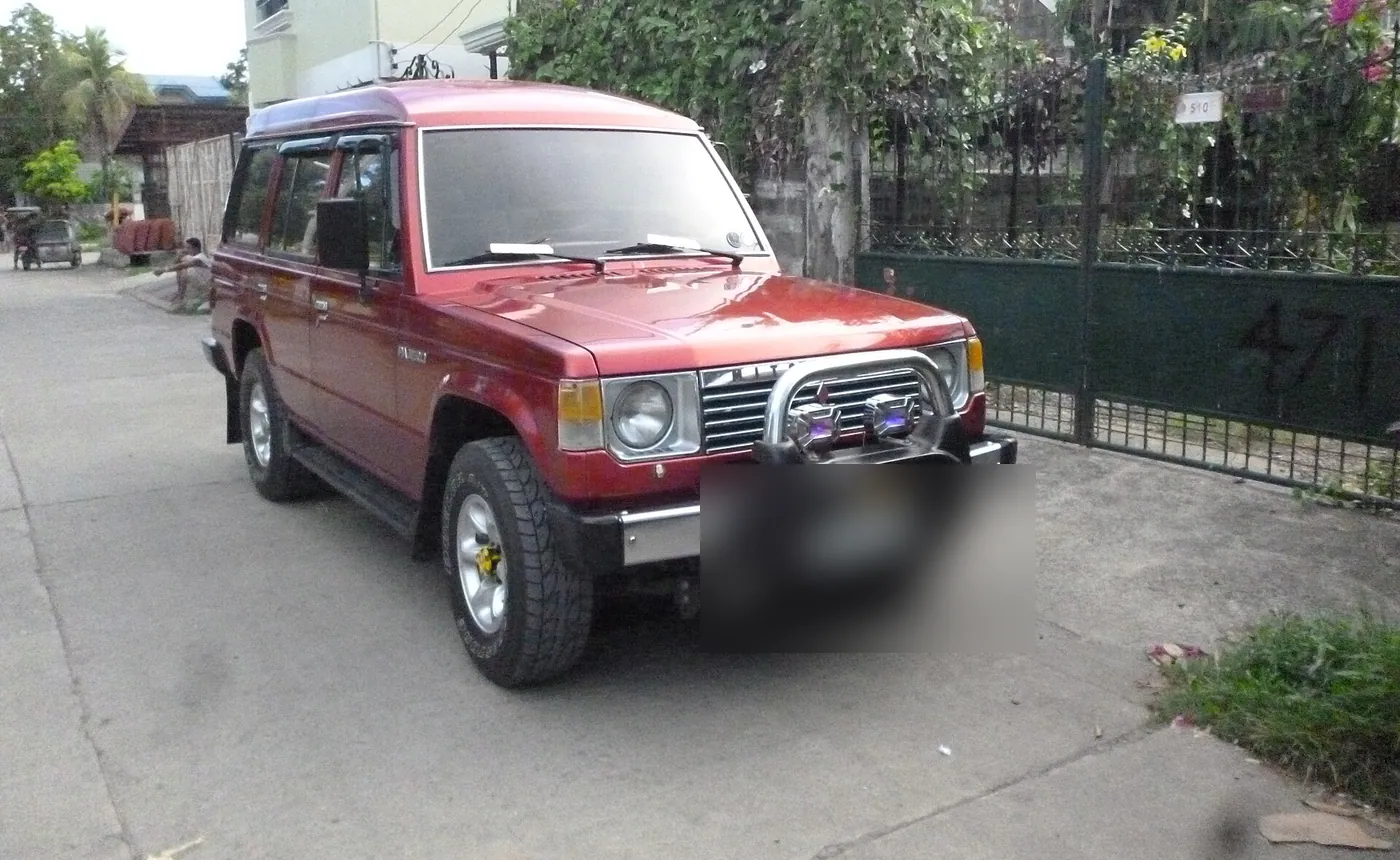
In January 1985 a boxy Mitsubishi crossed the finish line of the Paris-Dakar Rally in first place, with Patrick Zaniroli at the wheel. Three years earlier the car had barely existed. By the end of that decade the name Pajero, along with its export aliases Shogun and Montero, had become shorthand for a tough Japanese four-wheel drive you could also take to the shops.
The story begins long before that. From the early 1950s Mitsubishi built Jeeps under licence in Japan for the country's self-defence forces, forestry and farming. It knew how to make a small, rugged off-roader. What it lacked was a vehicle for a new kind of buyer: a Japanese family with money, leisure time and a taste for the outdoors. Prototypes appeared at the Tokyo Motor Show in the 1970s, and a near-production version was shown in 1981. The Pajero went on sale in 1982.
The specs
| Years built | 1982–1991 |
|---|---|
| Engine | 2.6 litre petrol four, 2.3 and 2.5 litre turbo-diesel fours, 3.0 litre V6 petrol (from 1988) |
| Gearbox | Five-speed manual or automatic |
| Drive | Part-time four-wheel drive with low range |
| Body styles | Three-door short wheelbase (metal or canvas top), five-door long wheelbase |
| Chassis | Ladder frame, independent front suspension, leaf-sprung rear axle |
| Export names | Montero, Shogun |
Jeep bones, passenger-car manners
The engineering was a clever compromise. The first Pajero kept a separate ladder frame and a live rear axle on leaf springs for strength, but it used independent front suspension with torsion bars, giving it steering and ride that felt far more civilised than an old Jeep. Four-wheel drive was part-time, with a two-speed transfer box and freewheeling front hubs on many versions.
At first it came as a short-wheelbase three-door, with either a metal roof or a canvas top. In 1983 Mitsubishi added the long-wheelbase five-door, which turned the Pajero from a fun vehicle into a family car that could carry seven. Engines began with a 2.6 litre petrol four and a 2.3 litre turbo-diesel. A 2.5 litre turbo-diesel and, from 1988, a 3.0 litre V6 petrol followed.
The styling was pure square-edged early 1980s: flat glass, rectangular lamps, flared arches and a spare wheel on the side-hinged rear door. It looks honest and purposeful today, which is why clean examples now draw a crowd.
The rally that made the name
Mitsubishi entered the Paris-Dakar from 1983 and the Pajero did well almost immediately in the production-based classes. The 1985 overall win was the breakthrough, and it began a long relationship between the model and the event. The publicity mattered in Europe, where the car was sold as the Shogun in Britain and Ireland. Farmers, vets, builders and horse owners bought them for the same reason desert racers did: they did not break.
Driving one now
A first-generation Pajero feels upright, narrow and mechanical. The diesels are slow, noisy at speed and happiest at around motorway-minimum pace. The V6 is smoother and much quicker but drinks accordingly. Steering is vague by modern standards and the brakes need a firm foot. Off the road, though, the old car is still hugely capable. Low range, short overhangs on the three-door and a sturdy chassis mean it will climb a muddy forestry track or pull a horsebox out of a wet field without fuss.
On Irish roads the short-wheelbase model is lively and characterful; the long-wheelbase five-door is the calmer, more practical choice and rides better on broken tarmac.
Variants worth knowing
The canvas-top short wheelbase is the rarest and most fun. The metal-top three-door is the most common short body. Five-door long-wheelbase cars are the practical ones, and later high-roof versions offered more space. The turbo-diesels are the default for durability; the V6 is the one for comfort and pace. Japanese-market trim levels were often more generously equipped than European ones.
Buying one in Japan
Age is the first issue: these vehicles are between 35 and more than 40 years old. Inspect the chassis rails, especially near the rear spring hangers and the crossmembers, plus the body sills, the floor, the rear door bottom and the wheel arches. Rust on the frame is far more serious than on the body.
Diesel engines should start cleanly and not smoke heavily; check for head gasket trouble and overheating, and ask whether the timing belt and balance shaft belt have been changed. Look for oil leaks from the transfer box and axles, worn kingpins or ball joints, and a free-turning set of front hubs. Many Pajeros were used hard: by farmers, on ski trips or for off-road club events. Raised suspension, big tyres and winch bumpers are common. A standard vehicle is easier to pass through the NCT and to insure.
Mileage on old Japanese 4x4s can be hard to verify, particularly where a speedometer has been changed. Look for documents, wear, and the car's general mechanical tightness rather than trusting a figure. Make sure the export paperwork and chassis plate match.
Should you import one?
The first Pajero suits someone who loves simple, rugged machinery and wants a 4x4 with real history. It makes sense in rural Ireland, where it can do genuine work, and as a weekend vehicle for beaches and forest roads. Most examples are now over 30 years old and can qualify for Ireland's vintage treatment, which changes the ownership picture considerably.
Be realistic about comfort and economy. It is loud, slow and thirsty compared with any modern SUV, and parts for trim and body panels can take time to source. Mechanical parts are better supported because so many Pajeros, Shoguns and Monteros were built. Buy the soundest chassis you can find, keep it standard, and it will be one of the most capable classics on any Irish road.
Frequently asked questions
Is the first-generation Pajero the same as the Shogun?
Yes. Mitsubishi sold it as the Shogun in Ireland and Britain and as the Montero in the Americas.
Which engine is best?
The turbo-diesels are the durable choice, while the 3.0 V6 petrol is smoother and faster but uses more fuel.
Did it really win the Dakar?
Yes. A Pajero won the Paris-Dakar overall in 1985, the first of many wins for the name.
What should I check first?
The ladder chassis for rust, particularly around the rear spring mounts and crossmembers.
More Japanese classics
- Nissan Rasheen: the boxy little four-wheel drive Japan kept to itself
- Nissan March Super Turbo: a twincharged Micra built for Japan's hot hatch wars
- Mitsubishi Pajero (second generation): the Dakar king that became Japan's family 4x4
- Mitsubishi Delica Star Wagon (L300): the four-wheel-drive van that went everywhere
- Mitsubishi GTO: the technology-packed grand tourer Japan built at the top of the boom
- All 90 Japanese classics you can import
Photo credits
- Photo: Captainmorlypogi1959 / Wikimedia Commons, CC BY-SA 4.0