
Nissan Rasheen: the boxy little four-wheel drive Japan kept to itself
Built on humble Sunny underpinnings and styled like a child's drawing of a jeep, the Rasheen was a home-market curiosity in the 1990s. Today it is one of the most charming small classics you can bring from Japan.
By the Japan to Ireland editors · · 5 min read
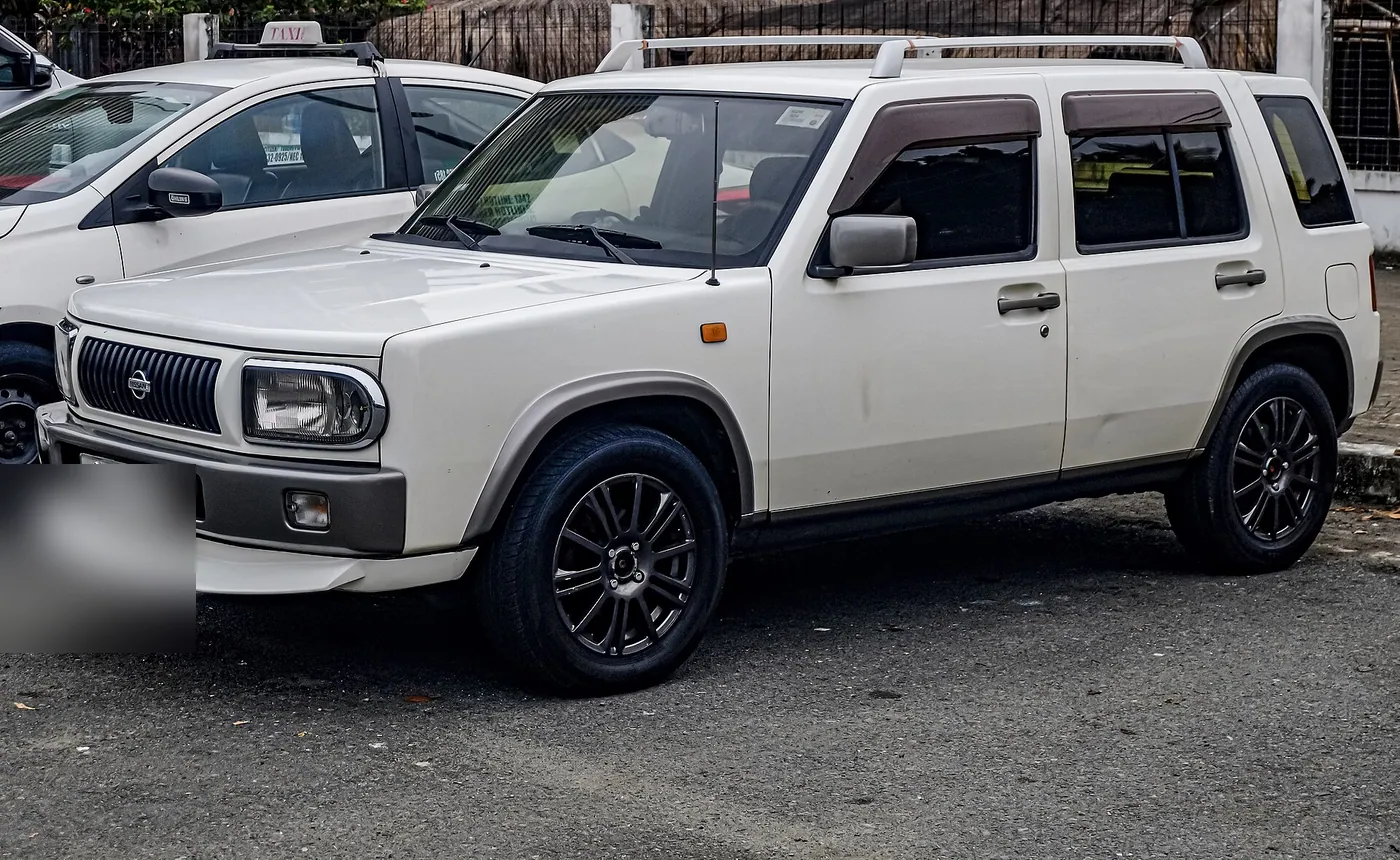
Picture a Tokyo street in the mid-1990s. The bubble economy has burst, the property boom has collapsed, and the swagger of the late 1980s has gone out of the car showrooms. In among the sober saloons sits something that looks as if it has been cut out of cardboard with a ruler: flat panels, a flat roof, upright glass and round headlamps. That was the Nissan Rasheen, and it was never meant to be clever. It was meant to be liked.
Nissan showed the Rasheen as a concept at the Tokyo Motor Show in 1993 and put it on sale the following year. It arrived at a moment when Japanese buyers were starting to fall for recreational vehicles, from big Pajeros to boxy little wagons, but many of them had no use for a ladder frame or a low-range transfer box. The Rasheen offered the look of an off-roader with the manners of a family hatchback. It was sold only in Japan, which is part of the reason it feels so fresh in Ireland today.
The specs
| Years built | 1994–2000 |
|---|---|
| Engine | 1.5, 1.8 and 2.0 litre petrol four-cylinders |
| Power | Roughly 105 PS (1.5) to 145 PS (2.0 Forza) |
| Gearbox | Mostly four-speed automatic |
| Drive | Mostly full-time four-wheel drive |
| Body styles | Five-door estate |
| Platform | Nissan Sunny (B14 era) underpinnings |
| Market | Japan only |
A Sunny in work clothes
Underneath, the Rasheen is a thoroughly ordinary Nissan, and that is a compliment. It borrowed its mechanical package from the Sunny family of the period, with a transverse engine, a monocoque body and four-wheel drive that sends power to the rear axle automatically when the fronts lose grip. There is no low ratio and no locking hardware. Ground clearance is modest. This is a car for a wet gravel lane, a snowy car park or a beach slipway, not for a mountain.
The launch engine was the 1.5 litre GA15DE, a smooth twin-cam four with about 105 PS. Later Nissan added a 1.8 and then, in the Rasheen Forza of 1998, the 2.0 litre SR20DE familiar from the Primera and Silvia families, rated at around 145 PS. Most cars use a four-speed automatic.
The design is the reason people buy one. The body is almost entirely straight lines, the bumpers are chunky and plain,. Inside, the dashboard is simple and the seats are upright, with big windows giving a view like a greenhouse. It feels deliberately unpretentious, closer in spirit to Nissan's retro Pike cars of the late 1980s than to the technology showcases of the same company.
On the road today
Drive a Rasheen now and it feels light, upright and slightly toy-like. The 1.5 is adequate in town and on the N-roads but needs patience on a motorway slip road with four people aboard. The 2.0 Forza is noticeably more willing and the one to pick if you will spend time on the M50 or the M7. Steering is light, the ride is soft and the body leans in corners, which suits its character. The four-wheel drive gives genuine reassurance on wet Irish tarmac and on muddy farm entrances, though tyres matter more than drivetrain on a boreen in January.
Fuel economy is reasonable for the era and size, though four-wheel drive and an old automatic will never match a modern supermini. Parts for the engines and much of the running gear are shared with other Nissans, which helps. Body panels, trim and the distinctive lamps are another matter.
The versions worth knowing
The early 1.5 is the purest and most common. Mid-life cars brought minor trim changes and the 1.8 option. The Forza, with its 2.0 litre engine, is the most desirable for Irish roads. Special editions with different trim, two-tone paint and roof rails appeared through the run. Equipment lists varied a lot, so judge each car on its own condition rather than its badge.
Buying one in Japan
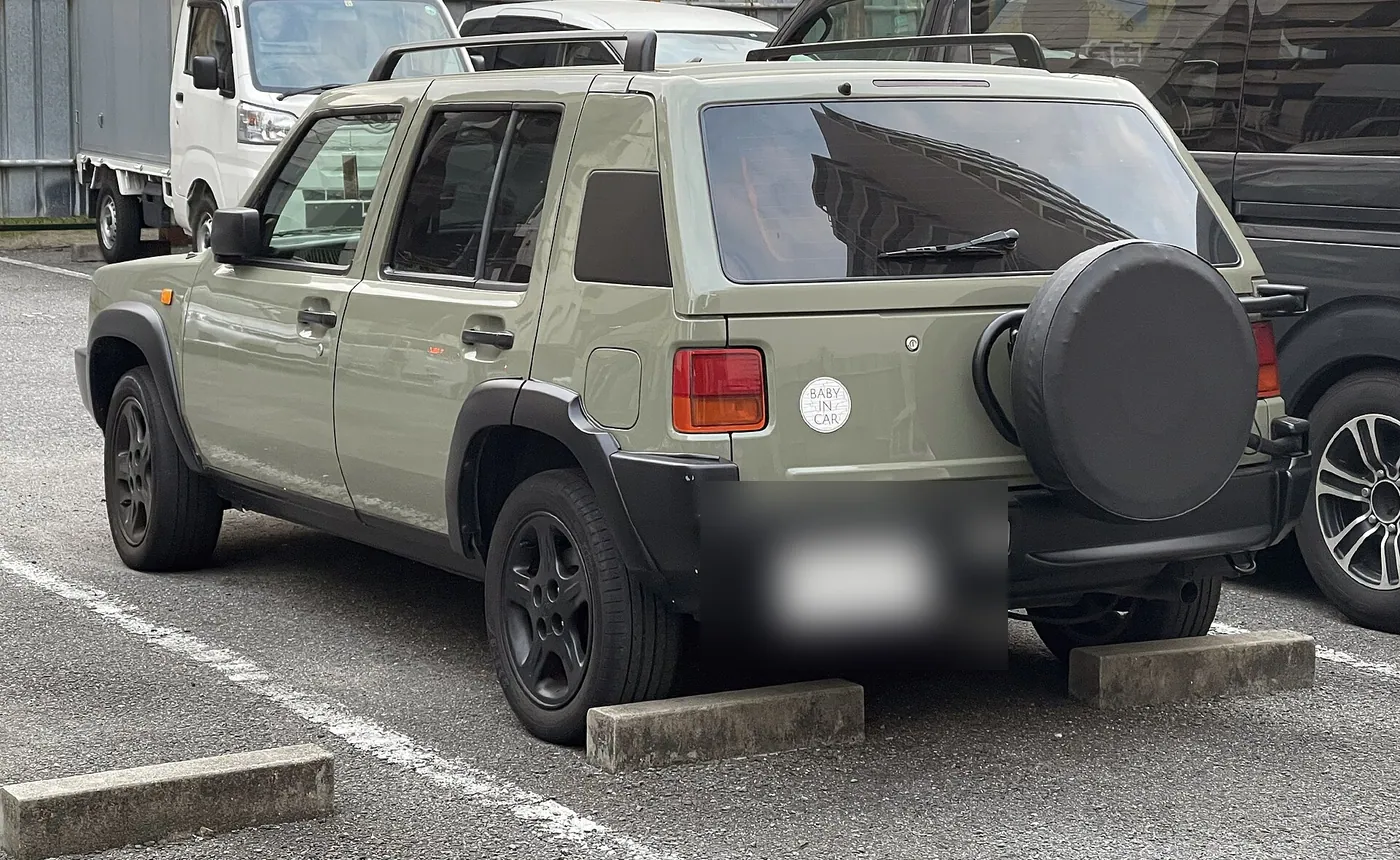
A Rasheen will be a quarter of a century old or more, so treat every one as an old car first. Rust is the main enemy. Look at the rear wheel arches, the sills, the bottom of the tailgate, the floor under the rear seats and the area around the spare wheel well. Cars from snowy northern prefectures may have seen road salt; cars from the south often fare better. Auction inspection sheets mark corrosion and repairs, and photographs of the underside are worth asking for.
Mechanically, check that the automatic changes cleanly and that the four-wheel-drive system does not bind or whine on tight turns. Listen for worn wheel bearings and driveshaft joints. Timing chain noise on the engines is worth noting. Air conditioning on old Japanese cars has often been converted or simply ignored.
Originality matters to buyers of these cars. Some have been lifted, fitted with off-road tyres or given aftermarket bumpers. That can look good but makes resale and the NCT harder, so a standard car is usually the better buy. Low mileage claims on a car this old deserve gentle scepticism: compare the recorded mileage with wear on the pedals, seats and steering wheel, and with any service records. Make sure the export certificate and chassis number match the car.
Should you import one?
The Rasheen suits someone who wants a small, cheerful car with real character and a bit of four-wheel-drive confidence, rather than outright speed. It makes a lovely second car for a rural home, a weekend car for the coast, or simply a daily runabout that makes people smile in a supermarket car park. It is easy to park, easy to live with and right-hand drive like every car on Irish roads.
Expectations should be realistic. It is slow by modern standards, its safety equipment belongs to the 1990s, and some trim parts must come from Japan. Insurance on an older import may require an agreed-value or classic policy, which can work in your favour. Cars over 30 years old can qualify for Ireland's vintage treatment, and the first Rasheens are now approaching that age. Buy the most solid, original example you can find, and it will repay you with years of easy, quirky motoring.
Frequently asked questions
Is the Nissan Rasheen a proper off-roader?
No. It has light-duty four-wheel drive with no low range, built for wet roads, snow and gravel rather than serious terrain.
Which Rasheen engine is best for Ireland?
The 2.0 litre Forza copes best with motorway driving, while the 1.5 suits town and country lanes.
Was the Rasheen sold in Europe?
No. It was a Japanese home-market model, so every one in Ireland is an import.
What is the main thing to check?
Rust in the rear arches, sills and floor, followed by the health of the automatic gearbox.
More Japanese classics
- Nissan March Super Turbo: a twincharged Micra built for Japan's hot hatch wars
- Datsun Bluebird (510): the family saloon that won the Safari Rally and conquered America
- Mitsubishi Pajero (first generation): the square-rigged 4x4 that conquered the desert
- Mitsubishi Pajero (second generation): the Dakar king that became Japan's family 4x4
- Mitsubishi Delica Star Wagon (L300): the four-wheel-drive van that went everywhere
- All 90 Japanese classics you can import
Photo credits
- Photo: Ethan Llamas / Wikimedia Commons, CC BY-SA 4.0
- Photo: Tokumeigakarinoaoshima / Wikimedia Commons, CC BY-SA 4.0