
Nissan 180SX: pop-up headlamps, a turbo and a ten-year run in Japan
The hatchback sibling of the S13 Silvia outlived it by years, gained a bigger engine and a late facelift, and became a staple of Japanese car culture. The hard part now is finding one that has not been driven sideways.
By the Japan to Ireland editors · · 4 min read
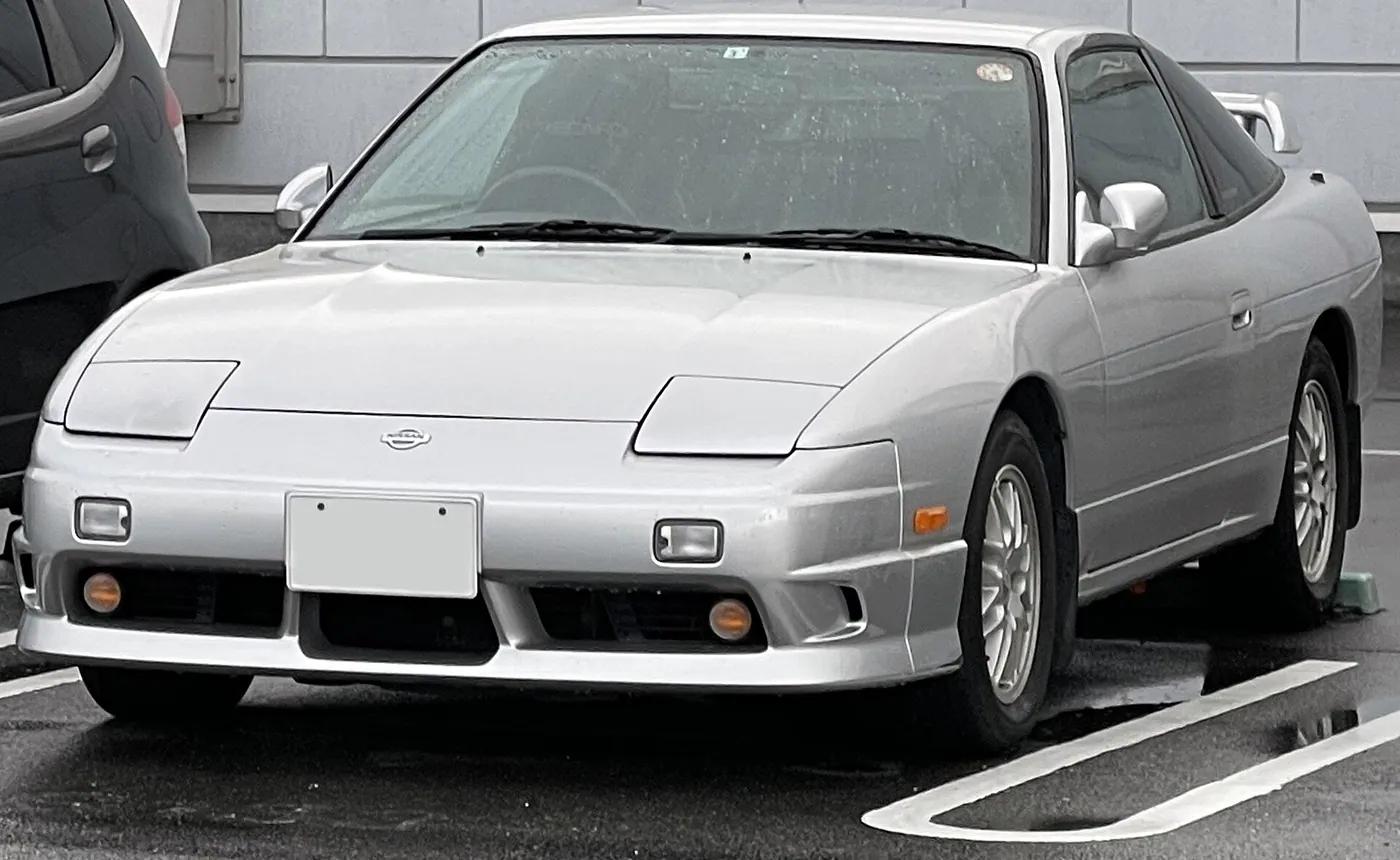
In the spring of 1989, Nissan added a second body to its new S13 platform. The Silvia coupé had already been a hit. The new car was a three-door hatchback with pop-up headlamps, a long sloping rear window and a sharper, more aggressive profile. It was called the 180SX, and it would stay on sale in Japan for almost a decade.
That long run is the first thing to understand about the car. While the Silvia moved on to the S14 and S15 generations, the 180SX continued on the S13 underpinnings, updated and refreshed. By the late 1990s it was a familiar sight on Japanese roads and, inevitably, on drift circuits, where its light weight and rear-wheel drive made it a natural choice.
The specs
| Years built | 1989–1998 |
|---|---|
| Engine | 1.8-litre CA18DET turbo, later 2.0-litre SR20DET turbo; non-turbo SR20DE late in production |
| Power | About 175 PS (CA18DET), 205 PS (SR20DET) |
| Gearbox | 5-speed manual or 4-speed automatic |
| Drive | Rear-wheel drive |
| Body styles | 3-door hatchback |
| Sold in Europe as | Nissan 200SX |
Why it was built
Nissan in the late 1980s was producing coupés for different tastes and dealer channels. The Silvia offered sleek elegance, while the 180SX brought a sportier, more practical fastback shape with a useful hatch. In Europe the car was sold as the 200SX, and Irish enthusiasts who remember that model will recognise the shape immediately.
The car belonged to the confident bubble years, when the Japanese market supported many sporty two-doors. Unlike many rivals, the 180SX survived the downturn of the early 1990s and remained in the line-up until 1998.
Design and engineering
The 180SX shares its chassis with the S13 Silvia, including the MacPherson strut front and multi-link rear suspension. It launched with the turbocharged 1.8-litre CA18DET. In 1991 it received the 2.0-litre SR20DET, a stronger and more tuneable engine. The four-wheel steering system HICAS was available on some versions.
In 1996 the car received its final facelift, with a new front bumper and round rear lamps. This late model, often called the kouki in Japan, added a Type X trim with a body kit and a non-turbo Type S model. The Type R was a simpler turbo version for those who wanted the engine without extra equipment.
How it drives today
The 180SX drives much like the S13 Silvia: light, balanced and responsive, with an eager turbo engine and steering that communicates well. The hatchback body makes it more practical than the coupé, with a usable boot for weekend bags. The pop-up headlamps are part of the charm, though older motors and linkages can be slow or uneven.
On Irish roads, the same advice applies as with any older rear-wheel-drive turbo car. Wet surfaces demand care, tyres matter and suspension that has been lowered too far will be uncomfortable on potholed rural roads. A well-sorted car on standard suspension is far more pleasant for daily use.
The versions worth knowing
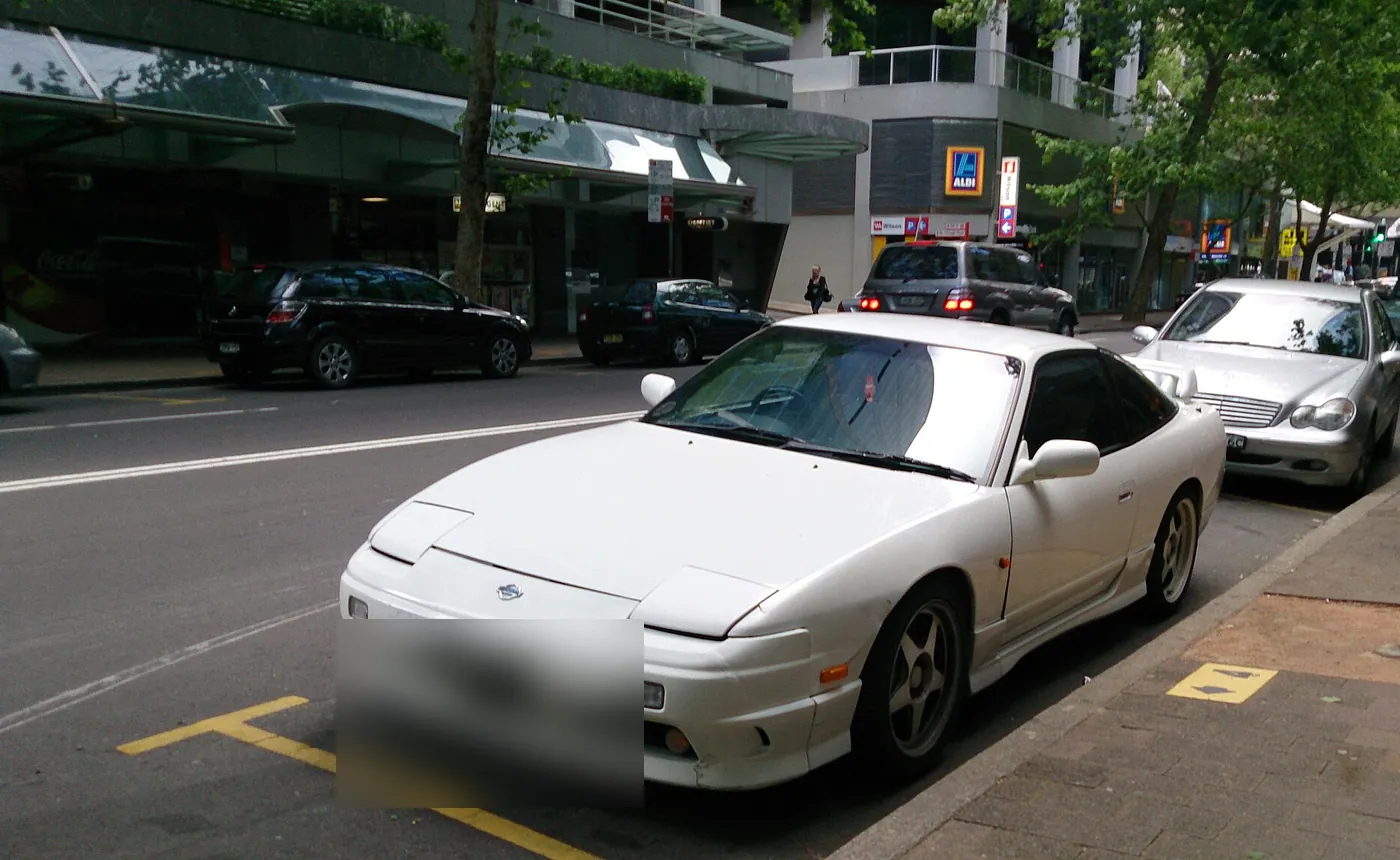
The early CA18DET cars are the purist's choice. The SR20DET models from 1991 offer more torque and easier tuning. The late facelift Type X is the most refined and best equipped. The Type S with the non-turbo SR20DE is the calmest choice and may be easier to insure.
In Japan, many 180SX bodies have been converted into what enthusiasts call a Sileighty, which pairs the 180SX with a Silvia front end. Others have received S15-style front ends. These conversions are part of the car's culture, but they are not original and should be identified as modified cars.
What to check when buying one in Japan
The vast majority of 180SXs have been modified at some point. Check for drift damage, especially to front ends, rear quarters and floors. Look for welded differentials, aftermarket suspension, cut arches, removed interior trim and evidence of heavy use on circuits. Accident repairs can be hidden under body kits, so inspect seams and panel fit closely.
Rust appears in the sills, rear arches, strut towers and spare wheel well. The pop-up headlamp mechanisms and their motors should be checked. Engine swaps are common, and a car with a different engine or a conversion may raise issues at the NCT and with insurers.
Odometer readings on modified cars are often unreliable. Look for an auction history and service records that make sense. Confirm that the chassis number on the car matches the export certificate.
Should you import one?
The 180SX suits an enthusiast who wants a classic Japanese turbo car with practicality and a strong following. It is right-hand drive, familiar to Irish drivers who remember the 200SX and supported by a large international parts market. The main challenges are insurance, finding an unmodified car and keeping on top of maintenance.
Cars over 30 years old can qualify for Ireland's vintage treatment, and the earliest 180SXs now qualify, while late facelift cars will take some years yet. Be prepared to wait for the right car. An honest, original 180SX is a scarce thing, and it is worth more to you than a modified car that looks fast.
Frequently asked questions
Is the 180SX the same as the European 200SX?
The European 200SX of that era used the same hatchback body, so it is effectively the export version of the 180SX.
What is a Sileighty?
A Sileighty is a 180SX fitted with a Silvia S13 front end. It is a popular conversion but not a factory original.
Which 180SX is the most refined?
The late facelift cars from 1996, particularly the Type X, are the most polished and well equipped.
Are original 180SXs rare?
Yes. Most have been modified, so an unmodified example in good condition is the hardest version to find.
More Japanese classics
- Nissan Silvia (S13): the bubble-era coupé that became the world's drift car
- Nissan S-Cargo: the snail-shaped delivery van that became a design icon
- Nissan Pulsar GTI-R: the pocket rally car with a Skyline-style four-wheel drive
- Nissan Cedric and Gloria (Y31): the twin saloons that carried Japan's businessmen
- Nissan Cima (Y31): the turbo luxury saloon that gave its name to a boom
- All 90 Japanese classics you can import
Photo credits
- Photo: Tokumeigakarinoaoshima / Wikimedia Commons, CC BY-SA 4.0
- Photo: FotoSleuth / Wikimedia Commons, CC BY 2.0