
Nissan Cima (Y31): the turbo luxury saloon that gave its name to a boom
The first Cima was so successful in bubble-era Japan that the press coined a phrase for its sales. Today it is a rare, powerful and distinctly Japanese luxury car.
By the Japan to Ireland editors · · 4 min read
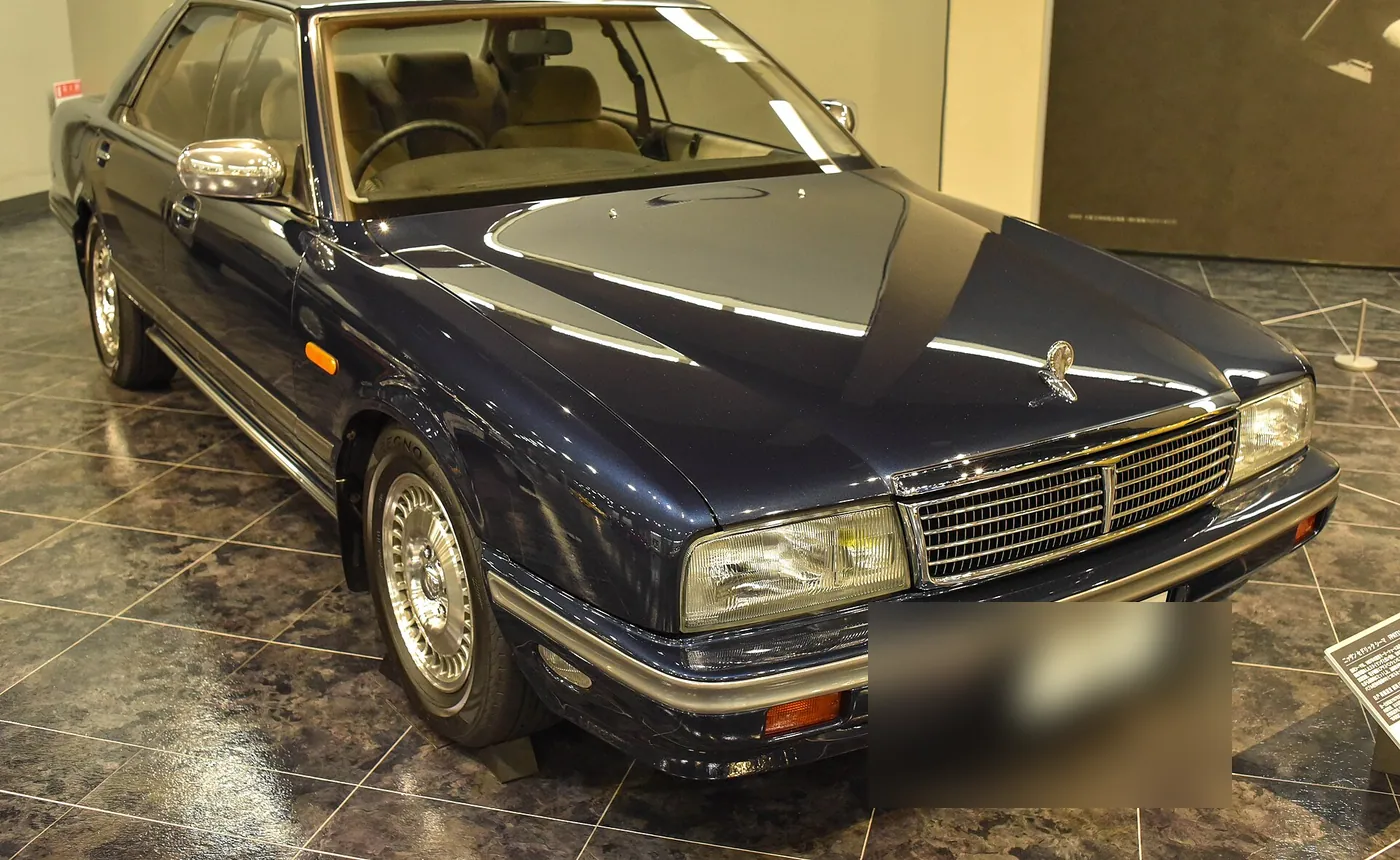
In January 1988 Nissan launched a car that captured the spirit of its time almost perfectly. It was big, smooth and wide, with a turbocharged V6 under the bonnet and a price that placed it well above the Cedric and Gloria. Yet it sold in remarkable numbers. Japanese newspapers spoke of a Cima phenomenon, a phrase that came to stand for the bubble economy's appetite for expensive things.
The first Cima, built on the Y31 platform, was not the largest or most expensive car in Japan. It was, however, the car that showed that ordinary well-off buyers would pay for luxury and power. It remains one of the most evocative cars of the period.
The specs
| Years built | 1988–1991 |
|---|---|
| Engines | 3.0-litre VG30DE V6 and 3.0-litre VG30DET turbo V6 |
| Power | About 200 PS (VG30DE) and 255 PS (VG30DET) |
| Gearbox | 4-speed automatic |
| Drive | Rear-wheel drive |
| Body styles | 4-door pillarless hardtop |
| Official names | Nissan Cedric Cima and Nissan Gloria Cima |
Why it was built
By the late 1980s Japan was booming. Property and share prices had soared, and many people felt rich. Nissan saw an opportunity for a car that sat above the Cedric and Gloria, combining luxury, performance and a modern image.
The Cima was officially called the Cedric Cima or Gloria Cima depending on the dealer network, but it had its own body and character. It was wider than the standard Y31, which placed it in a higher tax class in Japan and signalled its status. Its sales success in 1988 surprised many observers and remains the clearest symbol of that era.
Design and engineering
The Cima was built on the Y31 platform but with a distinctive four-door pillarless hardtop body, smoother and rounder than the angular Cedric and Gloria. The car was noticeably wider than its siblings, giving it a confident stance.
Two engines were offered. The 3.0-litre VG30DE V6 produced around 200 PS, while the turbocharged VG30DET produced around 255 PS. Both drove the rear wheels through a four-speed automatic gearbox. The suspension used electronically controlled air springs on higher models, and the cabin was well equipped, with leather or plush cloth, power everything and modern electronics.
How it drives today
The Cima is a fast, comfortable car. The turbocharged V6 delivers strong acceleration, and the car cruises quietly at motorway speeds. The air suspension, when working, gives a soft and composed ride. The steering is light and the car is not built for sharp cornering, but it is stable at speed.
On Irish roads the Cima is best suited to motorways and main roads. Its width and soft suspension are less comfortable on narrow, twisting rural roads, though it is manageable.
The character of the turbo car is worth describing properly. At low speeds it is calm and almost silent, and the gearbox slurs through its ratios without fuss. Press harder and the turbocharger builds boost in a long, smooth wave, and the big saloon gathers speed with a swiftness that still surprises passengers. It is the opposite of a modern turbo engine with instant response. You plan an overtake, you wait a moment, and then the car simply goes. That slightly theatrical delivery is a large part of the appeal.
It is worth remembering what the Cima was competing with. Toyota's Crown was the established choice for Japan's executive class, and Toyota would soon launch the Celsior, sold abroad as the Lexus LS 400. The Cima arrived first with a turbocharged, more overtly sporting take on luxury, and it set the tone for the Japanese luxury cars of the following years.
The versions worth knowing
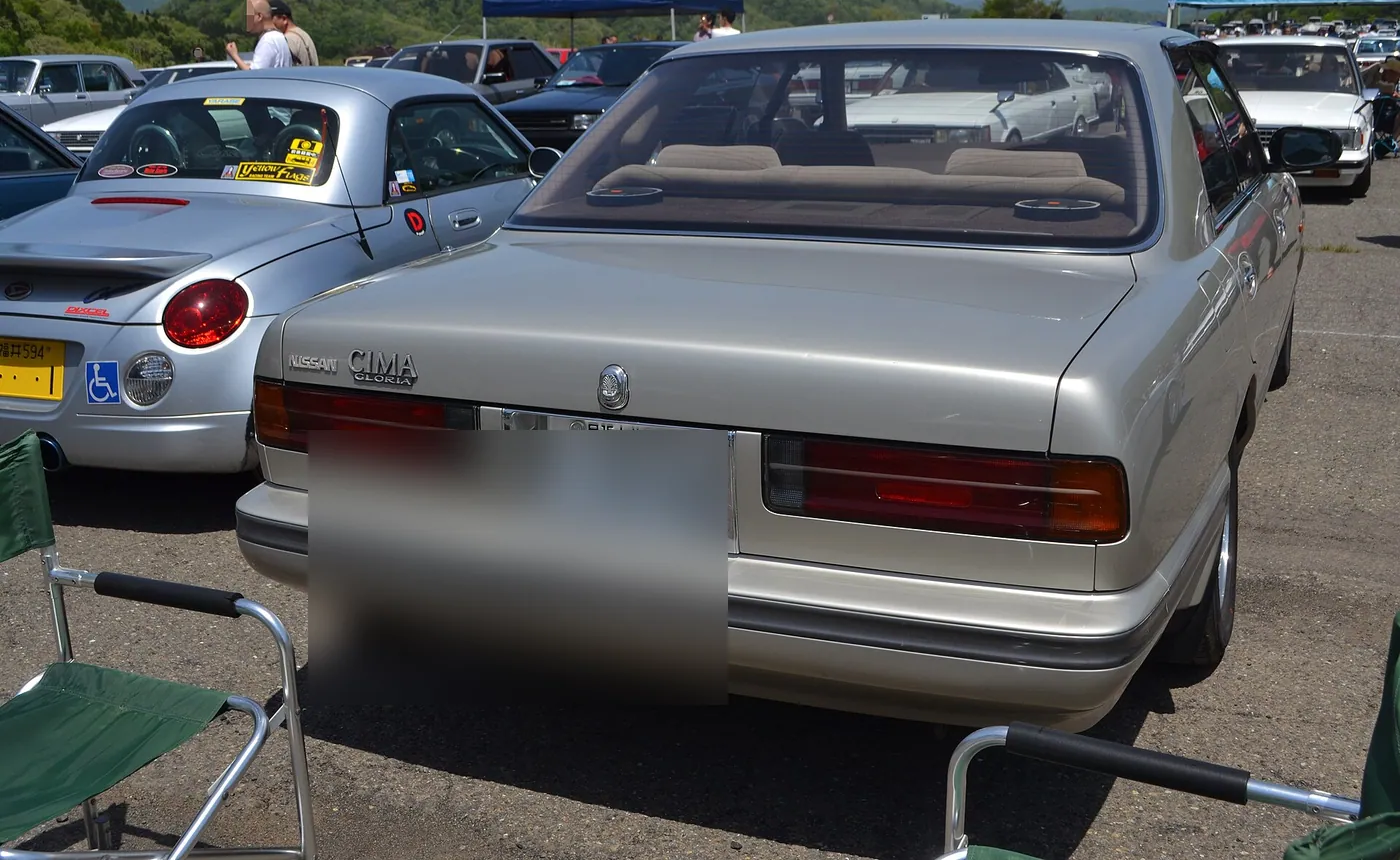
The Cima was offered in Type I and Type II specifications, with the Type II models offering more equipment and the turbocharged engine. The Type II Limited was the top model with the most luxurious trim. The turbocharged cars are the most sought after.
What to check when buying one in Japan
The air suspension is the first thing to check. Leaks, failed compressors and worn air springs are common and can be expensive to repair. Many cars have been converted to conventional springs or coilovers, which changes the ride and the car's originality.
Check the electrical systems, including power windows, climate control and electronic dashboard displays. Repairs can be difficult and parts are increasingly scarce. Rust appears in the sills, wheel arches and around window seals, and the pillarless doors need good seals to keep water out.
The turbocharged engine needs regular maintenance. Check for oil leaks, turbo wear and cooling system health. Many Cimas have been modified in the Japanese VIP style, with lowered suspension, large wheels and body kits. Original cars are rarer and more desirable.
Odometer readings can be uncertain, so look for service records and a sensible auction history. Ensure the export certificate and paperwork are complete.
Should you import one?
The Cima suits someone who wants a rare, powerful and comfortable luxury saloon from Japan's bubble years. It is right-hand drive and well suited to long-distance cruising. It is not a simple car to maintain, and the air suspension and electronics require care.
Cars over 30 years old can qualify for Ireland's vintage treatment, and the Y31 Cima has reached that age. Find a mechanic who understands older Japanese electronics and turbo engines, and budget time for sourcing parts. A good Cima is a remarkable piece of history and a genuinely fast, relaxing car to drive.
Frequently asked questions
What was the Cima phenomenon?
It was the phrase used in Japan for the car's strong sales in 1988, seen as a symbol of the bubble economy.
Which engine should I look for?
The turbocharged VG30DET, producing around 255 PS, is the most desirable and gives the car its strong performance.
Is the air suspension reliable?
It can be troublesome with age. Check for leaks and compressor faults, and note that many cars have been converted to conventional springs.
How is it different from the Cedric and Gloria?
It shares the Y31 platform but has its own wider pillarless hardtop body, more powerful engines and a higher level of luxury.
More Japanese classics
- Nissan Cedric and Gloria (Y31): the twin saloons that carried Japan's businessmen
- Nissan Pulsar GTI-R: the pocket rally car with a Skyline-style four-wheel drive
- Nissan Safari (Y60): the coil-sprung Patrol built for the hardest roads on earth
- Datsun Bluebird (510): the family saloon that won the Safari Rally and conquered America
- Nissan March Super Turbo: a twincharged Micra built for Japan's hot hatch wars
- All 90 Japanese classics you can import
Photo credits
- Photo: Coolalabright / Wikimedia Commons, CC BY 4.0
- Photo: 先従隗始 / Wikimedia Commons, CC0