
Nissan Cedric and Gloria (Y31): the twin saloons that carried Japan's businessmen
Sold through two dealer networks under two old names, the Y31 Cedric and Gloria were the backbone of Nissan's large-saloon range, and the sedan outlived the hardtop by most of a decade.
By the Japan to Ireland editors · · 4 min read
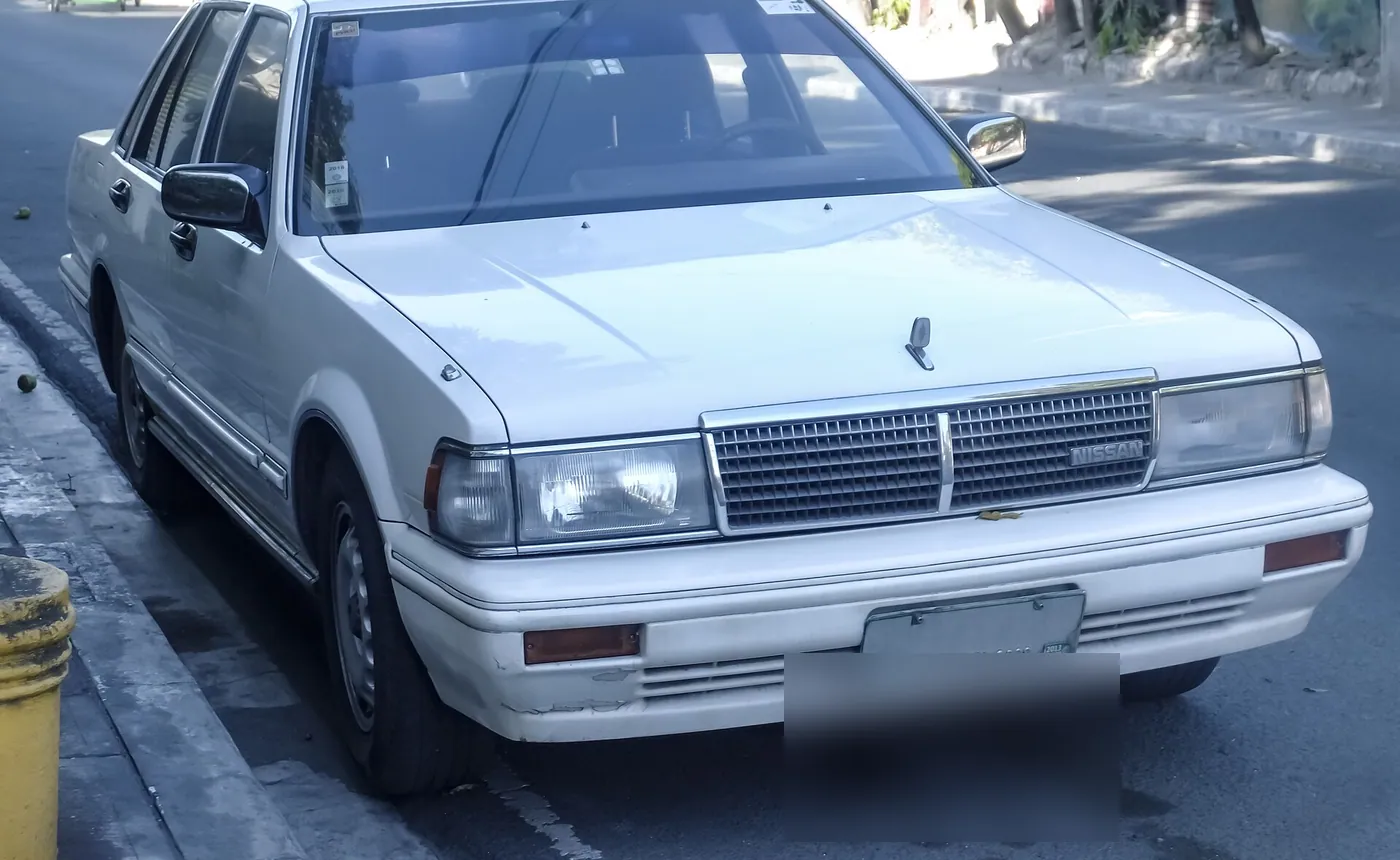
Stand on a Tokyo street corner in the late 1980s and you would have seen the same long, square-shouldered saloon over and over. It carried company executives to meetings, waited outside hotels with its engine idling and, in plainer form, picked up fares as a taxi. Sometimes the badge on its grille said Cedric. Sometimes it said Gloria. Underneath, it was the same car.
The Y31 generation, launched in 1987, arrived at the height of Japan's bubble economy and stayed in production, in sedan form, long after that boom had ended. For many Japanese drivers it is the definitive image of a big Nissan saloon, and it has a strong following among those who like their classics square, solid and quietly confident.
The specs
| Years built | 1987–1999 (sedan; hardtop replaced in 1991) |
|---|---|
| Engines | VG-series V6 petrol (2.0 and 3.0 litres, including a 2.0 turbo), RB20 six, diesel and LPG versions |
| Gearbox | 4-speed automatic; manual on some commercial and diesel versions |
| Drive | Rear-wheel drive |
| Body styles | 4-door sedan, 4-door pillarless hardtop |
| Twin names | Cedric (Nissan stores) and Gloria (Prince stores) |
| Notable trim | Gran Turismo |
Why it was built
The two names carry a lot of history. The Cedric was Nissan's own large saloon. The Gloria came from the Prince Motor Company, which merged with Nissan in 1966. After the merger, Nissan kept both names alive and sold them through separate dealer networks, with Cedric at Nissan stores and Gloria at Prince stores. By the Y31 generation the two cars were near-identical, differing mainly in grilles, lamps and badges.
In 1987 Japan's economy was booming and demand for large, well-equipped saloons was strong. The Y31 offered a broad range: plain sedans for fleets and taxis, plush hardtops for private buyers and, new for this generation, a sportier Gran Turismo version aimed at younger buyers who wanted a big car with more character.
Design and engineering
The Y31 is a conventional rear-wheel-drive saloon with a body that is all straight lines and flat panels. The four-door hardtop has no B-pillar, so with all the windows down the side is completely open, a classic Japanese luxury touch. The sedan has a conventional pillar and a more upright roofline.
Engines centred on Nissan's VG-series V6, in 2.0-litre and 3.0-litre forms, with a turbocharged 2.0-litre V6 in the sportier models. The sedan range also included the RB20 straight-six, diesel engines and LPG versions for taxi use. Most private cars used a four-speed automatic gearbox.
In 1991 the hardtop was replaced by the new Y32 generation. The Y31 sedan, however, carried on for many more years, mainly for fleet, taxi and commercial buyers, which explains why so many Y31 sedans survive today.
How it drives today
The Y31 is soft, quiet and relaxed. The V6 engines are smooth, the automatic gearbox shifts gently and the ride soaks up broken surfaces well. Steering is light and slow by modern standards, and the body leans in corners. It is not a sports saloon, even in Gran Turismo form, but it is a comfortable long-distance car.
On Irish motorways the Y31 cruises easily. On narrow rural roads its size is noticeable, though it is not as wide as many modern cars. The turbocharged models feel lively, and the 3.0-litre V6 has strong, relaxed torque.
The versions worth knowing
The Gran Turismo hardtops are the most sought after by enthusiasts, especially those with the turbocharged V6. The luxurious Brougham versions are the classic executive choice. The later sedans, many of them ex-fleet or ex-taxi, are plainer and often well used but can be mechanically sound.
What to check when buying one in Japan
Rust appears in the sills, wheel arches, boot floor and around the windscreen and rear window seals. Hardtops need careful checks of window seals and door alignment, as the pillarless design depends on everything fitting well. Check electrical equipment, including power windows and climate controls, as repairs can be awkward.
Ex-taxi and ex-fleet sedans often have very high mileages and may have been converted for LPG use. Check the fuel system and paperwork carefully. Many Y31 hardtops have been modified in the Japanese VIP style, with lowered suspension, wide wheels and body kits. These modifications can affect ride quality and roadworthiness, and original cars are the better buy.
Odometer readings can be unreliable, especially on commercial vehicles. Look for service records and a consistent auction history. Ensure the export certificate and deregistration paperwork are complete.
Should you import one?
The Y31 suits someone who wants a large, comfortable, distinctly Japanese saloon from the bubble era. It is right-hand drive, mechanically conventional and supported by a large parts supply in Japan. It is not a sports car, and the V6 engines are thirsty.
Cars over 30 years old can qualify for Ireland's vintage treatment, and early Y31s now qualify, while later sedans will take some years yet. Choose a well-maintained private car rather than a worn-out fleet vehicle if you can. A good Y31 is an easy, relaxed classic for weekend drives and long trips, and it will attract quiet admiration from anyone who remembers the era.
Frequently asked questions
What is the difference between the Cedric and the Gloria?
They are essentially the same car, sold through different Nissan dealer networks with different grilles, lamps and badges.
Why did the Y31 sedan stay in production so long?
Nissan kept building it for fleet, taxi and commercial buyers after the hardtop was replaced in 1991.
Which version is most desirable?
The Gran Turismo hardtops, especially with the turbocharged V6, are the most sought after by enthusiasts.
Are ex-taxi cars worth considering?
They can be mechanically sound, but often have very high mileages and may have LPG conversions, so check carefully.
More Japanese classics
- Nissan Pulsar GTI-R: the pocket rally car with a Skyline-style four-wheel drive
- Nissan 180SX: pop-up headlamps, a turbo and a ten-year run in Japan
- Nissan Cima (Y31): the turbo luxury saloon that gave its name to a boom
- Nissan Safari (Y60): the coil-sprung Patrol built for the hardest roads on earth
- Datsun Bluebird (510): the family saloon that won the Safari Rally and conquered America
- All 90 Japanese classics you can import
Photo credits
- Photo: Ethan Llamas / Wikimedia Commons, CC BY-SA 4.0