
Nissan Pulsar GTI-R: the pocket rally car with a Skyline-style four-wheel drive
Nissan built the Pulsar GTI-R to go rallying, giving a compact hatchback a 2.0-litre turbo and four-wheel drive. On the road it is a small, fierce and characterful hot hatch.
By the Japan to Ireland editors · · 4 min read
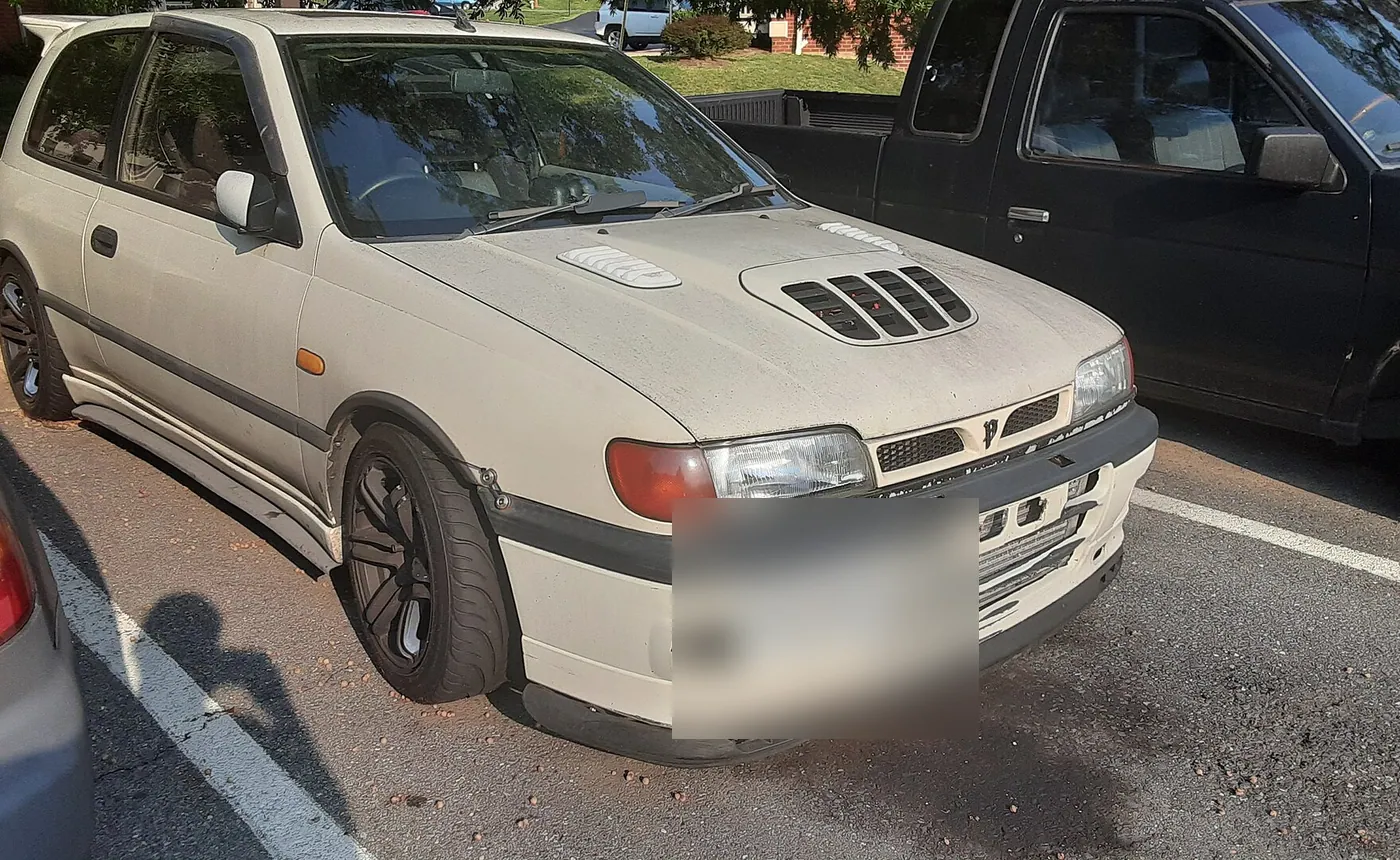
At the start of the 1990s the World Rally Championship was dominated by four-wheel-drive turbo cars, and the major Japanese manufacturers wanted to win it. Toyota had the Celica GT-Four, Mitsubishi had the Galant VR-4 and later the Lancer Evolution, and Subaru was preparing the Legacy and Impreza. Nissan's answer was a compact hatchback with an engine and drivetrain that seemed far too big for it. It was the Pulsar GTI-R.
The rally programme did not bring the results Nissan wanted, and the car was soon overshadowed by its rivals. The road car, however, has earned a devoted following. It remains one of the most unusual and focused hot hatches of its era.
The specs
| Years built | 1990–1994 |
|---|---|
| Engine | 2.0-litre SR20DET turbo four-cylinder with individual throttle bodies |
| Power | 230 PS |
| Gearbox | 5-speed manual |
| Drive | ATTESA four-wheel drive |
| Body styles | 3-door hatchback |
| Sold in Europe as | Nissan Sunny GTI-R |
Why it was built
Rallying under the Group A rules required manufacturers to build road cars closely related to their competition machines. Nissan used the new N14 Pulsar, a compact three-door hatchback, as the base and fitted the most capable turbo engine and four-wheel-drive system it had available.
Japan was still riding high in 1990, and its car makers were investing heavily in motorsport and technology. The GTI-R was part of that wave. In Japan it was sold as the Pulsar GTI-R, and in Europe it was badged as the Sunny GTI-R. Nissan entered it in the World Rally Championship in 1991 and 1992, but its short wheelbase and other challenges limited its success and the works programme ended.
Design and engineering
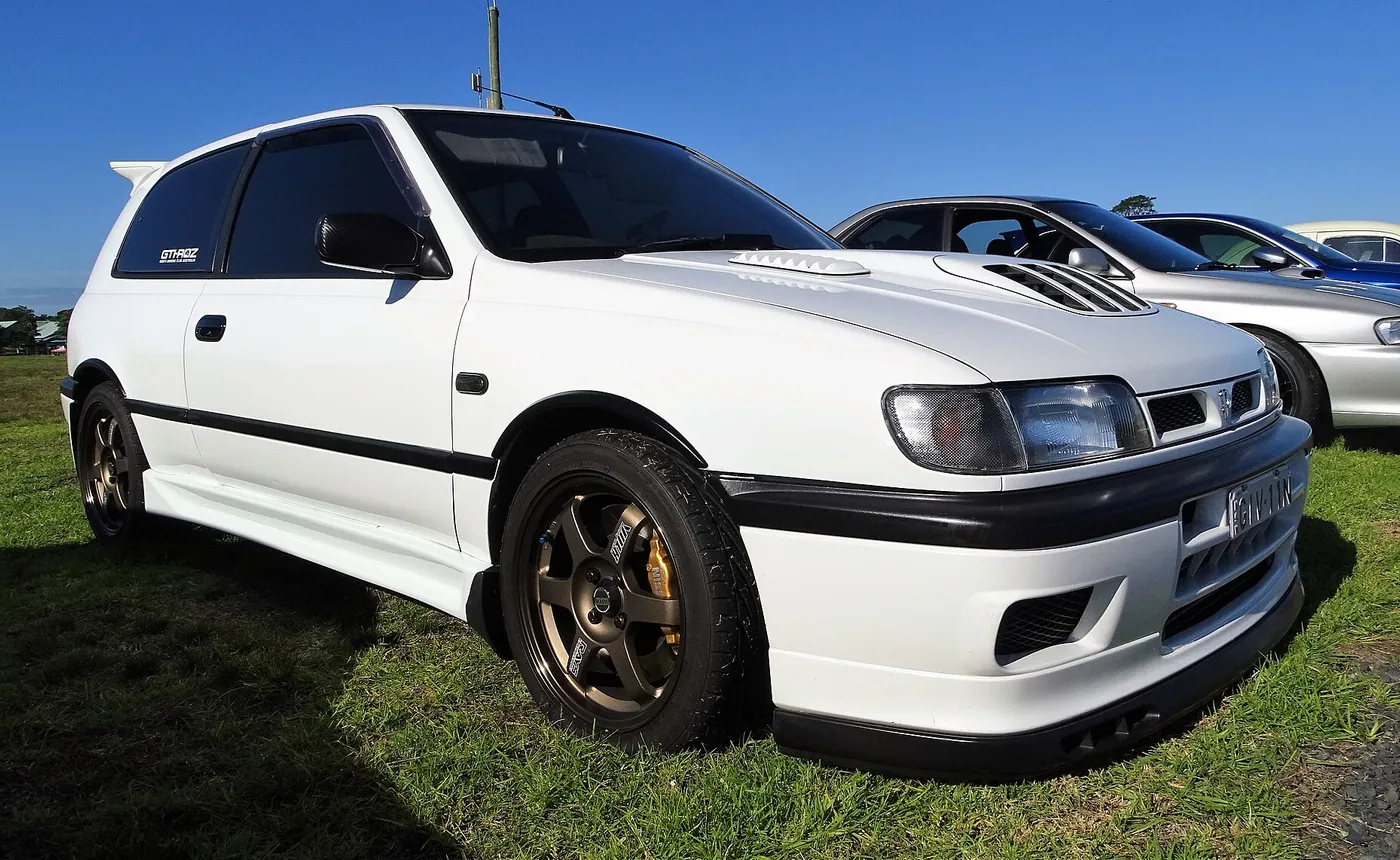
The engine is the 2.0-litre SR20DET, but in a distinctive form. It uses individual throttle bodies, one for each cylinder, and a large intercooler mounted on top of the engine, fed by the prominent scoop on the bonnet. The result is around 230 PS from a car that weighs little more than a standard family hatchback.
Power reaches the road through the ATTESA four-wheel-drive system, linked to Nissan's high-performance cars of the era. A five-speed manual gearbox was the only option. The body has flared arches, a rear spoiler and that bonnet scoop, which together give the car a purposeful look.
There was also a stripped-down GTI-R RA version for competition use, with fewer comforts and lighter equipment.
How it drives today
The GTI-R is quick and tenacious. The turbo has some lag, followed by a strong surge of power, and the four-wheel drive gives a great deal of traction on damp roads. The short wheelbase makes it feel agile and sometimes busy, and the steering is direct. It is a car that rewards commitment.
On Irish roads, the four-wheel drive is a genuine advantage in wet weather. The ride is firm and the car can feel nervous on broken surfaces, but a well-sorted example is enormous fun on a twisting back road. The engine runs hot under the bonnet, so cooling system health matters.
The versions worth knowing
The standard GTI-R is the main road car. The RA version is rarer and was intended as a basis for competition. Many surviving cars have been modified with larger turbos, uprated intercoolers and aftermarket engine management, which can make them faster but less reliable.
What to check when buying one in Japan
Check for overheating damage, including head gasket problems, warped components and cooling system leaks. The top-mounted intercooler traps heat, and many owners have changed the layout. Listen for turbo wear and look for oil smoke. Inspect the four-wheel-drive system, including the transfer case and rear differential, for noises and leaks.
Rust appears in the sills, rear arches and floor. Many cars have been used for motorsport or hard street driving, so look for accident repairs and modifications. Original parts such as the bonnet scoop, intercooler and specific trim items can be difficult to find.
Mileage on performance cars of this age is often uncertain. Look for service records and a sensible auction history. Ensure the export paperwork is complete and matches the car.
Should you import one?
The Pulsar GTI-R suits a driver who wants a small, rare, four-wheel-drive turbo car with genuine motorsport history. It is right-hand drive, compact and well suited to Ireland's wet and twisting roads. It is not a relaxed cruiser, and it needs careful maintenance by someone who understands turbo engines and four-wheel-drive systems.
Insurance can be expensive for a high-performance car of this age, so check before buying. Cars over 30 years old can qualify for Ireland's vintage treatment, and the earliest GTI-Rs have reached that age. Buy the most original, best-documented car you can find, and expect some parts to take time to source. The reward is a hot hatch with real character and a story few of its rivals can match.
Frequently asked questions
Is the Pulsar GTI-R the same as the Sunny GTI-R?
Yes. It was sold as the Pulsar GTI-R in Japan and as the Sunny GTI-R in Europe.
What engine does it use?
It uses a 2.0-litre SR20DET turbo with individual throttle bodies and a top-mounted intercooler.
Did it race in the World Rally Championship?
Yes. Nissan entered it in 1991 and 1992, but it did not achieve the results the company hoped for.
What is the main mechanical weakness?
Heat management is the main concern, so the cooling system and head gasket should be checked carefully.
More Japanese classics
- Nissan 180SX: pop-up headlamps, a turbo and a ten-year run in Japan
- Nissan Silvia (S13): the bubble-era coupé that became the world's drift car
- Nissan Cedric and Gloria (Y31): the twin saloons that carried Japan's businessmen
- Nissan Cima (Y31): the turbo luxury saloon that gave its name to a boom
- Nissan Safari (Y60): the coil-sprung Patrol built for the hardest roads on earth
- All 90 Japanese classics you can import
Photo credits
- Photo: PlotagonNoah / Wikimedia Commons, CC BY-SA 4.0
- Photo: FotoSleuth / Wikimedia Commons, CC BY 2.0