
Nissan Be-1: the little retro hatchback that taught Nissan to sell nostalgia
Built in a strictly limited run on humble Micra mechanicals, the Be-1 sold out almost overnight and started the Pike car family. It is still one of the most charming small cars Japan ever made.
By the Japan to Ireland editors · · 5 min read
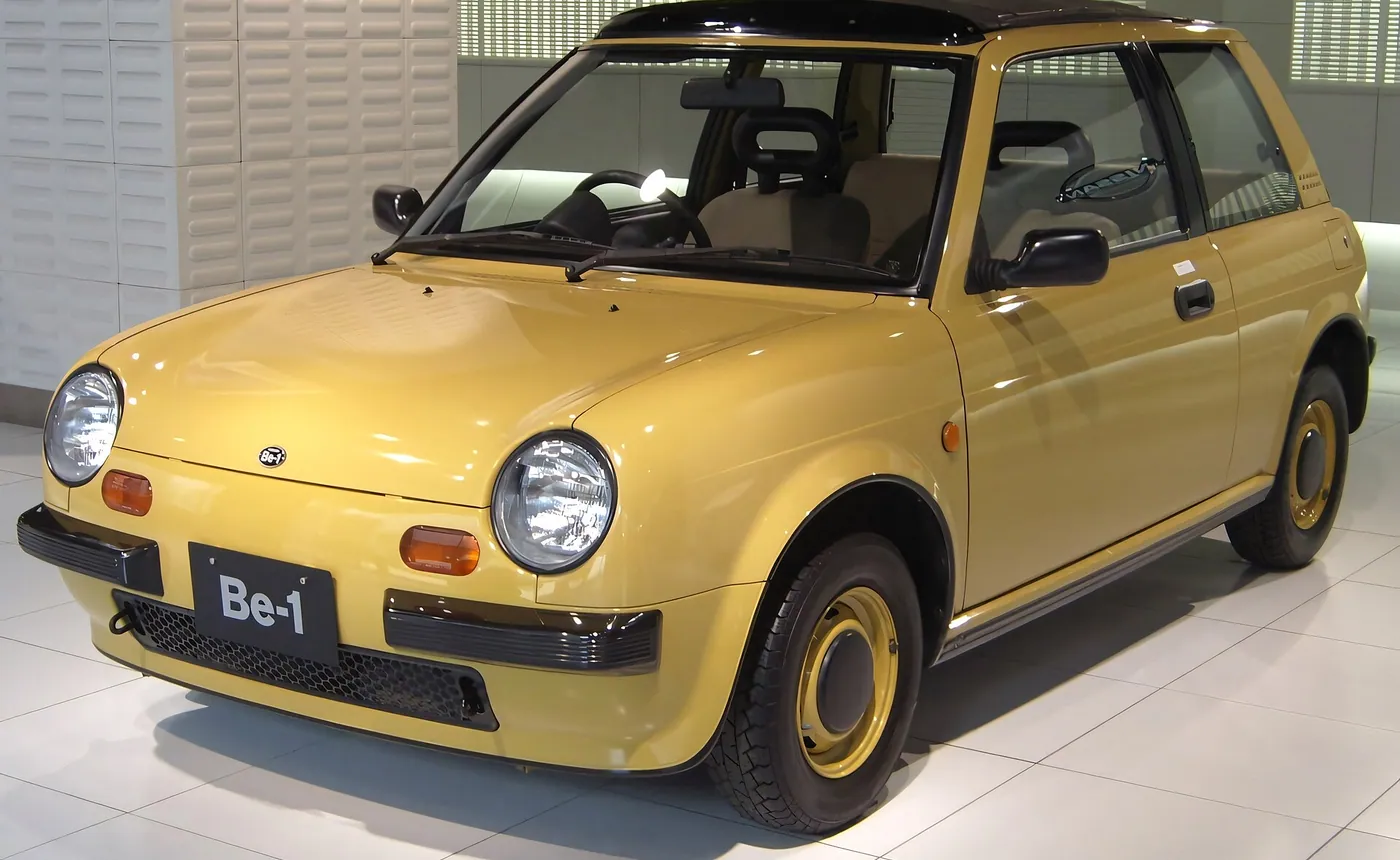
At the Tokyo Motor Show in the autumn of 1985, among the turbocharged sports coupés and the chrome-heavy executive saloons, Nissan put a small, round, faintly old-fashioned hatchback on its stand. It had a plain grille, big round headlamps and a face that looked as if it had been drawn by someone thinking about the 1950s and 1960s rather than the 1990s. Visitors liked it far more than anyone in the company expected. Fifteen months later it was on sale.
That car was the Be-1, and it has a better claim than most to have invented the retro car as a commercial idea. It was not fast, not large and not technically ambitious. It was a mood. Japan in the mid-1980s was getting rich quickly, cities were full of young buyers with money and taste, and Nissan worked out that some of them wanted a car that felt like an object rather than an appliance.
The specs
| Years built | 1987–1988 |
|---|---|
| Base | Nissan March (K10) |
| Engine | 1.0-litre MA10 four-cylinder petrol |
| Gearbox | 5-speed manual or 3-speed automatic |
| Drive | Front-wheel drive |
| Body styles | 3-door hatchback, canvas-top hatchback |
| Production | Limited to 10,000 cars |
Why it was built
The Be-1 came from a small project inside Nissan that worked with outside designers rather than the main styling studio. The outside firm usually credited is Water Studio, associated with the designer Naoki Sakai. The brief was simple: take the existing March, the car sold in Ireland as the Micra, and give it a completely different personality without paying for a new chassis.
Nissan decided to build only 10,000 of them. Demand was so far beyond that figure that the cars were allocated by lottery, and they sold out almost at once. A second-hand market with premiums appeared immediately. The lesson was not lost on Nissan, which followed with the Pao in 1989, the S-Cargo van in 1989 and the Figaro in 1991. Collectively these became known as the Pike cars, and the Be-1 was the first.
Design and engineering
Underneath, the Be-1 is a first-generation March. That means a transverse 1.0-litre four-cylinder engine, front-wheel drive, MacPherson strut front suspension and a simple rear axle. Output was modest, around 50 horsepower, which is enough for a car that weighs very little.
The interesting work is all on the surface. The body was reshaped completely, with soft curves, round lamps and a short, upright tail. Some exterior panels, including the front wings, were made of plastic rather than steel, which was unusual for a mass-market car at the time and has a direct bearing on how these cars have aged. Inside, the dashboard was redesigned with simple round dials and a clean, almost toy-like layout. The car was offered in a small palette of soft pastel colours, and there was a canvas roll-back roof version alongside the fixed-roof hatchback.
The final assembly was handled by a contractor rather than Nissan's main plants, a pattern that would continue with later Pike cars.
How it drives today
Expect a small 1980s city car, because that is what it is. The engine is willing and the car feels light and easy, with good visibility and a tight turning circle. The steering is unassisted on most cars and is heavy only at parking speeds. On a motorway the Be-1 will hold its own at legal speeds but it is noisy and busy, and a crosswind on an exposed stretch of the M1 will remind you how little it weighs.
Where it shines is in town and on smaller roads. On an Irish country lane it is narrow enough to feel relaxed, and the canvas-top cars make the most of a dry spring afternoon. The three-speed automatic blunts performance noticeably; the five-speed manual is the more lively choice.
The versions worth knowing
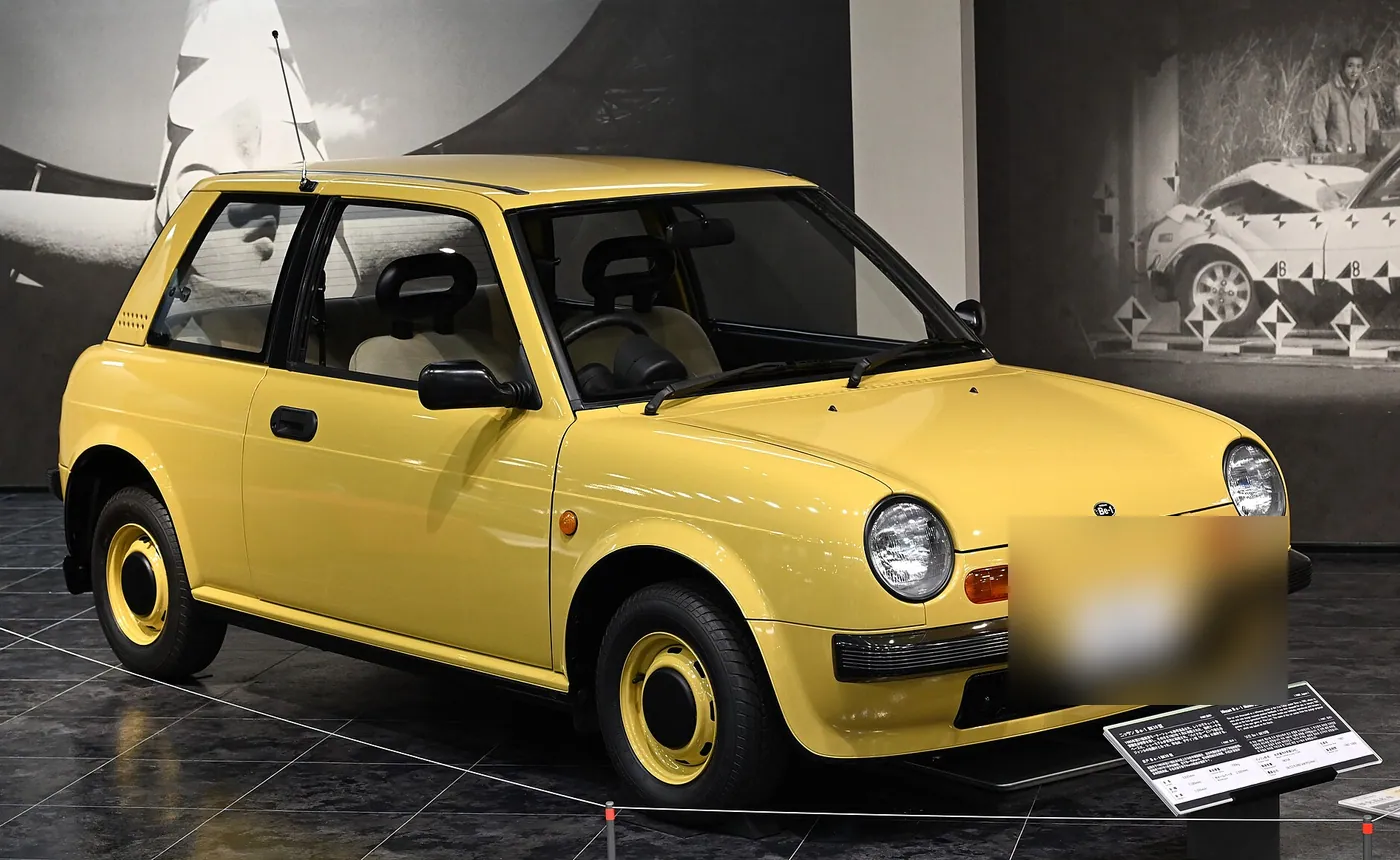
There are really only two: the fixed-roof hatchback and the canvas-top. The canvas-top is more sought after but the fabric, seals and drain channels need checking carefully. Both were offered with manual and automatic gearboxes. Because production was capped and short, there are no later facelifts or engine changes to worry about.
What to check when buying one in Japan
The plastic panels do not rust, but the steel structure beneath them certainly can. Look at the sills, the floor under the mats, the rear wheel arches, the bottom of the tailgate and the area around the fuel filler. On canvas-top cars, blocked drains let water sit in the body and the floor can suffer badly. Ask for photographs of the underside, not just the auction sheet.
Mechanical parts are shared with the K10 March, and many service items remain obtainable in Japan. Model-specific trim, lamps, badges and plastic body panels are a different matter. A cracked bumper or a missing interior part can take a long time to find, so originality and completeness matter more than a slightly lower mileage.
Odometers on cars of this age should be treated with caution. Service records, the condition of the pedals, seats and steering wheel, and a consistent auction history are better evidence than the number on the dial. Some cars have been repainted in non-original colours; a factory colour in good condition is worth having. Make sure the Japanese export certificate and deregistration paperwork are in order before the car leaves port.
Should you import one?
The Be-1 suits someone who wants a small, cheerful classic that turns heads without needing a garage full of tools. It will not frighten insurers, it is easy to park in Dublin, Cork or Galway, and it costs little to run. Because it is right-hand drive, it is entirely natural on Irish roads.
Realistic expectations matter. This is a 1980s economy car with charming clothes, so it is slow, light and best kept for short and medium trips. It needs to be stored somewhere dry, because Irish damp is the enemy of any car this age. Cars over 30 years old can qualify for Ireland's vintage treatment, which most Be-1s now do. Buy the most original, most rust-free example you can find, and it will reward you with a kind of attention most new cars never get.
Frequently asked questions
Is the Nissan Be-1 the same as a Micra underneath?
Yes. It is built on the first-generation March, sold in Ireland as the Micra, so most mechanical parts are shared.
How many Be-1s were made?
Nissan limited production to 10,000 cars, and they were allocated by lottery in Japan because demand was so high.
Do the plastic panels mean the Be-1 cannot rust?
No. Some outer panels are plastic, but the steel structure underneath, including sills and floors, can rust and must be inspected.
Is the canvas-top version worth the extra hassle?
It is the more desirable car, but check the fabric, seals and drains carefully, because water leaks can damage the floor.
More Japanese classics
- Nissan Pao: The Safari-Styled City Car Built Only for Those Who Ordered in Time
- Nissan Figaro: The 1991 Retro Convertible Ireland and the UK Fell in Love With
- Nissan S-Cargo: the snail-shaped delivery van that became a design icon
- Nissan Silvia (S13): the bubble-era coupé that became the world's drift car
- Nissan 180SX: pop-up headlamps, a turbo and a ten-year run in Japan
- All 90 Japanese classics you can import
Photo credits
- Photo: Oq10pass / Wikimedia Commons, CC BY 3.0
- Photo: TTTNIS / Wikimedia Commons, CC0