
Nissan Pao: The Safari-Styled City Car Built Only for Those Who Ordered in Time
Nissan took orders for the Pao for just three months in 1989. The result was a small, quirky car with external hinges, a split tailgate and a design that still feels fresh.
By the Japan to Ireland editors · · 5 min read
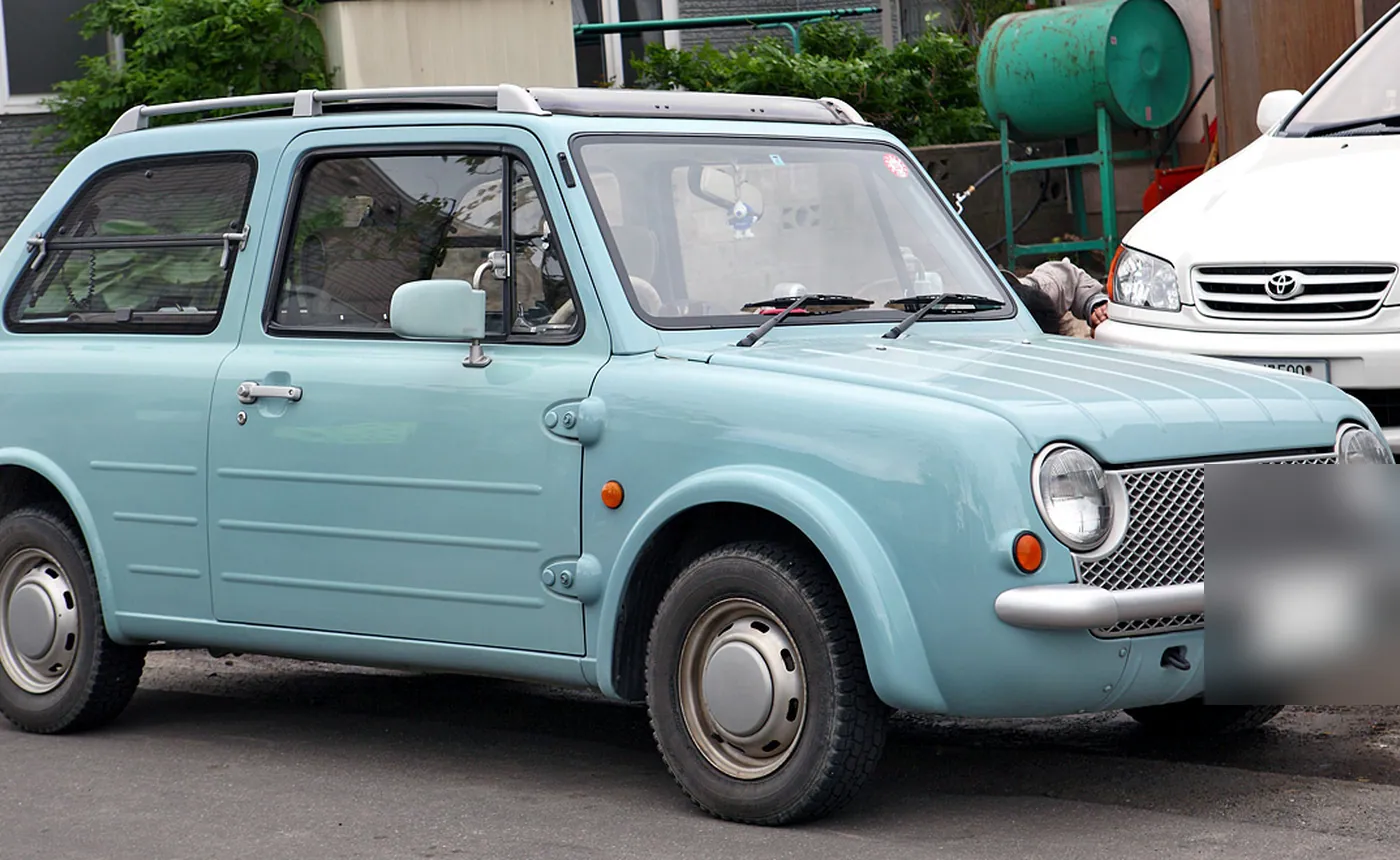
In January 1989, Nissan began taking orders for a small car that looked as if it had been packed for an overland expedition. It had round headlamps set into a flat, upright face, door hinges bolted to the outside of the body, a tailgate split into two halves and the option of a canvas roof that rolled back to the sky. Nissan announced that it would accept orders for a limited period only. When the window closed three months later, more than 50,000 people had signed up, and every one of them would receive a car.
The Pao was the second of Nissan's so-called Pike cars, and in many ways it is the most charming of them. It is small, slow and simple, yet it still draws a crowd at any classic car show.
The specs
| Years built | 1989–1991 |
|---|---|
| Engine | 1.0-litre four-cylinder (MA10S) |
| Power | 52 PS |
| Gearbox | 5-speed manual or 3-speed automatic |
| Drive | Front-wheel drive |
| Body styles | 3-door hatchback, with or without canvas top |
| Production | More than 50,000 |
| Base | Nissan March (K10) |
Why Nissan built it
The Pike idea began with the Be-1 of 1987, a rounded, retro-styled small car built on the mechanicals of the first-generation March, the car known in Ireland and Britain as the Micra. Nissan sold the Be-1 in a limited run and it was snapped up. The lesson was clear. Japanese buyers at the height of the bubble economy had money to spend and an appetite for objects with personality, and they would pay for design as much as for engineering.
The Pao took the formula in a different direction. Where the Be-1 was soft and nostalgic, the Pao borrowed from the look of rugged travel gear and old utility vehicles: exposed hinges, a ribbed bonnet, simple bumpers and an upright cabin. It was not an off-roader and never pretended to be. It was a city car dressed for adventure, and that playfulness was exactly what made it popular.
By selling to order during a fixed period, Nissan also turned scarcity into part of the appeal. Production continued after the order book closed until every car had been delivered, which is why the Pao is generally listed as built from 1989 to 1991.
Design and engineering
Under the skin the Pao is a K10 March. It uses a 1.0-litre four-cylinder petrol engine producing 52 PS, driving the front wheels through either a five-speed manual or a three-speed automatic gearbox. The suspension, brakes and running gear are conventional, light and easy to work on.
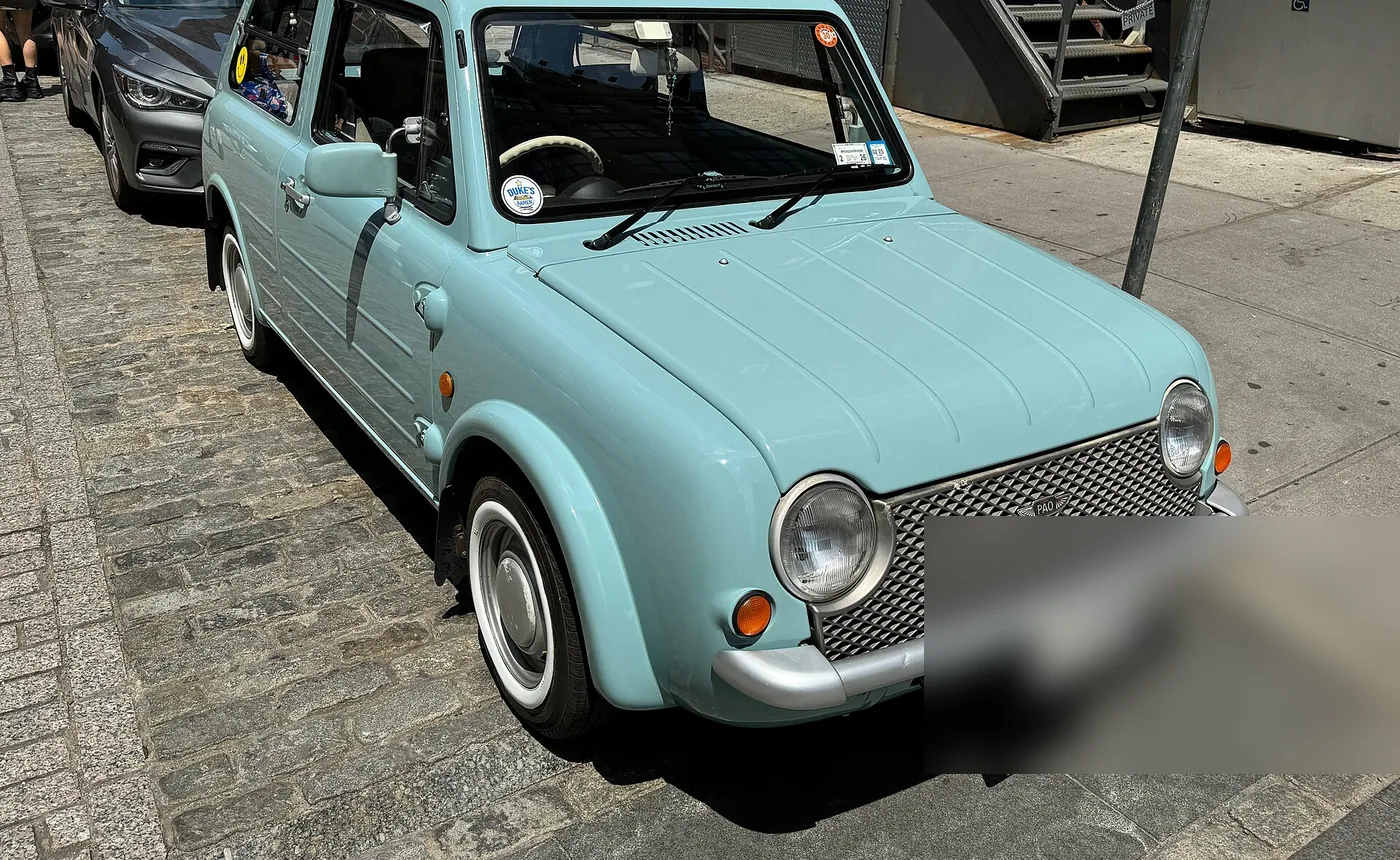
The design is where the money went. The external door hinges are a deliberate styling feature, as are the small round lamps and the simple painted surfaces. The tailgate is split: the upper glass section lifts upwards, while the lower panel folds down to form a ledge, which is useful for loading shopping or sitting on at a beach car park. Inside, the dashboard is clean and uncluttered, with round dials and switches styled to look older than they are. A canvas roof was offered as an option, turning the Pao into something close to an open car on a fine day.
Colours were part of the character, with soft, earthy shades such as Aqua Grey, Ivory, Olive Grey and Terracotta. Many surviving cars still wear them, and they suit the shape far better than modern bright colours.
How it drives today
The Pao is light and easy, and it asks nothing of its driver. Performance is modest and the engine is happiest at moderate speeds, but in town it feels nimble and alert. The steering is light, the ride is soft rather than sporty, and the large windows give excellent visibility in every direction.
On Irish roads the Pao is best in towns and on quieter regional roads, where its size is an advantage and its pace is no handicap. It will reach motorway speeds, though it feels small and busy among lorries on the M50, and wind noise rises sharply with the canvas roof fitted. Treat it as a cheerful runabout for short trips rather than a car for crossing the country.
The versions worth knowing
Because every Pao was built to the same basic design during a short period, the variations are simple. The main choices are the gearbox, manual or automatic, and the roof, either fixed steel or canvas. Canvas-topped cars are generally the most sought after. Original colours and a complete, original interior matter more than anything else, since the Pao's appeal lies almost entirely in its design.
What to look for when buying one in Japan
Rust is the main concern, as it is on all small Japanese cars of this age. Check the sills, the floor, the wheel arches, the lower edges of the doors and both halves of the tailgate. The external hinges and the areas around them should be inspected closely for corrosion. On canvas-topped cars, look for tears in the fabric, perished seals and blocked drains, since leaks can soak the carpets and rot the floor from above.
Mechanically the Pao is robust, and engine and running-gear parts are shared with the March, which helps. Body panels, glass, trim and the canvas roof assemblies are scarce, so a complete car is worth more than a cheaper one with missing pieces. Check the engine for oil leaks and the automatic gearbox, if fitted, for smooth changes.
Many Paos have been repainted, sometimes in colours Nissan never offered, and some have been fitted with non-original wheels or interiors. As with any car of this age, the odometer reading should be treated with caution; condition, the auction sheet and the wear on seats and pedals tell a truer story. Make sure the export paperwork matches the chassis number.
Should you import one?
The Pao suits a buyer who values design, humour and simplicity over speed. It is a car for town errands, summer drives and classic events, and it makes ordinary journeys feel like small occasions.
In Ireland it will be a rare and talked-about sight, and as a right-hand-drive car it feels entirely natural here. All Paos are now over 30 years old and can qualify for Ireland's vintage treatment. Expect a charming, undemanding little car that needs rust prevention, a dry place to sleep and occasional patience with trim parts.
Frequently asked questions
How many Nissan Paos were built?
More than 50,000, all built to orders taken over a three-month period in early 1989.
What engine does the Pao have?
A 1.0-litre four-cylinder with 52 PS, paired with a five-speed manual or three-speed automatic gearbox.
Is the Pao a Pike car?
Yes. It was the second of Nissan's Pike cars, after the Be-1, and the family also includes the S-Cargo and the Figaro.
More Japanese classics
- Nissan Figaro: The 1991 Retro Convertible Ireland and the UK Fell in Love With
- Suzuki Carry Truck: Six Decades of Japan's Toughest Little Workhorse
- Nissan Be-1: the little retro hatchback that taught Nissan to sell nostalgia
- Nissan S-Cargo: the snail-shaped delivery van that became a design icon
- Nissan Silvia (S13): the bubble-era coupé that became the world's drift car
- All 90 Japanese classics you can import
Photo credits
- Photo: Tennen-Gas / Wikimedia Commons, CC BY-SA 3.0
- Photo: Oleg Yunakov / Wikimedia Commons, CC BY-SA 4.0