
Suzuki Carry Truck: Six Decades of Japan's Toughest Little Workhorse
The Carry has been carrying loads across Japan since 1961. Its older generations, simple, tough and beautifully compact, are now classics in their own right.
By the Japan to Ireland editors · · 5 min read
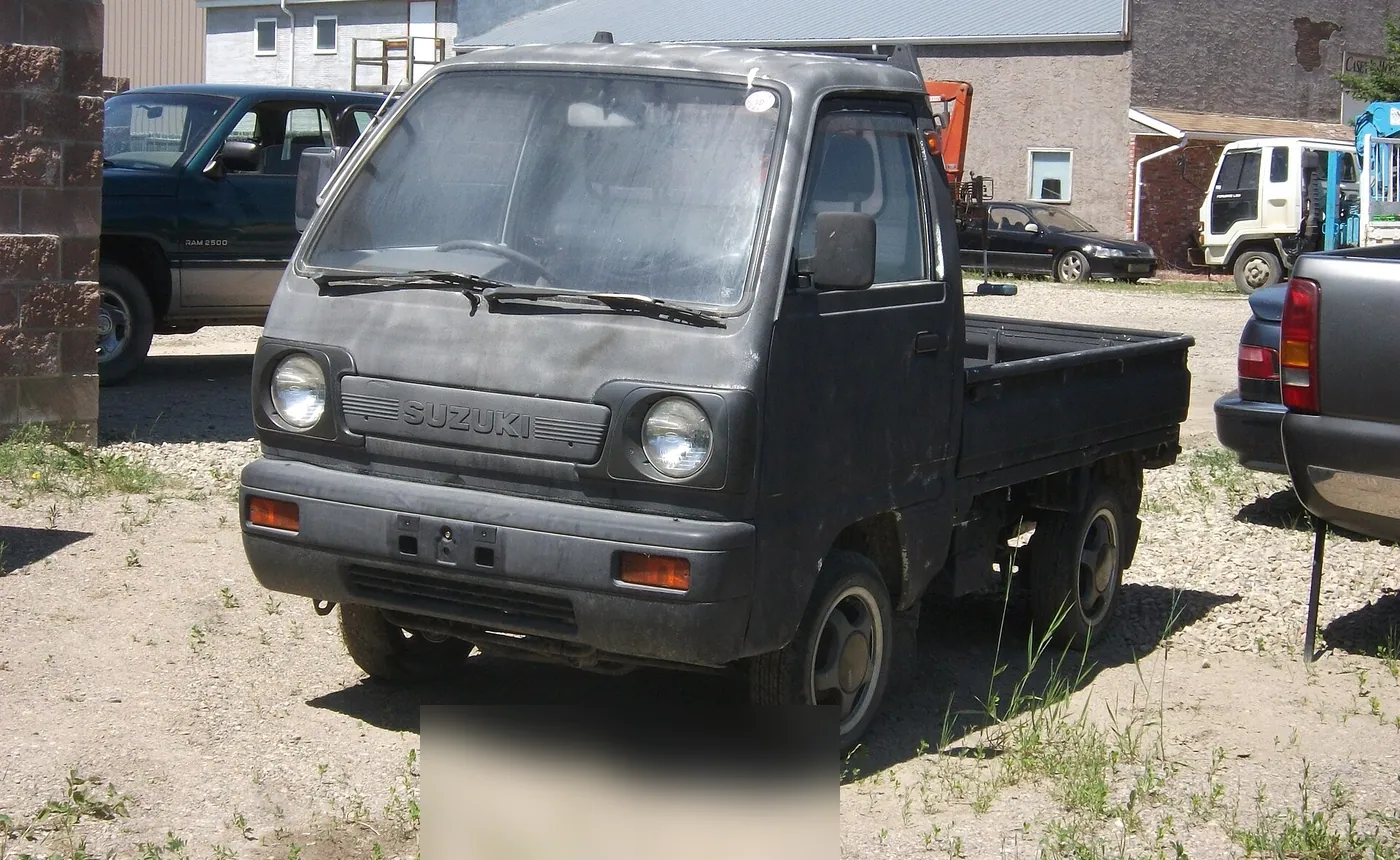
In 1961, Japan was in the middle of its rapid post-war growth. New roads were being built, small businesses were expanding and farmers were moving from carts to motor vehicles. That year, Suzuki introduced the Suzulight Carry, a small truck built to the kei rules of the day. More than six decades later, the Carry is still in production, and generations of it have worked in fields, markets and building sites across Japan.
The Carry's older generations, from the 1970s to the 1990s, are now attracting enthusiasts far beyond Japan.
The specs
| Years built | 1961–present (classic focus: 1970s–1990s) |
|---|---|
| Engine | Two-stroke and later four-stroke petrol, 360 cc to 660 cc |
| Layout | Cab-over, engine under the seats |
| Gearbox | Manual; automatic on later trucks |
| Drive | Rear-wheel drive; part-time four-wheel drive on many |
| Body styles | Drop-side truck, dump and specialist bodies; Carry van |
| Kei class | Built to the 360 cc, 550 cc and 660 cc rules |
Why Suzuki built it
In the early 1960s, the kei rules allowed vehicles with 360 cc engines and very compact bodies. These vehicles enjoyed lower taxes and simpler ownership rules, making them ideal for small farmers and tradespeople. Suzuki had already built small cars under the Suzulight name, and a light truck was a natural extension.
The Carry was designed to carry useful loads on narrow roads, and it quickly became one of the best-selling kei trucks in Japan. Its name was a plain statement of purpose, and the truck lived up to it. Over the following decades the Carry became the vehicle of choice for vegetable sellers, small builders, fishermen and orchard growers, and it was sold in many export markets under its own name and others.
Design and engineering
Early Carrys used small two-stroke engines. Over the decades, the truck moved to a cab-over layout, with the engine mounted under the seats and the front wheels beneath the cab. This allowed a longer load bed within the strict kei length limits.
In 1976, the kei rules expanded to 550 cc, and the Carry adopted larger engines to match. Suzuki introduced four-stroke three-cylinder engines in the 1980s, and in 1990 the rules changed again to 660 cc and a longer body. Part-time four-wheel drive became common, making the Carry useful in snowy regions and on rough farm tracks. In 1999, new kei rules brought a wider, safer cab.
The virtue of the classic Carry is its packaging. With the engine under the seats and the cab pushed right to the front, almost the whole length of the vehicle becomes load space. The bed is low, the drop sides fold flat, and a single person can load it without a forklift. It is a design refined by daily use rather than by styling studios, and it shows.
How it drives today
An older Carry is basic and mechanical. The cab is small and upright, with the driver sitting high above the front wheels. Steering is light, performance is modest and the gearing is short for heavy loads. Visibility is excellent, and the truck can turn in remarkably tight spaces.
On Irish roads it is at home on farms, in villages and on boreens. It is not suited to motorway driving, as it is slow and offers little protection. Used for light work, it is reliable and surprisingly practical. Wet grass, a muddy gateway or a steep lane to a hillside field rarely trouble a four-wheel-drive Carry with a light load, and its narrow track lets it pass where a tractor or a full-size pickup would scrape both hedges.
The versions worth knowing
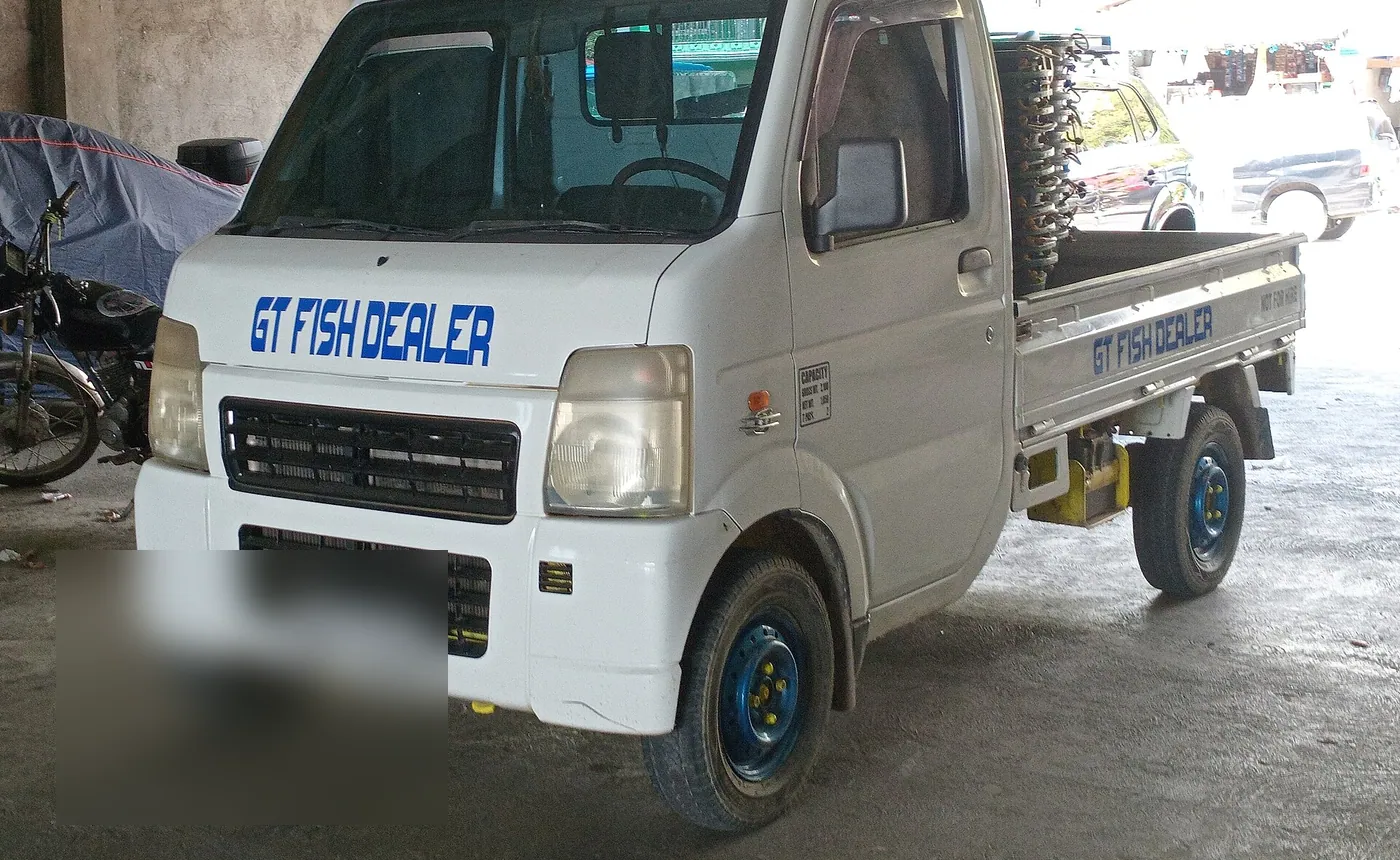
The early two-stroke trucks are rare and collectable but can be harder to keep running. The 550 cc trucks of the late 1970s and 1980s are a good balance of classic character and usability. The early 1990s 660 cc trucks are more powerful and more common, and the oldest of them are now over 30 years old. Four-wheel-drive versions are especially useful in Ireland. Drop-side trucks are the most common, but dump bodies and specialist conversions exist. The Carry van is a related closed version.
What to look for when buying one in Japan
Most Carrys have worked hard. Check the chassis rails, the cab floor, the door bottoms, the area under the windscreen and the load bed for rust. Trucks from coastal or snowy regions may have suffered more corrosion.
Look at the engine for oil leaks, coolant leaks and signs of overheating. Check the clutch, gearbox and four-wheel-drive system. Mechanical parts for later four-stroke engines are generally available because Suzuki used them widely, but parts for early two-stroke trucks and cab panels for older models can be hard to find.
Many trucks have been repainted, fitted with non-standard beds or modified for work. Mileage records on old work vehicles are often incomplete, so judge the condition rather than the number. Confirm the export paperwork matches the chassis plate.
Tyres deserve a look too. Kei trucks run on small commercial tyres, and a truck that has sat for years may have cracked or perished rubber regardless of tread depth. Replacements are easy to source, but factor them in. Finally, check that the lights, wipers and heater all work, because small electrical faults on old trucks tend to multiply.
Should you import one?
An older Carry suits a buyer who wants a compact, useful classic for a farm, a large property or a small business. It is a piece of Japanese motoring history that still works for a living.
In Ireland, it will attract attention and can be genuinely useful on narrow rural roads. It is right-hand drive, simple and economical, but slow and basic. Trucks over 30 years old can qualify for Ireland's vintage treatment. Expect a tough, honest vehicle that needs regular care and rust prevention and will reward it with years of service.
Frequently asked questions
When was the first Suzuki Carry built?
The first Suzulight Carry appeared in 1961, built to Japan's 360 cc kei rules.
Which Carry trucks count as classics?
The older generations from the 1970s to the 1990s, especially the 550 cc trucks and the early 660 cc trucks over 30 years old.
Is a Carry suitable for Irish roads?
It is ideal on farms, rural roads and in villages, but it is slow and basic and not suited to motorway driving.
More Japanese classics
- Suzuki Alto Works: The Little Hatch That Set Japan's 64 PS Kei Car Limit
- Suzuki Jimny JA11: The Pocket Off-Roader That Climbs Where Bigger Trucks Give Up
- Nissan Figaro: The 1991 Retro Convertible Ireland and the UK Fell in Love With
- Nissan Pao: The Safari-Styled City Car Built Only for Those Who Ordered in Time
- Nissan Be-1: the little retro hatchback that taught Nissan to sell nostalgia
- All 90 Japanese classics you can import
Photo credits
- Photo: dave_7 from Lethbridge, Canada / Wikimedia Commons, CC BY 2.0
- Photo: Ethan Llamas / Wikimedia Commons, CC BY-SA 4.0