
Suzuki Alto Works: The Little Hatch That Set Japan's 64 PS Kei Car Limit
In 1987 a turbocharged, twin-cam three-cylinder kei hatchback arrived with so much power that the industry agreed to stop there. The Alto Works is the original kei hot hatch.
By the Japan to Ireland editors · · 4 min read
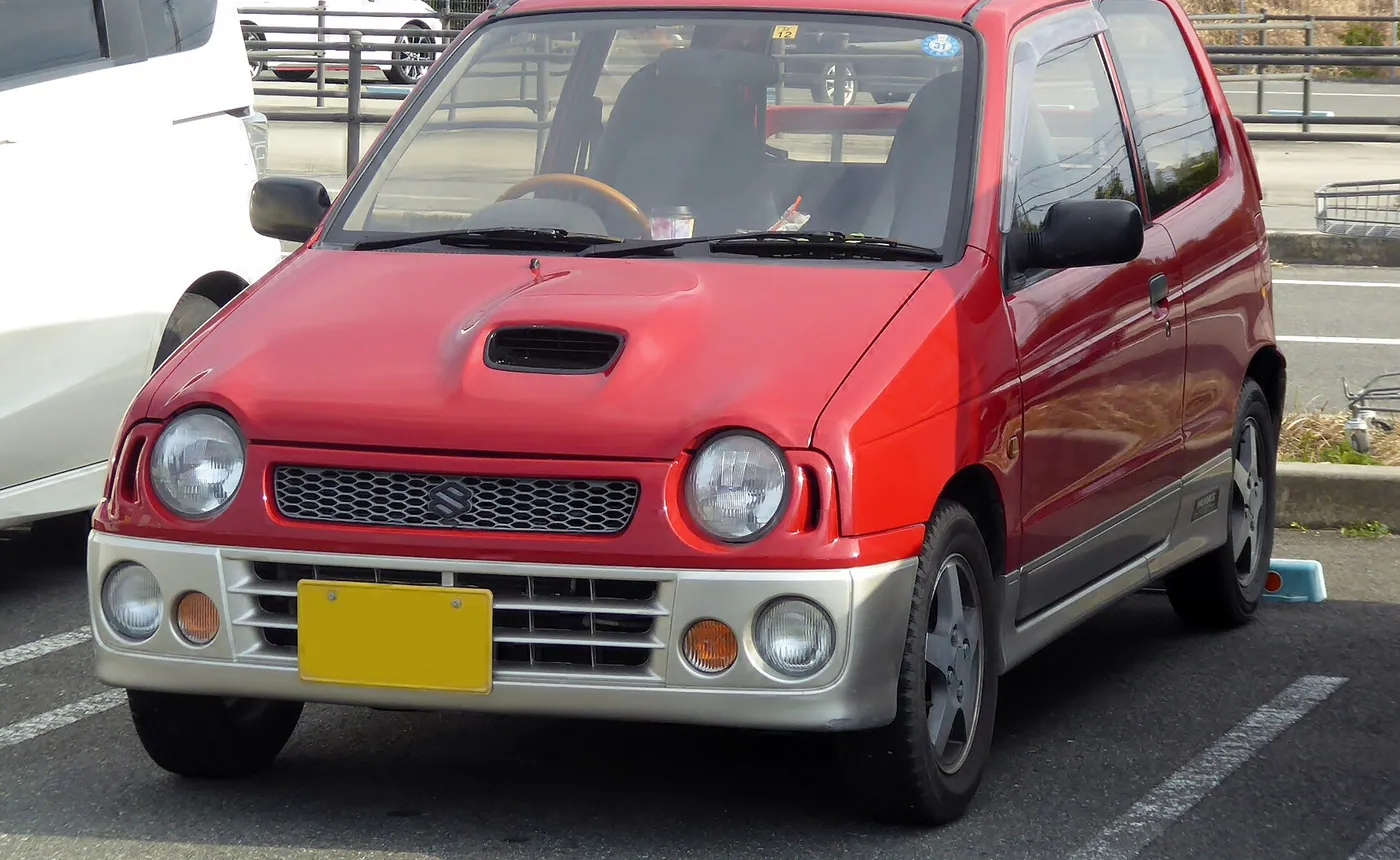
In early 1987, Suzuki launched a version of its Alto city car with a twin-cam, intercooled turbo engine producing 64 PS from just 543 cc. For a car of that size and weight, it was a startling figure. The Japanese industry, under pressure over road safety and power escalation, soon settled on that number as an informal ceiling for kei cars. For decades afterwards, almost every kei car with sporting intent arrived with exactly 64 PS.
The car that drew the line was the Alto Works.
The specs
| Years built | 1987–2000 |
|---|---|
| Engine | Three-cylinder twin-cam turbo, 543 cc then 657 cc |
| Power | 64 PS |
| Gearbox | 5-speed manual; automatic on some versions |
| Drive | Front-wheel drive or four-wheel drive |
| Body styles | 3-door hatchback |
| Significance | Its output became the voluntary kei power limit |
Why Suzuki built it
The Alto had launched in 1979 as a cheap, simple kei car, registered as a commercial vehicle to take advantage of lower taxes. It was a huge success, and by the mid-1980s Japan's small-car market had become fiercely competitive. Turbocharging was spreading across the kei class, and manufacturers were racing to offer more power and more equipment.
Suzuki's response was the Works: a performance version of the Alto with a high-revving twin-cam engine, sporty styling and an optional four-wheel-drive system. It was aimed at young drivers who wanted speed and style but could only afford, or only needed, a kei car. Japanese car culture in the late 1980s was full of tuning magazines, street racing legends and amateur motorsport, and the Works spoke directly to that world.
Design and engineering
The first Alto Works used a 543 cc three-cylinder engine with twin overhead camshafts, four valves per cylinder, fuel injection, a turbocharger and an intercooler. Its 64 PS came at high engine speeds, and the light body gave it brisk acceleration for its class. Body kits, bonnet scoops and sports seats signalled its intent.
As the kei rules changed in 1990, the Works moved to a 657 cc version of the engine, still at 64 PS but with more torque. Later generations followed the Alto's own redesigns through the 1990s, and the Works name was retired in 2000. It was revived in 2015, but the classic cars are the ones built before 2000.
Four-wheel-drive versions offered extra traction, useful in snow and on gravel, and made the Works a favourite with grassroots rally drivers in Japan.
How it drives today
The Alto Works feels light and eager. The turbo engine has noticeable lag, then a surge of power that makes the car feel much faster than its numbers suggest. Steering is quick, the car changes direction readily, and the short wheelbase makes it lively. Front-wheel-drive versions can tug at the wheel under hard acceleration, while four-wheel-drive models feel more planted in the wet.
On Irish roads it is great fun on regional roads and in town, though it is small and light for motorway driving among large vehicles. There is little in the way of safety equipment by modern standards, so it should be driven with care.
The versions worth knowing
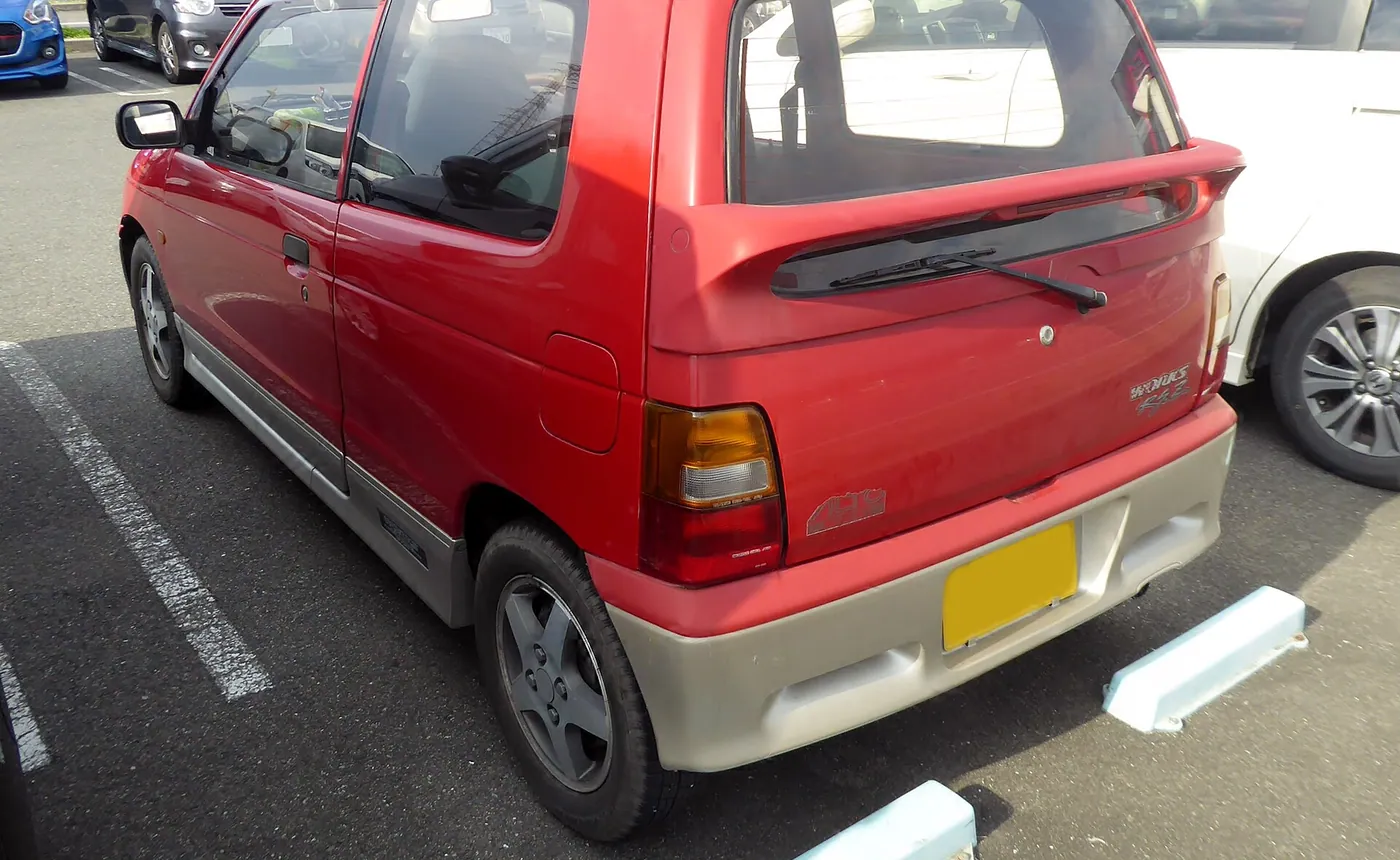
The earliest 550 cc cars from 1987 to 1990 are the original and the rarest. The 660 cc cars of the early 1990s are a little more usable. The later 1990s cars, built on the redesigned Alto, have a different look and a more refined engine, especially those with the all-aluminium K6A. Four-wheel-drive versions are prized in snowy regions and by rally fans. Suzuki also built a stripped, competition-focused Works R for motorsport, and these are very rare.
What to look for when buying one in Japan
These cars were often driven hard by young owners and used in grassroots motorsport, so condition varies widely. Rust is common in the sills, floor, rear wheel arches, tailgate and the strut tops. Check carefully under the car and inside the boot.
Many Alto Works cars have been modified with larger turbos, exhausts, boost controllers, aftermarket wheels and suspension. A standard or lightly modified car is generally the better choice, and original body kits, seats and steering wheels can be hard to replace. Engine parts are reasonably available because of the wide use of Suzuki's F5A, F6A and K6A engines, but trim and body panels for early cars are getting scarce.
Mileage on these cars is often uncertain, especially if the car has been raced or rallied. Look for signs of heavy wear on the seats, pedals and gear lever. Confirm that the export papers match the chassis number.
Should you import one?
The Alto Works suits a driver who wants a small, light, fun car with a historic place in Japanese motoring. It is a classic hot hatch in miniature, best enjoyed on country roads and at weekends.
In Ireland, it will be a rare and talked-about car. It is right-hand drive and economical, but it is small and basic. Early cars are now over 30 years old and can qualify for Ireland's vintage treatment. Expect a lively, engaging car that needs careful checking for rust and modifications before you buy.
Frequently asked questions
Why is the Alto Works important?
Its 64 PS output in 1987 became the informal power limit that Japanese manufacturers applied to kei cars for many years.
Was the Alto Works available with four-wheel drive?
Yes. Four-wheel-drive versions were offered and are popular for their traction in snow and with rally enthusiasts.
Which Alto Works is the most collectable?
The early 550 cc cars from 1987 to 1990 and the rare Works R competition models are generally the most sought after.
More Japanese classics
- Suzuki Jimny JA11: The Pocket Off-Roader That Climbs Where Bigger Trucks Give Up
- Autozam AZ-1: Gullwing Doors, a Mid-Mounted Turbo and Japan's Wildest Kei Car
- Suzuki Carry Truck: Six Decades of Japan's Toughest Little Workhorse
- Nissan Figaro: The 1991 Retro Convertible Ireland and the UK Fell in Love With
- Nissan Pao: The Safari-Styled City Car Built Only for Those Who Ordered in Time
- All 90 Japanese classics you can import
Photo credits
- Photo: Tokumeigakarinoaoshima / Wikimedia Commons, CC BY-SA 4.0
- Photo: Tokumeigakarinoaoshima / Wikimedia Commons, CC BY-SA 4.0