
Toyota AE86 Levin and Trueno: The Humble Corolla That Taught the World to Drift
A light, rear-wheel-drive coupe built from the parts bin of the last old-school Corolla. It became the most mythologised small car Japan ever made.
By the Japan to Ireland editors · · 5 min read
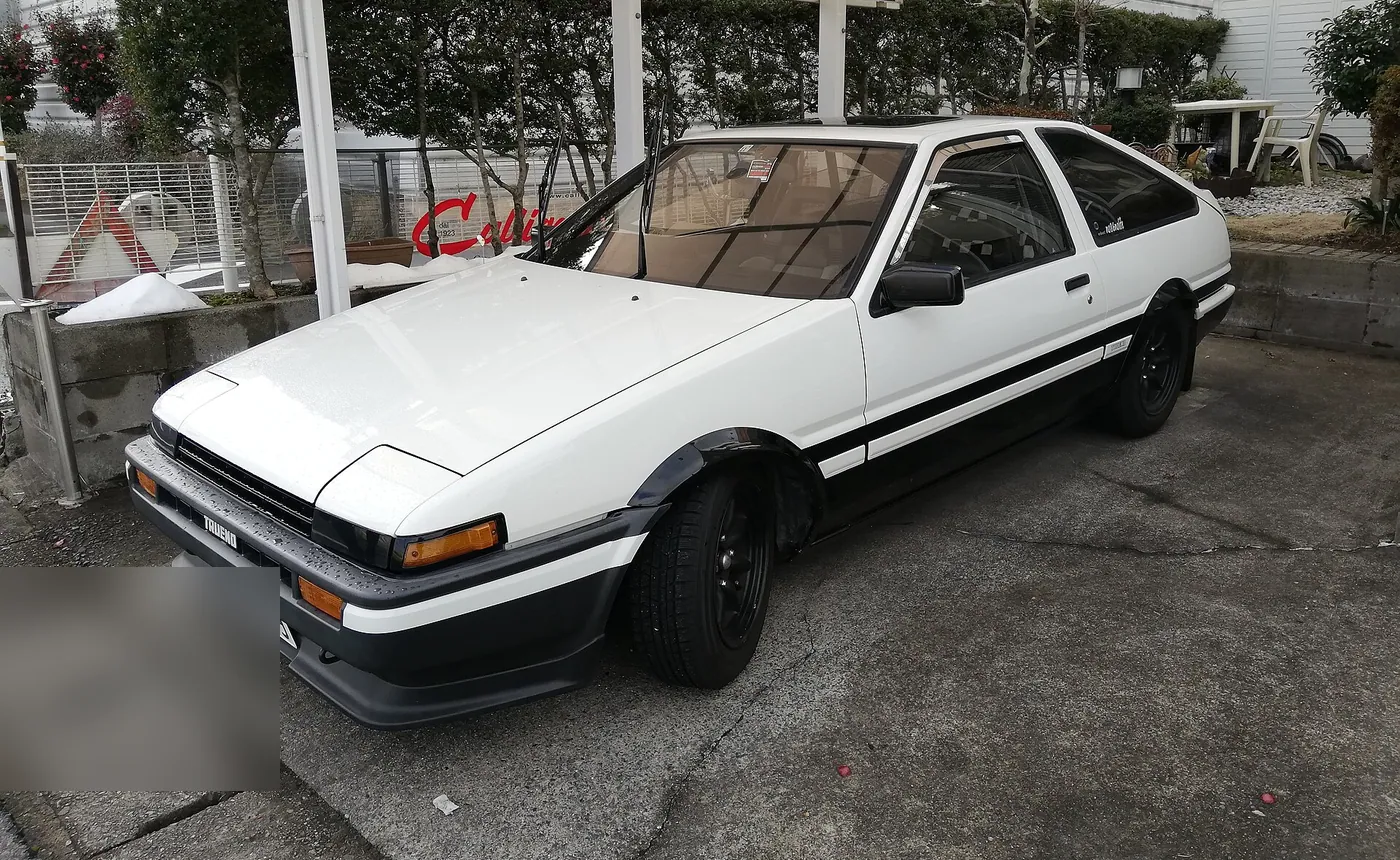
In 1983 Toyota did something that, at the time, looked like progress. The fifth-generation Corolla saloon switched to front-wheel drive, following the industry towards lighter, roomier, cheaper-to-build cars. But Toyota kept one branch of the family on the old layout. The sporty two-door and three-door Corollas, sold as the Corolla Levin and, through a separate dealer network, as the Sprinter Trueno, stayed rear-wheel drive.
That decision, more cautious than radical, produced a car with a strange and enduring afterlife. The AE86, as enthusiasts call it after its chassis code, went on to become the foundation of drifting, the star of a hugely popular manga and a symbol of a particular idea of driving: light, cheap, balanced and honest.
The specs
| Years built | 1983–1987 |
|---|---|
| Engine | 1.6 4A-GE twin-cam 16-valve (GT grades); 1.5 3A-U in lower grades (AE85) |
| Power | 130 PS gross (4A-GE) |
| Gearbox | 5-speed manual or 4-speed automatic |
| Drive | Rear-wheel drive, live rear axle |
| Body styles | Two-door coupe and three-door hatchback |
| Levin or Trueno | Levin has fixed headlights; Trueno has pop-up headlights |
Japan in the early 1980s
This was a confident Japan. Exports were booming, the yen was strengthening and a young generation of drivers wanted something more spirited than a family saloon. The Corolla was already the country's everyday car. A light, affordable coupe based on it was a logical product, not a statement. The AE86 shared much of its hardware with the earlier rear-drive Corolla, including a live rear axle on four links and a relatively simple suspension layout.
What made it special was the engine. The 4A-GE was a 1.6-litre twin-cam with 16 valves, developed with Yamaha, and it loved to rev. In the lightweight AE86 shell it produced a car that was quick enough to be fun without being fast enough to be frightening.
Drift, the mountain and the manga
The AE86's legend grew in the mountains around Japan's cities, where young drivers ran the twisting passes at night. Keiichi Tsuchiya, a racing driver who honed his technique on those roads and became known as the Drift King, did more than anyone to popularise the AE86 and the art of sliding a car with control. In 1995 the manga Initial D began, featuring a teenager delivering tofu in his father's white and black Sprinter Trueno. Its success, and the anime that followed, carried the AE86 to a global audience that had never seen one in the metal.
The result is that a modest Corolla from the 1980s now attracts serious money and intense attention, especially in Japan.
Levin or Trueno
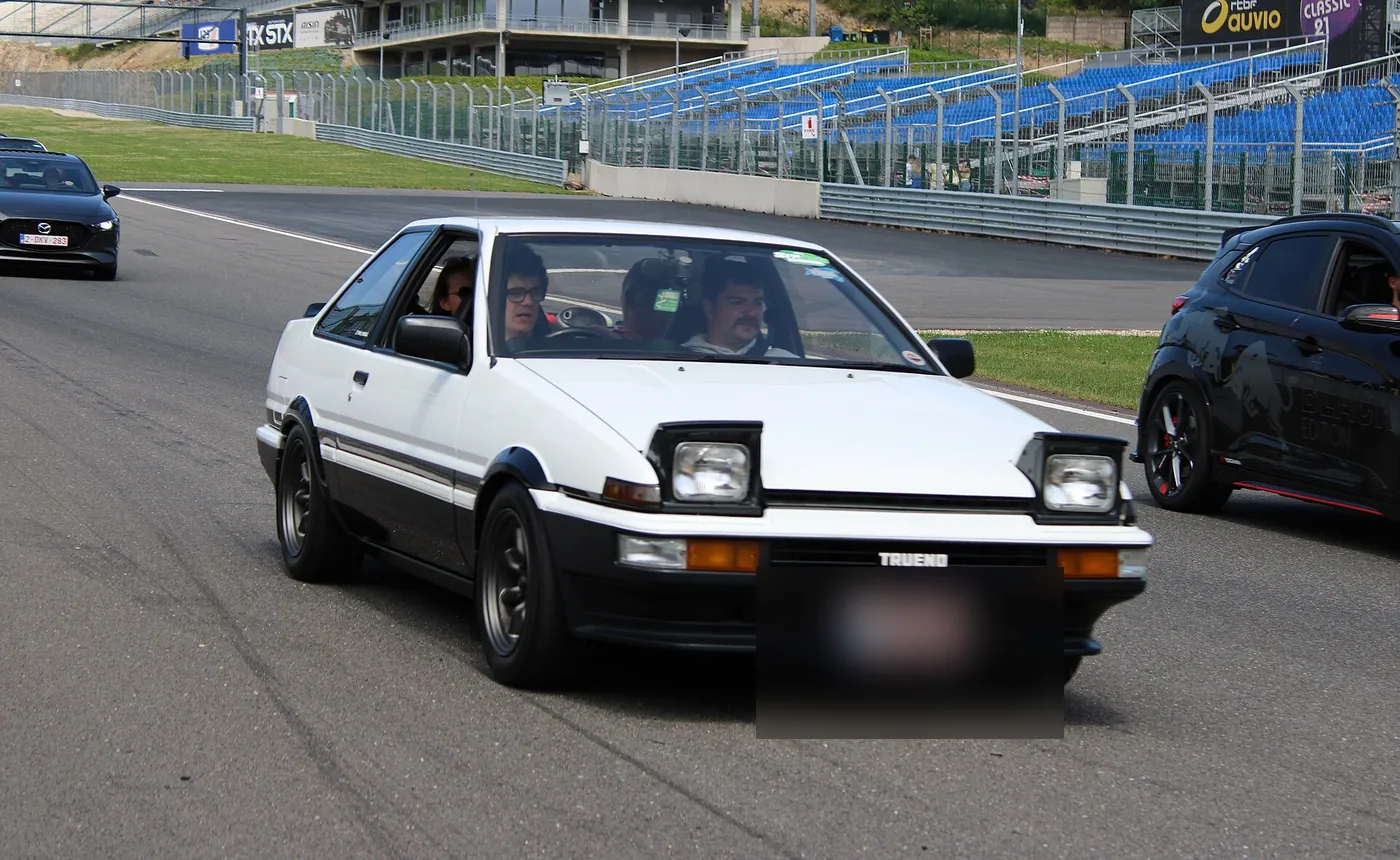
The two cars are mechanically almost identical. The Trueno has pop-up headlights and is the more famous because of Initial D. The Levin has fixed headlights and a slightly squarer face. Both came as a two-door coupe, with a notched boot and a fixed pillar, and as a three-door hatchback. In Japan the top grade was the GT-APEX, with the GTV a lighter, more sporting option. Lower grades used the 1.5-litre single-cam engine and carry the AE85 code, which is not the same thing, so check the chassis plate.
Toyota gave the car a facelift during 1985, and enthusiasts distinguish between early and late cars, known in Japan as zenki and kouki.
How it drives today
By modern standards an AE86 is small, light and narrow. The steering is unassisted on many cars and talkative at speed. The engine needs revs to give its best, and the car rewards a driver who keeps momentum up through corners. It is not fast in a straight line next to a modern hot hatch. Its pleasure is in balance, feel and the sense that every input matters.
On an Irish back road, with the hedges close and the surface uneven, the live rear axle can skip over bumps. In the wet, a rear-drive car with an open differential and old-style tyres demands attention. This is a car that gives back what you put into it.
What to check when buying one in Japan
Rust is the main enemy. Check the sills, the rear wheel arches, the floor, the boot floor, the front strut tops, the bottom of the doors and the area around the front and rear screens. Many cars have had repairs, some well done and some hidden under filler and fresh paint.
Very few AE86s survive unmodified. Most have been lowered, many have had engine swaps, some have been converted between Levin and Trueno front ends, and a great many have been drifted hard. Look for signs of crash damage, chassis bracing, welded differentials and mismatched panels. Confirm the chassis number matches the paperwork and that the car is the model it claims to be.
Mileage claims on cars this old should be treated as a guide only. Parts availability is reasonable for mechanical items thanks to the 4A-GE's wide use, but original trim, interior plastics and body panels are increasingly scarce.
Should you import one?
An AE86 suits a buyer who wants an engaging, analogue car and accepts that the market for them is overheated. Every surviving example is now more than 30 years old, which can qualify it for Ireland's vintage treatment, and that suits the way most owners will use one: as a second car for dry days and good roads.
Expect to spend time and money on rust prevention, because Irish winters are hard on cars of this age. Store it under cover, wash the salt off promptly and keep the underside protected. Buy the most original example you can, ideally with a clear history, and be suspicious of anything that looks too perfect for its stated mileage. A good AE86 will not make you fast. It will make you a better driver.
Frequently asked questions
What is the difference between the Levin and the Trueno?
They are mechanically the same. The Trueno has pop-up headlights and the Levin has fixed headlights.
What is an AE85?
The AE85 is a lower-grade version with a 1.5-litre single-cam engine instead of the 1.6-litre 4A-GE twin-cam.
Are AE86s rust-prone?
Yes. Sills, arches, floors, strut tops and screen surrounds are all common rust areas, so a careful inspection matters.
Is an AE86 old enough for vintage status in Ireland?
Every AE86 is now more than 30 years old, and cars over 30 years old can qualify for Ireland's vintage treatment.
More Japanese classics
- Toyota Supra (A80): The Grand Tourer That Became a Legend by Accident
- Toyota Supra (A70): the turbocharged GT that gave the Supra its own name
- Toyota Celica GT-Four (ST165): The First Turbocharged, Four-Wheel-Drive Celica Goes Rallying
- Toyota Celica GT-Four (ST185): Toyota's World Champion in a Wide, Muscular Coupe
- Toyota Celica (TA22): The Coupe That Gave Japan's Young Drivers a Choice
- All 90 Japanese classics you can import
Photo credits
- Photo: 先従隗始 / Wikimedia Commons, CC0
- Photo: SprinterTrueno1985 / Wikimedia Commons, CC0