
Toyota Celica (TA22): The Coupe That Gave Japan's Young Drivers a Choice
The first Celica arrived in 1970 as Japan raced into the age of the private car. Stylish, affordable and built to the buyer's own specification, it became a symbol of an optimistic decade.
By the Japan to Ireland editors · · 4 min read
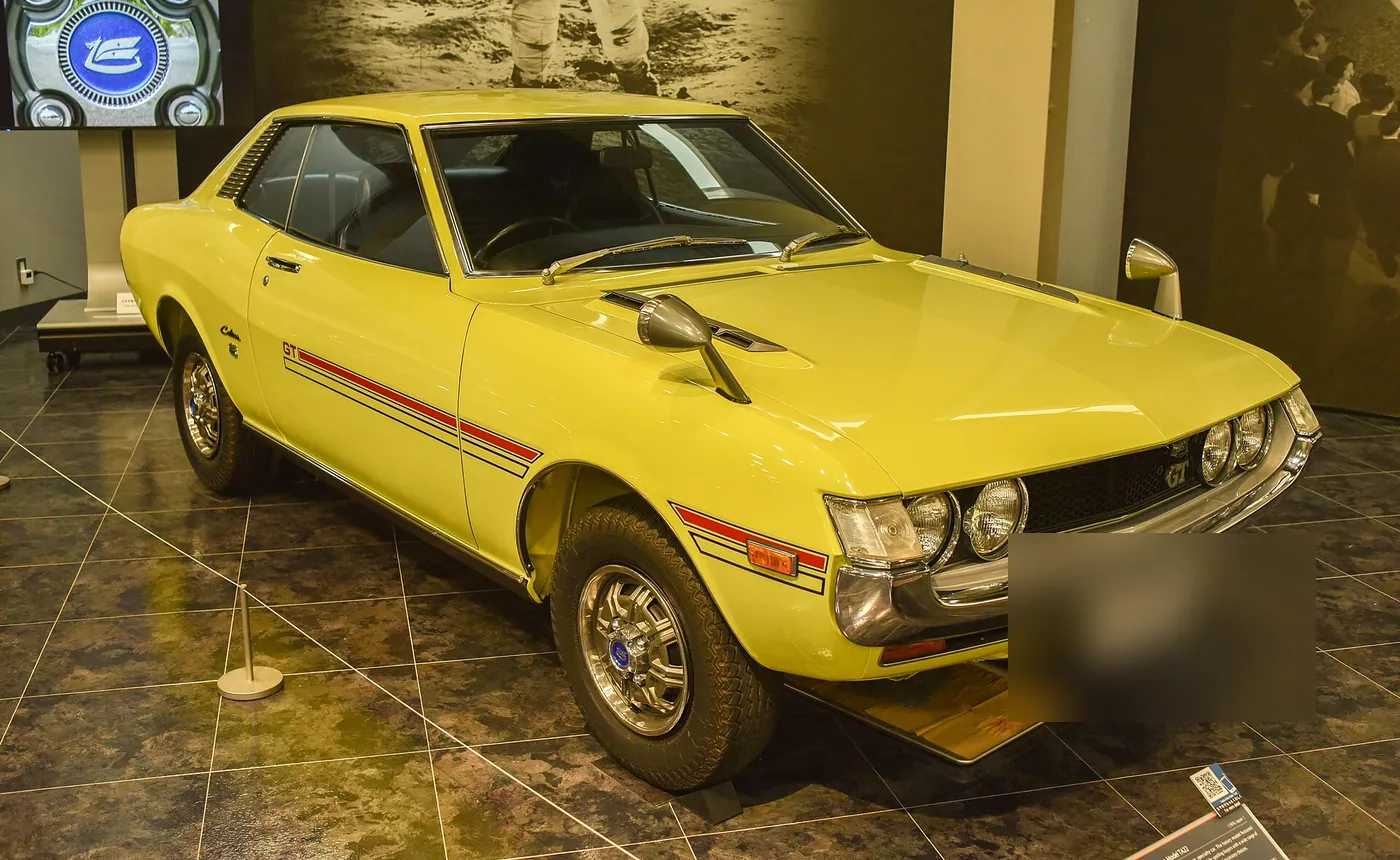
In 1970 Japan was celebrating. The Osaka World Expo had drawn huge crowds, the economy had grown at a pace the world could barely believe, and millions of families had bought their first car. The phrase of the moment was "my car", the idea that a private car was now within reach for ordinary people.
Into this world, at the end of 1970, Toyota launched the Celica. It was a two-door hardtop coupe, sold alongside a new saloon called the Carina, and it was aimed squarely at young buyers who wanted something with style. The TA22, the 1.6-litre version and the most famous of the first-generation cars, became the face of the early Celica.
The specs
| Years built | 1970–1977 |
|---|---|
| Engine | 1.6 2T, or 2T-G twin-cam in the 1600GT |
| Power | 115 PS gross (2T-G) |
| Gearbox | 4-speed or 5-speed manual, automatic offered |
| Drive | Rear-wheel drive |
| Body styles | Two-door hardtop coupe; Liftback from 1973 |
| Launch idea | Full Choice system for engine, gearbox and interior |
A car for the new Japan
The first Celica was often compared with the Ford Mustang, and the comparison made sense. It was a stylish coupe built on a relatively ordinary platform, designed to be affordable and to give buyers a sense of individuality. Toyota offered it under what it called the Full Choice system, which let buyers select their engine, gearbox and interior from a range of options, rather than simply choosing a trim level. The top model, the 1600GT, had its own fixed specification.
The design was long-bonneted and short-tailed, with a gently curving waistline and a pillarless hardtop profile. It was elegant, modern and unmistakably of its time.
It also mattered as a signal. Through the 1960s, Japanese cars had been built to be cheap, durable and sensible. The Celica said that a Japanese company could sell desire as well as transport, and that young people with their first salaries would pay for a car that looked good outside a coffee shop in Tokyo. That idea shaped Toyota's sporty cars for decades, from the Supra to the MR2. The Celica name itself would run through seven generations before it was retired in the 2000s.
Engineering
The Celica was mechanically conventional. It had a front-mounted engine, rear-wheel drive, MacPherson strut front suspension and a live rear axle. The base engines were simple four-cylinder units. The 1600GT used the 2T-G, a 1.6-litre twin-cam with twin carburettors, developed with Yamaha. It produced 115 PS gross and turned the Celica into a lively, rev-happy car.
In 1973 Toyota added the Liftback, a fastback hatchback body with a large tailgate. It is often called the LB and has its own following. Larger engines arrived during the life of the car, including two-litre versions, but those carry different chassis codes.
How it drives today
A TA22 is small and light by modern standards. The steering is unassisted, the brakes are modest and the ride is soft. The 2T-G engine needs revs to deliver its best, and it sounds wonderful doing it. The handling is predictable and well balanced, though the live rear axle can be unsettled by bumps.
On Irish roads, the Celica is a pleasure in dry weather on a quiet road. It is slower than a modern small car, and drivers must plan overtakes carefully. Its pleasures are in its sound, its lightness and its period character.
The versions worth knowing
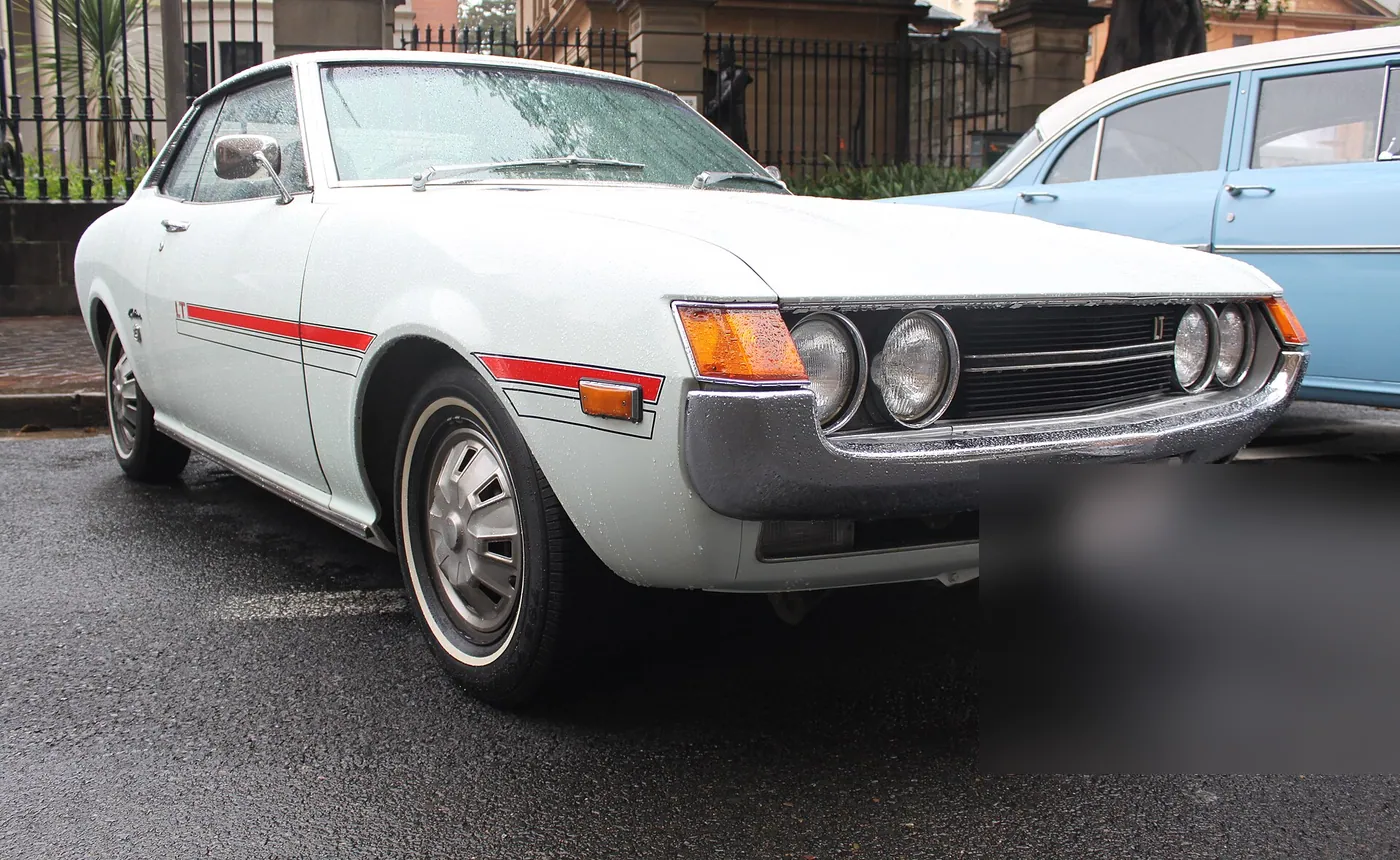
The 1600GT with the twin-cam engine is the most desirable. Its fixed specification and stronger engine make it the collector's choice. Other TA22s with single-cam engines are more common and still charming. The Liftback is a different body style with its own appeal, though most Liftbacks have different chassis codes.
Check chassis plates and paperwork carefully. Many cars have been modified, and some have had engines swapped or panels changed to resemble a more valuable version.
What to check when buying one in Japan
Rust is the major issue. Check the floor pans, sills, front wings, the bottom of the doors, the rear valance, the boot floor and the area around the rear window. Many cars have had repairs, and some have been heavily restored. A good restoration can be excellent, but ask for photographs and documentation.
Original trim, badges, interior parts and body panels are increasingly scarce. Mechanical parts are easier to find, especially for the T-series engines, but some specific items will take patience. Many TA22s have been modified with wider wheels, overfenders, lowered suspension and engine upgrades. Some are lovely, but an original car is far rarer and more valuable over time.
Mileage claims on cars this old are almost meaningless without documentation. Concentrate on condition, history and originality.
Should you import one?
A TA22 suits a buyer who wants a piece of Japanese motoring history from its formative years. It is a car for sunny weekends, car shows and gentle drives on quiet roads, not for daily use.
Every TA22 is now well over 30 years old, which can qualify it for Ireland's vintage treatment. Ownership will require care: rust prevention, dry storage and a willingness to hunt for parts. Irish weather is hard on cars of this age, so keep it under cover and wash it promptly after wet drives.
Choose the most original, best-documented example you can find, and buy on condition rather than mileage. A good TA22 is a charming, stylish car that captures the optimism of 1970s Japan.
Frequently asked questions
What does TA22 mean?
TA22 is the chassis code for the 1.6-litre first-generation Celica coupe.
What was the Full Choice system?
It let buyers choose their own engine, gearbox and interior combination, rather than a fixed trim level.
Which TA22 is most desirable?
The 1600GT with the 2T-G twin-cam engine is the most sought-after version.
Can a TA22 qualify as a vintage car in Ireland?
Yes. Every TA22 is well over 30 years old, and cars over 30 years old can qualify for Ireland's vintage treatment.
More Japanese classics
- Toyota Celica GT-Four (ST185): Toyota's World Champion in a Wide, Muscular Coupe
- Toyota Celica GT-Four (ST165): The First Turbocharged, Four-Wheel-Drive Celica Goes Rallying
- Toyota MR2 (AW11): Japan's First Mass-Produced Mid-Engined Car Still Feels Like a Revelation
- Toyota MR2 (SW20): The Baby Supercar That Grew Up Through a Decade of Changes
- Toyota Soarer (Z20): The Bubble-Era Coupe That Showcased Japan's Love of Technology
- All 90 Japanese classics you can import
Photo credits
- Photo: Coolalabright / Wikimedia Commons, CC BY 4.0
- Photo: Jeremy from Sydney, Australia / Wikimedia Commons, CC BY 2.0