
Toyota Celica GT-Four (ST185): Toyota's World Champion in a Wide, Muscular Coupe
The ST185 carried Toyota to its first world rally manufacturers' title. On the road it is a fast, wide, four-wheel-drive coupe with a strong engine and plenty of character.
By the Japan to Ireland editors · · 4 min read
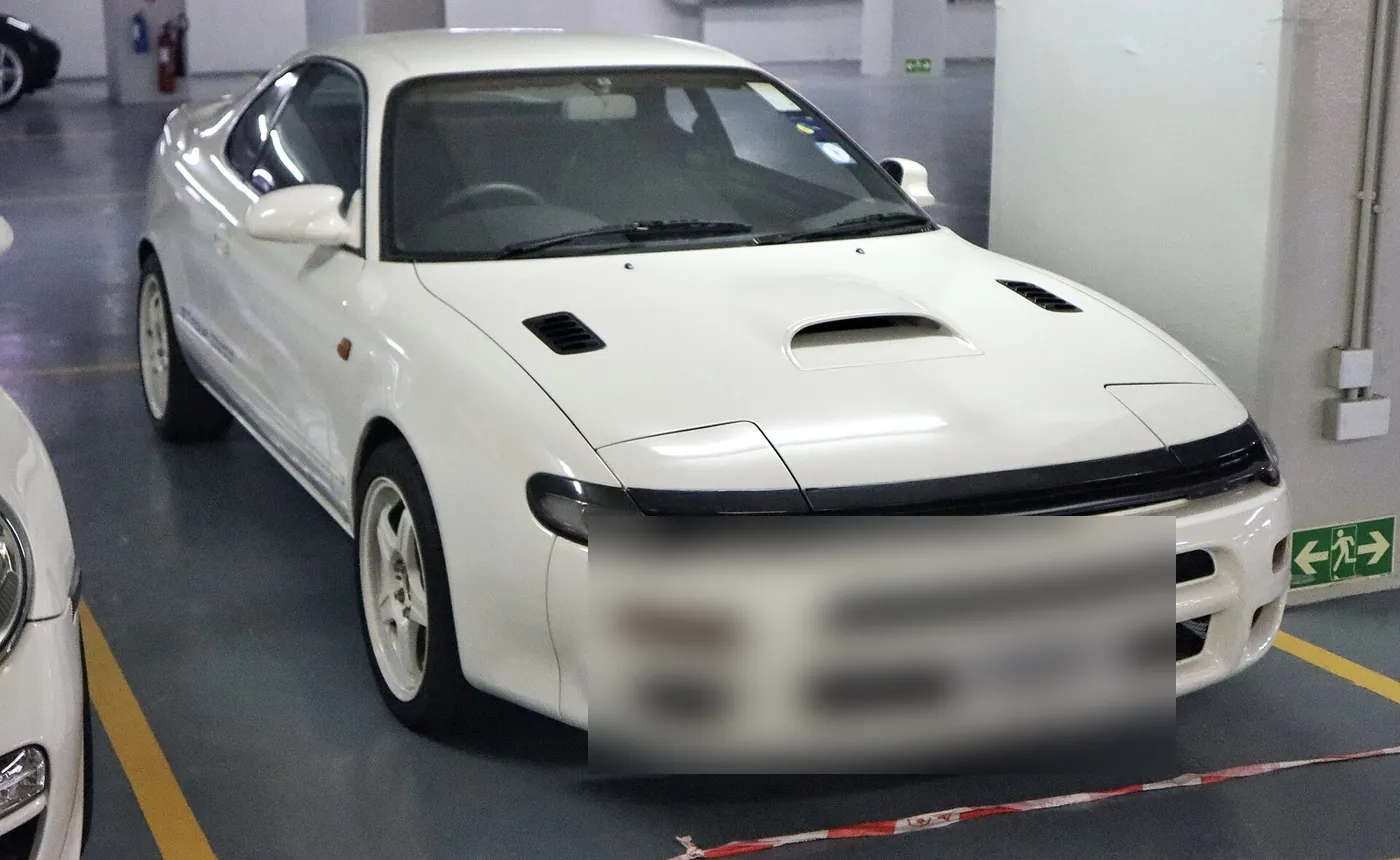
In the early 1990s, the World Rally Championship belonged to a few makers locked in a contest for prestige. Lancia had dominated the late 1980s. Toyota wanted the title. Its weapon was the fifth-generation Celica GT-Four, the ST185, a wider, rounder and more powerful car than the ST165 it replaced.
It worked. Carlos Sainz won the drivers' championship in 1992. Juha Kankkunen took the drivers' title in 1993, the year Toyota won its first world rally manufacturers' championship. Didier Auriol won the drivers' title in 1994 and Toyota took the makers' title again. For a time the Celica was the car to beat.
The specs
| Years built | 1989–1993 |
|---|---|
| Engine | 2.0 3S-GTE turbocharged four-cylinder |
| Power (Japan) | 225 PS; 235 PS for the GT-Four RC |
| Gearbox | 5-speed manual; automatic offered in Japan |
| Drive | Full-time four-wheel drive |
| Body styles | Three-door liftback |
| Homologation special | GT-Four RC, water-to-air intercooler |
Born as the bubble burst
The fifth-generation Celica arrived in Japan in 1989, at the very peak of the bubble economy, with the GT-Four following soon after. It was a car designed for confident times: curvy, wide and packed with technology. By the time the rally cars were winning, Japan's economy was in retreat, but the ST185 had already been developed.
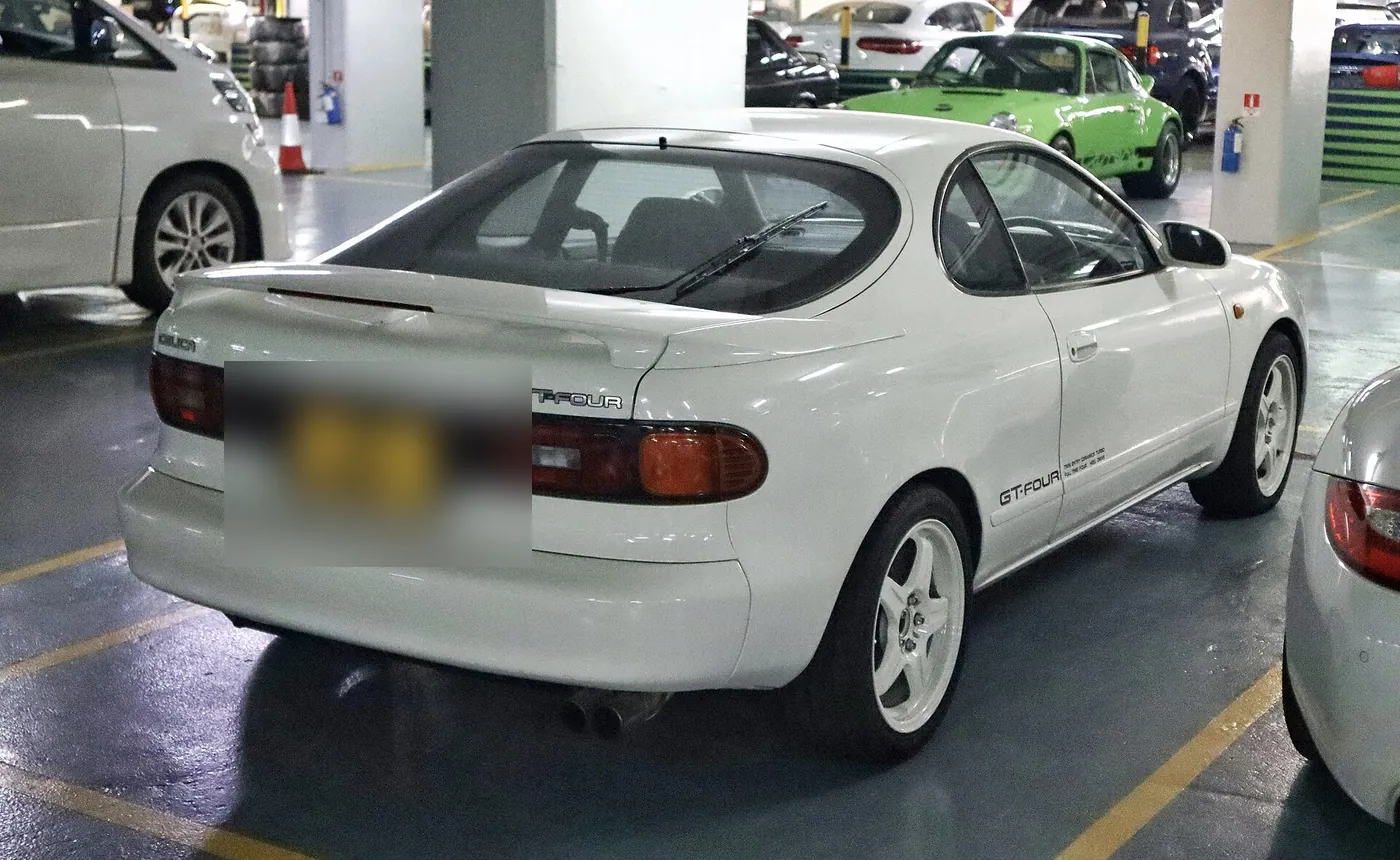
The engine was an evolution of the 3S-GTE. In Japanese specification it produced 225 PS, a large step from the ST165. The full-time four-wheel-drive system used a viscous coupling on the centre differential, and many cars had a Torsen limited-slip rear differential. The body was noticeably wider than the ST165, especially at the rear, with broad wheel arches that made it look planted even standing still.
The GT-Four RC
To compete in Group A, Toyota needed to build a minimum number of road cars with the parts it wanted to use in competition. The result was the GT-Four RC, sold in Europe as the Carlos Sainz edition in some markets. Its key change was a water-to-air intercooler mounted on top of the engine, fed through a vented bonnet. In Japanese specification it was rated at 235 PS. The RC is the most sought-after version and the one to look for if you want the rally connection at its most direct.
Standard Japanese GT-Fours had an air-to-air intercooler and a different bonnet. Both versions are fast, but the RC carries the history.
How it drives today
On the road the ST185 feels heavier and more substantial than the ST165. The engine pulls hard once the turbo is spinning, and the four-wheel drive gives it enormous traction on wet or loose surfaces. It is stable, grippy and confidence-inspiring, a car that can cover ground quickly on a damp Irish road without drama.
The steering is precise for its age, though not especially light. Brakes are adequate for normal road use but benefit from good-quality pads and fluid. Ride comfort is reasonable on Japanese suspension, though worn bushes and dampers can make it feel loose. The width is generous for narrow roads, so take care on boreens.
The versions worth knowing
In Japan the GT-Four was offered in more than one specification over its life, automatic cars included, and the RC was built in limited numbers as the homologation special. It is the rarest and the one to verify most carefully, because standard cars have been dressed up with RC bonnets. Other fifth-generation Celicas were front-wheel drive with non-turbo engines, so check the chassis code is ST185 and that the car is the model it claims to be.
What to check when buying one in Japan
Rust is the main enemy. Check the rear wheel arches, the sills, the floor under the rear seats and around the rear suspension mounts, the spare-wheel well and the tailgate. The wide rear arches can trap dirt and moisture. Take a good look underneath, ideally on a lift.
The 3S-GTE is strong but often tuned. Check for blue smoke, oil leaks, turbo noise and signs of overheating. On RCs, the water-to-air intercooler system needs to be in good condition; leaks and pump failures are possible. The four-wheel-drive system should feel smooth with no clunks or vibrations. A tired centre viscous coupling can make the car feel reluctant on tight turns.
Many ST185s have been modified, and some have been used in club rallying. Look for chassis repairs, mismatched panels and signs of hard use. Mileage claims on cars of this age deserve careful checking against service records. Body panels, trim and interior parts are getting harder to find, though many mechanical parts are shared with other Toyotas.
Should you import one?
The ST185 suits a buyer who wants a usable, four-wheel-drive classic with real rally history. It is practical, with four seats and a useful boot, and the four-wheel drive makes it well suited to Irish weather. It is also the car that made Toyota a world champion, and that matters to many owners.
Every ST185 is now more than 30 years old, which can qualify it for Ireland's vintage treatment. It is best treated as a weekend or occasional car rather than a daily commuter. Expect to spend time on rust protection and maintenance, and choose the most original, best-documented car you can find. A good one is fast, secure and full of character, and it carries a story few other cars can match.
Frequently asked questions
What is the GT-Four RC?
It is the homologation version of the ST185, with a water-to-air intercooler and vented bonnet, rated at 235 PS in Japan.
Which drivers won world titles in the ST185?
Carlos Sainz in 1992, Juha Kankkunen in 1993 and Didier Auriol in 1994.
Is the ST185 good in wet weather?
Yes. Its full-time four-wheel drive gives strong traction on wet roads, which suits Irish conditions.
Are ST185s prone to rust?
Yes. Check the rear arches, sills, rear floor, spare-wheel well and tailgate carefully.
More Japanese classics
- Toyota Celica GT-Four (ST165): The First Turbocharged, Four-Wheel-Drive Celica Goes Rallying
- Toyota AE86 Levin and Trueno: The Humble Corolla That Taught the World to Drift
- Toyota Celica (TA22): The Coupe That Gave Japan's Young Drivers a Choice
- Toyota MR2 (AW11): Japan's First Mass-Produced Mid-Engined Car Still Feels Like a Revelation
- Toyota MR2 (SW20): The Baby Supercar That Grew Up Through a Decade of Changes
- All 90 Japanese classics you can import
Photo credits
- Photo: Jones028 from Hong Kong / Wikimedia Commons, CC BY 2.0
- Photo: Jones028 from Hong Kong / Wikimedia Commons, CC BY 2.0