
Toyota MR2 (AW11): Japan's First Mass-Produced Mid-Engined Car Still Feels Like a Revelation
Small, light and built around a rev-happy twin-cam behind the seats, the first MR2 brought exotic-car layout to ordinary buyers in 1984.
By the Japan to Ireland editors · · 4 min read
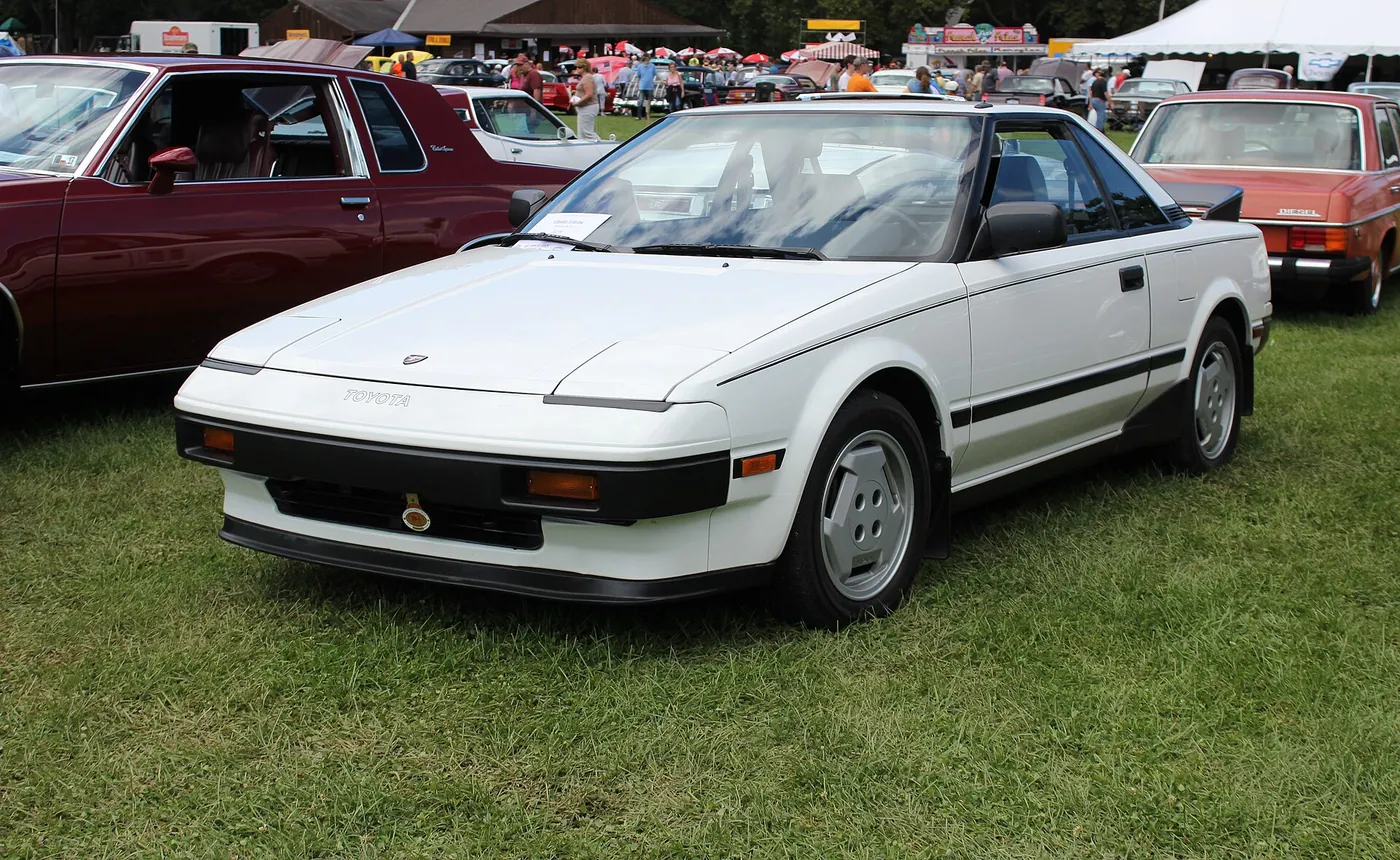
At the Tokyo Motor Show in 1983, Toyota showed a small, wedge-shaped concept called the SV-3. It was low, angular and had its engine behind the seats, the layout of Italian supercars and racing cars. In June 1984 the production version went on sale in Japan as the MR2, the first mid-engined car built in large numbers by a Japanese manufacturer.
The name stood for midship runabout two-seater, and it captured the idea neatly. This was not a supercar. It was a small, affordable sports car that brought an exotic layout within reach of ordinary drivers, at a time when Japan's car industry was brimming with confidence and willing to try new things.
The specs
| Years built | 1984–1989 |
|---|---|
| Engine | 1.6 4A-GE twin-cam; 1.6 4A-GZE supercharged from 1986; 1.5 3A-U in lower grades |
| Power | 130 PS gross (4A-GE); 145 PS (4A-GZE) |
| Gearbox | 5-speed manual or 4-speed automatic |
| Drive | Rear-wheel drive, mid-engined |
| Body styles | Two-seat coupe; T-bar roof option from 1986 |
| Chassis code | AW11 |
Why Toyota built it
The early 1980s were a period of rising prosperity and expanding ambition in Japan. Toyota was already the country's largest car maker, but it was known for sensible, reliable cars rather than excitement. The MR2 was part of a push to change that image. It also made engineering sense. Toyota had a ready supply of front-wheel-drive components from the Corolla, and by turning the engine and gearbox package around and mounting it behind the cabin, it could build a mid-engined car without inventing everything from scratch.
The engine was the 4A-GE, the same 1.6-litre twin-cam used in the AE86 Corolla. In a car weighing around a tonne, it made the MR2 quick, responsive and fun. The chassis was tuned to give agile, balanced handling, and the MR2 quickly earned praise from motoring press around the world.
Design and engineering
The AW11 is a crisp, folded-paper design, all straight lines and sharp edges. It is a two-seater with a small boot at the front and another behind the engine. The cabin is snug but well laid out, with the driver sitting low and close to the front wheels.
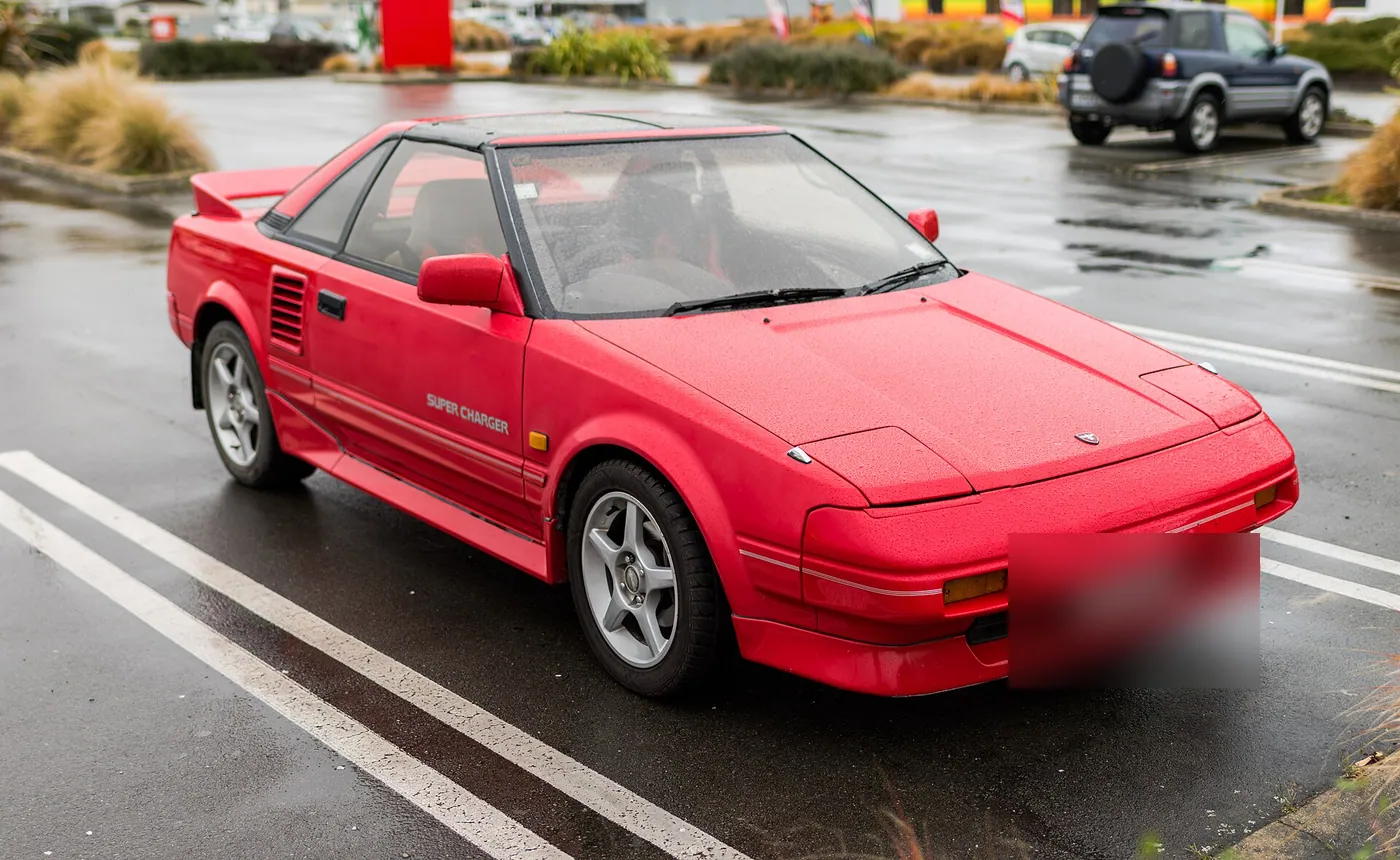
In 1986 Toyota gave the car a facelift and introduced the supercharged 4A-GZE engine, which gave stronger mid-range pull. A T-bar roof with removable glass panels became available, and it is common on Japanese cars. Lower grades in Japan used a 1.5-litre single-cam engine, which is less desirable but still gives the same mid-engined experience at a gentler pace.
How it drives today
The AW11 still feels special. The steering is quick and direct, and the car turns into corners with an eagerness few modern cars can match. The engine is right behind your ears, and the 4A-GE sounds fantastic as it revs. The supercharged car has more torque and is easier to drive quickly in everyday traffic.
On Irish roads, the MR2 is at its best on a dry, twisting road with a good surface. It is small enough to feel at home on narrow country lanes. In the wet, the mid-engined layout and light front end demand care, especially on worn tyres. The ride is firm but acceptable, and the car is surprisingly usable for its age.
The versions worth knowing
The early cars, built before the 1986 facelift, are prized for their purity. The later supercharged cars are the most powerful and are often preferred for road use. T-bar cars give a more open feel but can leak if the seals are tired. Automatic cars exist but are less desirable for most enthusiasts.
Check that the car is the model it claims to be. Badges and parts are easy to swap.
What to check when buying one in Japan
Rust is the biggest concern. Check the sills, the rear wheel arches, the floor, the front boot floor and the area around the fuel tank, which sits in the central tunnel. T-bar cars should be checked for water leaks and rust around the roof seals.
The engine is generally strong, but check for oil leaks, smoke and signs of overheating. The cooling system runs long pipes from the front radiator to the rear engine, and air trapped in the system can cause problems. On supercharged cars, check the supercharger for noise and its clutch for correct operation.
Many AW11s have been modified, with lowered suspension, aftermarket wheels and engine swaps. Some have been raced. Look for signs of accident damage and poorly repaired bodywork. Mileage claims on cars of this age should be treated with caution. Mechanical parts are reasonably easy to find, but trim, interior parts and body panels are increasingly scarce.
Should you import one?
The AW11 suits a buyer who wants a light, engaging and characterful sports car that is affordable to run and simple to maintain. It is a two-seater, so it will not replace a family car, but as a second car for sunny weekends it is hard to beat.
Every AW11 is now more than 30 years old, which can qualify it for Ireland's vintage treatment. Ownership requires attention to rust, dry storage and some patience when hunting for parts. Choose the most original, best-documented car you can find. A good AW11 is a reminder of a time when Japanese car makers built small sports cars purely for the joy of driving.
Frequently asked questions
What does MR2 stand for?
It stands for midship runabout two-seater, describing its mid-engined, two-seat layout.
Which engines did the AW11 use?
Most used the 1.6-litre 4A-GE twin-cam. From 1986 a supercharged 4A-GZE was offered, and lower grades in Japan had a 1.5-litre engine.
Are AW11 MR2s prone to rust?
Yes. The sills, rear arches, floor, front boot and roof seals on T-bar cars all need checking.
Is an AW11 old enough for Ireland's vintage treatment?
Every AW11 is now more than 30 years old, and cars over 30 years old can qualify for vintage treatment.
More Japanese classics
- Toyota Celica (TA22): The Coupe That Gave Japan's Young Drivers a Choice
- Toyota Celica GT-Four (ST185): Toyota's World Champion in a Wide, Muscular Coupe
- Toyota MR2 (SW20): The Baby Supercar That Grew Up Through a Decade of Changes
- Toyota Soarer (Z20): The Bubble-Era Coupe That Showcased Japan's Love of Technology
- Toyota Soarer (Z30): The Japanese Coupe Designed in California That Became the Lexus SC
- All 90 Japanese classics you can import
Photo credits
- Photo: Jacob Frey 4A / Wikimedia Commons, CC BY 2.0
- Photo: SealyPhoto / Wikimedia Commons, CC BY-SA 4.0