
Toyota Mark II (X70): the white hardtop that carried Japan's salarymen into the boom years
The X70 Mark II made the four-door hardtop a symbol of success in 1980s Japan, and its smooth straight-six engines still make it a charming classic.
By the Japan to Ireland editors · · 4 min read
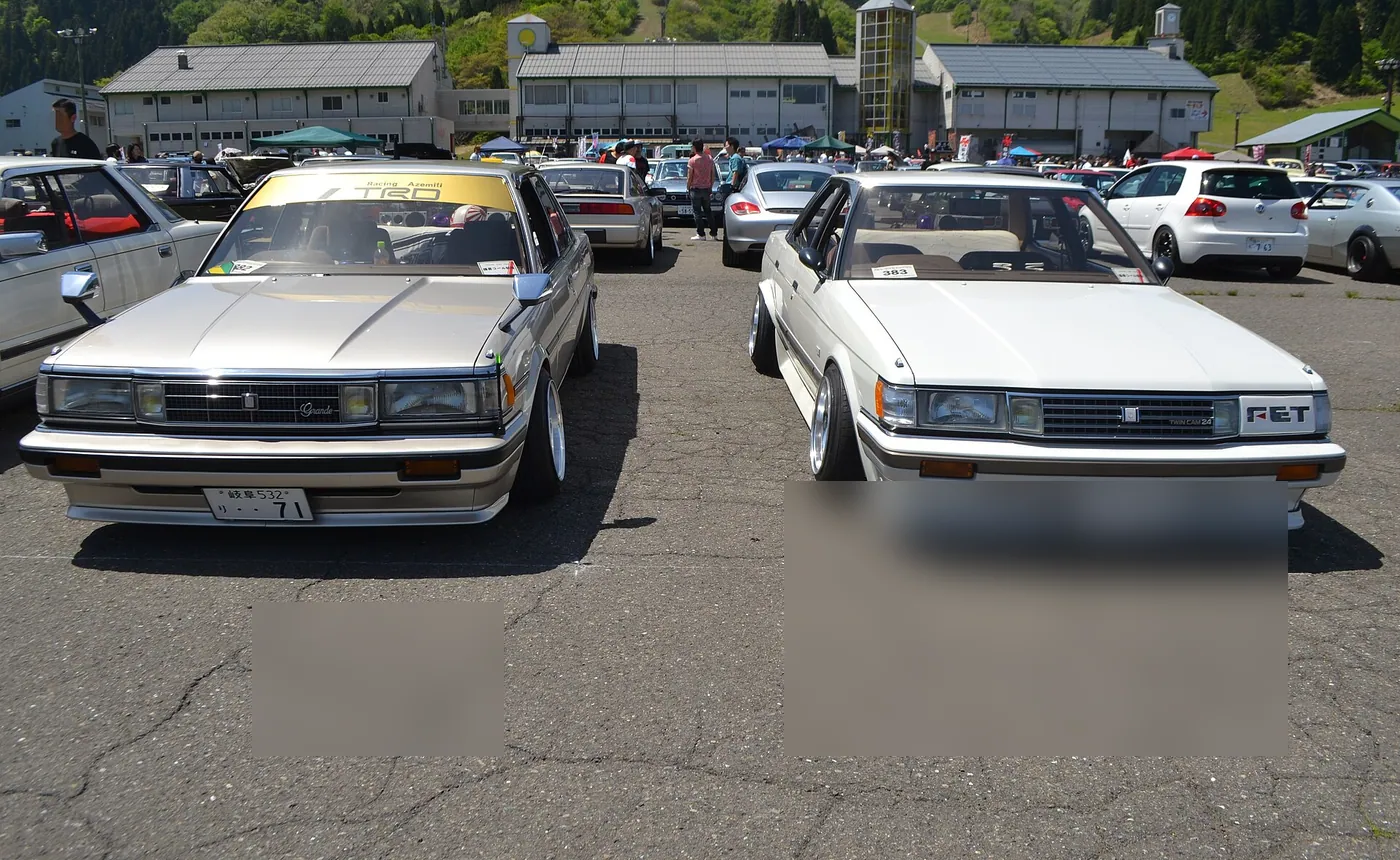
Picture a Japanese city street in the mid-1980s. The economy is growing fast, and a new generation of office workers is earning enough to buy a car that signals success. In many of their driveways sits a white Toyota Mark II hardtop, its frameless door windows and crisp lines giving it an air of quiet sophistication. The X70 generation, launched in 1984, became one of the defining cars of that era.
It was not a sports car or a luxury limousine. It was a comfortable, well-built saloon that offered a taste of upmarket living. Today the X70 is a charming classic, with a following among those who appreciate Japanese design and engineering from the boom years.
The specs
| Years built | 1984–1988 (saloon and hardtop) |
|---|---|
| Engines | Four-cylinder petrol and diesel; 1G-EU 2.0-litre straight-six; 1G-GEU twin-cam six; 1G-GTE twin-turbo six |
| Gearbox | Five-speed manual or four-speed automatic |
| Drive | Rear-wheel drive |
| Body styles | Four-door hardtop, four-door saloon, estate and van |
| Platform siblings | Toyota Chaser and Toyota Cresta |
| Steering | Right-hand drive |
Why it was built
The Mark II had grown from the Corona into a separate model, and by the 1980s it had become a key part of Toyota's range. It sat below the Crown, offering similar comfort at a more accessible level. Its siblings, the Chaser and Cresta, shared its platform but were sold through different dealer networks.
The X70 arrived as Japan's economy was gathering pace towards the bubble years. The Plaza Accord of 1985 strengthened the yen, and consumer confidence was rising. Buyers wanted cars that were stylish, comfortable and well equipped, and the Mark II delivered all three.
Design and engineering
The X70 has a square, crisp design typical of 1980s Japanese cars. The four-door hardtop, with its frameless windows and slim pillars, was the most popular body style. A pillared saloon, an estate and a van were also offered. White was by far the most popular colour, and many surviving cars are still finished in it.
The engine range included four-cylinder petrol and diesel units and a selection of straight-six petrol engines. The 1G-EU 2.0-litre six was smooth and refined, while the twin-cam 1G-GEU offered more performance. The most powerful version used the 1G-GTE twin-turbo six, one of the early Japanese twin-turbo engines. Gearboxes included a five-speed manual and a four-speed automatic.
How it drives today
An X70 drives like a comfortable, well-balanced saloon. The straight-six engines are smooth and quiet, and the ride is soft and composed. Rear-wheel drive gives the car a pleasant, balanced feel, and the steering is light and easy. The twin-turbo version offers lively performance, while the non-turbo sixes are relaxed and refined.
On Irish roads, the X70 is comfortable on the motorway and pleasant on country roads, although it is not designed for fast cornering. The cabin is spacious, with comfortable seats and plenty of room for rear passengers. The dashboard is simple and well laid out, with many examples featuring plush velour upholstery.
There is a softness to the whole experience that modern cars rarely offer. Doors close with a light, well-damped sound, the seats are deep and forgiving, and the frameless windows give the hardtop an open, airy feel when lowered. It is a car for unhurried driving, a Sunday run along the coast rather than a fast lap of a back road.
The variants worth knowing
The twin-turbo 1G-GTE versions are the most sought after by enthusiasts, especially with a manual gearbox. The twin-cam 1G-GEU offers a good balance of performance and refinement. Non-turbo 1G-EU versions are smooth and relaxed, and often more affordable. The hardtop is the most desirable body style, while the estate is a practical and charming alternative. Top-trim Grande versions offer the most equipment and comfort.
What to check when buying in Japan
Rust can be a problem on any car of this age. Check the sills, the lower edges of the doors, the rear wheel arches, the boot floor and the area around the front and rear windscreens. Inspect the floor and suspension mounting points underneath.
Interior condition is important, as velour upholstery and trim can be difficult to replace. Check that electrical features such as power windows, central locking and air conditioning work properly. Many X70s have been modified, with lowered suspension, aftermarket wheels and engine changes. Some modifications are tasteful, but others can affect reliability and value.
Mileage can be difficult to verify on older Japanese cars, so look for consistent wear on the interior and pedals, and check service records where available. Ensure that the chassis number matches the export paperwork.
Should you import one?
The X70 Mark II suits buyers who appreciate 1980s Japanese design and want a comfortable, characterful classic. It is ideal for those who enjoy smooth straight-six engines, rear-wheel drive and a relaxed driving experience.
In Ireland, an X70 is comfortable for long journeys and pleasant on country roads. Parts availability can be a challenge for some trim and body parts, so expect to source some items from Japan. Cars over 30 years old can qualify for Ireland's vintage treatment, which covers every X70 saloon and hardtop. Choose a well-maintained example, preferably close to standard, and it will reward you with a charming slice of Japan's boom years.
Frequently asked questions
What engines were available in the X70 Mark II?
Four-cylinder petrol and diesel engines and a range of straight-six petrol engines, including the 1G-GTE twin-turbo.
Which body style is most desirable?
The four-door hardtop with frameless windows is the most popular and sought after.
Is the X70 right-hand drive?
Yes. It was built for the Japanese market and is right-hand drive.
Are parts easy to find?
Mechanical parts are reasonably available, but some trim and body parts may need to be sourced from Japan.
More Japanese classics
- Toyota Chaser, Mark II and Cresta (X90): three saloons, one twin-turbo heart and a cult that never faded
- Toyota Hilux Surf (N130): the pick-up that became a family SUV just as Japan fell for the outdoors
- Toyota Sera: the glass-roofed coupe with butterfly doors that only the bubble era could have built
- Toyota Estima (first generation): the egg-shaped people carrier with its engine under the floor
- Toyota Starlet (KP61): The Last Rear-Drive Starlet and Japan's Pocket Sports Car
- All 90 Japanese classics you can import
Photo credits
- Photo: 先従隗始 / Wikimedia Commons, CC0