
Toyota Hilux Surf (N130): the pick-up that became a family SUV just as Japan fell for the outdoors
The second-generation Surf traded the removable roof of its predecessor for a proper five-door body, and helped turn the off-roader into everyday transport.
By the Japan to Ireland editors · · 4 min read
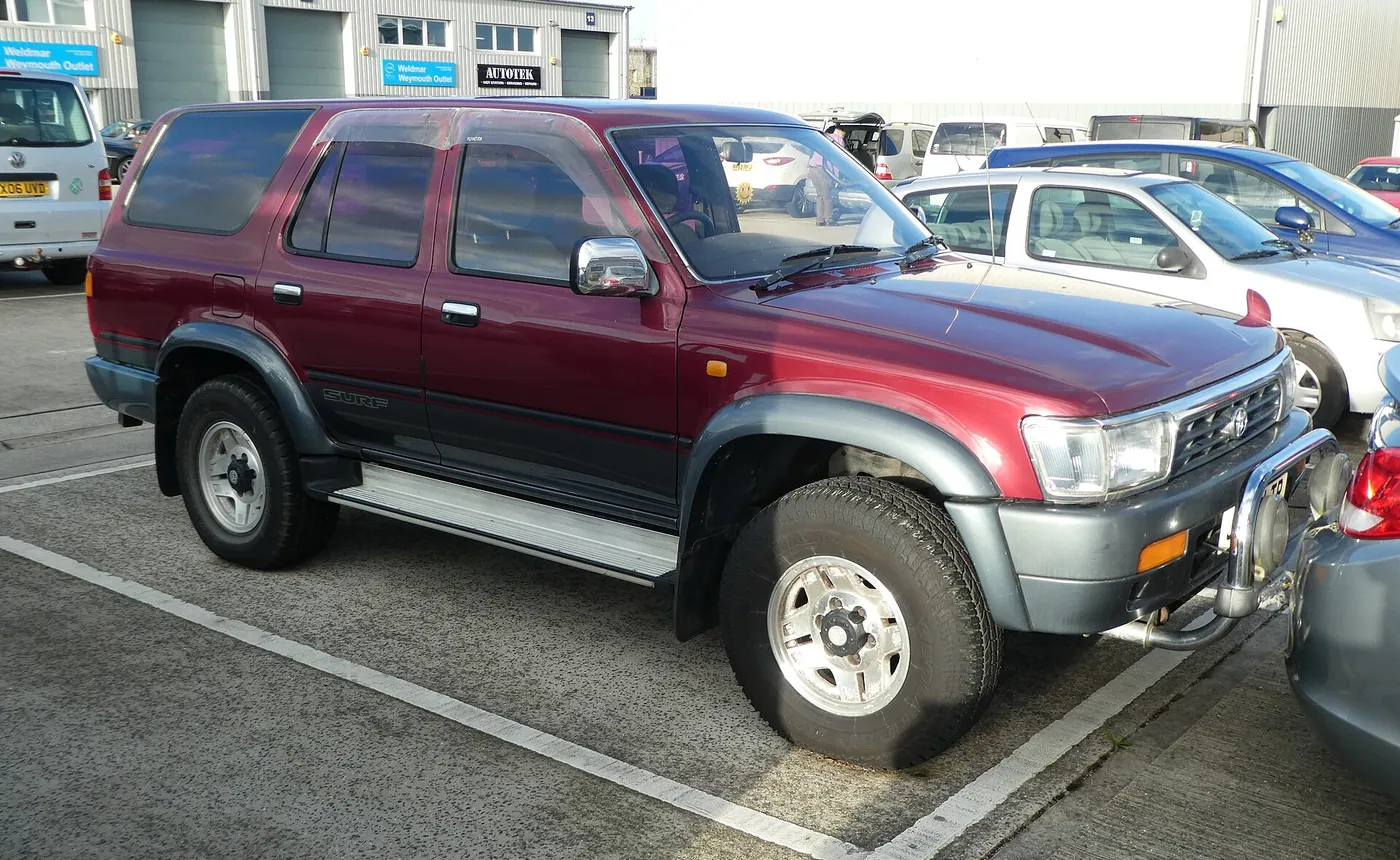
At the end of the 1980s, Japanese weekends were changing. With money flowing through the economy, families were heading for the mountains, the ski slopes and the coast, and they wanted vehicles that looked ready for adventure. The Toyota Hilux Surf, known in many export markets as the 4Runner, arrived in its second generation in 1989 at exactly the right moment.
The first Surf had been a pick-up with a removable fibreglass rear canopy. The N130 was a more complete vehicle: a steel five-door body, a more comfortable cabin and an engine range that included a V6 petrol and turbocharged diesels. It became one of the vehicles that defined the Japanese RV boom of the early 1990s, and it remains a popular import today.
The specs
| Years built | 1989–1995 |
|---|---|
| Engines | 2L-T 2.4-litre turbo diesel; 3VZ-E 3.0-litre V6 petrol; 1KZ-TE 3.0-litre turbo diesel from 1993 |
| Gearbox | Five-speed manual or four-speed automatic |
| Drive | Part-time four-wheel drive |
| Suspension | Independent front, coil-sprung solid rear axle |
| Body style | Five-door estate |
| Known abroad as | Toyota 4Runner |
Why it was built
Toyota had seen how well the first Surf sold, but it also recognised that buyers wanted more practicality. Families needed rear doors, a fixed roof and better weather sealing. The N130 delivered that while keeping the Hilux pick-up's rugged ladder chassis and its proven four-wheel-drive system.
The result was a vehicle that could be driven to the office during the week and taken off road at the weekend. In Japan, it attracted younger buyers who wanted something more stylish than a saloon, and older families who wanted space and ruggedness.
Design and engineering
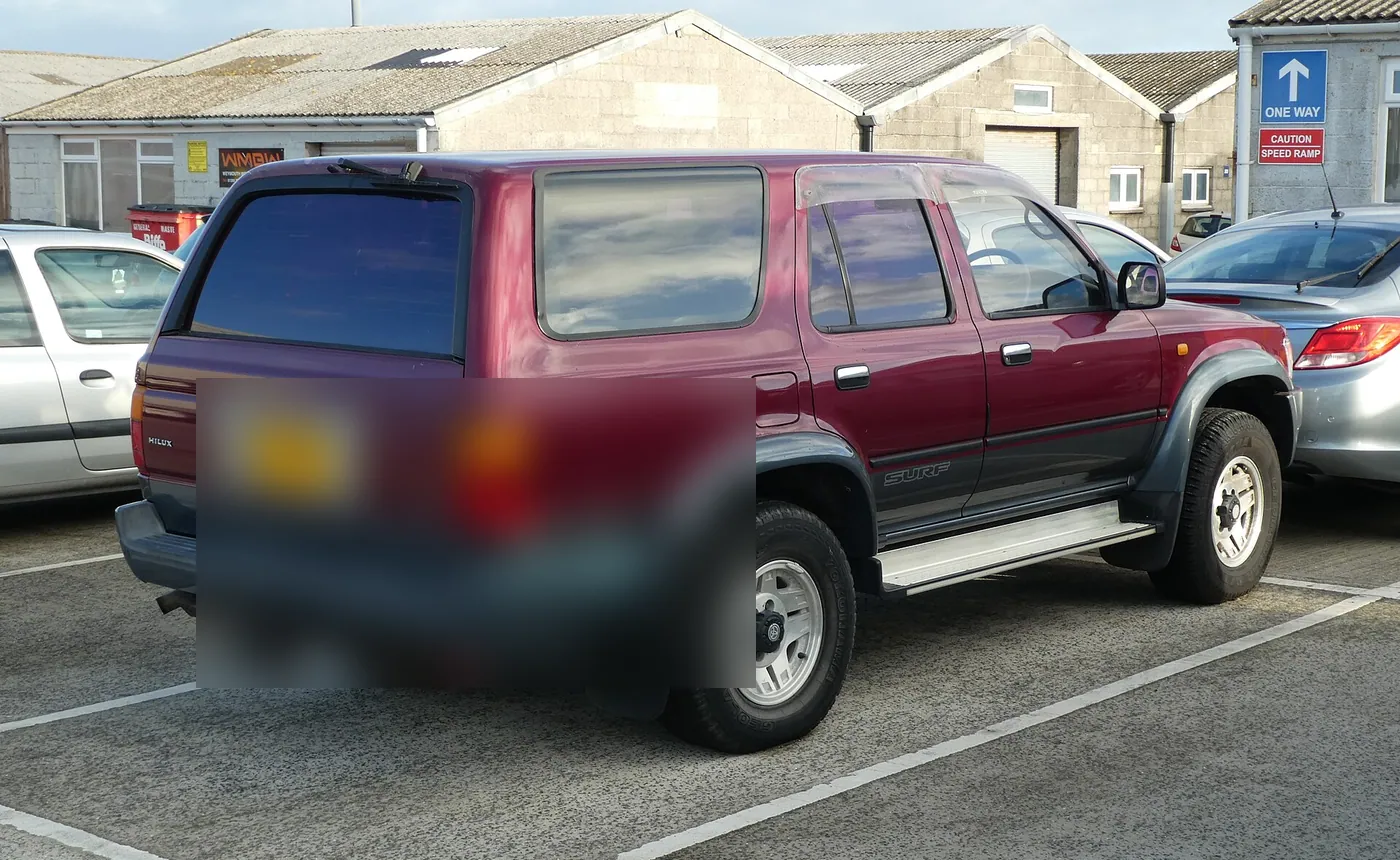
The N130 has a square, purposeful shape, with a distinctive rear window that winds down electrically into the tailgate. That feature, inherited from the earlier Surf, makes loading long items easy and gives the vehicle an open-air feel on a summer evening.
Underneath, the front suspension is independent with torsion bars, while the rear uses a solid axle with coil springs. This gave a better ride than earlier leaf-sprung vehicles. Four-wheel drive was part-time, with a low-range gearbox for off-road use.
The engine range included the 2L-T 2.4-litre turbo diesel, the 3VZ-E 3.0-litre V6 petrol and, from 1993, the 1KZ-TE 3.0-litre turbo diesel, which offered a welcome boost in power and refinement. Later in the run, Toyota also offered wide-body versions with flared wheel arches.
How it drives today
The Surf drives like a comfortable pick-up rather than a modern SUV. The steering is slow, body roll is noticeable and the ride can be firm on poor surfaces, but it cruises well and feels robust. The 1KZ-TE diesel is the most relaxed choice for Irish roads, while the 2L-T is slower and needs to be worked hard on hills. The V6 is smooth but thirsty.
Off road, the Surf is capable, with good ground clearance and a strong chassis. It is well suited to forestry tracks, beach access and muddy farm lanes, and its compact size makes it easier to manoeuvre on narrow boreens than larger Land Cruisers.
Inside, the cabin is plain but practical. The seats are comfortable, visibility is good and the load space is generous. The rear seats fold to create a long, flat floor, useful for bicycles, surfboards and camping gear.
The variants worth knowing
The 1KZ-TE turbo diesel is the most sought-after engine for its combination of torque and economy. The 2L-T is simpler and very durable, but slower. The 3VZ-E V6 is smooth and quiet but uses more fuel. Wide-body versions are more distinctive, while standard-body versions are simpler and lighter. Automatic gearboxes make the Surf more relaxing in traffic, while manuals give more control off road.
What to check when buying in Japan
Rust is the main enemy. Check the chassis rails, especially at the rear near the spring mounts and fuel tank. Inspect the rear wheel arches, the sills, the tailgate and the floor. The rear window mechanism should operate smoothly; a slow or stuck window is common and can be fiddly to fix.
The 3VZ-E V6 has a history of head gasket problems, so look for signs of overheating or coolant loss. Diesel engines should start easily and not smoke excessively. The 1KZ-TE can suffer from cylinder head cracks if it has been overheated, so check the cooling system carefully.
Many Surfs have been modified with lift kits, large tyres and aftermarket bumpers. Some are well done, but others have suffered from poor workmanship. Check that the steering and suspension are tight and that there are no signs of heavy off-road damage.
Mileage can be difficult to verify, so look for consistent wear on the interior and pedals, and check service records where available. Ensure that the chassis number on the vehicle matches the export paperwork.
Should you import one?
The N130 Surf suits buyers who want a practical, characterful four-wheel drive with a strong reputation for durability. It is ideal for outdoor enthusiasts, families and anyone who needs a vehicle that can cope with rough tracks and wet weather.
In Ireland, a Surf will feel at home on rural roads and in muddy fields, and it can tow a small trailer or boat. Fuel consumption is higher than a modern SUV, especially with the V6. Rust protection is essential, and dry storage will help preserve its value. Cars over 30 years old can qualify for Ireland's vintage treatment, which covers the earliest N130s. Choose a well-maintained example with a solid chassis, and it will offer years of reliable service.
Frequently asked questions
Is the Hilux Surf the same as the 4Runner?
Yes. The Hilux Surf is the Japanese-market name for the vehicle sold as the 4Runner in many export markets.
Which engine is best in the N130 Surf?
The 1KZ-TE turbo diesel is often considered the best choice for its balance of power and economy.
Does the rear window really go down?
Yes. The rear window winds down electrically into the tailgate, a feature carried over from the first Surf.
Is rust a problem on the N130?
Yes. Check the chassis, rear arches, sills and tailgate carefully before buying.
More Japanese classics
- Toyota Land Cruiser 80: coil springs, big sixes and the moment the Land Cruiser grew up
- Toyota Land Cruiser 70: the working truck Toyota never stopped building, and the early ones worth importing
- Toyota Chaser, Mark II and Cresta (X90): three saloons, one twin-turbo heart and a cult that never faded
- Toyota Mark II (X70): the white hardtop that carried Japan's salarymen into the boom years
- Toyota Sera: the glass-roofed coupe with butterfly doors that only the bubble era could have built
- All 90 Japanese classics you can import
Photo credits
- Photo: Andrew Bone from Weymouth, England / Wikimedia Commons, CC BY 2.0
- Photo: Andrew Bone from Weymouth, England / Wikimedia Commons, CC BY 2.0